Højriis Castle
Højriis Castle has origins dating back to the early 15th century, with its first recorded owner being Johan Skarpenberg, a knight serving under Queen Margrethe I. Skarpenberg was a significant landowner, possessing multiple estates including the nearby Spøttrup Castle in Salling. His burial at Viborg Cathedral underscores his prominence in Danish medieval nobility. The estate's long history reflects the evolution of Danish manorial culture and architecture over several centuries.
Architectural evolution and 19th-century reconstruction
The current structure of Højriis Castle primarily dates from the 19th century, specifically between 1859 and 1876. This period saw the castle transformed into a three-winged complex built in the Historicist style, which was prevalent in Danish architecture during that era. The north-west wing and the tower were designed by the notable architect Hans Jørgen Holm and constructed in 1859. Later, the north-east and south-west wings were added in 1876 following designs by August Klein. This comprehensive rebuilding gave the manor its current form, blending historical architectural motifs with 19th-century stylistic trends.
Historicist style characteristics
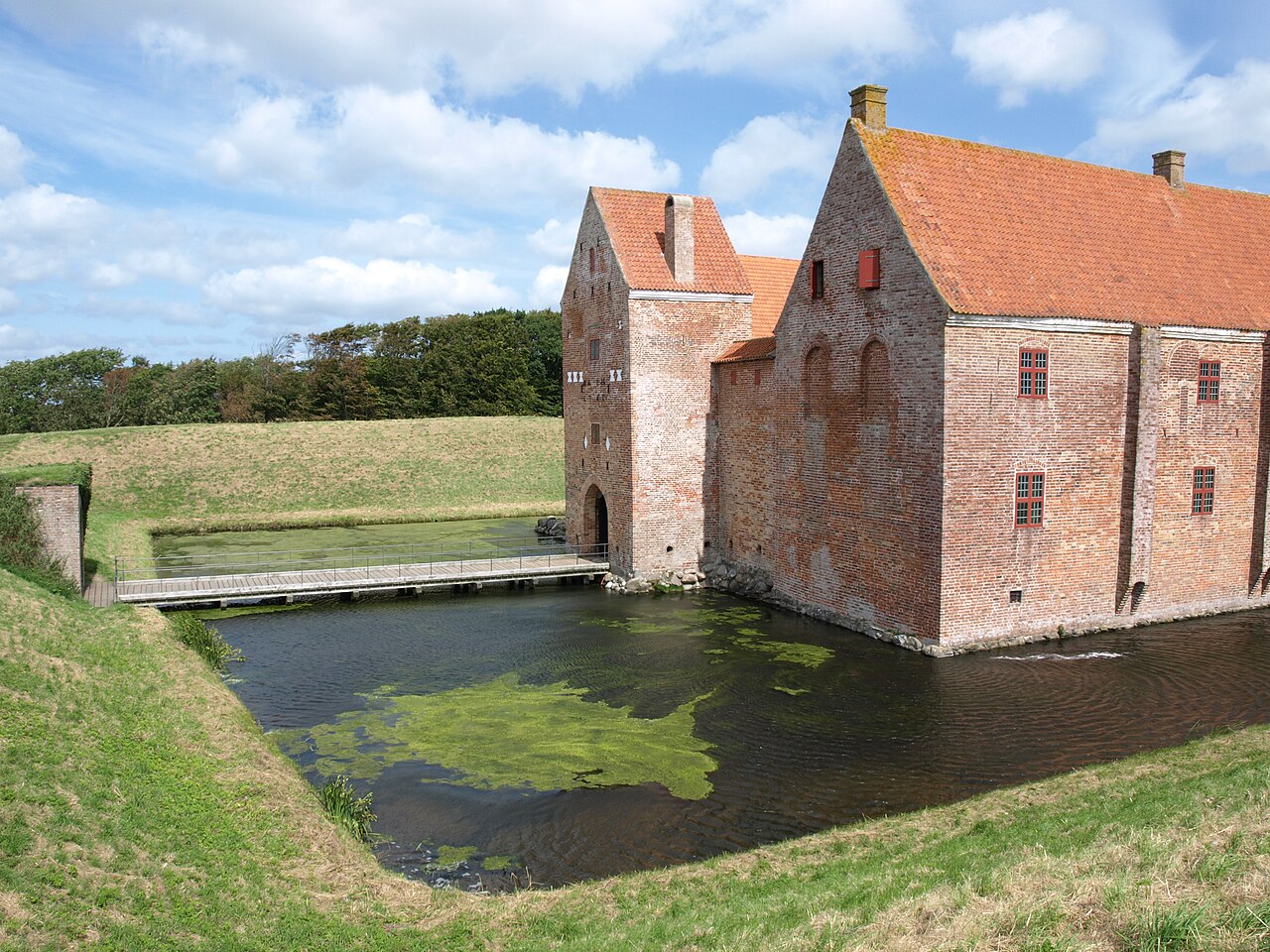
The Historicist style employed at Højriis Castle is characterized by a revival and reinterpretation of earlier architectural forms. This style often incorporated elements from Gothic, Renaissance, and other historical periods to create a romanticized vision of the past. At Højriis, this is evident in the castle's ornate tower, , and the use of decorative brickwork. The castle's layout around a central courtyard and the presence of moats emphasize its manorial and defensive heritage, even if the moats were more symbolic than functional by the 19th century.
Historical challenges and preservation
In the 20th century, Højriis Castle faced significant difficulties due to economic hardships that affected many Danish manors. The castle was abandoned and fell into disrepair from 1865 onwards, remaining uninhabited for over a century. This period of neglect led to deterioration of the building fabric and loss of some original interior features. However, the castle's historical and architectural value was recognized by later generations.
In 1994, the property was acquired by private owners committed to its restoration and preservation. Since then, efforts have been made to stabilize and restore the castle, respecting its 19th-century Historicist character while ensuring structural integrity. The castle today stands as a well-preserved example of Danish manor architecture from the period, surrounded by its original moats which enhance its historic ambiance.
Geographical and cultural context
Højriis Castle is located in Nykøbing Mors, on the island of Mors in northern Denmark. The region is known for its rich medieval history and numerous castles and manors, reflecting the area's strategic and economic importance through the centuries. The castle's proximity to water and its moat system highlight traditional defensive considerations typical of Danish estates.
The castle remains a private property, but its architectural significance and historical associations with figures like Johan Skarpenberg and Queen Margrethe I contribute to its cultural heritage value. Its preservation helps illustrate the transition of Danish noble residences from medieval strongholds to romantic 19th-century country houses.
Architectural features and layout
The castle's three-winged design creates an enclosed courtyard, a common feature in Danish manor houses that provided both security and a private outdoor space. The tower designed by Hans Jørgen Holm is a prominent vertical element, adding to the castle's silhouette and serving as a visual focal point. The use of brick construction and stylistic details like pointed arches and decorative cornices reflect the Historicist penchant for combining functional and ornamental elements.
The surrounding moats are integral to the castle's setting, enhancing its imposing appearance and connecting it to the medieval tradition of water defenses, even though by the 19th century such features were largely symbolic. The castle's wings contain various chambers and halls that historically served residential, administrative, and agricultural functions typical of a Danish manor estate.
Frequently asked questions (FAQ)
- How do I get to Højriis Castle?
- Højriis Castle is located in Nykøbing Mors, Denmark, and can be easily accessed by car or public transportation. If you are driving, there is ample parking available on-site. For those using public transport, local buses connect Nykøbing Mors with nearby towns and cities.
- What is the historical significance of Højriis Castle?
- Højriis Castle dates back to the 16th century and is known for its rich history and beautiful architecture. It has served various purposes over the centuries, including being a noble residence and a center for local governance. The castle is a testament to Danish Renaissance architecture and reflects the cultural heritage of the region.
- When was Højriis Castle built?
- Højriis Castle was constructed in the late 16th century, with its earliest records dating back to 1570. The castle has undergone several renovations and expansions over the years, preserving its historical essence while adapting to modern needs. Today, it stands as a significant landmark in Nykøbing Mors.
- Can I visit Højriis Castle year-round?
- Yes, Højriis Castle is open to visitors throughout the year, although hours may vary by season. It's advisable to check the official website for specific opening hours before planning your visit. Special events and guided tours are often available, enhancing your experience.
- Why is Højriis Castle considered an architectural gem?
- Højriis Castle showcases a blend of Renaissance and Baroque architectural styles, characterized by its elegant facades and intricate details. The castle's layout, gardens, and surrounding landscape contribute to its beauty and historical charm. Visitors often admire its well-preserved interiors and picturesque setting.
- Is it possible to take guided tours of Højriis Castle?
- Yes, guided tours are available at Højriis Castle, providing visitors with in-depth knowledge of its history and architecture. These tours are conducted by knowledgeable guides who can share fascinating stories and insights about the castle's past. It's recommended to book in advance, especially during peak tourist seasons.
- What are the ticket prices for Højriis Castle?
- Ticket prices for Højriis Castle vary depending on age and type of tour. Generally, adult tickets are priced reasonably, while discounts may be available for children, students, and seniors. Check the official website for the most current pricing and any special offers.
- What is the best time to visit Højriis Castle?
- The best time to visit Højriis Castle is during the late spring and early summer months when the gardens are in full bloom, and the weather is pleasant. Additionally, special events and exhibitions often take place during this time, enhancing the visitor experience. Fall can also be beautiful, with vibrant autumn colors surrounding the castle.
- Are there any nearby attractions to Højriis Castle?
- Yes, there are several attractions near Højriis Castle, including local museums, parks, and historic sites. The surrounding area offers opportunities for hiking, cycling, and enjoying the scenic views of the Danish countryside. Make sure to explore the charming town of Nykøbing Mors, which has its own unique attractions and amenities.
Information
Website
Visit websiteSources & official resources
Verify the information above using these authoritative references.
Loading map...
Visitor reviews
No reviews yet. Been here? Write the first review and help other travelers!
Write the first reviewVisited this castle? Share your experience
Your review helps other travelers and adds first-hand knowledge to our encyclopedia.