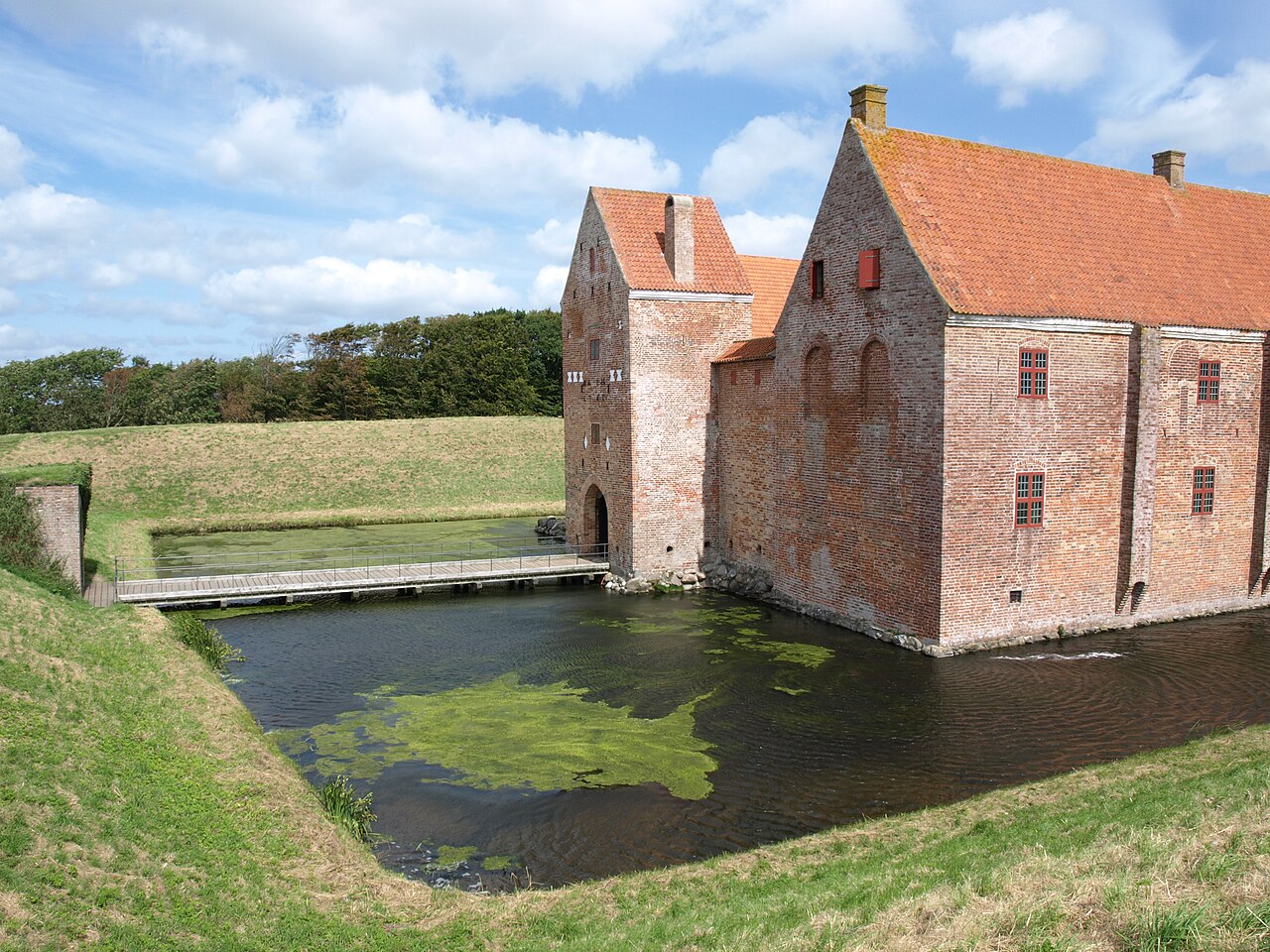
Nørre Vosborg Castle
Nørre Vosborg Castle is a distinguished Renaissance manor located in Vemb, Denmark, with a rich history spanning several centuries. The estate's origins trace back to the 14th century when Niels Bugge was among its earliest known owners. The castle complex as it stands today is a remarkable amalgamation of buildings from four centuries, showcasing five distinct architectural styles that reflect the evolving tastes and functions of its successive owners.
Historical development and ownership
The original manor suffered a catastrophic setback in 1532 when a massive storm surge destroyed the buildings on the initial site. This natural disaster prompted Knud Gyldenstjerne to relocate the estate inland to a safer location, where the current castle was established. The Gyldenstjerne family played a crucial role in the castle's Renaissance development, with the main residence dating from 1552. Over the centuries, the estate passed through the hands of prominent families, including the Linde Leths (1707–1778) and the Tangs (1783–1946).
The Tang family period was notable for hosting many distinguished guests, most famously the celebrated Danish author Hans Christian Andersen. During his stay in the summer of 1859, Andersen engaged in creative pursuits such as writing poetry and tales, cutting silhouettes, and sharing stories about the castle's reputed ghosts, adding a literary dimension to the manor's heritage.
Architectural styles and notable buildings
The Gyldenstjerne residence
Constructed in 1552, the Gyldenstjerne residence is a prime example of Renaissance architecture infused with Gothic elements. Its Gothic garrets are particularly characteristic, and the building has undergone several remodels to adapt to changing needs while preserving its historic character.
The ide lange residence
Dating from 1642, the Ide Lange residence is a half-timbered structure exemplifying Renaissance style. It is distinguished by its supporting columns made of joined wood, which is among the earliest examples of this construction technique in the region of western Denmark.
The de linde residence
The De Linde residence, built in 1770, exhibits the Baroque style prominently through its grand stairways. This residence was erected on the foundations of a former carriage house and barn. Remarkably, beneath the house were once several prison cells used to hold detainees awaiting trial at the high court in Viborg, highlighting the manor's role in regional judicial affairs.
The tang residence and later additions
The Tang residence, constructed in 1839, reflects the New Classicist style. It is connected to the Gyldenstjerne wing by a New Gothic bay room, blending stylistic elements across periods. After a fire, the southern section of the barn complex was rebuilt in 1951, transforming former agricultural spaces into modern facilities such as a foyer, multi-purpose hall with seating for 300, conference rooms, and hotel accommodations.
The northern barn section, dating from 1778, retains traditional North Jutland architectural features including burned tiles, hipped thatched roofs, and blue wooden doors. Historically serving as a haymow, bullock barn, horse stalls, and the farm bailiff’s residence, it now houses the hotel reception, a gift shop, additional hotel rooms, and venues for exhibitions and banquets.
The gate tower and distinctive features
The Gate Tower is a defining symbol of Nørre Vosborg. Built in 1790 by Peder Tang, its design was inspired by Dutch architecture observed during his travels. A unique feature of the tower is its clock face, which intriguingly has only one hand, a detail that captures visitors' attention and adds to the manor's distinctive character.
Cultural significance and preservation
Nørre Vosborg Castle serves as a tangible record of Danish architectural and social history, illustrating transitions from medieval manorial estates to Renaissance residences and beyond. The complex's preservation allows visitors to explore a variety of architectural styles, from Gothic and Renaissance to Baroque and New Classicist, all within a single estate. Its adaptive reuse of former agricultural buildings into hospitality and event spaces demonstrates a commitment to maintaining the site's relevance and accessibility.
The castle's connection to figures like Hans Christian Andersen enriches its cultural narrative, making it a site of literary as well as architectural interest. Today, Nørre Vosborg stands well preserved, offering a multifaceted experience that combines history, architecture, and cultural heritage in the heart of western Denmark.
Frequently asked questions (FAQ)
- What is Nørre Vosborg Castle known for?
- Nørre Vosborg Castle is renowned for its well-preserved medieval architecture and its rich history dating back to the 15th century. The castle has served various purposes over the centuries, including as a noble residence and a farm, showcasing the evolution of Danish heritage.
- When was Nørre Vosborg Castle built?
- Nørre Vosborg Castle was originally constructed in the late 1400s, with significant renovations occurring in the 18th and 19th centuries. Its historical layers reflect the changes in architectural styles and the castle's role throughout Danish history.
- What are the opening hours for Nørre Vosborg Castle?
- Nørre Vosborg Castle is open to visitors from April to October, typically from 10 AM to 5 PM on weekdays and from 11 AM to 4 PM on weekends. During the winter months, opening hours may vary, so it is advisable to check the official website before planning your visit.
- Can I visit Nørre Vosborg Castle with children?
- Yes, Nørre Vosborg Castle is family-friendly and offers various activities suitable for children. The grounds are spacious, and guided tours often include engaging stories and historical facts that captivate visitors of all ages.
- Is there an entrance fee for Nørre Vosborg Castle?
- Yes, there is an entrance fee to visit Nørre Vosborg Castle, with discounts available for children and seniors. Ticket prices can vary depending on special events or guided tours, so it's best to check the official site for the latest pricing information.
- When is the best time to visit Nørre Vosborg Castle?
- The best time to visit Nørre Vosborg Castle is during the spring and summer months when the gardens are in full bloom and outdoor activities are available. Additionally, the weather is generally pleasant, allowing for a comfortable exploration of the grounds.
- What nearby attractions can I explore while visiting Nørre Vosborg Castle?
- While visiting Nørre Vosborg Castle, you can explore the beautiful surrounding countryside, including scenic walking and biking trails. Nearby attractions also include the charming village of Vemb and local museums that highlight the region's history and culture.
- How do I get to Nørre Vosborg Castle?
- Nørre Vosborg Castle is easily accessible by car, located just off the main road in Vemb, Denmark. Public transportation options, including buses, are also available from nearby cities, making it convenient for visitors traveling from different locations.
- Is Nørre Vosborg Castle accessible for individuals with disabilities?
- Yes, Nørre Vosborg Castle is committed to ensuring accessibility for all visitors. There are ramps and facilities in place to accommodate guests with mobility challenges, allowing everyone to enjoy the historic site.
Information
Website
Visit websiteSources & official resources
Verify the information above using these authoritative references.
Loading map...
Visitor reviews
No reviews yet. Been here? Write the first review and help other travelers!
Write the first reviewVisited this castle? Share your experience
Your review helps other travelers and adds first-hand knowledge to our encyclopedia.