Spofforth Castle
Spofforth Castle stands as a significant example of a medieval fortified manor house located in the village of Spofforth, North Yorkshire, England. Established in the early 14th century, the castle was originally constructed under the authority of Henry de Percy, 1st Baron Percy, who received a licence to crenellate—a royal permission to fortify his manor house with battlements and defensive features. This legal privilege marked the transformation of a domestic residence into a defensible stronghold, reflecting the turbulent political and military climate of medieval England.
The castle's origins date back to approximately the early 14th century, with the earliest surviving fabric of the ground floor hall-tower dating from this period. Over the 14th and 15th centuries, the castle underwent several architectural modifications and expansions, mirroring the Percy family's evolving status and the changing needs of their estate. These adaptations included the addition of a two-storey chamber block and a distinctive polygonal stair turret at the northwest corner, which provided vertical circulation and added defensive and residential space.
Historical context and ownership
The Percy family, one of the most powerful noble families in northern England, played a central role in the castle's history. Their estates, including Spofforth Castle, were deeply affected by the political upheavals of the 15th century. Following their rebellion against King Henry IV, the Percys' lands were confiscated in 1408 and granted to Sir Thomas Rokeby. Although the estates were eventually restored to the Percys, they faced further confiscation in 1461 due to their allegiance to the losing faction in the Wars of the Roses, a series of dynastic conflicts that shaped England's monarchy. Despite these setbacks, the castle was returned to the Percy family and continued to serve as the residence of their steward until 1604.
The castle's decline began during the English Civil War (1642–1646), when it suffered extensive damage and was subsequently abandoned, falling into ruin. In the 20th century, ownership passed to the Office of Works in 1924 through the 3rd Baron Leconfield, ensuring the site's protection as a historic monument. Today, Spofforth Castle is managed by English Heritage and is designated as a Grade II* listed building, highlighting its national importance and special architectural interest.
Architectural features and layout
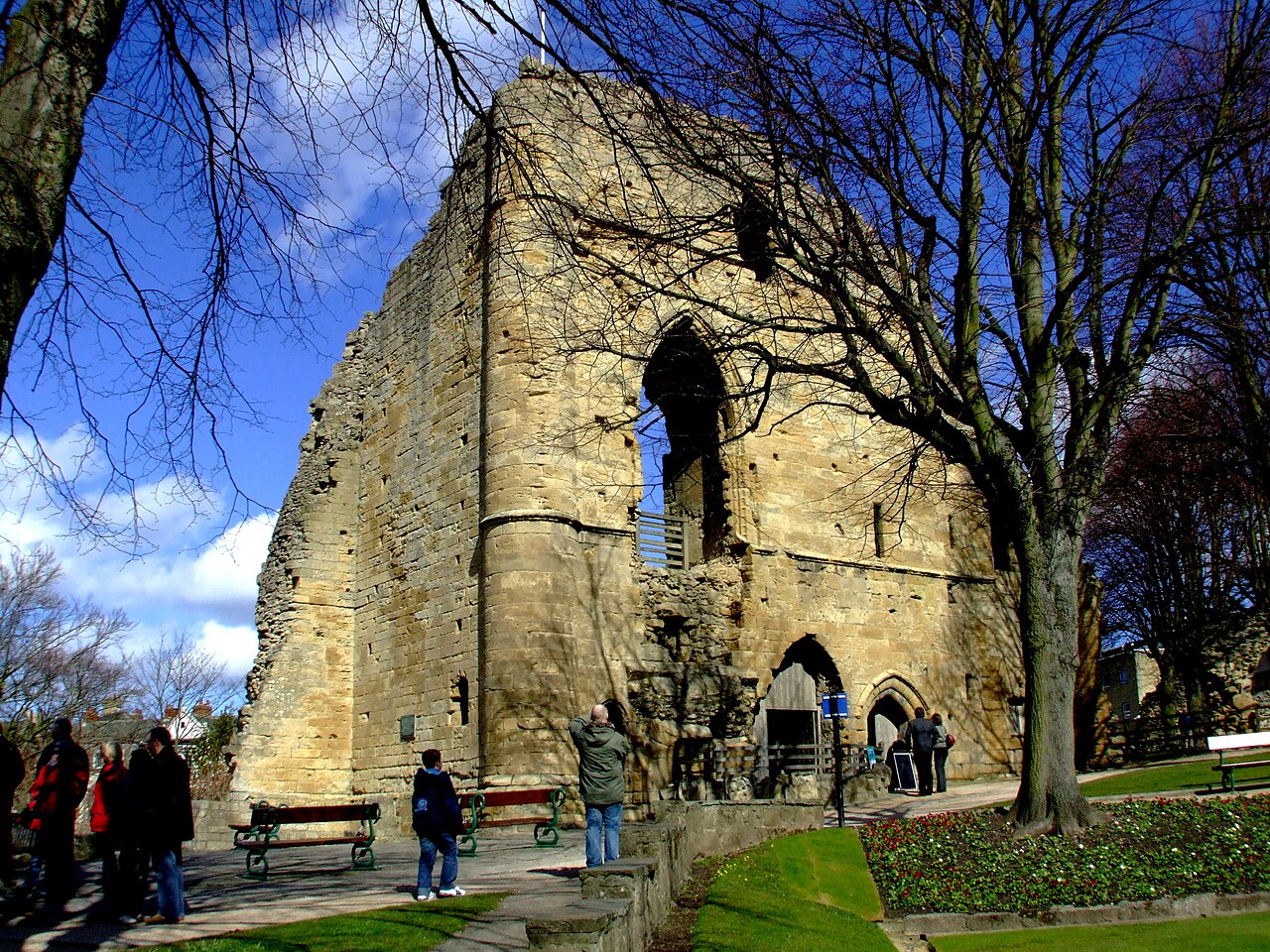
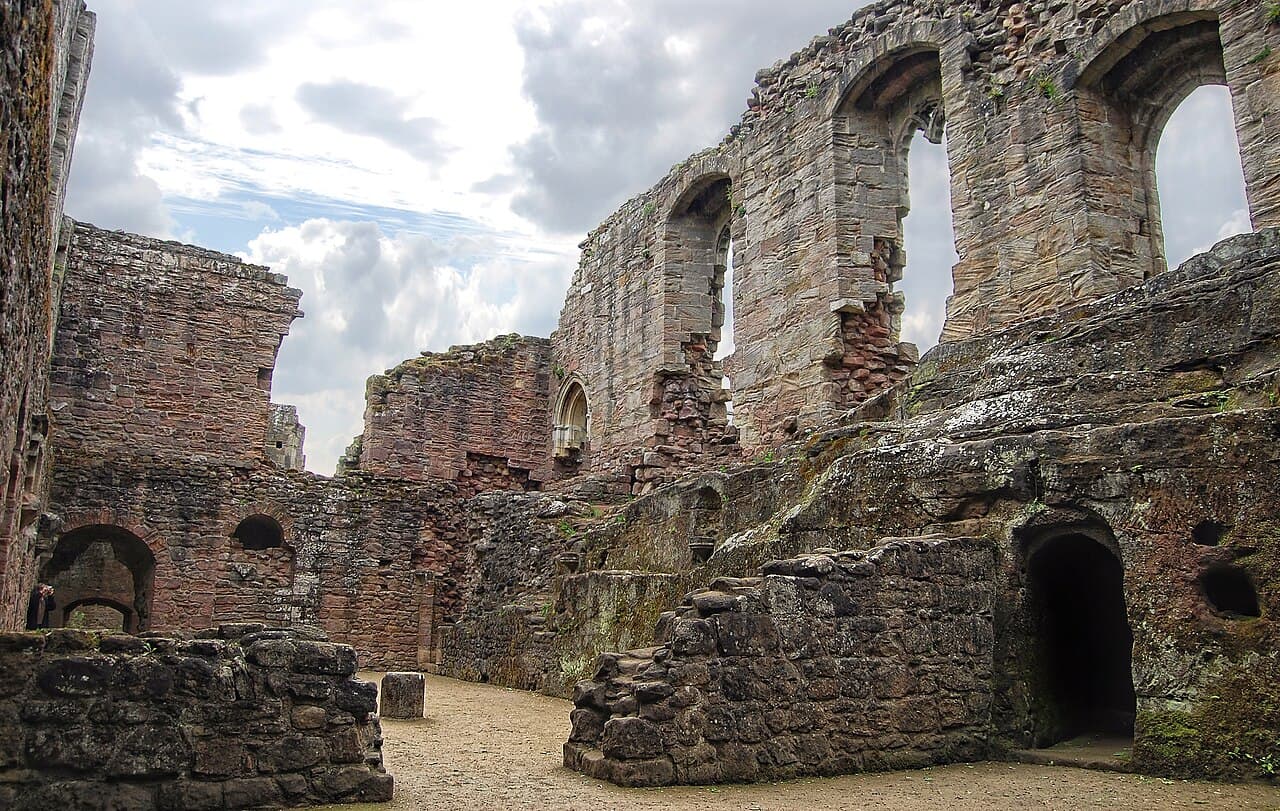
The surviving remains of Spofforth Castle primarily consist of the hall-tower, which exhibits a distinctive layout characteristic of fortified manor houses of the medieval period. The castle is notable for its integration with the natural landscape, particularly the eastern wall of the main hall, which is built directly upon the natural rock foundations. This unusual construction means the undercroft—the vaulted chamber beneath the main hall—incorporates the rock face as part of its eastern enclosure, providing both structural support and natural defense.
Access within the castle is facilitated by two staircases carved into the eastern rock face, which lead up to the hall's lobby area. The northern side of the tower features a two-storey chamber block with the aforementioned polygonal stair turret at the northwest corner, enhancing the castle's vertical circulation and residential function. The ground floor of the hall-tower dates from the initial 14th-century construction phase, while the upper story represents a 15th-century addition, likely part of restoration efforts by the Percy family.
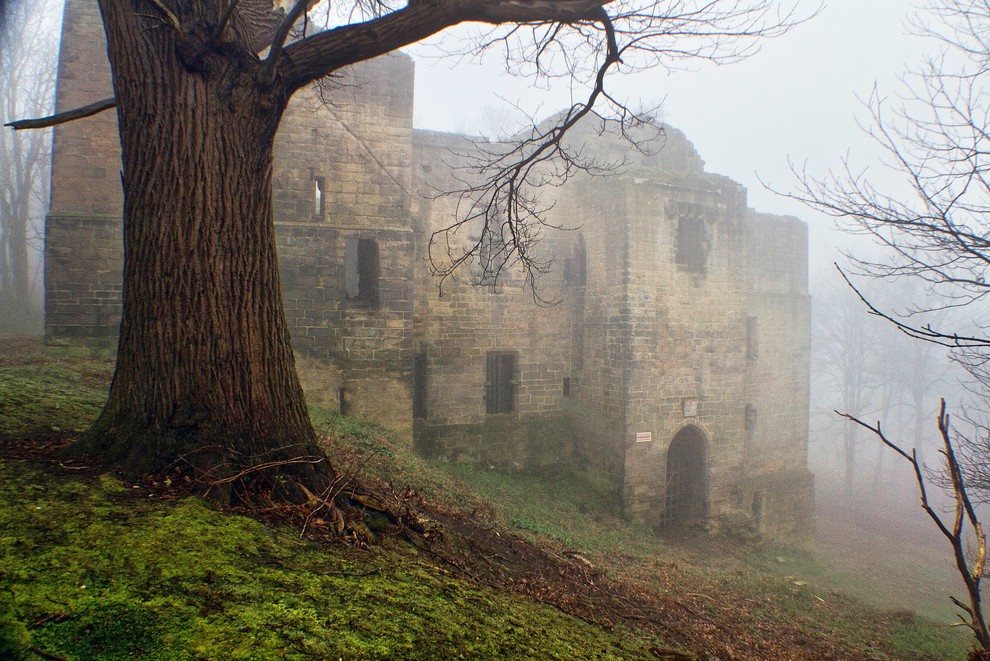
The ruins mainly represent the western portion of the original castle structure, with much of the masonry still intact despite centuries of decay. The castle's defensive elements, such as battlements and thick walls, reflect its dual purpose as a residence and military fortification. The castle's layout and construction techniques provide valuable insight into the architectural evolution of fortified manor houses during the High and Late medieval periods.
Spoorth castle in the modern era
Today, Spofforth Castle remains a preserved ruin that offers visitors a glimpse into medieval noble life and military architecture. Managed by English Heritage, the site is accessible to the public and serves as an educational resource illustrating the complexities of feudal power, architecture, and the impact of national conflicts on regional strongholds.
The castle's status as a Grade II* listed site ensures ongoing conservation efforts to maintain its structural integrity and historical significance. Its unique integration with the natural rock and the survival of key architectural features make it a notable example of medieval fortified manor houses in England.
Visitor experience and accessibility
Visitors to Spofforth Castle can explore the atmospheric ruins, including the hall-tower and chamber block, while enjoying views of the surrounding North Yorkshire countryside. The site provides interpretive signage to explain its historical context and architectural details. Access involves some uneven terrain and rock-cut staircases, so visitors should wear appropriate footwear and be prepared for moderate physical exertion.
Cultural and heritage significance
Spofforth Castle stands as a testament to the enduring legacy of the Percy family and their role in English history. Its architectural features exemplify the transition from purely defensive castles to fortified manor houses that balanced residential comfort with military readiness. The castle's history reflects broader themes of loyalty, rebellion, and restoration that characterized medieval England's aristocratic landscape.
Frequently asked questions (FAQ)
- How do I get to Spofforth Castle?
- Spofforth Castle is located in the village of Spofforth, North Yorkshire. It is accessible by car and local bus services from nearby towns such as Harrogate and Leeds. Parking is available near the site.
- What are the opening hours for Spofforth Castle?
- The castle is open to visitors year-round during daylight hours, typically from 9:00 AM to dusk. There are no formal ticketed entry fees as the site is managed by English Heritage as a protected ruin.
- Is Spofforth Castle suitable for families?
- Yes, Spofforth Castle is suitable for families interested in history and medieval architecture. However, due to uneven terrain and rock-cut staircases, supervision of young children is recommended for safety.
- What is the historical significance of Spofforth Castle?
- Spofforth Castle is historically significant as a fortified manor house linked to the powerful Percy family. It reflects medieval military architecture and the political upheavals of the 15th century, including the Wars of the Roses and the English Civil War.
- Can I explore the interior of the castle ruins?
- Visitors can explore the accessible ruins, including the hall-tower and chamber block. While some areas are open, others may be restricted for safety reasons. Informative signage helps visitors understand the layout and history.
Photo gallery

Information
Sources & official resources
Verify the information above using these authoritative references.
Loading map...
Visitor reviews
No reviews yet. Been here? Write the first review and help other travelers!
Write the first reviewVisited this castle? Share your experience
Your review helps other travelers and adds first-hand knowledge to our encyclopedia.