Spesbourg Castle
Spesbourg Castle, also known as Château de Spesbourg or Spesburg, is a striking ruined fortress located northwest of the village of Andlau in the Bas-Rhin department of France, within the region known as Northern Alsace or the Middle Vosges. Perched on a rugged granite outcrop at an altitude of 452 meters, this castle commands panoramic views of the surrounding valley and forested hills, making it a prominent landmark in the area.
The origins of Spesbourg Castle date back to the mid-13th century, with construction likely commencing shortly after 1246. It was built for Alexandre de Dicka, the solicitor (Vogt) of the Abbey of Andlau, a significant ecclesiastical institution in the region. Although the castle is not mentioned in historical records until 1310, architectural and documentary evidence supports its establishment in the late High Medieval period. The castle served both as a defensive stronghold and a residence, reflecting the dual military and administrative functions typical of medieval fortifications.
Historical context and ownership
By 1386, the castle had passed into the hands of the Lords of Andlau, an influential noble family in the region who consolidated their control over several local fortresses. The von Andlau family maintained ownership for several centuries, during which the castle underwent various modifications and expansions to adapt to evolving defensive needs and residential comforts.
In the 16th century, the castle experienced significant turmoil. Local legend recounts that angry villagers set fire to the castle after one of the lords allegedly seduced a village girl, an event that contributed to the castle's decline. Additionally, the castle was abandoned after 1550, coinciding with broader shifts in military technology and political power that rendered many medieval fortresses obsolete.
The castle also suffered damage during the Thirty Years' War (1618–1648), a devastating conflict that affected much of Central Europe, including Alsace. Following this period, Spesbourg fell further into ruin and was never fully restored.
Architectural features and layout
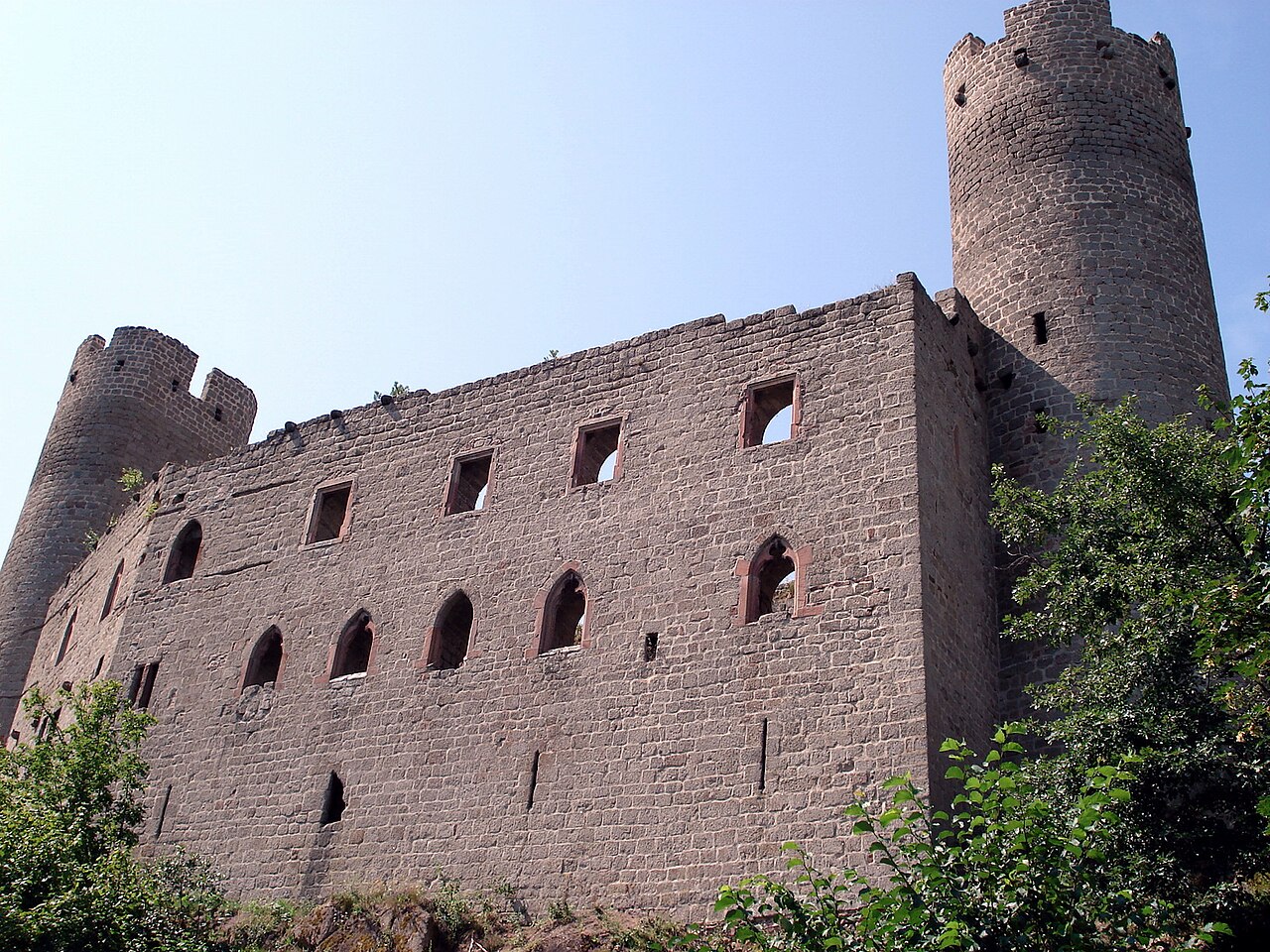
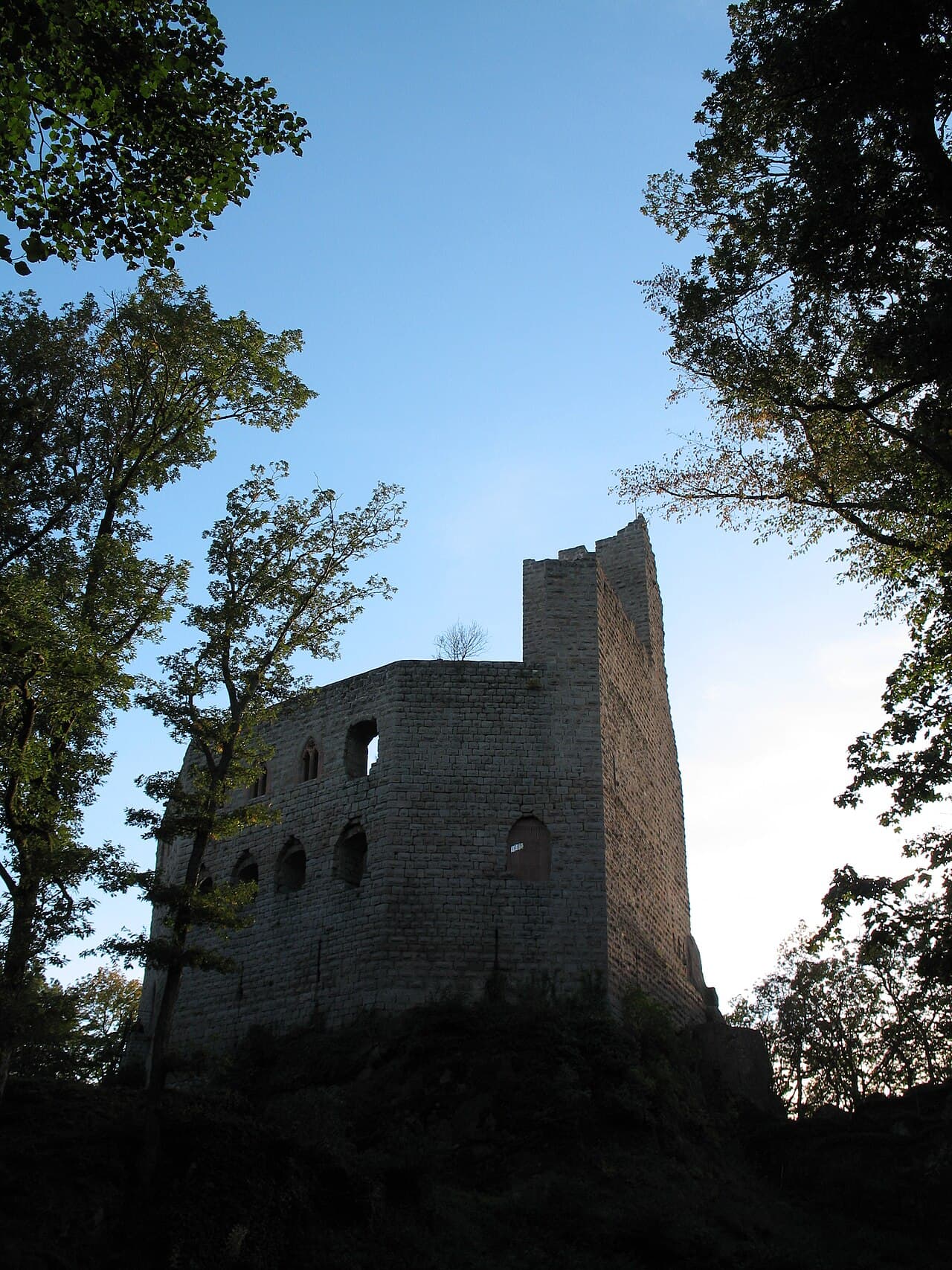
The castle's layout is characteristic of medieval fortifications, featuring a square keep—a central fortified tower that served as the last line of defense and the lord's residence. This keep is surrounded by two residential buildings enclosed within a high curtain wall that once provided formidable protection against attackers.
Within the living quarters, particularly on the first floor, traces of murals remain, offering valuable insights into the castle's interior decoration and the artistic tastes of its inhabitants. These remnants suggest that the castle was not solely a military installation but also a place of some comfort and status.
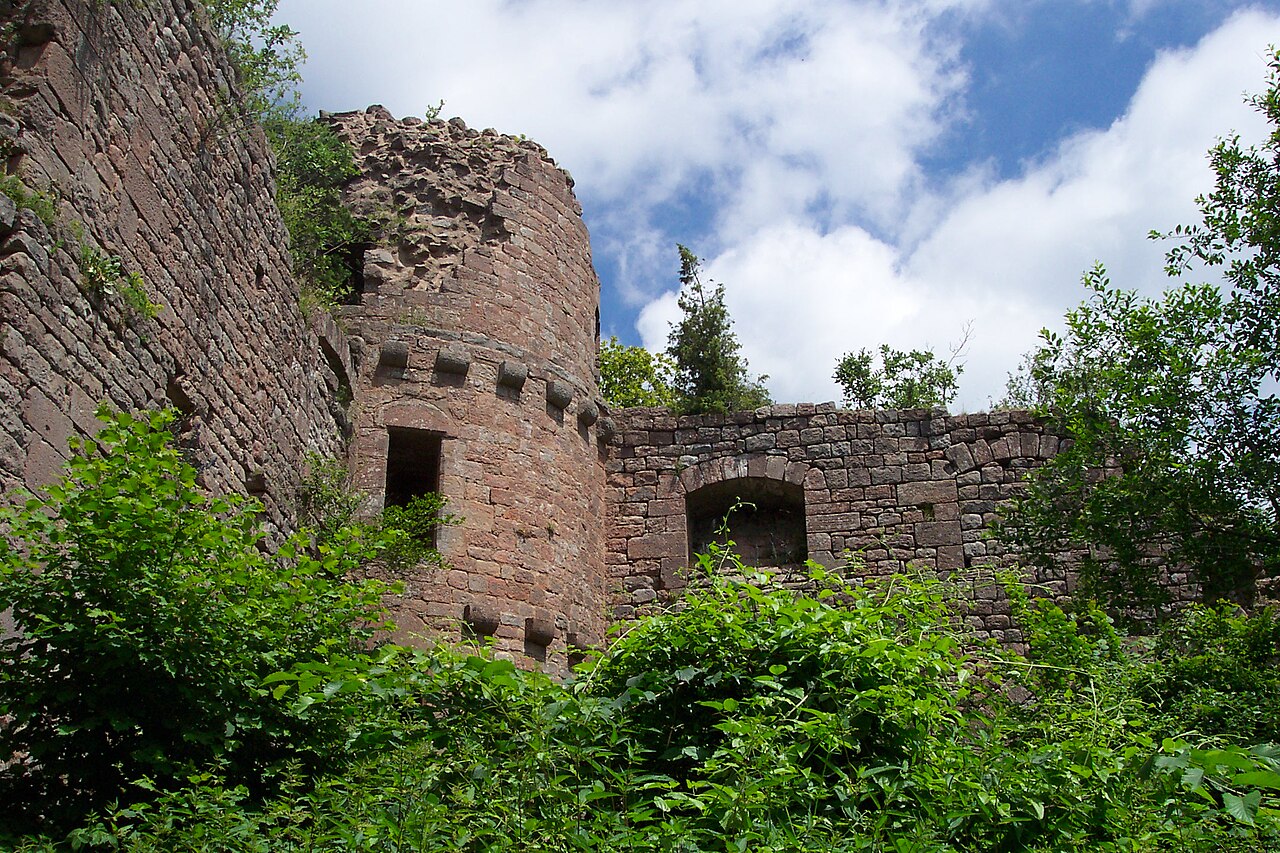
During the mid-16th century, the western residential building was demolished as part of a refitting effort, reflecting changing architectural needs or damage incurred. The bailey, or courtyard area, contains remains of buildings dating from the 16th century, indicating continued use and adaptation of the site during the Renaissance period.
Construction materials and defensive elements
The castle is constructed primarily from local granite, a durable stone that has helped preserve much of the structure despite centuries of exposure. The strategic placement on a granite rock provided natural defensive advantages, making the castle difficult to assault.
Defensive features include the high curtain walls, battlements, and the elevated position, which afforded defenders clear lines of sight and the ability to repel attackers effectively. Although the keep is currently inaccessible to visitors due to safety concerns, it remains an imposing symbol of medieval military architecture.
Current condition and visitor experience
Today, Spesbourg Castle stands as a ruined fortress, partially preserved but evocative of its medieval past. The site is accessible to visitors who can explore the ruins, including the curtain walls and residential quarters, while the keep remains closed for safety reasons.
The castle's proximity to the nearby Haut-Andlau Castle offers visitors a unique opportunity to experience two historically linked ruins within a short distance, enriching the cultural and historical context of the visit.
Visitors to Spesbourg can enjoy hiking through the surrounding forested landscape of the Middle Vosges, combining natural beauty with historical exploration. The altitude and location provide scenic views, making it a favored destination for both history enthusiasts and nature lovers.
Access and amenities
The castle is located near the Maison Forestière de Hungerplatz, providing a convenient starting point for hikes and exploration. While there are no extensive visitor facilities on site, the ruins themselves offer a captivating glimpse into medieval and Renaissance fortification architecture.
Cultural significance and heritage
Spesbourg Castle is an important cultural landmark within the Alsace region, reflecting the area's complex feudal history and the architectural evolution from the High Medieval through the Renaissance periods. Its ruins stand as a testament to the turbulent history of the region, including noble power struggles, local folklore, and the impact of European conflicts such as the Thirty Years' War.
The castle contributes to the rich tapestry of Alsace's heritage, attracting scholars, historians, and tourists interested in medieval architecture and the historical narratives embedded in the landscape.
Frequently asked questions (FAQ)
- How do I get to Spesbourg Castle?
- Spesbourg Castle is accessible via hiking trails starting near the Maison Forestière de Hungerplatz in the Bas-Rhin department. Visitors should prepare for a moderate hike through forested terrain to reach the ruins.
- What is the historical significance of Spesbourg Castle?
- Spesbourg Castle was built in the mid-13th century for the solicitor of Andlau Abbey and later owned by the Lords of Andlau. It reflects the region's medieval feudal history and Renaissance modifications.
- Can I enter the keep of Spesbourg Castle?
- The keep of Spesbourg Castle is currently inaccessible to visitors due to safety concerns, but the surrounding ruins and curtain walls can be explored.
- When was Spesbourg Castle abandoned?
- The castle was abandoned after 1550, following local unrest and changes in military technology, and fell into ruin after the Thirty Years' War.
- Is there another castle nearby worth visiting?
- Yes, Haut-Andlau Castle is located nearby and offers complementary historical insights into the region's medieval fortifications.
Photo gallery

Information
Address
Near Maison Forestière de Hungerplatz, France
Loading map...
Visitor reviews
No reviews yet. Been here? Write the first review and help other travelers!
Write the first reviewVisited this castle? Share your experience
Your review helps other travelers and adds first-hand knowledge to our encyclopedia.