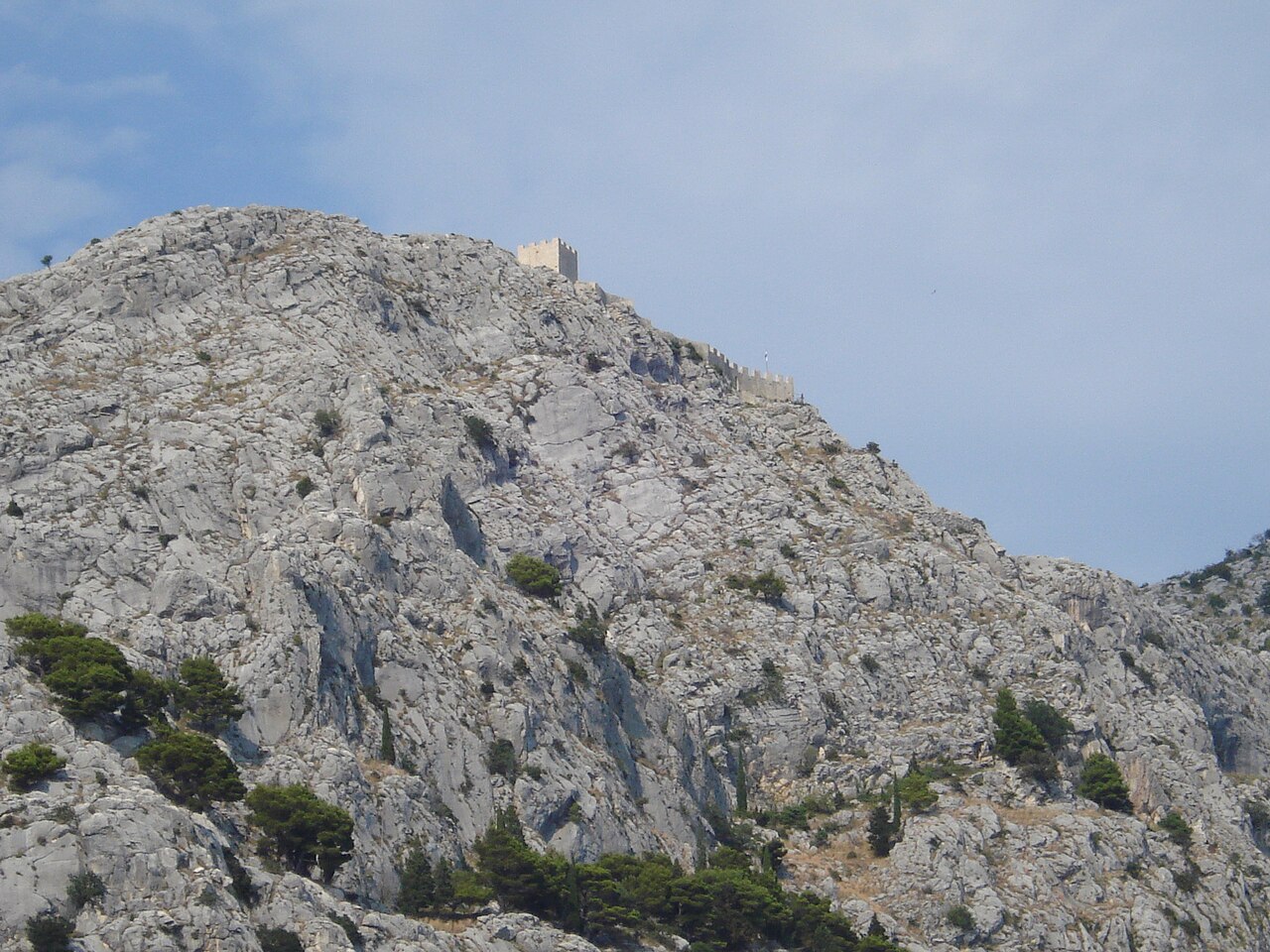
Spanish Fortress
The Spanish Fortress, locally known as Španjola, is a prominent Renaissance coastal fortress located on the island of Hvar, Croatia. Constructed at the beginning of the 16th century during the period of Venetian rule, the fortress was strategically built to defend the town of Hvar from Ottoman and pirate attacks, reflecting the turbulent geopolitical climate of the eastern Adriatic Sea in that era. The fortress underwent significant reconstruction in 1579, enhancing its defensive capabilities and adapting its structure to the evolving military technologies of the period.
Architectural features and design
The Spanish Fortress is a classic example of a coastal fortress designed to maximize defense against naval threats. It is situated on a hill overlooking the town and the harbor, providing commanding views of the surrounding sea and the Pakleni islands. The fortress features robust stone walls with bastions and ramparts designed to withstand cannon fire. Its layout includes a series of courtyards, gates, and watchtowers that allowed defenders to monitor and repel attackers effectively.
The fortress's design reflects Renaissance military architecture principles, emphasizing geometric shapes and angled bastions to deflect artillery shots. The thick walls and limited entry points were intended to create a formidable obstacle for any invading force. Inside, the fortress housed barracks, storage rooms for weapons and ammunition, and cisterns to collect rainwater, ensuring defenders could withstand prolonged sieges.
Historical significance and role
During the 16th century, the eastern Adriatic coast was a contested frontier between the Venetian Republic and the Ottoman Empire. The Spanish Fortress was a critical element of Venice's defensive network, securing Hvar as a vital maritime and trading hub. Its presence deterred Ottoman naval incursions and pirate raids, contributing to the region's relative stability under Venetian control.
Over the centuries, the fortress witnessed various military actions and changes in control, reflecting the shifting political landscape of the Adriatic. Although its military importance declined with the advent of modern warfare, the fortress remains a symbol of Hvar's historical resilience and strategic importance.
Cultural heritage and current use
Today, the Spanish Fortress is a well-preserved historical monument and a popular tourist destination. It hosts a collection of amphorae and other archaeological exhibits from antiquity and the Middle Ages, offering visitors insight into the region's maritime history and trade. The fortress also serves as a cultural venue for events and exhibitions, connecting the past with contemporary local life.
Visitors can explore the fortress's exquisite Renaissance architecture and enjoy breathtaking panoramic views of Hvar town, its surroundings, and the Pakleni islands. The elevated position of the fortress makes it an ideal spot for photography and appreciating the natural beauty of the Adriatic coastline.
Visiting information
The Spanish Fortress is accessible via a steep path from Hvar's old town, requiring a moderate level of fitness. It is open to the public throughout the year, with varying hours depending on the season. Visitors are advised to wear comfortable footwear and bring water, especially during the hotter months.
Information
Loading map...
Visitor reviews
No reviews yet. Been here? Write the first review and help other travelers!
Write the first reviewVisited this castle? Share your experience
Your review helps other travelers and adds first-hand knowledge to our encyclopedia.