Sowiniec
Sovinec Castle is a remarkable example of a late medieval bastioned fortress located in the municipality of Jiříkov-Břidličná in the present-day Czech Republic. Founded in the early 14th century by the Moravian noble family Hrutovic, the castle was strategically positioned near the trade route linking Moravia and Silesia. Its initial construction between 1329 and 1332 established it as a key border stronghold during territorial disputes with the bishops of Olomouc. The castle’s location on a rocky promontory provided natural defense advantages, complemented by its robust architectural features.
The origins and early architecture of Sovinec castle
The original fortress was built by brothers Paweł and Vok from the Hrutovic family after they received the village of Křižov as a fief from the Olomouc bishopric around 1318. The earliest documented mention of the castle dates to 1348, where the founders are referred to as "ze Sovince de Aylnburk." Initially, the castle occupied only the summit of a rock, featuring a distinctive round tower set on an octagonal base and an adjoining eastern building, all enclosed by a thick defensive wall. This configuration typifies early medieval hill castles designed for both defense and residence.
At the turn of the 14th and 15th centuries, Sovinec underwent its first significant expansion. A new northern wall was constructed, creating what is today known as the fourth courtyard. The western lower castle area, or outer bailey, was fortified with a stone wall and a northern tower, enhancing the castle’s defensive perimeter.
Historical significance during the Hussite wars and ownership changes
During the turbulent Hussite wars, the castle’s owners frequently shifted allegiances between opposing factions, reflecting the complex political landscape of the time. Notably, Sovinec hosted a meeting between the Hussite leader Prokop the Great and Zygmunt Korybutowicz, a claimant to the Bohemian throne. In 1480, Jan Heralt of Kunštát acquired the castle but sold it a decade later to Jan Pnovski of Sovinec, who initiated further expansions.
Under Pnovski’s ownership, the castle’s outer bailey was transformed with the addition of a northern palace connected to the formerly freestanding tower, and a southern palace was erected opposite it. The western curtain wall was reinforced with three towers, and a new pedestrian gate adorned with an ornate portal was introduced. Additional fortifications on the southern and eastern sides created new courtyards, enhancing the castle’s complexity and defensive capabilities.
Renaissance enhancements and the role of the Teutonic Order
In 1543, Jesěk, grandson of Jan Pnovski, sold Sovinec to Kryštov of Boskovice. Although neither Kryštov nor his heir Jan Černohorský resided at the castle, they commissioned Renaissance-style renovations, including the addition of a cloister connecting the two palaces and the creation of the Boskovice Hall, a representational chamber in the northern palace. This period marked a transition from purely military architecture to more refined noble residences.
The castle changed hands again in 1576, when it was purchased by Wawrzyniec Eder. His tenure saw further expansions: the construction of the burgrave’s building on the third courtyard, modernization of the gate tower, and the addition of artillery bastions such as the polygonal Remter bastion and the distinctive "Cat’s Head" tower projecting northwest. These improvements reflected the growing importance of artillery in castle defense during the Renaissance.
Following Eder’s death in 1590, Sovinec passed to his daughter Anna and subsequently to her husband Jan Starszy Kobylka. A devout Lutheran, Kobylka fortified the castle with a Renaissance-style barbican protecting the main entrance. His involvement in the Protestant uprising against Emperor Matthias of Habsburg led to the forced sale of Sovinec in 1623 to Bishop Karl of Wrocław, brother of Emperor Ferdinand II and Grand Master of the Teutonic Order.
Thirty Years’ War and extensive fortification upgrades
The Thirty Years’ War brought significant military activity to Sovinec. In 1626, Danish troops occupied the castle without resistance. To prevent future easy captures, the Teutonic Order appointed Jan Höpper as administrator, who oversaw extensive fortification works until 1643. New bastions named after saints and family members—such as St. George’s bastion to the south and Jan and Wilhelm bastions to the north—were constructed. The gate received a reinforced bastion called the Clippel’s Mantle, and the New Tower was built to connect to the Cat’s Head tower.
The Remter tower was rebuilt with an upper floor serving as a meeting hall for the Order’s members. Additional fortifications included the Lichtensteinka tower and the installation of stone-lined moats and palisades. These enhancements represent some of the most sophisticated 17th-century military architecture in Moravia.
In September 1643, retreating Swedish forces under Lennart Torstensson besieged Sovinec. After a three-week artillery bombardment involving 82 guns, the defenders capitulated on October 7. The Swedes repaired the damaged fortifications and used Sovinec as a strategic base to control parts of Moravia and Silesia until their withdrawal in 1650, when the Teutonic Order regained possession.
Decline, fires, and adaptive reuse in the modern era
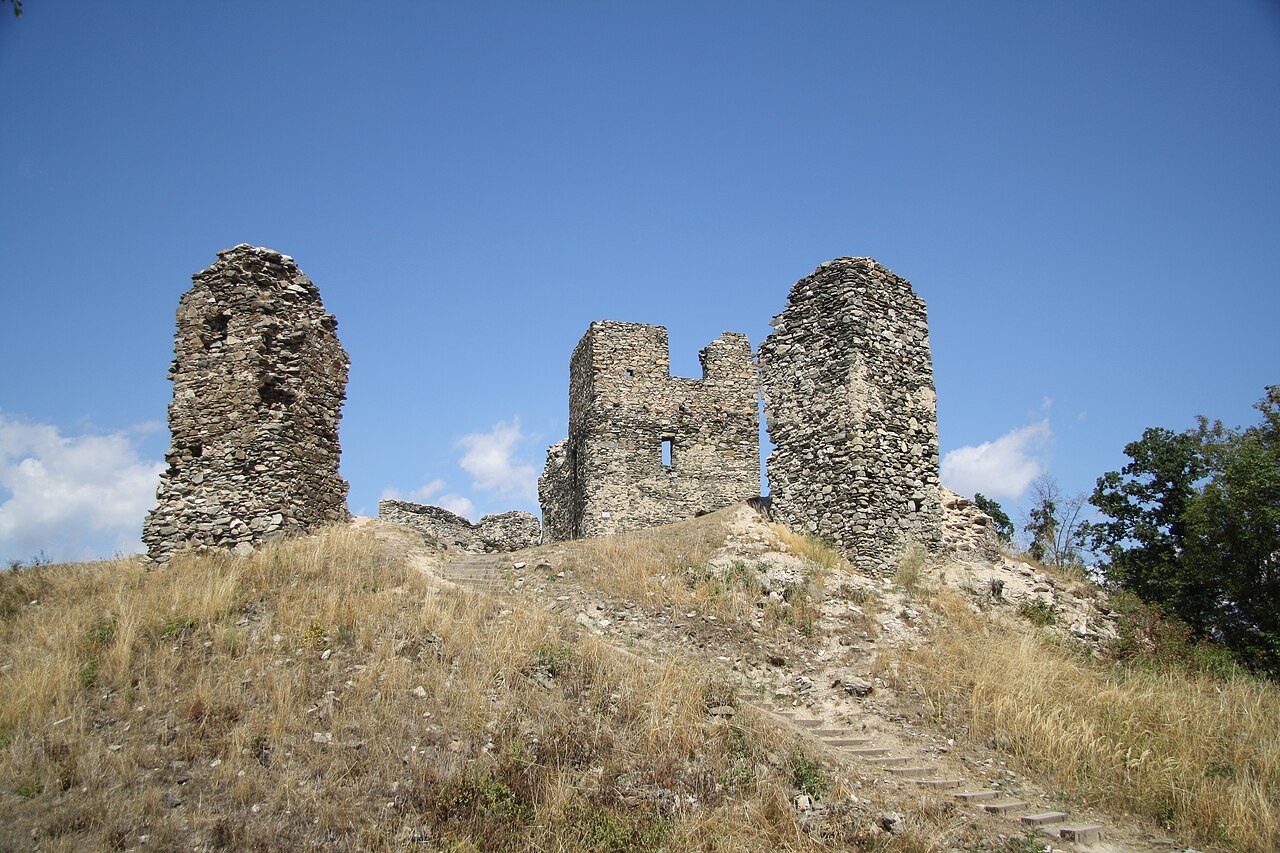
The threat of Ottoman invasions in the 17th century ensured the castle’s defenses remained functional. However, by the mid-18th century, the diminished military threat led to neglect and deterioration. A major fire in 1784 caused significant damage, including the lowering of the main tower and removal of the upper floor of the palace. The Lichtensteinka tower was partially dismantled for building materials.
After 1810, the castle was abandoned by its administrators and became a quarry for stone until intervention by Grand Master Maximilian II Joseph d’Este in 1836 halted this practice. Between 1842 and 1845, the Church of St. Augustine was constructed in front of the castle, incorporating the castle’s octagonal artillery tower as its bell tower, an example of Empire-style architecture in Moravia.
In the 1860s, Sovinec was repurposed as a seminary for the Teutonic Order. During World War II, Nazi authorities confiscated the castle and used it as a prisoner-of-war camp for French officers. A devastating fire in May 1945 destroyed much of the structure. Postwar nationalization led to preservation efforts beginning in the 1950s, with ongoing restoration of courtyards, gates, towers, and interiors.
Architectural features and visitor experience today
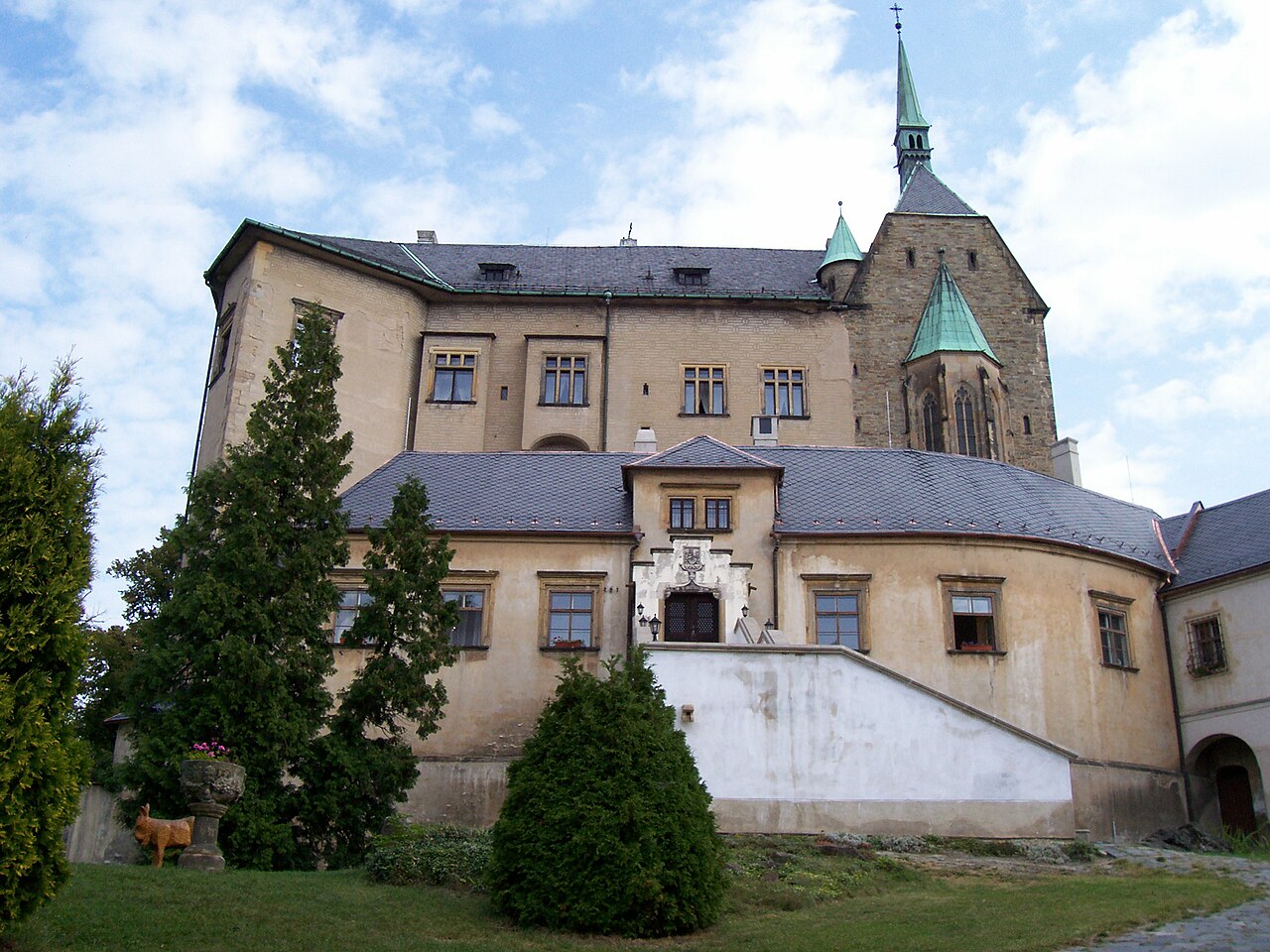
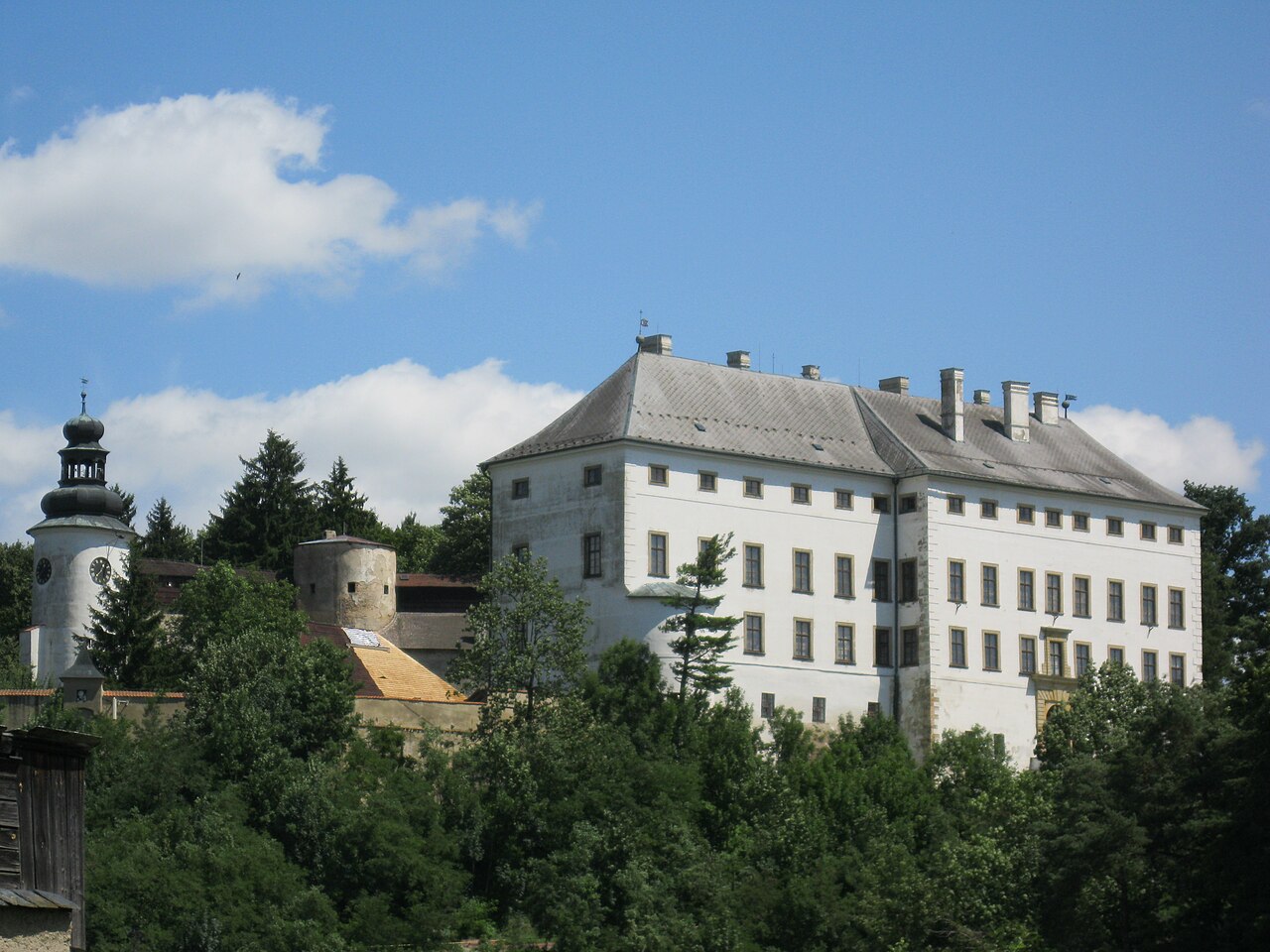
Today, Sovinec Castle is a large complex situated on a rocky ridge, offering visitors a glimpse into centuries of architectural evolution. The castle’s main tower, although reduced in height, remains a prominent viewing point. Visitors can explore five courtyards, including the upper castle, the northern and southern palaces, the burgrave’s building, and the Remter tower.
Key surviving elements include the richly decorated gate portals, Renaissance halls, and the remnants of extensive bastioned fortifications. Several rooms have been adapted to house exhibitions detailing the castle’s history. The castle’s layered architecture illustrates its transformation from a medieval fortress to a Renaissance noble residence and a Baroque military stronghold.
Sovinec Castle remains a significant cultural and historical landmark in Czechia, attracting tourists interested in medieval and early modern fortifications, Renaissance art, and Central European history.
Frequently asked questions (FAQ)
- What is the historical significance of Sowiniec Castle?
- Sowiniec Castle, located in Czechia, is a remarkable example of medieval architecture and serves as a testament to the region's rich history. Built in the 13th century, it has witnessed numerous historical events and changes in ownership, reflecting the area's cultural evolution over centuries.
- When was Sowiniec Castle built?
- Sowiniec Castle was constructed in the early 13th century, around the year 1230. This period marked the beginning of its long-standing presence in the region, making it an important landmark in Czech history.
- Can I visit Sowiniec Castle?
- Yes, visitors are welcome to explore Sowiniec Castle and its stunning surroundings. The castle is open to the public, offering guided tours that provide insight into its history and architecture.
- What are the opening hours for Sowiniec Castle?
- Sowiniec Castle is typically open to visitors from 10 AM to 6 PM during the tourist season, which runs from May to September. It's advisable to check the official website for any seasonal changes or special events that may affect these hours.
- Is it possible to access Sowiniec Castle by public transport?
- Yes, Sowiniec Castle is accessible by public transport, with several bus lines serving the area. Visitors can easily reach the castle from nearby towns, making it a convenient destination for day trips.
- What is the best time to visit Sowiniec Castle?
- The best time to visit Sowiniec Castle is during the spring and early autumn months when the weather is pleasant and the gardens are in full bloom. Additionally, these seasons tend to attract fewer tourists, allowing for a more peaceful experience.
- Are there any nearby attractions to visit along with Sowiniec Castle?
- Yes, there are several nearby attractions worth exploring, including the picturesque village of Sowiniec and the scenic hiking trails in the surrounding area. Visitors can also enjoy local dining options that highlight Czech cuisine.
- How much do tickets cost for Sowiniec Castle?
- Ticket prices for Sowiniec Castle are generally affordable, with discounts available for children, students, and seniors. It's best to check the castle's official website for the most current pricing information and any special offers.
Photo gallery

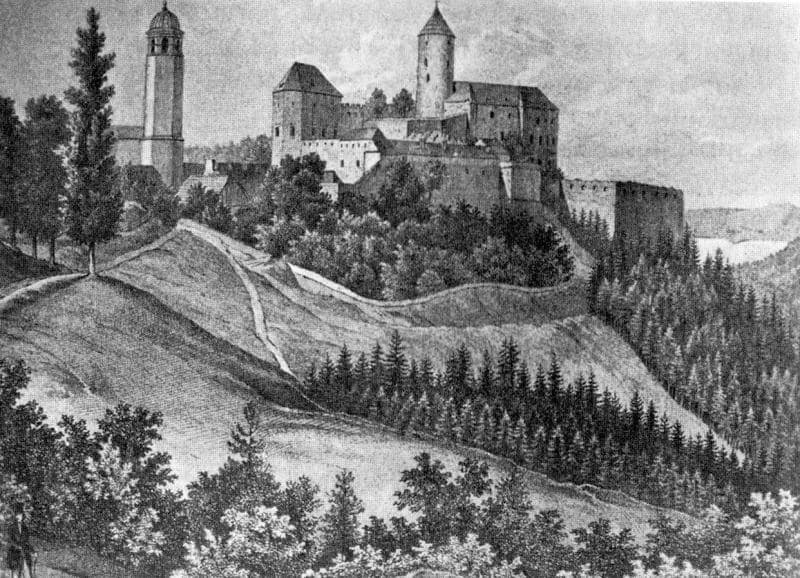
Photo by Franz Alexander Heber•Public domain
Information
Website
Visit websiteSources & official resources
Verify the information above using these authoritative references.
Loading map...
Visitor reviews
No reviews yet. Been here? Write the first review and help other travelers!
Write the first reviewVisited this castle? Share your experience
Your review helps other travelers and adds first-hand knowledge to our encyclopedia.