South Channel Fort
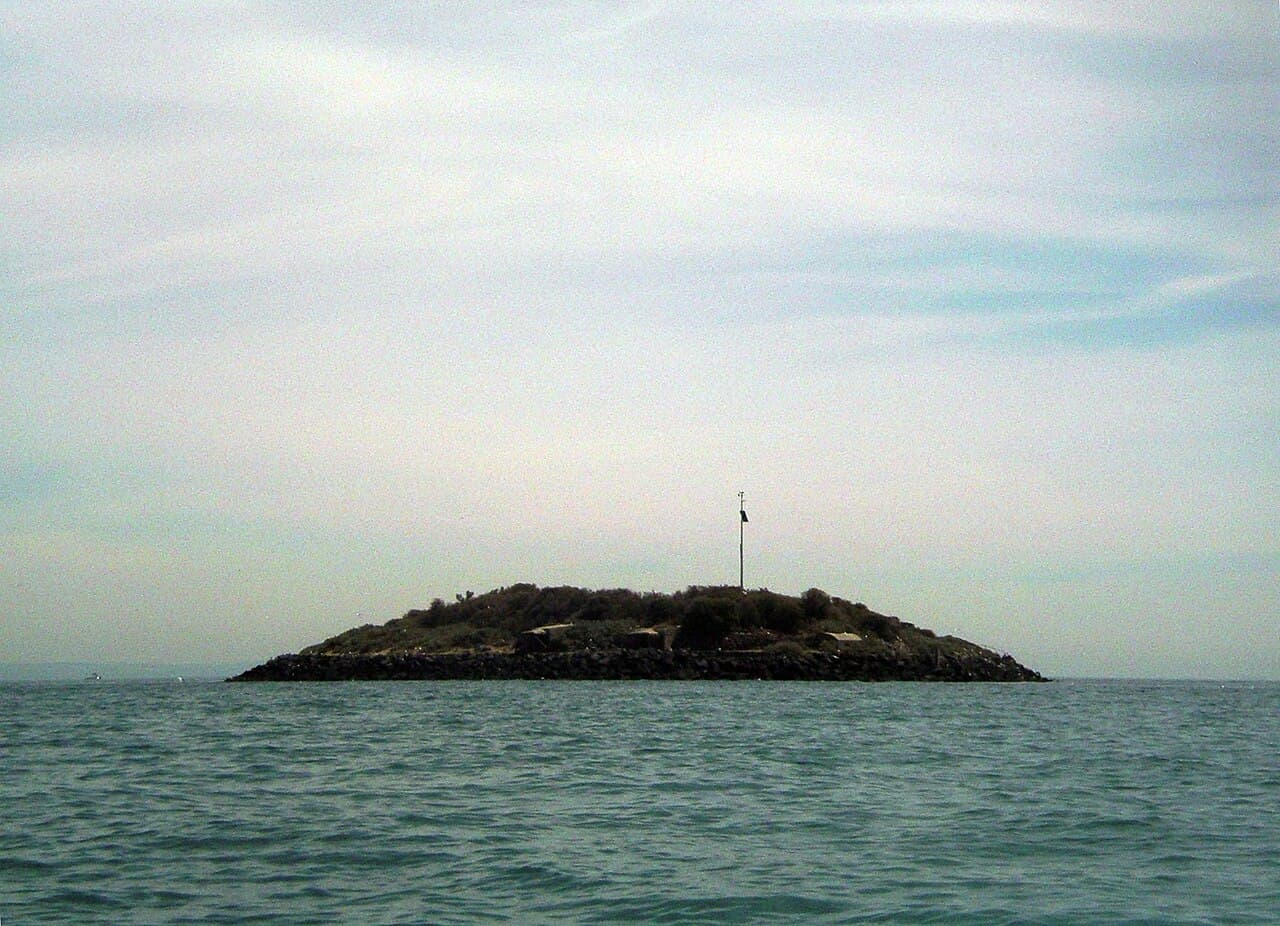
South Channel Fort, also known as South Channel Island, is a remarkable example of 19th-century coastal defense architecture located in Port Phillip, Victoria, Australia. This artificial island fortress was constructed during the 1880s as part of a broader network of fortifications designed to protect the strategic maritime gateway to the cities of Melbourne and Geelong. Situated approximately 6 km northeast of the town of Sorrento, the fort occupies a shoal near the main shipping channel of the bay, commanding a critical position for controlling naval access.
Construction and architectural features
The island measures roughly 122 meters in length and 76 meters in width, rising about 6.4 meters above sea level. It was engineered by depositing some 14,000 tonnes of bluestone boulders, concrete, and sand to create a stable platform on the shoal. The fort's design is characteristic of a bastioned fortress, a style that emphasizes angular bastions projecting outward from the main walls to provide overlapping fields of fire and eliminate blind spots.
The fortification includes remnants of its original military hardware, notably the disappearing guns. These innovative artillery pieces were mounted on hydraulically operated carriages that allowed the guns to retract behind protective parapets for reloading, minimizing exposure to enemy fire. The layout and construction techniques reflect the modern military engineering practices of the late 19th century, integrating robust masonry and concrete work to withstand bombardment.
Strategic military role and historical context
South Channel Fort formed a crucial component of the defensive system guarding Port Phillip Heads, the narrow entrance to Port Phillip Bay. The fort's primary function was twofold: to illuminate the main shipping channel during nighttime, facilitating safe passage, and to serve as a control point for the deployment of naval mines. These mines were strategically placed underwater to deter or destroy hostile ships attempting to breach the bay's defenses.
The fort's artillery and minefield coordination were vital during a period when naval threats were evolving with the advent of ironclad warships and more powerful naval artillery. The fortification was part of a wider network of coastal defenses, including nearby forts and batteries, which collectively secured one of Australia's most important maritime hubs.
Preservation and current condition
Today, South Channel Fort remains a well-preserved example of 19th-century coastal fortifications, although it is no longer an active military site. The island and its structures provide valuable insights into the defensive strategies and technological innovations of the era. Visitors and historians can observe the surviving military equipment and the fort's robust construction, which has endured the harsh marine environment for over a century.
The fort's location on an artificial island adds to its uniqueness, illustrating the lengths to which military engineers went to establish strategic control points in challenging environments. While access may be limited due to its offshore position, South Channel Fort remains a significant heritage site reflecting Australia's colonial-era defense efforts.
Architectural significance and legacy
South Channel Fort exemplifies the transition from traditional masonry fortresses to more modern coastal defense systems incorporating concrete and advanced artillery mechanisms like disappearing guns. Its bastioned design demonstrates the enduring influence of European military architecture adapted to the Australian context.
The fort's construction on a shoal using massive bluestone blocks showcases the engineering ingenuity required to create a stable platform in a marine setting. This approach ensured the fort could withstand both natural forces and potential enemy attacks, highlighting the strategic importance placed on protecting Port Phillip Bay.
As part of the broader network of Victorian coastal defenses, South Channel Fort contributes to understanding Australia's military preparedness during the late 19th century, a period marked by increasing global naval tensions and colonial defense initiatives.
Frequently asked questions (FAQ)
- How do I visit South Channel Fort?
- South Channel Fort is located on an artificial island accessible by boat. Visitors should check local tour operators in Sorrento for guided trips, as direct public access is limited due to its offshore position.
- What was the primary purpose of South Channel Fort?
- The fort was built to protect the entrance to Port Phillip Bay by illuminating the shipping channel at night and controlling naval mines to deter enemy ships.
- When was South Channel Fort constructed?
- Construction of South Channel Fort took place during the 1880s as part of a coastal defense strategy for Victoria.
- What type of artillery did South Channel Fort use?
- The fort was equipped with disappearing guns, which could retract behind protective parapets to reload safely, a significant military innovation of the time.
- Is South Channel Fort open to the public?
- Access to the fort is restricted due to its location on an artificial island. However, boat tours from nearby Sorrento may offer viewing opportunities.
Photo gallery

Information
Current owner
State museum
Loading map...
Visitor reviews
No reviews yet. Been here? Write the first review and help other travelers!
Write the first reviewVisited this castle? Share your experience
Your review helps other travelers and adds first-hand knowledge to our encyclopedia.