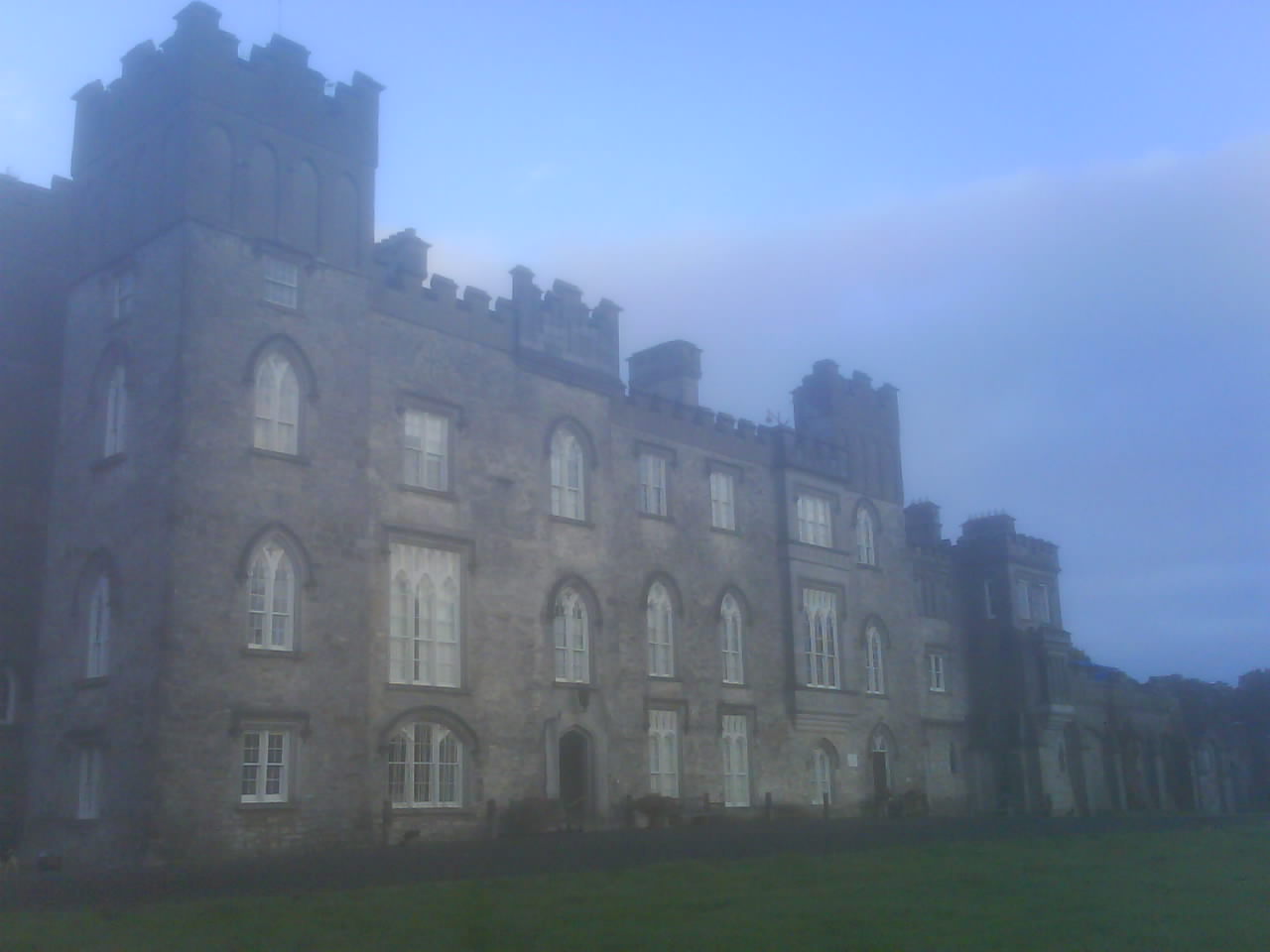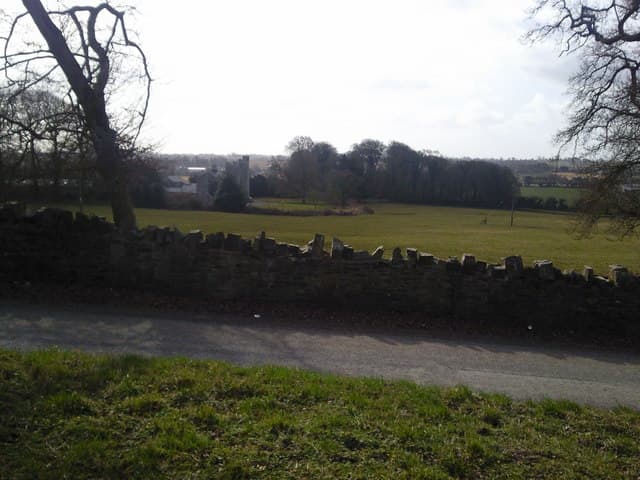
Skryne Castle — Ireland castle

Skryne Castle

Skryne Castle, County Meath, Ireland
High Medieval (11th–13th c.)
Ruins

Skryne Castle, known in Irish as Caislean na Scríne or Caisleán Scrín Cholm Cille, is a significant high medieval motte and bailey castle located in County Meath, Ireland. Constructed in the 12th century by Adam de Feypo, one of the Norman knights who participated in the Norman invasion of Ireland, the castle served as a strategic fortification during the early Norman period. Today, only archaeological ruins remain, offering valuable insight into Norman military architecture and settlement patterns in medieval Ireland.

The origins and historical context of Skryne Castle

The castle was established shortly after the Norman arrival in Ireland, a time when motte and bailey castles were commonly built as rapid defensive structures to assert control over newly conquered territories. Adam de Feypo, a prominent Norman lord, was granted lands in Meath following the invasion, and Skryne Castle was part of his efforts to consolidate Norman authority in the region.

The name "Skryne" is derived from the Irish word for "shrine," referencing the nearby ecclesiastical sites dedicated to Saint Colmcille. This religious significance influenced the castle's location, which overlooked important routes and ecclesiastical centers, combining both military and symbolic power.

Architectural features and layout

As a motte and bailey castle, Skryne Castle featured a large earthen mound (the motte) topped by a wooden or stone keep, surrounded by an enclosed courtyard (the bailey) protected by a palisade and ditch. This design was typical of early Norman fortifications, emphasizing speed of construction and defensive capability.

The motte at Skryne is notable for its substantial size, reflecting the importance of the site. Although the original wooden structures have not survived, archaeological evidence suggests the presence of timber buildings within the bailey, including living quarters, stables, and storage facilities.

Stonework remains are limited due to the castle's early construction phase and subsequent decline, but later medieval modifications may have introduced some stone defenses before the castle fell into disuse.

Skryne Castle's role in medieval Ireland

Throughout the high medieval period, Skryne Castle was part of the network of Norman fortifications that controlled the rich agricultural lands of Meath. It acted as a local administrative center and a military stronghold against Gaelic Irish resistance.

The castle's proximity to the religious sites of Skryne also meant it played a role in protecting ecclesiastical interests, often a source of tension and cooperation between Norman lords and the Irish church.

Over time, as military technology and political circumstances evolved, the castle's strategic importance diminished, leading to its eventual abandonment and ruin.

Archaeological significance and current condition

Today, Skryne Castle survives as an archaeological site with visible earthworks marking the motte and remnants of the bailey's defensive ditches. The ruins provide valuable information about Norman military architecture and settlement strategies in Ireland.

Excavations and surveys have helped to reconstruct the castle's layout and understand its historical context, contributing to broader studies of Norman influence in medieval Ireland. The site is accessible to visitors interested in medieval history and archaeology, although no standing structures remain.

Visiting Skryne Castle and surrounding attractions

While Skryne Castle itself is in ruins, the surrounding area in County Meath offers rich cultural heritage, including ancient ecclesiastical sites, other Norman castles, and historic towns. Visitors can explore the landscape that shaped Ireland's medieval past and enjoy the scenic countryside.

The castle's location near the village of Skryne makes it a point of interest for those studying Norman architecture and medieval Irish history.

Frequently asked questions (FAQ)

What is the historical significance of Skryne Castle?
Skryne Castle, located in Ireland, is steeped in rich history dating back to the medieval period. It is believed to have been constructed in the 12th century and served as a stronghold for the local nobility, playing a crucial role in the region's political landscape.
When was Skryne Castle built?
The exact date of construction for Skryne Castle is not definitively recorded, but it is thought to have been built around the 12th century. This places it in a significant era of Irish history, marked by the establishment of feudalism and the Norman influence in Ireland.
Can I visit Skryne Castle?
Yes, Skryne Castle is open to visitors, although it is advisable to check ahead for any specific visiting hours or restrictions. The site offers a glimpse into Ireland's medieval past, making it a worthwhile stop for history enthusiasts.
What are the opening hours for Skryne Castle?
Skryne Castle typically opens to visitors from 10 AM to 5 PM, but these hours may vary seasonally or for special events. It is best to verify the current opening hours on the official website or through local visitor information centers before planning your visit.
Is it possible to access Skryne Castle with mobility aids?
The accessibility of Skryne Castle may be limited due to its historical architecture and terrain. Visitors with mobility aids should contact the site in advance to inquire about specific accommodations and the best routes for access.
When is the best time to visit Skryne Castle?
The best time to visit Skryne Castle is during the spring and summer months when the weather is generally milder and more conducive to outdoor exploration. Additionally, visiting during these times allows you to enjoy the surrounding natural beauty and local events.
What are some nearby attractions to Skryne Castle?
Nearby attractions include the Hill of Tara, an important archaeological site with ancient burial mounds and stone structures, as well as the quaint village of Skryne itself. These sites provide a deeper understanding of the area's historical significance and offer beautiful landscapes for visitors to enjoy.
What are the ticket prices for visiting Skryne Castle?
Ticket prices for Skryne Castle are generally very affordable, often with concessions available for students and seniors. It is advisable to check the official website or local tourist information for the most current pricing and any special offers that may be available.

Photo gallery

Skryne Castle
Click to view

Photo by C O'Flanagan•CC BY-SA 2.0

1 photo • Click any image to view in full screen

Information

Archaeological Site / Ruins

Loading map...

Visitor reviews

No reviews yet. Been here? Write the first review and help other travelers!

Write the first review

Visited this castle? Share your experience

Your review helps other travelers and adds first-hand knowledge to our encyclopedia.
Write a review

(5/5)

0/2000 characters

Your review will be visible after admin approval

Nearby castles

5.6 km
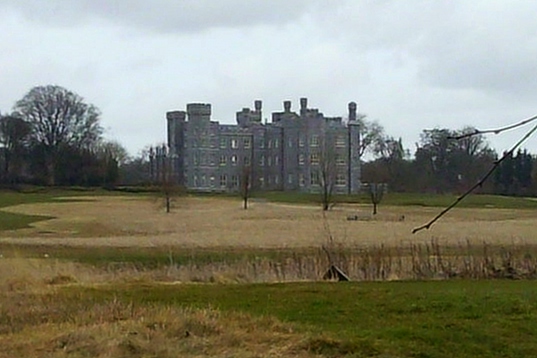
Killeen Castle, Dunsany — Ireland castle

Killeen Castle, Dunsany

Dunsany, Ireland

Killeen Castle (Irish: Caisleán an Chillín), situated in Dunsany, County Meath, Ireland, stands on a site with a history of fortification dating back to around 1180. The castle visible today is primarily a 19th-century restoration of an earlier medieval structure, which suffered significant damage when it was burnt out in 1981. Despite this, the castle remains an important example of Ireland's historic hill castles and reflects centuries of architectural evolution and noble lineage. Historical lineage and ownership The site of Killeen Castle has been continuously associated with prominent Irish families for centuries. Originally, the estate was held by the Cusack family from the late 12th century, shortly after the Norman invasion of Ireland in 1172. Through marriage, ownership passed to the Plunkett family, who maintained possession of the castle and its surrounding lands until the mid-20th century, specifically until 1951. This long tenure illustrates the castle's role as a familial seat and its importance in local aristocratic history. Architectural features and site layout Killeen Castle is classified as a hill castle, strategically positioned overlooking the surrounding landscape. It was originally constructed as part of a pair of castles flanking a major northern roadway, with its counterpart being the still-standing Dunsany Castle. This dual-castle arrangement served both defensive and administrative purposes, controlling passage along this important route. The castle's architecture reflects its medieval origins combined with later modifications. The 19th-century restoration incorporated elements typical of the period's revivalist styles, although the core structure retains features indicative of its medieval past. The castle includes fortified walls, towers, and a gatehouse, which together formed a formidable defensive complex designed to withstand attacks and assert control over the region. 19th-century restoration and fire damage The significant restoration work carried out in the 19th century aimed to preserve and enhance the castle's medieval character. However, in 1981, a devastating fire caused extensive damage to the building, leaving it largely burnt out. Subsequent efforts have focused on preserving what remains and stabilizing the structure to prevent further deterioration. Cultural and historical significance Killeen Castle's long history and association with notable Irish families contribute to its cultural importance. The castle not only represents the architectural styles and defensive needs of different periods but also embodies the social and political history of County Meath and Ireland more broadly. Its proximity to Dunsany Castle and its role in controlling a key roadway highlight its strategic significance in medieval Ireland. Visitor information and current status Today, Killeen Castle is recognized as a heritage site reflecting Ireland's rich medieval and post-medieval history. While the castle remains partially preserved following the fire, it is a point of interest for those studying Irish castles, architecture, and noble lineage. Visitors interested in historic castles in Ireland often consider Killeen Castle alongside nearby Dunsany Castle for a comprehensive understanding of the region's fortified heritage.

Modern (19th–20th c.)
Details
6.6 km
Dunsany Castle and Demesne — Ireland castle

Dunsany Castle and Demesne

, Ireland

Dunsany Castle (Irish: Caisleán Dhún Samhnaí) is a prominent Anglo-Norman hill castle located in County Meath, Ireland. Constructed around 1180-1181 by the notable Norman lord Hugh de Lacy, it stands as one of the oldest continuously inhabited residences in Ireland, possibly the longest occupied by a single family lineage. The castle's history is deeply intertwined with the Cusack family and their descendants, the Plunkett family, who have maintained ownership from its foundation through to the present day.Historical background and foundationThe origins of Dunsany Castle date back to the late 12th century, during the period of Norman expansion into Ireland. Hugh de Lacy, the powerful Anglo-Norman lord responsible for commissioning several key fortifications including Killeen Castle and the renowned Trim Castle, established Dunsany Castle as part of his strategy to secure and administer his territories in Meath. The castle was strategically positioned on a hill, offering commanding views of the surrounding landscape and serving both defensive and administrative functions.Architectural features and evolutionDunsany Castle originally featured typical medieval defensive elements characteristic of Anglo-Norman hill castles, including thick stone walls, battlements, and a strong keep or donjon. Over the centuries, the castle underwent significant modernization and expansion, adapting to changing architectural styles and residential needs while preserving its medieval core. The castle's structure today reflects a blend of high medieval military architecture with later additions that provide more comfortable living spaces.Castle layout and defensive structuresThe castle is situated on a raised site, which enhances its defensive capabilities. Its original fortifications likely included a curtain wall enclosing the main residential and service buildings, with towers positioned to provide overlapping fields of fire. The keep served as the last line of defense and as the lord's residence. Although some of the medieval defensive features have been altered or softened by later renovations, the castle retains significant elements of its original fortifications.Modern adaptations and estate featuresBeyond the castle itself, the dunsany demesne encompasses an extensive estate that includes a historic church, a walled garden, a stone farm complex, and an ice house, reflecting the estate's agricultural and domestic functions through the centuries. The demesne's landscape supports a diverse range of fauna, contributing to its ecological and heritage value. These features illustrate the evolution of the castle from a purely military stronghold to a stately home integrated with its surrounding lands.The castle's continuous occupation and family legacyOne of the most remarkable aspects of Dunsany Castle is its continuous occupation by the same family line since its foundation. The Cusack family originally held the castle, and through marriage, it passed to the Plunkett family, who have maintained stewardship for over eight centuries. This uninterrupted lineage makes Dunsany Castle unique among Irish castles and contributes to its cultural and historical significance.Cultural significance and heritage statusDunsany Castle is recognized not only as an architectural monument but also as a living heritage site. Its long-standing family ownership and well-preserved medieval structures provide valuable insights into Norman military architecture and Irish aristocratic life across centuries. The castle and its demesne remain a focal point for local history and attract interest from historians, architects, and visitors alike.Visiting dunsany castle and demesneWhile Dunsany Castle is privately owned, its historical importance and picturesque setting make it a subject of interest for cultural tourism. The estate's features, including the walled garden and historic church, offer visitors a glimpse into the layered history of the site. Access arrangements and visiting hours may vary, so prospective visitors should seek current information before planning a visit.

High Medieval (11th–13th c.)
Details
10.6 km

Athlumney Castle

Navan, United Kingdom

Athlumney Castle is a historic site located in Navan, Ireland, near the confluence of the Leinster Blackwater and the River Boyne. Its name derives from the Irish "Caisleán Áth Luimnigh," meaning "Loman's ford," named after the local patron saint, Saint Lommán. The site has a deep history extending back to Iron Age settlements and served as an Early Christian center. Archaeological finds include souterrains—underground passages used for refuge or storage—and remnants of early ecclesiastical buildings, highlighting the area's long-standing spiritual and strategic importance. The castle's origins as a fortified site began in the late 12th century, following the Anglo-Norman conquest of Ireland. Around 1172, Amauri de Feypo, a Norman lord granted lands by Hugh de Lacy, Lord of Meath, established a motte-and-bailey earthwork here. This initial fortification was typical of early Norman military architecture, designed to secure newly acquired territories against native Irish resistance. Development of the castle structures The 15th-century tower house The stone tower house that dominates the site today dates from the 15th century. Constructed primarily of limestone and local rubble, it exemplifies the transition from wooden motte-and-bailey forts to more durable stone fortifications. The tower is three storeys tall, featuring a barrel-vaulted ground floor which provided robust structural support and defense. The northern entrance was protected by a murder-hole, an opening through which defenders could attack assailants trying to breach the doorway. Inside, a spiral staircase connects the floors, and the presence of beam holes in the walls reveals where wooden floors once rested. The tower house served as the main defensive stronghold and residential quarters, combining protection with functional living space. The Tudor fortified residence In the late 16th or early 17th century, a Tudor-style fortified house was added adjoining the tower. This structure reflects the evolving architectural styles and the growing emphasis on domestic comfort alongside defense. The Tudor building is also three storeys, featuring larger corridors and mullioned windows that allowed increased natural light into the interiors. A distinctive oriel window projects from the eastern facade, a typical Tudor element enhancing both aesthetics and interior space. The entrance is framed with finely cut limestone, emphasizing the building's residential character. The lower floor housed the kitchen, equipped with a heating system to warm the upper living quarters, which had glass windows and wooden floors, marking a shift towards greater comfort and refinement. Defensive and domestic features The castle complex includes several defensive elements such as corner turrets of varying sizes, battlements crowning the walls, and fortified entrances with murder-holes. The combination of the medieval tower and Tudor residence created a courtyard that balanced security with domestic needs. One of the castle's most intriguing features is a secret chamber within the wall thickness on the first floor, accessible by a hidden staircase. This "priest hole" was likely used to conceal Catholic clergy during periods of religious persecution in Ireland, illustrating the castle's role as a refuge as well as a fortress. Historical significance and ownership Throughout its history, Athlumney Castle was involved in significant political and military events, especially during the 17th century. During the Irish Confederate Wars, the castle was held by the Maguire clan. In 1649, as Oliver Cromwell's forces advanced, the Maguires deliberately set fire to the castle to prevent its capture, causing considerable damage. Later, in 1690, following the Battle of the Boyne, Sir Launcelot Dowdall, the castle's last lord and a Catholic supporter of the deposed King James II, also set fire to the property to keep it from falling into the hands of William III's forces. Dowdall had served as the High Sheriff of Meath before these turbulent times. The castle's ownership changed hands due to the political upheavals of the period. Confiscated during the Cromwellian Plantation, it was returned to the Dowdall family after the Restoration of Charles II. Eventually, the estate passed to the Somerville family of Kentstown, who adopted the noble title Baron Athlumney. Current condition and surroundings Today, Athlumney Castle stands as a ruined but evocative monument. It occupies a modest hill overlooking the River Boyne, adjacent to the 14th-century ruins of a parish church with a bell tower. The juxtaposition of the castle and church ruins enriches the historical landscape, offering visitors a tangible connection to the medieval and early modern periods. The remaining structures retain significant architectural details that reveal the castle's layered history, from its medieval defensive tower to the more domestic and stylistically refined Tudor residence. The site is an important cultural heritage location, reflecting centuries of architectural evolution, military conflict, and social change in Ireland.

Late Medieval (14th–15th c.)
Details