Sisak Fortress
Sisak Fortress is a prominent Renaissance bastioned fortress located in the city of Sisak, in central Croatia. Constructed between 1544 and 1550, it was built in response to the increasing threat posed by the expanding Ottoman Empire during the 16th century. The fortress stands at the confluence of the Kupa and Sava rivers, strategically positioned to control river traffic and defend the region from Ottoman incursions.
Historical context and construction
The fortress was commissioned by the Bishop of Zagreb, who was the owner of the estate at the time. The construction was part of a broader effort to strengthen the Kingdom of Croatia's defenses against the Turkish attacks that had become increasingly devastating. Sisak Fortress was designed as a lowland bastioned fortress, a style that reflects the military architectural advances of the Renaissance period, emphasizing angled bastions to better withstand artillery fire.
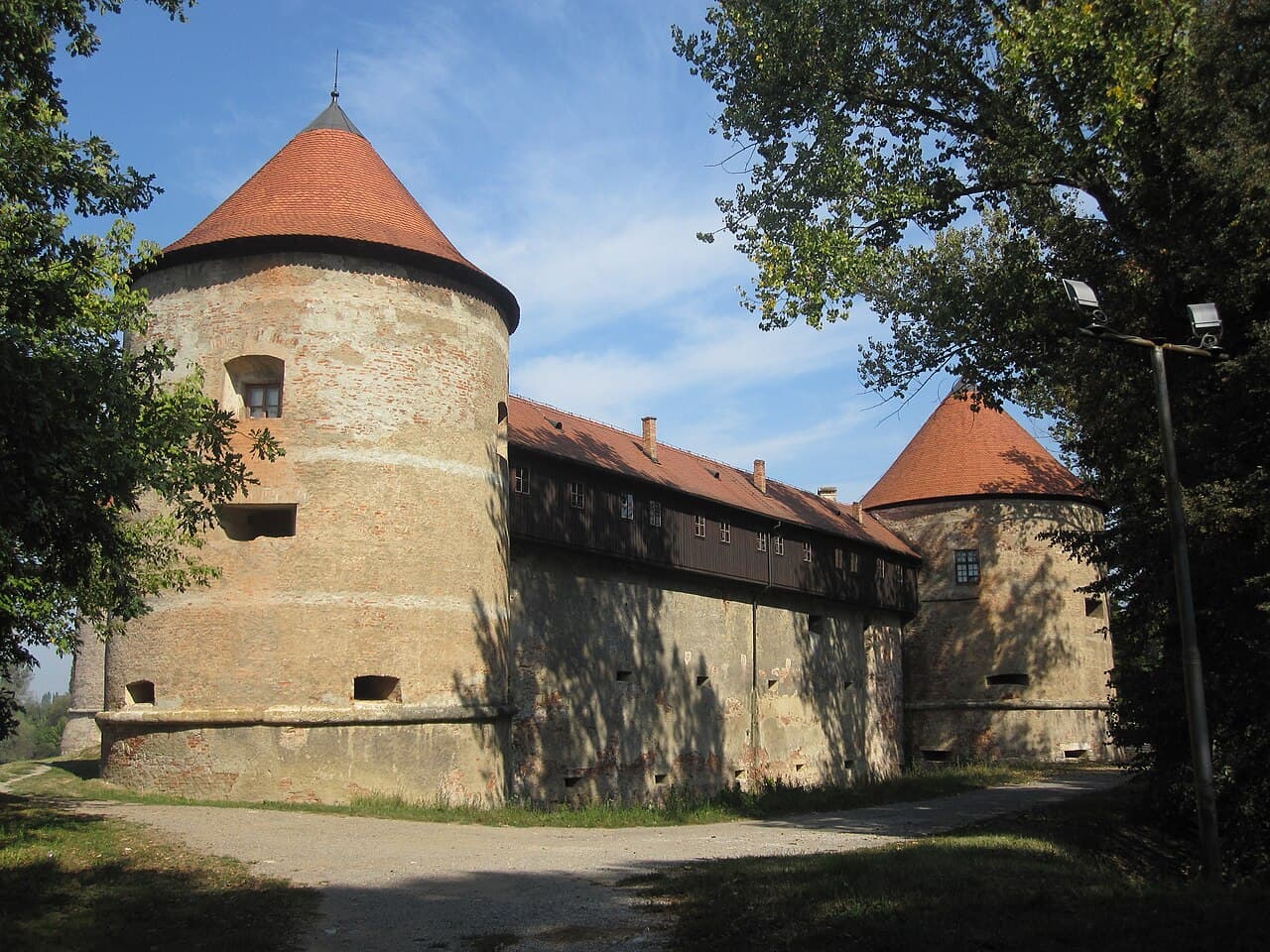
The triangular shape of the fortress is a distinctive feature, with each corner reinforced by a round tower topped with a conical roof. These towers are connected by thick brick walls over 30 meters long, equipped with loopholes for defensive firing. The use of brick combined with stone reinforcements was typical for the period and region, providing both strength and resilience.
Architectural features and defensive design
The fortress's location on the riverbank provides a natural defensive advantage. The western and southwestern sides are protected by the Kupa River, while the other sides benefit from the proximity of the Sava River. This natural moat effect was enhanced by the fortress's design, which incorporates bastions that allowed defenders to cover all approaches with crossfire.
The round towers at each corner served multiple purposes: as lookout points, artillery platforms, and strongholds in case of breach. The conical roofs protected the towers from the elements and prevented scaling by attackers. The walls connecting the towers are thick enough to absorb cannon fire, a testament to the fortress's Renaissance military engineering.
Significant historical events
Sisak Fortress is historically renowned for its role in the Battle of Sisak on 22 June 1593. This battle was a decisive conflict between the forces of the Ottoman Empire, led by Hasan Pasha Predojević, and a coalition of Croatian, Slovene, and Austrian troops. Hasan Pasha, who had become Bosnian pasha in 1591, launched several attacks on the fortress, culminating in the 1593 campaign.
During this battle, the Ottoman army, numbering around 12,000 soldiers, was decisively defeated by the defenders of Sisak Fortress. Hasan Pasha was killed in the engagement, marking a turning point that halted further Ottoman advances into Croatian lands. This victory was significant in the broader context of the Ottoman-Habsburg wars and the defense of Central Europe.
Later history and preservation
Following the 17th century, as Ottoman pressure on Croatian territories diminished, the fortress changed hands several times. It suffered damage during various conflicts but was promptly repaired to maintain its defensive capabilities. The last major damage occurred during the Second World War, when the fortress was hit by artillery shells, partially destroying the northwest tower.
Today, Sisak Fortress remains in generally good condition though it requires some restoration. It serves as a cultural and historical site, housing collections of the Sisak Town Museum, established in 1951. The museum's holdings include archaeological artifacts, ethnological items, cultural history exhibits, and numismatic collections.
Architectural significance and current status
The fortress exemplifies the Renaissance military architecture adapted to the specific needs of riverine defense in the Croatian lowlands. Its triangular plan with bastioned corners reflects the evolution of fortifications in response to the increasing use of gunpowder artillery. The combination of brick and stone materials, along with the integration of natural water defenses, demonstrates a sophisticated approach to fortress design in the 16th century.
While the fortress is not fully restored, it remains a well-preserved example of its type and period. Its location near the city of Sisak makes it accessible to visitors interested in military history, architecture, and Croatian heritage.
Visiting Sisak Fortress today
The fortress is open to the public as part of the Sisak Town Museum complex. Visitors can explore the fortress's towers, walls, and courtyards, gaining insight into its defensive features and historical significance. The museum's exhibits provide context about the fortress's role in regional history and the broader conflicts between European powers and the Ottoman Empire.
Despite some areas needing restoration, the fortress offers a tangible connection to the turbulent history of the Croatian borderlands during the Renaissance and early modern periods.
Frequently asked questions (FAQ)
- What is the historical significance of Sisak Fortress?
- Sisak Fortress, dating back to the 16th century, played a crucial role in the defense against Ottoman invasions. It served as a strategic military stronghold, influencing the history of the region and contributing to the development of Croatian national identity.
- When was Sisak Fortress built?
- Construction of Sisak Fortress began in 1544 and was completed in 1579. The fortress was built to protect the town of Sisak and the surrounding areas from potential threats, particularly from the Ottoman Empire.
- Can I visit Sisak Fortress, and is there an entrance fee?
- Yes, Sisak Fortress is open to visitors, and there is typically no entrance fee. However, it's always a good idea to check for any special events or guided tours that may have associated costs.
- What are the opening hours for Sisak Fortress?
- The opening hours for Sisak Fortress can vary depending on the season. Generally, it is open daily from 9 AM to 7 PM during the warmer months, while shorter hours may apply in the winter.
- Is the fortress accessible for visitors with mobility challenges?
- Sisak Fortress has some areas that may be challenging for visitors with mobility issues due to uneven terrain and stairs. However, there are pathways that allow for partial access, and staff can provide assistance as needed.
- What is the best time to visit Sisak Fortress?
- The best time to visit Sisak Fortress is during the spring and early autumn months when the weather is mild and conducive for outdoor exploration. These seasons also offer fewer crowds, allowing for a more enjoyable experience.
- Are there any nearby attractions to explore after visiting the fortress?
- Yes, after visiting Sisak Fortress, you can explore the charming old town of Sisak, which features beautiful churches and museums. Nearby, the confluence of the Sava and Kupa rivers offers picturesque views and opportunities for leisurely walks.
- How do I get to Sisak Fortress from major cities in Croatia?
- Sisak Fortress is accessible by car or public transport from major cities like Zagreb, which is about an hour's drive away. Regular bus services run from Zagreb to Sisak, making it easy to plan your visit.
Photo gallery

Information
Loading map...
Visitor reviews
No reviews yet. Been here? Write the first review and help other travelers!
Write the first reviewVisited this castle? Share your experience
Your review helps other travelers and adds first-hand knowledge to our encyclopedia.