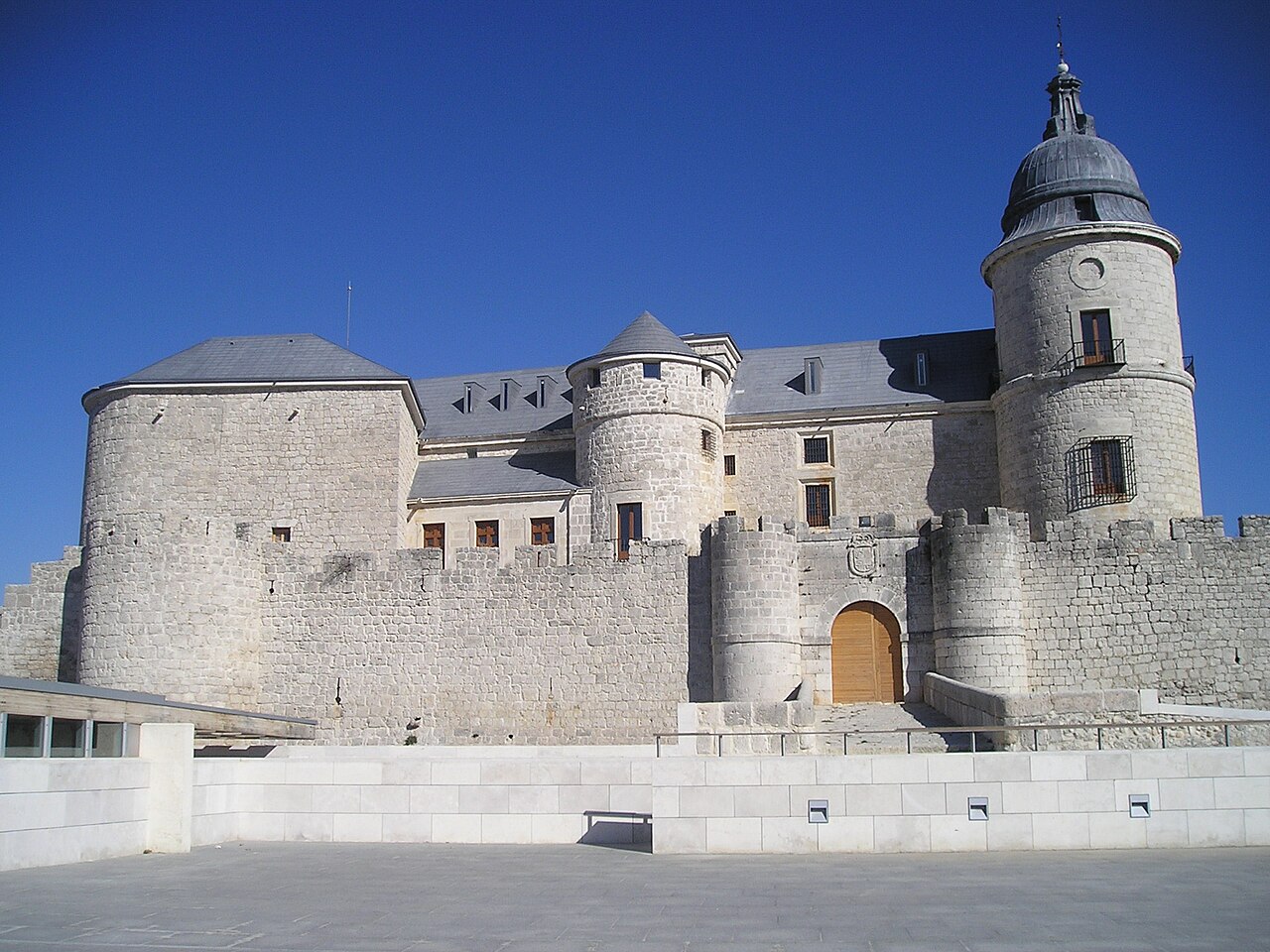
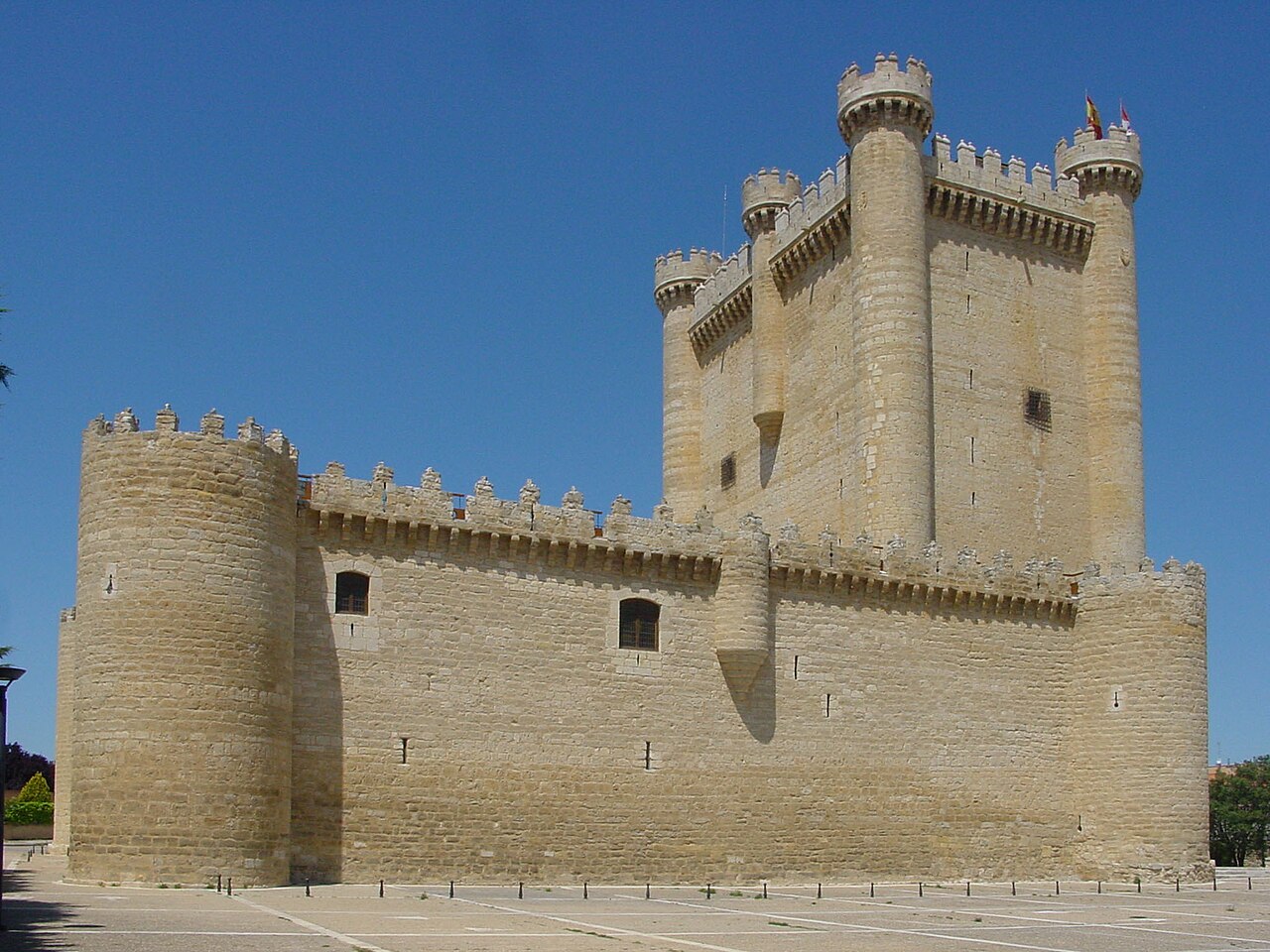
Simancas Castle
Simancas Castle stands as a remarkable example of a late-medieval hill castle in Simancas, Valladolid, Castilla y León, Spain. Originally built atop the ruins of a Moorish fortress, the castle embodies centuries of Spanish history, evolving from a military stronghold to a vital administrative center housing one of Europe's most significant archives.
The site’s earliest fortifications date back to the Islamic period, reflecting the region's early medieval history under Muslim rule. In the 15th century, the noble Enríquez family, admirals of Castile and lords of Simancas, undertook a comprehensive reconstruction of the fortress. This work restored the existing Moorish walls, added new defensive structures such as bastions and crenellated towers (cubos), and incorporated a chapel, establishing the castle’s medieval character as both a residence and military stronghold.
Historical significance and royal transformation
Shortly after its reconstruction, the castle was seized by the Catholic Monarchs and integrated into the royal domain. Its strategic importance led to its conversion into a state prison. Notable prisoners included Antonio de Acuña, bishop of Zamora and a leader of the Castilian comuneros, executed in 1521, and Marshal Pedro de Navarra, assassinated in 1522 during the campaign to reclaim Navarre.
In 1540, under King Charles I, a pivotal change occurred when one of the castle’s towers was adapted to house the General Archive of Simancas, the first official archive of the Crown of Castile. This marked the beginning of the castle’s transformation from a military fortress to an administrative repository.
Architectural evolution and archive expansion
King Philip II expanded the archive’s presence throughout the castle, commissioning architectural modifications to better accommodate the growing collection of documents. These changes included the removal of some interior walls and vaults, the leveling of the courtyard, and the construction of a main staircase and entrance portico, enhancing access and functionality.
The castle’s Bishop’s Tower is a distinctive feature, notable for its high dome topped by a bell-shaped lantern. This element dates to 16th-century renovations led by prominent architects Juan de Herrera and Francisco de Mora, who introduced elements of the Herrerian architectural style.
The archive now houses between 33 and 35 million documents, including approximately 400,000 files related to the Spanish Inquisition. The archive's rooms include four large noble halls designed for document preservation, among them the ground-floor space known as the "Philip II cubo" and two eastern rooms dedicated to royal documents.
Defensive features and preservation
The castle retains much of its 15th-century defensive layout, featuring thick stone walls, bastions, crenellated towers, and a surrounding moat accessed by two bridges. The walls are constructed from light-colored stone contrasting with darker roofing materials, emphasizing the fortress's robust yet elegant appearance.
The 15th-century chapel, built by the Enríquez family and restored in the 1950s, features a painted star-shaped vault adorned with the coats of arms of Don Alonso Enríquez and Doña María de Velasco, the castle’s founders.
The castle’s history as a prison is evidenced by the preserved torture chamber, underscoring its multifaceted past. Modern fireproofing measures protect the archive’s invaluable documents, ensuring their preservation for future generations.
Conservation and public access
Declared a protected site by the Spanish government in 1949, Simancas Castle underwent renovations in the early 1950s to safeguard the archives and stabilize the structure. Today, it remains a well-preserved monument open to tourists and researchers alike, offering a unique window into Spain’s medieval military architecture and its administrative history.
Visitors can explore the castle’s imposing defensive structures, the historic chapel, and the archive rooms, gaining insight into the castle’s dual role as a fortress and a repository of Spanish heritage. The castle’s blend of medieval fortifications and Renaissance modifications exemplifies the adaptive reuse of military architecture in response to changing political and administrative needs.
Frequently asked questions (FAQ)
- How do I visit Simancas Castle and the General Archive?
- Simancas Castle is open to the public for tours and research visits. Visitors should check the official website or local tourism offices for current opening hours and any special requirements for accessing the archive.
- What is the historical significance of Simancas Castle?
- Simancas Castle is historically significant as a former military fortress, state prison, and the home of the General Archive of Simancas, which holds millions of important documents from the Spanish monarchy.
- When was the General Archive of Simancas established?
- The General Archive of Simancas was established in 1540 under King Charles I, making it the first official archive of the Crown of Castile.
- Can I see the medieval chapel inside the castle?
- Yes, visitors can view the 15th-century chapel built by the Enríquez family, which was restored in the 1950s and features a distinctive star-shaped painted vault.
- Is the castle accessible for people with mobility issues?
- Due to its medieval structure and historic preservation, some areas of Simancas Castle may have limited accessibility. Visitors with mobility concerns should inquire in advance about accommodations.
Information
Sources & official resources
Verify the information above using these authoritative references.
Loading map...
Visitor reviews
No reviews yet. Been here? Write the first review and help other travelers!
Write the first reviewVisited this castle? Share your experience
Your review helps other travelers and adds first-hand knowledge to our encyclopedia.