Castle of Simancas
The Castle of Simancas stands as a remarkable testament to Spain's rich medieval and early modern history. Located in the town of Simancas, this hill castle traces its origins back to a fortress established during the Islamic period, marking the site’s earliest known defensive structure. Over the centuries, it evolved through significant architectural and functional transformations, reflecting the changing political and administrative needs of the Spanish kingdom.
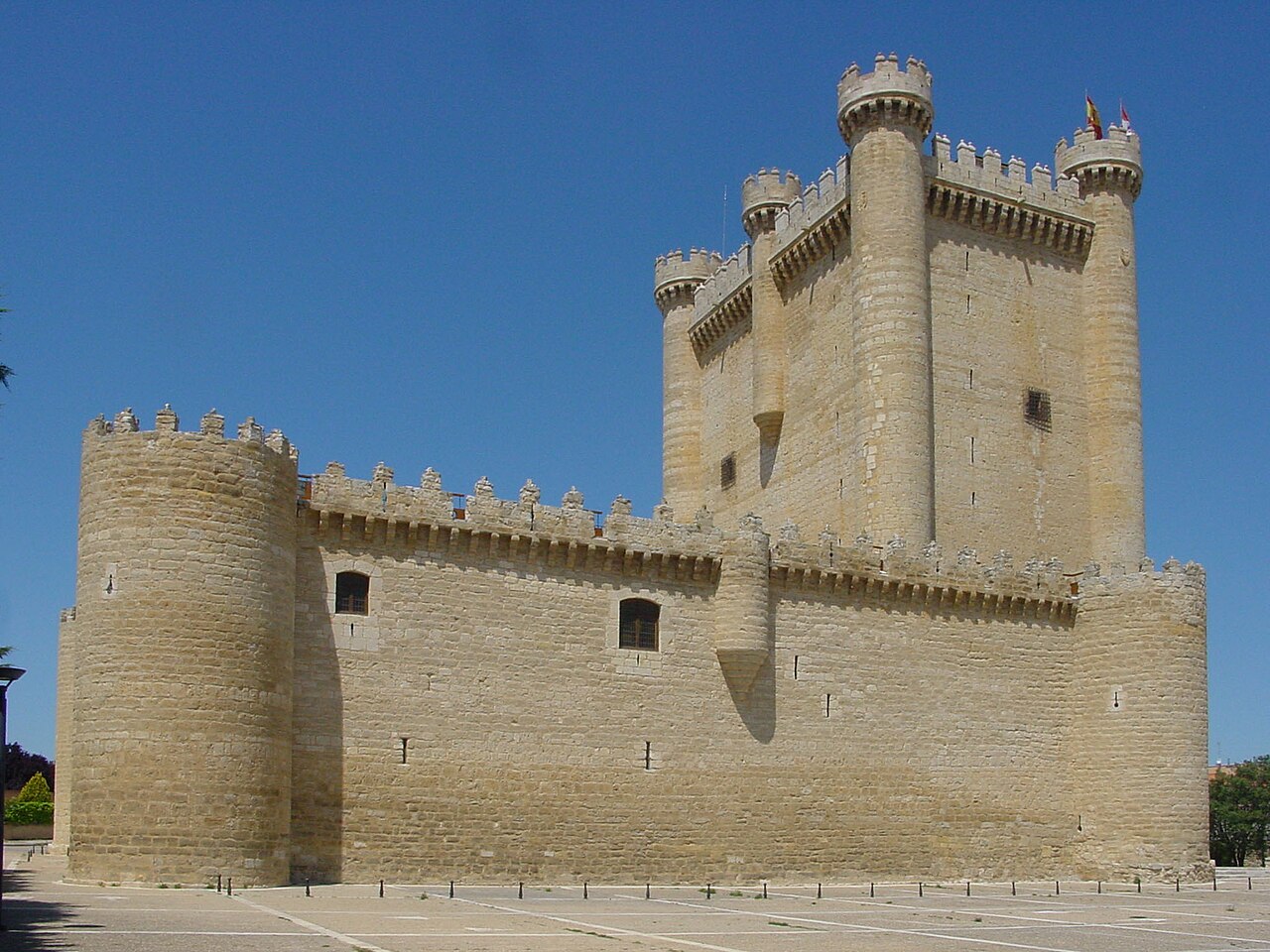
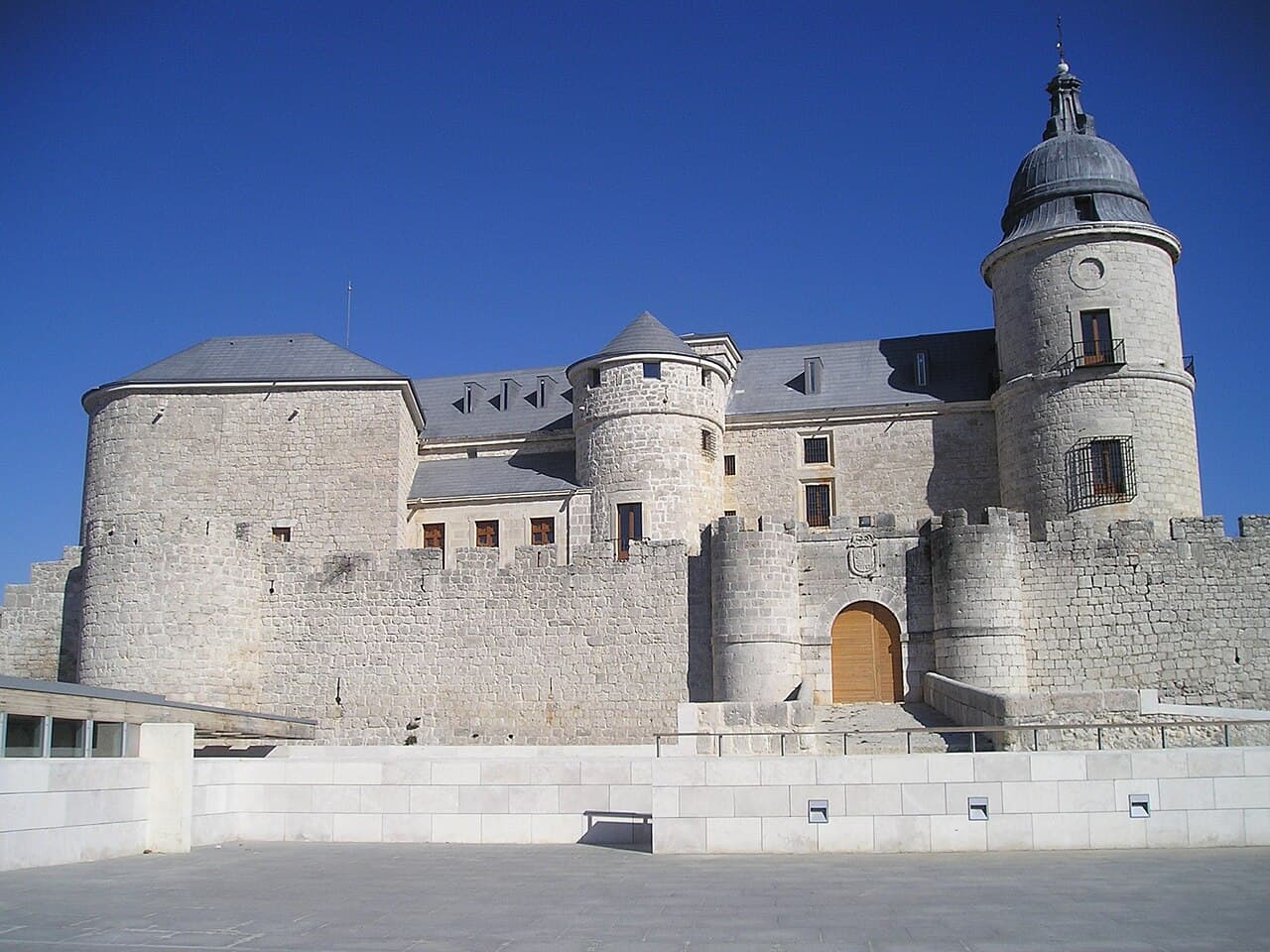
Initially rebuilt in the 15th century by the Enríquez family, prominent nobles who held the title of admirals of Castile and lords of Simancas, the castle was designed as a formidable military stronghold. The Enríquez family’s patronage is evident in the castle’s fortified layout, which includes thick stone walls, multiple defensive towers known as cubos, battlements with crenellations (almenas), and a protective moat. The strategic design ensured robust defense capabilities, characteristic of late medieval military architecture.
Medieval origins and noble ownership
The castle’s initial fortifications were expanded and enhanced in the 15th century to serve the needs of the Enríquez family, who played a significant role in Castilian nobility and military affairs. Their influence is particularly visible in the castle’s chapel, dating from this period, which features a star-shaped vaulted ceiling adorned with the coats of arms of Don Alonso Enríquez and Doña María de Velasco. This chapel not only served religious functions but also symbolized the family’s status and legacy.
Transition to royal control and prison use
Following the noble period, the castle came under the authority of the Catholic Monarchs of Spain. They repurposed the fortress as a state prison, where several notable historical figures were confined and executed. Among the most prominent prisoners was Antonio de Acuña, the bishop of Zamora and leader of the Castilian Comuneros uprising, who was executed in 1521. The castle also held Marshal Pedro de Navarra, another key figure in the political upheavals of the time, who was imprisoned and killed within its walls the following year. These events underscore the castle’s role in the turbulent political landscape of early 16th-century Spain.
The castle as a royal archive
In 1540, King Charles I designated one of the castle’s towers as the repository for the General Archive of Simancas, marking a pivotal moment in the castle’s history. This transformation was further expanded under King Philip II, who converted the entire fortress into the kingdom’s principal archive. Architectural modifications were undertaken to accommodate this new function, including the creation of four large, elegant halls designed to protect and preserve vast collections of documents.
The archive grew to house tens of millions of documents, including extensive records related to the Spanish Inquisition, royal decrees, administrative correspondence, and historical manuscripts. A specialized fire-resistant chamber was constructed to safeguard the most valuable archival materials, reflecting the importance placed on preserving Spain’s documentary heritage.
Architectural evolution and significant features
The castle’s architecture showcases a blend of late medieval military design and 16th-century Renaissance adaptations. The Bishop’s Tower, designed by renowned architects Juan de Herrera and Francisco de Mora in the 16th century, is a prominent feature. This tower, topped with a distinctive dome and lantern shaped like a bell, served multiple purposes, including as a prison cell and execution site.
During the 16th century, internal modifications were made to create a more regular courtyard by removing some walls and vaulted ceilings and raising the area over a preexisting well. The main staircase and entrance portico, also designed by Francisco de Mora, enhanced the castle’s accessibility and administrative functionality.
Further renovations in the 17th and 18th centuries by architects such as Pedro Mazuecos and Diego de Praves contributed to the castle’s current form. These efforts balanced the need to maintain the fortress’s defensive character with its evolving role as a repository of the kingdom’s historical records.
Defensive structures and layout
The castle’s fortified layout includes thick surrounding walls and several cylindrical towers (cubos) that provided vantage points for defense. The battlements with crenellations allowed defenders to shield themselves while observing or firing upon attackers. The castle’s main entrance is accessed via two bridges crossing the moat, emphasizing its secure design and strategic location.
Chapel and artistic heritage
The 15th-century chapel remains one of the castle’s artistic highlights. Its star-shaped vaulted ceiling painted with the founders’ coats of arms is a rare example of noble patronage in religious architecture within a military fortress. The chapel underwent restoration in the mid-20th century to preserve these unique artistic features.
Prison and torture facilities
Reflecting its history as a state prison, the castle retains a torture chamber that provides insight into the harsh conditions faced by prisoners. The prison cells and execution sites within the castle walls illustrate the fortress’s dual role as both a defensive structure and a place of political repression.
Cultural significance and preservation
Today, the Castle of Simancas continues to serve as a vital cultural and historical landmark. Its role as the home of the General Archive of Simancas makes it one of the most important repositories of Spanish history, preserving documents that span centuries of political, social, and religious developments. The castle is under ongoing conservation efforts to maintain its structural integrity and historical authenticity.
Visitors to the castle can explore its architectural features, including the defensive walls, towers, chapel, and archival halls. The site offers a unique glimpse into the evolution of a medieval fortress into a center of royal administration and historical preservation.
The Castle of Simancas exemplifies the dynamic history of Spanish fortifications, illustrating how military architecture adapted to changing political realities and administrative needs. Its preservation as both a historical monument and an active archive underscores the enduring importance of safeguarding cultural heritage for future generations.
Frequently asked questions (FAQ)
- How do I visit the Castle of Simancas?
- The Castle of Simancas is open to visitors interested in exploring its historic architecture and the General Archive. It is advisable to check the official website or local tourist information for current visiting hours and any guided tour availability.
- What is the historical significance of the Castle of Simancas?
- The Castle of Simancas is historically significant as a medieval fortress, a state prison, and the principal royal archive of Spain, housing millions of important documents including those related to the Spanish Inquisition.
- Can I see the General Archive of Simancas during my visit?
- Access to the General Archive of Simancas is typically restricted to researchers and authorized personnel. However, visitors can view the castle's architectural features and some exhibition areas dedicated to its archival history.
- When was the castle originally built?
- The site originally hosted a fortress during the Islamic period, with the current castle structure primarily dating from the 15th century and later modifications in the 16th to 18th centuries.
- Why is the Bishop’s Tower notable?
- The Bishop’s Tower is notable for its distinctive dome topped with a lantern shaped like a bell, designed by Juan de Herrera and Francisco de Mora in the 16th century. It served multiple roles, including as a prison and execution site.
Photo gallery

Information
Sources & official resources
Verify the information above using these authoritative references.
Loading map...
Visitor reviews
No reviews yet. Been here? Write the first review and help other travelers!
Write the first reviewVisited this castle? Share your experience
Your review helps other travelers and adds first-hand knowledge to our encyclopedia.