Siedlisko
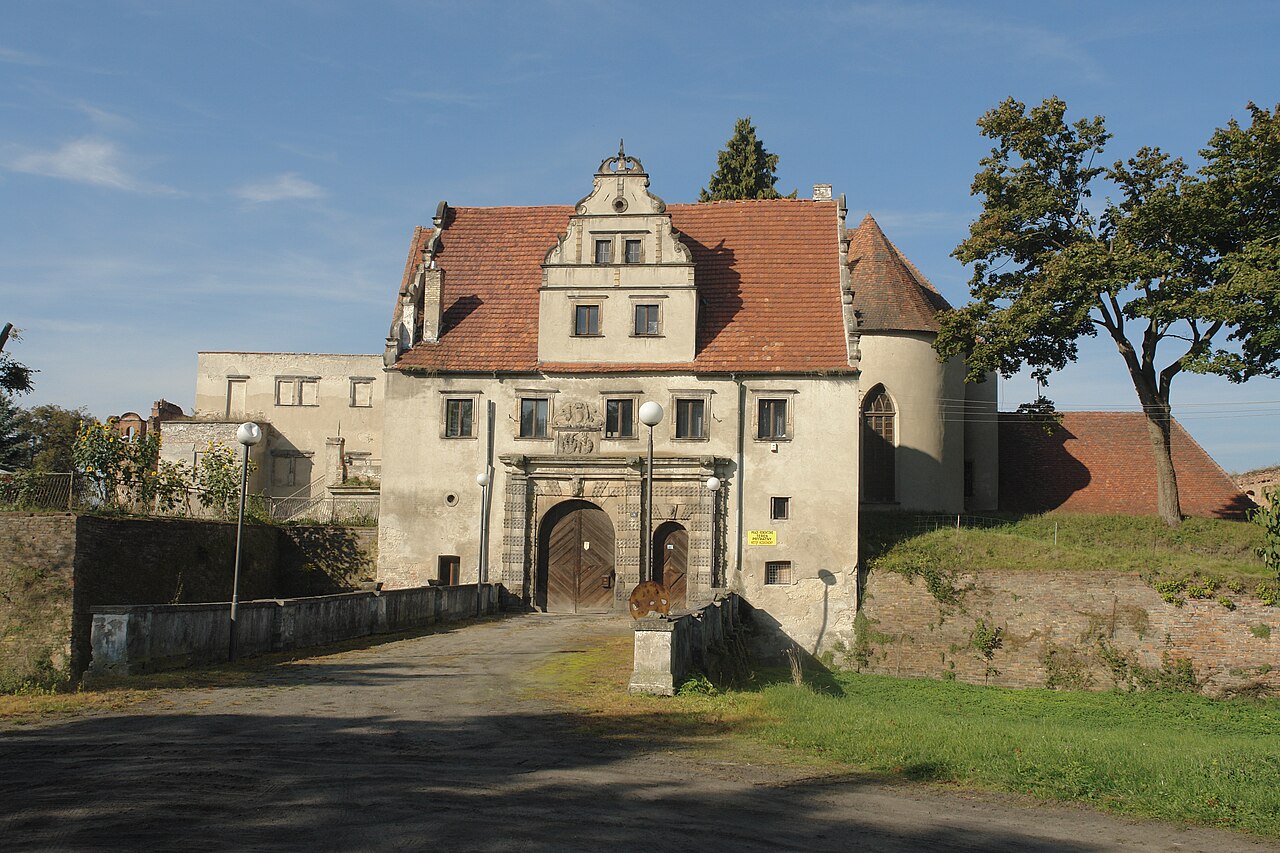
Siedlisko Castle stands as a remarkable example of a Renaissance bastion fortress located on the right bank of the Odra River in Poland. Perched on a high escarpment, the castle's ruins reveal a rich history of architectural evolution and noble residence spanning the late 16th and 17th centuries. Originally constructed in 1598, the castle began as a two-story residential house fortified with defensive walls, marking the inception of what would become an extensive noble estate.
Early construction and architectural origins
The initial structure was built by Melchior Deckhart in 1598 on a square plan. This foundational building served as the core of the residence and was surrounded by defensive fortifications typical of the period's military architecture. The castle's early form reflected the transitional architectural trends of the late Renaissance, combining residential comfort with strategic defense.
Expansion and renaissance enhancements
Following a devastating fire in 1601, the castle underwent significant expansion under the ownership of the Schonaich family. Between 1611 and 1619, an east wing was constructed, enhancing the castle's residential capacity and architectural complexity. This phase also saw the addition of a chapel to the north of the east wing, serving the spiritual needs of the castle inhabitants, and a gatehouse that controlled access to the estate.
Mid-17th century developments
In the mid-1600s, the castle complex was further enlarged with the construction of a west wing and the expansion of the original building into a south wing. These additions created a more enclosed and defensible courtyard layout. The northern side of the castle was fortified with a curtain wall featuring two earthen corner bastions, reflecting the influence of bastioned fortification principles designed to withstand artillery attacks.
Architectural features and defensive structures
The castle's defensive system was notable for its combination of masonry walls and earthworks. The bastions on the northern curtain wall provided flanking fire coverage, a cutting-edge military architectural feature in the Renaissance period. The gatehouse with its ornate portal served as both a defensive checkpoint and a symbol of noble status, leading into a second courtyard that offered additional layers of security.
Historical ownership and decline
Siedlisko Castle remained under the ownership of the Schonaich family until the end of World War II. After the family vacated the property, the castle suffered a destructive fire which led to its current state of ruin. Today, only the gatehouse with its bastions and the castle chapel survive in a relatively good condition, while the remainder of the complex consists of charred walls that still convey the grandeur and scale of the original residence.
Cultural significance and current status
The ruins of Siedlisko Castle are a significant cultural heritage site, illustrating the architectural and historical transitions from late Renaissance noble residences to fortified bastion castles in Poland. The site offers valuable insights into the defensive strategies and residential architecture of the period. Its location on a prominent river escarpment underscores its strategic importance in regional defense and control.
Visitors to the site can explore the surviving chapel and gatehouse, gaining a tangible connection to the castle's past. Although much of the structure lies in ruins, the remaining features provide a compelling narrative of resilience and transformation over centuries.
Frequently asked questions (FAQ)
- When was Siedlisko Castle originally built?
- Siedlisko Castle was originally constructed in 1598 by Melchior Deckhart as a fortified residential house on a square plan.
- What architectural style characterizes Siedlisko Castle?
- The castle reflects Renaissance architectural features combined with bastioned fortifications typical of late 16th and early 17th-century military architecture.
- What remains of Siedlisko Castle today?
- Today, only the gatehouse with its bastions and the castle chapel remain in relatively good condition, while the rest of the complex exists as ruins.
- Who owned Siedlisko Castle until World War II?
- The castle was owned by the Schonaich family until the end of World War II, after which it was abandoned and subsequently damaged by fire.
- Is Siedlisko Castle open to visitors?
- Visitor information is limited, but the ruins, including the chapel and gatehouse, can be explored on site, offering insight into its historical significance.
Information
Architect
Melchior Deckhart
Loading map...
Visitor reviews
No reviews yet. Been here? Write the first review and help other travelers!
Write the first reviewVisited this castle? Share your experience
Your review helps other travelers and adds first-hand knowledge to our encyclopedia.