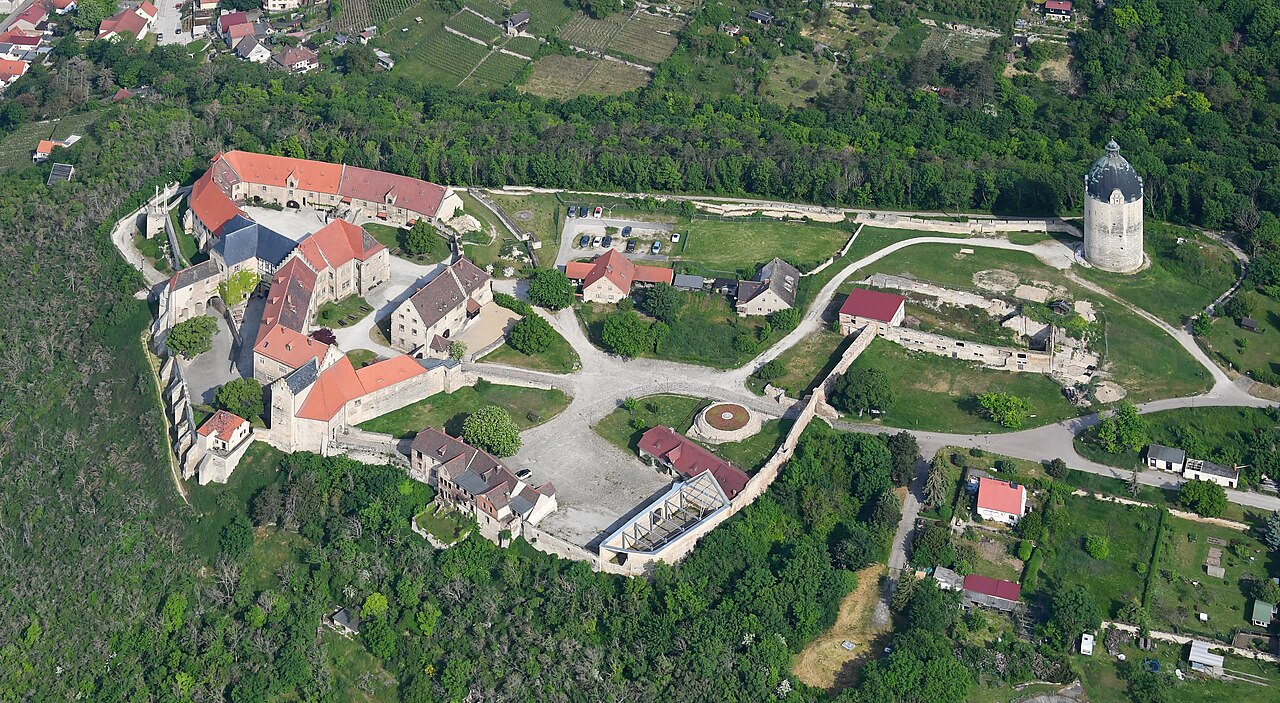
Sibetsburg
Sibetsburg castle stands as a significant example of a late medieval hill castle located in the city of Wilhelmshaven, Germany. Originally established in the late 14th century, this fortress played a pivotal role in the regional power dynamics of East Frisia during the medieval period. Its historical importance is closely tied to the East Frisian chieftain Edo Wiemken, who founded the stronghold around 1383 under the original name Edenburg.
The castle's strategic location on a now-silted branch of the sea enabled it to function as a maritime base, facilitating direct docking for ships. This feature was crucial during the early 15th century when the fortress was renamed Sibetsburg by Sibet Lubbenson, Edo Wiemken's grandson. Under Sibet's leadership, the castle not only served as a noble residence but also became a refuge for the Vitalienbrüders, a notorious group of pirates active in the late medieval period. Their presence underscored the fortress's maritime significance and its role in the turbulent political and economic landscape of the North Sea region.
Historical context and significance
The establishment of Sibetsburg coincided with a period of intense regional conflicts and shifting alliances among East Frisian chieftains. The fortress's association with the Vitalienbrüders brought it into direct conflict with the powerful Hanseatic League, a commercial and defensive confederation of merchant guilds and towns that dominated Northern European trade routes.
In 1433, the Hanseatic League launched a military campaign targeting East Frisian chieftains and their pirate allies, culminating in the capture of Sibetsburg. Two years later, in 1435, the fortress was deliberately demolished to prevent its further use as a pirate base. This event marked the end of Sibetsburg's active military and residential function, reflecting the broader efforts by the Hanseatic League to secure maritime trade and suppress piracy in the region.
Architectural features and layout
Motte and defensive structures
Sibetsburg is classified as a motte and bailey castle, characterized by its prominent artificial earth mound, or motte, measuring approximately six meters in height and thirty meters in diameter. This elevated platform provided a defensible position for the main structures of the fortress.
Atop the motte stood a substantial residential tower measuring about 14 by 12 meters. The tower's foundation walls were remarkably thick, reaching three meters, which emphasized its defensive purpose. The courtyard within the tower was paved with bricks, indicating a focus on durable and functional living spaces.
Walls, moats, and bailey
Surrounding the motte was a thick defensive wall, two to three meters wide, constructed on wooden pile foundations to ensure stability on the soft ground. The wall incorporated granite and tuff stone blocks, materials likely reclaimed from dismantled churches in the region, a common medieval practice that reflects resourcefulness and regional architectural influences.
Beyond the wall, the fortress was protected by an intricate system of three moats separated by two ramparts. These moats served as formidable obstacles to attackers, while the ramparts provided elevated defensive positions for the garrison.
To the west of the outermost moat lay the bailey, an enclosed courtyard raised by approximately 1.5 meters. This area housed essential economic buildings that supported the daily operations of the fortress, such as stables, workshops, and storage facilities.
The entire fortified complex covered an area roughly 210 by 175 meters, illustrating the considerable scale of the site for a regional chieftain's stronghold.
Archaeological research and preservation
Archaeological excavations conducted in the early 1960s uncovered the detailed layout and construction techniques of Sibetsburg. The findings revealed the sophisticated defensive design and the use of high-quality materials, providing insight into the engineering capabilities of the late medieval period in East Frisia.
Today, the remains of Sibetsburg are conserved in situ, allowing visitors to appreciate the site's historical footprint. Informational displays and a reconstructed model nearby offer educational context, illustrating the fortress's original appearance and defensive strategy.
Legacy and cultural importance
Sibetsburg's history encapsulates the turbulent maritime and political environment of late medieval East Frisia. Its connection to the Vitalienbrüders highlights the intersection of noble power and piracy in the North Sea region. Although the fortress no longer stands intact, its archaeological remains serve as a valuable cultural heritage site, shedding light on the region's medieval past and the architectural practices of hill castles during this era.
Visitors to Wilhelmshaven can explore the site and engage with the rich history of Sibetsburg, gaining insight into the complexities of medieval fortifications and the socio-political landscape of northern Germany during the 14th and 15th centuries.
Information
Website
Visit websiteSources & official resources
Verify the information above using these authoritative references.
Loading map...
Visitor reviews
No reviews yet. Been here? Write the first review and help other travelers!
Write the first reviewVisited this castle? Share your experience
Your review helps other travelers and adds first-hand knowledge to our encyclopedia.