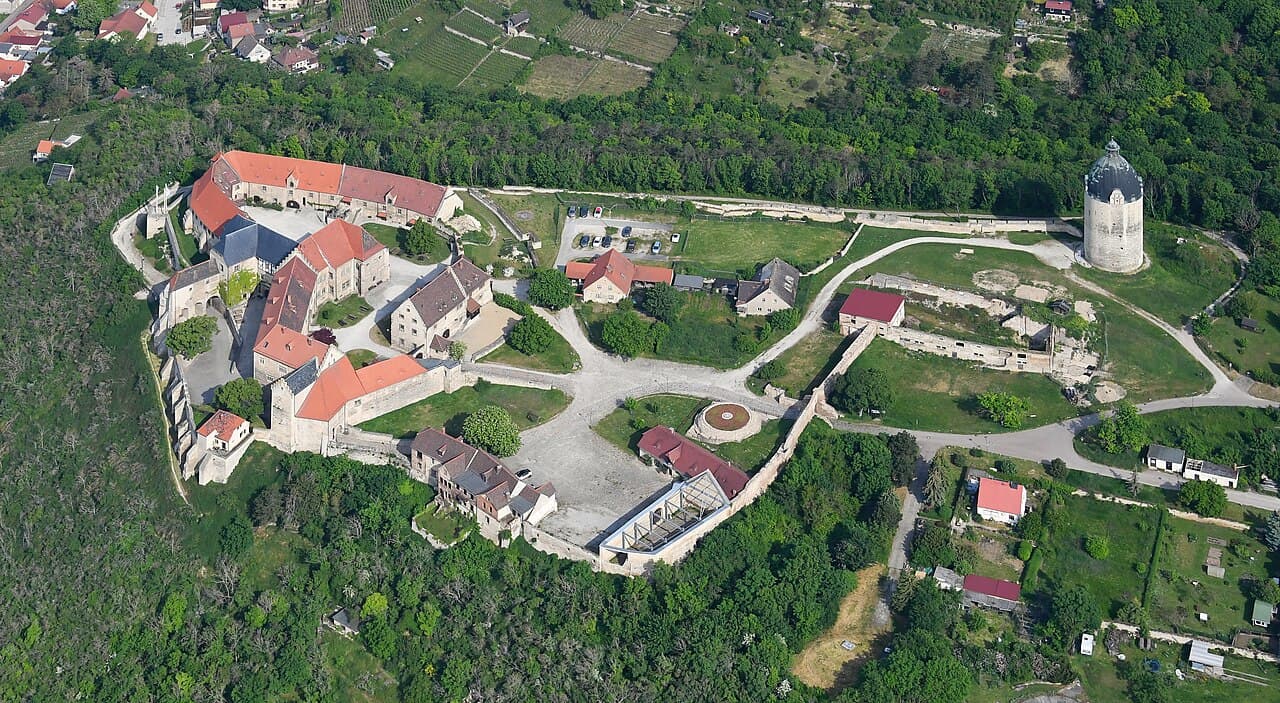
Neuenburg Castle
Neuenburg Castle, located in the town of Freyburg in Saxony-Anhalt, Germany, is a prominent hill castle with origins dating back to the late 11th century. Perched on a spur-like foothill above the eastern bank of the river Unstrut, it commands a strategic view over the surrounding landscape, including the nearby wine-growing town of Freyburg and the historic city of Naumburg (Saale). The castle is part of the culturally rich Romanesque Road, a route that highlights significant medieval sites across the region.
Early history and strategic importance
The initial construction of Neuenburg Castle began around 1090 under the direction of Ludwig der Springer, a Thuringian count. It was erected as a fortress to secure the eastern borders of his territories, complementing the sister fortress of Wartburg Castle to the west. The name "Neuenburg" translates to "new castle," reflecting its role as a newly established stronghold in the medieval landscape.
As a hill castle, Neuenburg's elevated position provided natural defensive advantages, including extensive views for early warning of approaching enemies and difficult access for attackers. Its location on a plateau spur allowed for the construction of robust fortifications, including thick stone walls and defensive towers that formed the core of its military architecture.
Architectural evolution through the centuries
While originally conceived as a fortress in the late medieval period, Neuenburg Castle underwent significant transformations over the centuries. The existing metadata notes a construction date of 1462, which likely refers to major rebuilding or expansion phases rather than the initial foundation. These later modifications adapted the castle from a purely military fortress into a more comfortable residence.
16th-century conversion
In the 16th century, the castle was converted into a residential palace. This period saw the introduction of more refined architectural elements designed to enhance comfort and status rather than just defense. The residential conversion included the addition of living quarters, chapels, and decorative facades that reflected Renaissance influences, although the core medieval structure remained dominant.
17th-century uses and adaptations
During the 17th century, Neuenburg Castle's function shifted again, serving practical and institutional roles. It was used for horse breeding, particularly for stallions, which was a common noble pursuit at the time. This period also saw the castle housing various institutions, including an Ackerbauschule (agricultural school), a Landfrauenschule (rural women's school), and a Reservelazarett (military reserve hospital).
Ownership and cultural significance
From 1656 until 1746, Neuenburg Castle served as a secondary residence for the Dukes of Saxe-Weissenfels, a branch of the Wettin dynasty. This association with regional nobility reinforced the castle's status as an important cultural and political site in Saxony-Anhalt.
Today, the castle is owned and managed by the Saxony-Anhalt Cultural Foundation, which oversees its preservation and public accessibility. The castle complex includes a museum that showcases its history and architecture, a chapel still used for religious services, a kindergarten, and a wedding hall, reflecting its ongoing role as a community center.
Architectural features and layout
Neuenburg Castle exhibits typical features of a hill castle designed for both defense and residence. The castle's fortifications include thick stone curtain walls with battlements, several towers that provided vantage points and strongholds, and a gatehouse controlling access to the inner courtyard.
The inner courtyard is surrounded by residential and service buildings, including halls, chambers, and stables. The castle's chapel is a notable architectural and historical feature, often hosting cultural events and ceremonies.
Location and accessibility
Situated on the eastern bank of the Unstrut River, the castle overlooks the town of Freyburg, renowned for its wine production. Its proximity to Naumburg and its inclusion on the Romanesque Road make Neuenburg Castle a popular destination for visitors interested in medieval history and architecture.
The castle is accessible by road and offers visitors a chance to explore its museum, attend events in its chapel and wedding hall, and enjoy the scenic views of the surrounding Saxony-Anhalt countryside.
Frequently asked questions (FAQ)
- What are the visiting hours for Neuenburg Castle?
- Neuenburg Castle is generally open to visitors during daytime hours, often from 10:00 to 16:00 daily, but it is recommended to check the official website or local tourist information for current opening times and any seasonal variations.
- Can I visit the museum inside Neuenburg Castle?
- Yes, the castle houses a museum that is open to the public. It features exhibits on the castle's history, architecture, and the regional culture of Saxony-Anhalt, providing an informative experience for visitors.
- Is Neuenburg Castle accessible for people with mobility issues?
- While the castle is well preserved, some areas may have limited accessibility due to its historic nature and hilltop location. Visitors with mobility concerns should inquire in advance about access and available accommodations.
- When was Neuenburg Castle originally built?
- Neuenburg Castle was originally constructed around 1090 by Count Ludwig der Springer as a fortress to secure his eastern territories during the late 11th century.
- What architectural styles are represented at Neuenburg Castle?
- The castle primarily features late medieval military architecture with later Renaissance influences from the 16th-century residential conversion, reflecting a blend of functional fortification and refined living spaces.
Photo gallery

Information
Current owner
Saxony-Anhalt Cultural Foundation
Loading map...
Visitor reviews
No reviews yet. Been here? Write the first review and help other travelers!
Write the first reviewVisited this castle? Share your experience
Your review helps other travelers and adds first-hand knowledge to our encyclopedia.



