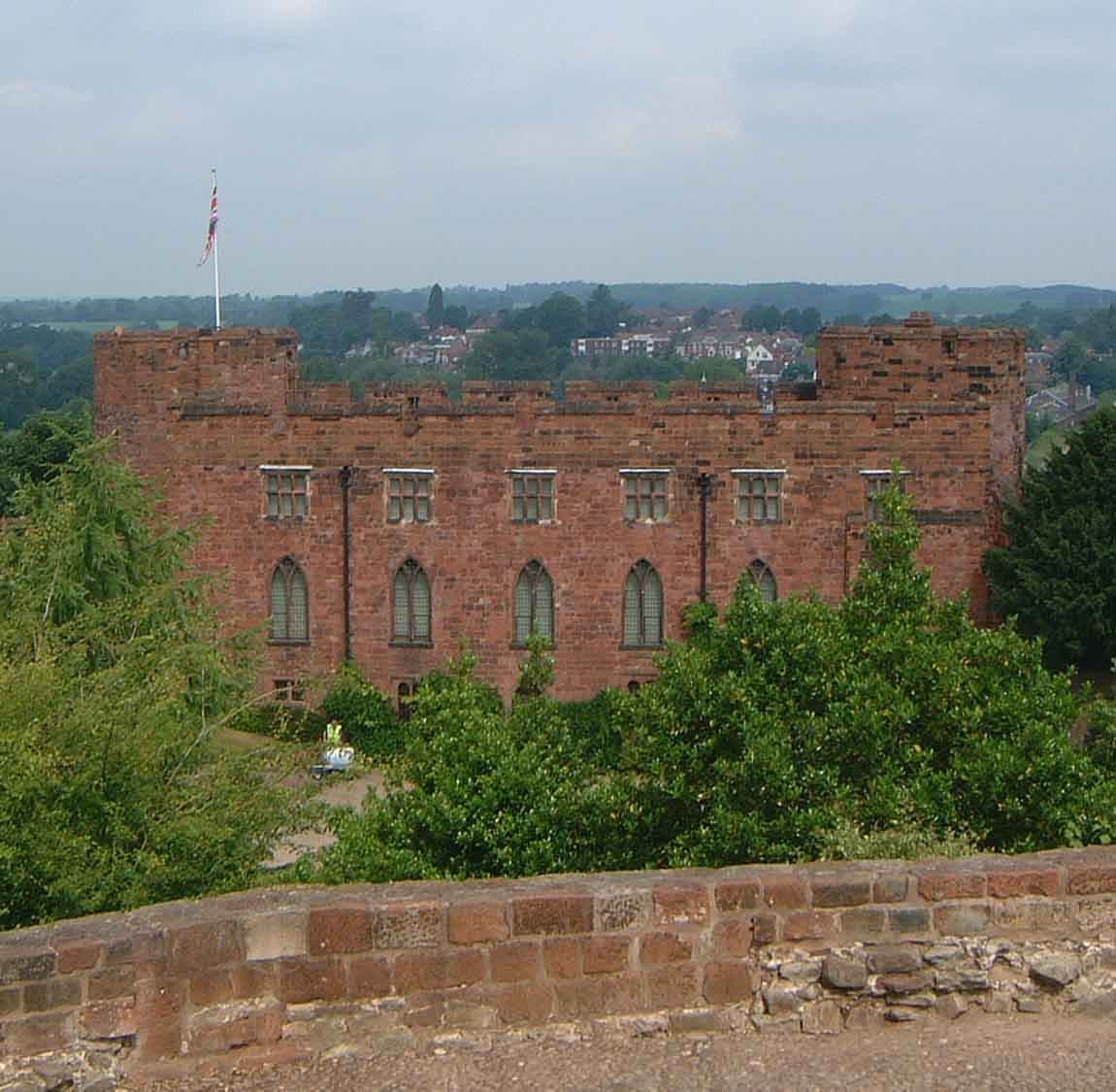
Shrewsbury Castle
Shrewsbury Castle stands as a striking example of Norman military architecture perched on a red sandstone hill at the neck of a meander of the River Severn in Shrewsbury, England. This high medieval hill castle was originally built shortly after the Norman Conquest in the late 11th century and has played a significant role in English and Welsh border history for nearly a millennium. The castle's strategic location above the river and overlooking the town made it a critical defensive stronghold and a symbol of Norman power in the region.
The castle's imposing silhouette dominates the Shrewsbury skyline, directly above the town's railway station, and it is recognized as a Grade I listed building, reflecting its architectural and historic importance. Today, Shrewsbury Castle houses the Shropshire Regimental Museum, preserving the military heritage of the county and showcasing artefacts from the King's Shropshire Light Infantry and other regiments.
Early construction and medieval military significance
Constructed between 1067 and 1070 by order of William the Conqueror, Shrewsbury Castle replaced an earlier wooden fortification with a more durable stone structure. The initial construction included a motte-and-bailey design, typical of Norman castles, with a wooden tower atop an earthen mound (motte) and an enclosed courtyard (bailey). Over time, the wooden elements were replaced by stone, and the castle was expanded significantly by Roger de Montgomery, the first Earl of Shrewsbury, who used it as a military base for campaigns into Wales and as a defensive bastion protecting the town.
During the 12th century, the castle was a focal point in the civil war known as The Anarchy, fought between King Stephen and Empress Matilda. In 1138, it was held by William Fitz Alan for Matilda before being captured by Stephen's forces. The castle's strategic importance continued through the 13th century, serving as a military base during Welsh uprisings and border conflicts. Notably, the Welsh prince Llywelyn the Great briefly controlled the castle in 1215, and it was used by Simon de Montfort during his rebellion in 1265.
Architectural evolution and later modifications
Following the conquest of Wales and the stabilization of the border, the castle's military role diminished. By the early 14th century, it had fallen into disrepair. During the reign of Elizabeth I, the castle was transformed into a domestic residence. In 1565, Richard Onslow leased the property and undertook restoration work, including adding an extra floor above the great hall, signaling a shift from fortress to stately home.
The castle's architecture reflects its layered history, with the oldest surviving masonry dating from around 1160. The inner bailey walls, gatehouse, and lower floors of the main building originate from this period. The great hall, completed by the mid-13th century under King Henry III, originally stood three stories tall during the Elizabethan era but now comprises two floors. The hall features a restored open fireplace and a wooden ceiling that once supported a now-lost mansard floor.
In the late 18th century, the castle underwent significant renovations commissioned by Sir William Pulteney and executed by the renowned architect Thomas Telford. Telford replaced the original medieval arrow slits with tall, pointed windows and subdivided the great hall into smaller rooms, reflecting changing tastes and functional needs. The western tower retains medieval rib-vaulted ceilings on its upper floor, while its lower floors were remodeled for use as conference and reception rooms. The eastern tower, part of the museum exhibition area, includes a windowless cellar thought to have served as a dungeon.
Role during the english civil war and subsequent history
During the English Civil War (1642–1645), Shrewsbury Castle was fortified by Royalist forces but surrendered to Parliamentary troops in 1645. It was subsequently garrisoned by forces loyal to Oliver Cromwell during the Commonwealth period. Ownership passed to the Earl of Bradford in 1663, and the castle remained in private hands for centuries thereafter.
In the 18th and 19th centuries, the castle continued as a private residence, with further modifications and landscaping enhancing its residential character. In 1924, the Shropshire Horticultural Society purchased the property and transferred it to the town council, which used it as council chambers until the 1970s.
Modern use and archaeological discoveries
Since 1985, Shrewsbury Castle has housed the Shropshire Regimental Museum, which displays military collections spanning from 1755 to 1970. The museum preserves and interprets the military history of the region, including artefacts, uniforms, and memorabilia from local regiments.
In 1992, the castle suffered severe damage from an IRA bomb attack but was restored and reopened in 1995, demonstrating its resilience and continued cultural significance. Archaeological excavations conducted in 2019–2020 uncovered remains of the original Norman motte ditch, medieval pottery, arrowheads, and evidence of high-status feasting. Although the chapel of St Michael was not found, these findings have enriched understanding of the castle's early history and daily life.
Architectural features and castle grounds
Shrewsbury Castle is primarily constructed of red sandstone, a locally quarried material that gives the castle its distinctive warm hue. The castle occupies about 40 ares, roughly corresponding to the original inner bailey, while the outer bailey has been lost to urban development.
The castle's motte no longer maintains its original circular shape due to a flood in 1271 that caused the collapse of the wooden tower atop it. The inner bailey walls partly rest on earthworks from the original Norman motte castle, reflecting the site's long history of fortification.
The gatehouse remains a prominent feature, with a wooden door still marked by musket ball impacts from the Civil War, providing a tangible link to the castle's turbulent past. A poterne, a small postern gate dating from around 1600, once provided access to the River Severn but is now blocked by a 19th-century railway embankment.
Within the castle grounds, Laura's Tower was built in 1790 by Sir William Pulteney as a birthday gift for his daughter. This tower stands atop the motte and offers panoramic views over Shrewsbury and the surrounding countryside. It is occasionally used for events and weddings, contributing to the castle's role as a cultural venue.
Although no physical remains survive of the stables and workshops once located within the inner bailey, historical records confirm their existence. A chapel dedicated to St Nicholas stood in the outer bailey until its demolition in the 19th century, replaced by a church that has since been converted into a restaurant, illustrating the evolving use of the site and its surroundings.
Cultural significance and visitor experience
Today, Shrewsbury Castle remains a prominent historic landmark and a vital link to the region's medieval past. The castle grounds host various cultural events, including theatrical performances such as adaptations of the Canterbury Tales. The castle is also a popular venue for weddings and community gatherings, blending its historical ambiance with contemporary uses.
Visitors to the castle can explore the museum's extensive military collections, view the medieval architectural features, and enjoy the scenic views from Laura's Tower. The castle's location above the railway station makes it easily accessible, and its Grade I listing ensures its preservation for future generations.
Shrewsbury Castle exemplifies the enduring legacy of Norman fortifications in England and offers a rich tapestry of history, architecture, and cultural heritage that continues to captivate scholars and visitors alike.
Frequently asked questions (FAQ)
- What is the historical significance of Shrewsbury Castle?
- Shrewsbury Castle was built shortly after the Norman Conquest and served as a strategic military base during medieval conflicts, including The Anarchy and Welsh uprisings.
- Can I visit the Shropshire Regimental Museum inside the castle?
- Yes, the castle houses the Shropshire Regimental Museum, open daily from 10:00 to 16:00, showcasing military artefacts from 1755 to 1970.
- Is Shrewsbury Castle accessible by public transport?
- Yes, the castle is located directly above Shrewsbury railway station, making it easily accessible by train and other public transport.
- Are there guided tours available at Shrewsbury Castle?
- Guided tours are available at certain times; visitors should check the official website or contact the castle for current tour schedules.
- What architectural styles are seen in Shrewsbury Castle?
- The castle features a mix of medieval Norman architecture and later modifications from the Elizabethan and Georgian periods, including renovations by Thomas Telford.
- Can I hold events or weddings at Shrewsbury Castle?
- Yes, the castle grounds and Laura's Tower are used for weddings and cultural events, offering a historic setting for special occasions.

Information
Opening hours
10:00-16:00, daily
Ticket prices
£5 adult, £3 child
Architect
Thomas Telford
Current owner
Municipality
Website
Visit websiteAddress
Castle Street, Shrewsbury
Sources & official resources
Verify the information above using these authoritative references.
Loading map...
Visitor reviews
No reviews yet. Been here? Write the first review and help other travelers!
Write the first reviewVisited this castle? Share your experience
Your review helps other travelers and adds first-hand knowledge to our encyclopedia.