Acton Burnell Castle
Acton Burnell Castle stands as a remarkable example of a medieval fortified manor house located near Shrewsbury in Shropshire, England. Constructed in the late 13th century, this site reflects the intertwined nature of secular power, royal authority, and architectural innovation during the reign of King Edward I. Its origins trace back to 1284, when Robert Burnell, the influential Bishop of Bath and Wells and close advisor to the king, established the manor as both a residence and a symbol of his status within the kingdom.
The castle's historical significance is amplified by its association with one of the earliest parliamentary assemblies in England. In 1283, King Edward I convened what is regarded as the first English Parliament to include full representation of the Commons, a pivotal moment in the development of English governance. This assembly likely took place in the large barn adjacent to the manor, a structure whose surviving gable walls attest to its former grandeur. The meeting produced the Statute of Acton Burnell, a landmark legal act designed to protect creditors' rights and facilitate commerce, highlighting the growing importance of trade and law in medieval England.
Architectural features and layout
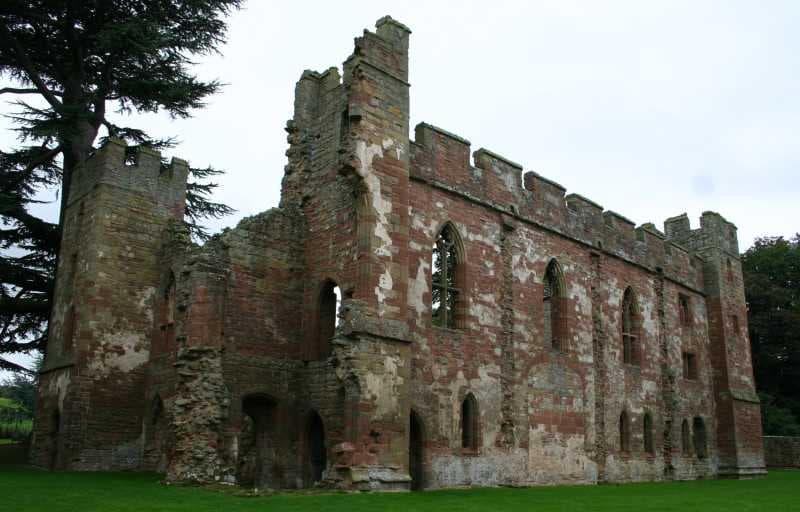
The remains of Acton Burnell Castle reveal a rectangular fortified manor house characterized by a tower at each of its four corners. Built primarily from stone and originally rising to three stories, the manor was enclosed by external walls that served more as a status symbol and protective barrier than as a full defensive fortress. The granting of a royal licence to crenellate in January 1284 authorized Robert Burnell to add battlements, emphasizing the manor's fortified appearance while reflecting the owner's elevated social standing.
Inside, the manor was designed to accommodate both domestic life and administrative functions. Key internal features included a great hall for communal gatherings and official business, a solar which served as the lord's private chamber, multiple bedrooms, service offices, a chapel for religious observance, and kitchens for food preparation. This arrangement illustrates the manor's dual role as a residence and a center of local governance.
The great barn and parliamentary significance
Adjacent to the manor stands the large barn where the historic 1283 Parliament was likely held. Although the barn's gable walls survive, the structure remains on private land and is not accessible to the public. The barn's substantial size and enduring stone construction underscore its importance as a venue for significant medieval assemblies, including the enactment of the Statute of Acton Burnell, which aimed to regulate credit and commerce.
Historical ownership and changes
Following Robert Burnell's death in 1292, the estate passed through his family before transferring by marriage to the Lovel family. The manor's fortunes shifted dramatically after the Battle of Stoke Field in 1487, when King Henry VII confiscated the property and granted it to Thomas Howard, 2nd Duke of Norfolk. Over the following centuries, the manor declined, and by the mid-17th century, much of the structure had fallen into ruin.
In the 18th and 19th centuries, the estate came under the ownership of the Smythe family, who constructed a classical-style country house nearby. They incorporated the remains of the original manor into the landscaped park as a decorative ruin, adding features such as a pyramidal roof to one of the towers, which was repurposed as a dovecote. This transformation reflects the period's romantic appreciation for medieval ruins as picturesque elements within garden design.
Current condition and heritage status
Today, Acton Burnell Castle is recognized as a Grade I listed building, protected for its exceptional historical and architectural significance. Visitors can explore the surviving external walls of the manor house, which stand amidst wooded surroundings, as well as view the two gable walls of the great barn from a distance. The site offers a tangible connection to medieval England's legal and political history, as well as insights into the lifestyle of a powerful royal advisor.
Surrounding features and community importance
Close to the castle, Robert Burnell also founded the Church of St Mary and the surrounding village, underscoring the manor's role as a focal point for both secular and religious life in the medieval period. This integration of residential, religious, and administrative functions highlights the manor's significance within the local community and its enduring legacy in English history.
Frequently asked questions (FAQ)
- What is the historical significance of Acton Burnell Castle?
- Acton Burnell Castle, built in the late 13th century, is renowned for its association with the early development of Parliament in England. It served as a meeting place for the Parliament of England in 1283, making it an important site in medieval political history.
- When was Acton Burnell Castle constructed?
- The construction of Acton Burnell Castle began around 1283 and was completed in the following decades. It was built by Robert Burnell, the Chancellor to King Edward I, and reflects the architectural style and defensive needs of the period.
- Can I visit Acton Burnell Castle?
- Yes, Acton Burnell Castle is open to visitors, allowing you to explore its historical ruins and beautiful surroundings. However, it is advisable to check for any specific visitor information or restrictions before planning your visit.
- What are the opening hours for Acton Burnell Castle?
- Acton Burnell Castle is typically open to the public from dawn until dusk. It’s best to verify the opening hours on the official website or local listings, especially during public holidays or special events.
- Is it possible to access Acton Burnell Castle by public transport?
- Yes, Acton Burnell Castle is accessible by public transport, although services may be limited. The nearest bus stop is within walking distance, and visitors are encouraged to check local transport schedules for the best options.
- What is the best time to visit Acton Burnell Castle?
- The best time to visit Acton Burnell Castle is during the spring and early autumn when the weather is pleasant for outdoor exploration. Additionally, visiting during weekdays can offer a quieter experience away from larger crowds.
- Are there any ticket prices for visiting Acton Burnell Castle?
- Entry to Acton Burnell Castle is free, as it is managed by English Heritage. However, donations are appreciated to help maintain the site and its historical significance.
- What nearby attractions can I visit while at Acton Burnell Castle?
- While visiting Acton Burnell Castle, you can also explore the picturesque village of Acton Burnell and the nearby Shrewsbury with its rich history and charming architecture. Other attractions include the Shrewsbury Museum and Art Gallery and the beautiful Shrewsbury Abbey.
Photo gallery

Information
Website
Visit websiteSources & official resources
Verify the information above using these authoritative references.
Loading map...
Visitor reviews
No reviews yet. Been here? Write the first review and help other travelers!
Write the first reviewVisited this castle? Share your experience
Your review helps other travelers and adds first-hand knowledge to our encyclopedia.