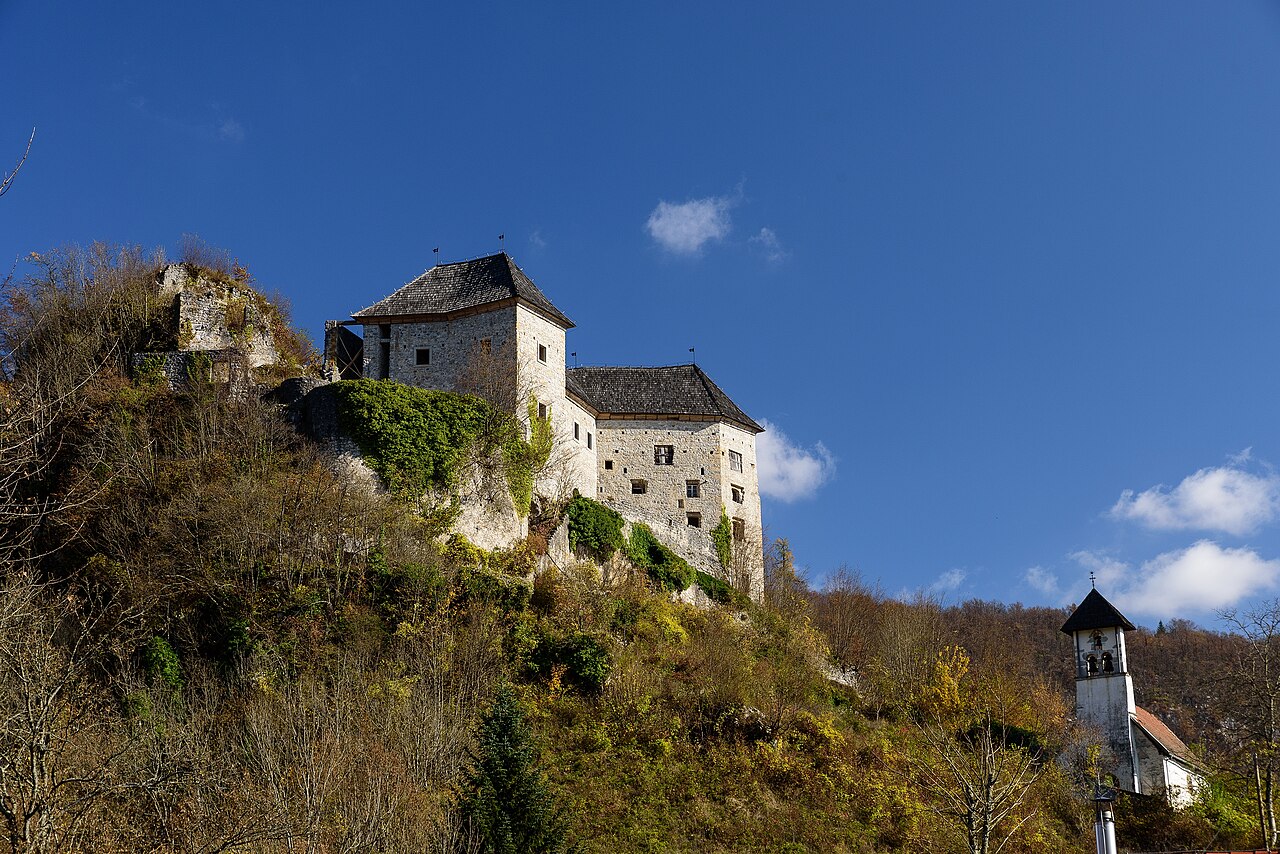
Severin Castle
Severin Castle, located in Črnomelj, Slovenia, is a significant example of a Renaissance fortress built in the 16th century. The castle's origins trace back to its first mention in 1558, when it was constructed by the noble Frankopan family on a steep bank overlooking the river Kupa. This strategic position provided natural defense advantages and control over the surrounding region.
Historical background and early construction
The initial structure included a tower and a wooden castle mentioned in chronicles from the same period. The Frankopans were a prominent Croatian noble family, influential in the region's political and military affairs. Severin Castle served as a defensive stronghold and residence for the family, reflecting the turbulent times marked by frequent conflicts and territorial disputes in the 16th century.
Following the death of the last Frankopan and the collapse of the Zrinski-Frankopan Conspiracy in 1671, the castle suffered significant damage. It was looted and fell into ruin, reflecting the broader decline of the Frankopan family's power and influence in the region.
Architectural features and renovations
The castle underwent substantial renovation in 1803 under the ownership of Duke Ivan Oršić, which gave it much of its current appearance. The building is a two-storey structure with a rectangular ground plan. Its corners are reinforced with cylindrical towers, a characteristic defensive feature typical of Renaissance military architecture.
Inside, the castle includes a courtyard surrounded by arcade columns, which add both aesthetic appeal and structural support. This courtyard would have served as a central open space for gatherings and daily activities within the castle walls.
Within the castle complex stands the Chapel of St Florian, notable for its small size and distinctive architectural elements. The chapel features an emphasized arched doorway and a turret, which contribute to the castle's overall historic and cultural significance.
Surrounding landscape and garden
Adjacent to the castle lies a protected garden, which has been declared a monument of landscape architecture. This garden enhances the castle's setting and reflects the landscaping styles associated with noble residences of the period. The preservation of the garden underscores the importance of the castle not only as a military and residential structure but also as a cultural landmark.
Significance and current status
Severin Castle represents an important part of the region's cultural heritage, illustrating the architectural and historical developments from the Renaissance period through the early 19th century. Its combination of defensive and residential features, along with the chapel and garden, provide insight into the lifestyle and priorities of the noble families who inhabited it.
Today, the castle stands as a well-preserved example of Renaissance architecture in Slovenia, attracting visitors interested in history, architecture, and the legacy of the Frankopan family. Its location above the river Kupa offers scenic views and a tangible connection to the region's past.
Information
Loading map...
Visitor reviews
No reviews yet. Been here? Write the first review and help other travelers!
Write the first reviewVisited this castle? Share your experience
Your review helps other travelers and adds first-hand knowledge to our encyclopedia.