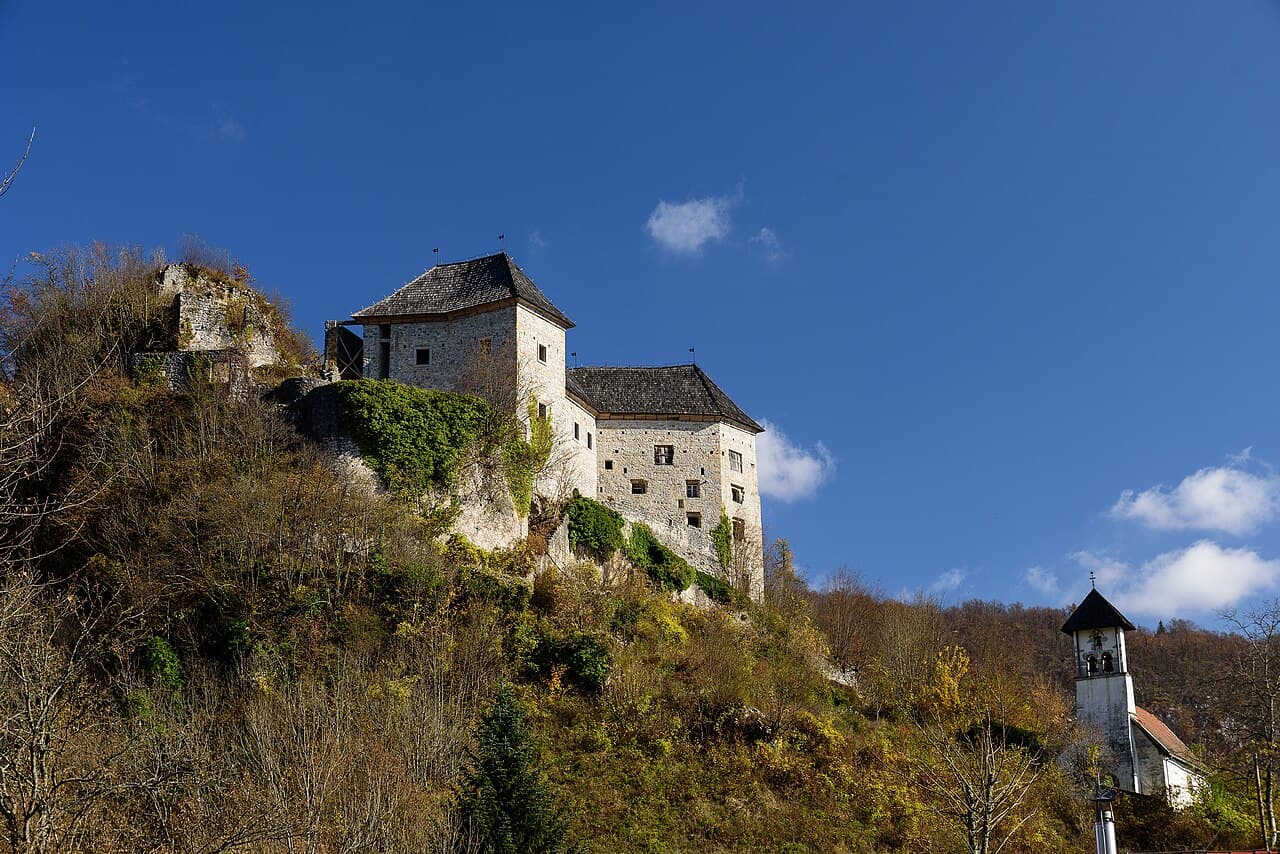
Kostel Castle
Kostel Castle is a prominent late medieval hill castle located on a steep hill overlooking the Kolpa River near the Croatian border in southeastern Slovenia. Its commanding position above the river valley made it a vital defensive stronghold throughout its history, especially during the turbulent 15th and 16th centuries when Ottoman incursions threatened the region. The castle's origins trace back to a smaller fortification, which was expanded into a significant fortress by the Counts of Ortenburg between 1247 and 1325.
Early history and architectural development
The first recorded mention of the castle, then known as castrum Grafenwarth, dates to 1336. The name Kostel, derived from a Slavic adaptation of the Latin word for castle, appeared in documents by 1449. The castle's initial construction phase under the Ortenburg family laid the foundation for a fortified complex designed to secure their territorial holdings under the suzerainty of the Patriarchate of Aquileia. After the extinction of the Ortenburg line in 1418, ownership passed to the powerful Counts of Celje, who significantly expanded Kostel Castle into a formidable fortress known as Schloss Grauenwarth.
Fortifications and layout
The Celje expansion included the construction of a robust defensive wall approximately two meters thick, encircling the castle and the adjacent settlement. This wall was reinforced by five strategically placed defense towers, enhancing the castle's ability to withstand sieges and attacks. The castle complex served multiple purposes: it was a military bastion, a local seat of judiciary authority, and included an execution site situated about one kilometer from the main fortress. The design reflected the military architectural principles of the late medieval period, emphasizing strong curtain walls, towers for flanking fire, and a commanding position on elevated terrain.
Strategic importance during the ottoman wars
Following the demise of the Celje family after the death of Prince Ulrich II of Celje in 1456, the castle came under the control of the Habsburgs. Recognizing its strategic value, the Habsburgs granted market rights to the nearby settlement, fostering its development. Kostel Castle became a crucial defensive point against the advancing Ottoman Empire, which was expanding into southeastern Europe during the 15th and 16th centuries.
Situated along one of the main incursion routes used by Ottoman raiders into Slovenian territory, the castle endured multiple attacks. Its fortifications and garrison were tested repeatedly as it served as a bulwark protecting the Habsburg lands. However, in 1578, the castle fell under tragic circumstances when the garrison accepted individuals claiming to be refugees from the Ottomans. These infiltrators opened the gates at night, allowing Ottoman forces to enter, resulting in the massacre and capture of the castle's defenders and the inhabitants of the surrounding village and region.
Aftermath and settlement changes
The devastation caused by the Ottoman assault led to a significant depopulation of the area. In the following years, the region was resettled by Uskoks, refugees and warriors who had fled Ottoman-controlled territories. This resettlement helped revive the local population and maintain the defensive presence in the borderlands.
Architectural features and current state
Kostel Castle is classified as a hill castle, characterized by its elevated position which provided natural defensive advantages. The castle's surviving structures include portions of the thick defensive walls and some of the original towers that once formed a protective ring around the complex. The castle's architectural style reflects the late medieval military design prevalent in the region, with an emphasis on functionality and defense.
Today, Kostel Castle stands as a partially preserved monument, with ruins that offer insight into medieval fortification techniques and the historical conflicts that shaped the borderlands of Slovenia. Its location near the Kolpa River and the Croatian border adds to its historical significance as a frontier fortress.
Cultural and historical significance
Kostel Castle's history encapsulates the complex political and military struggles of medieval and early modern southeastern Europe. It illustrates the shifting control between noble families, the impact of Ottoman expansion, and the defensive strategies employed by regional powers like the Habsburgs. The castle is a valuable cultural heritage site that attracts visitors interested in medieval architecture, military history, and the dynamic history of Slovenia's border regions.
Visiting kostel castle
Visitors to Kostel Castle can explore the ruins and enjoy panoramic views of the Kolpa River valley. The castle's elevated position offers a unique perspective on the landscape that once made it a strategic military site. While the castle is not fully restored, its remains provide a tangible connection to the region's medieval past and the turbulent history of border defense against Ottoman incursions.
The nearby settlement of Kostel also offers cultural experiences related to the castle's history and the traditional lifestyle of the area. The site is accessible for hiking and historical tours, making it a notable destination for those interested in Slovenian medieval heritage.
Frequently asked questions (FAQ)
- How do I get to Kostel Castle?
- Kostel Castle is located in the picturesque village of Kostel, Slovenia. You can reach it by car, with parking available nearby, or by public transport to the nearest town, followed by a short walk. The scenic surroundings make the journey enjoyable, so take your time to appreciate the beautiful landscape.
- What is the historical significance of Kostel Castle?
- Kostel Castle dates back to the 13th century and is a key historical site in Slovenia, reflecting the region's medieval heritage. It was originally built for defensive purposes and has witnessed numerous historical events over the centuries. Today, it stands as a symbol of the area's rich history and cultural identity.
- When was Kostel Castle last renovated?
- Kostel Castle underwent significant renovations in the late 20th century to preserve its structure and historical features. The restoration aimed to maintain the castle's authenticity while making it accessible to visitors. Ongoing maintenance ensures that the castle continues to be a vibrant part of Slovenia's heritage.
- Can I visit Kostel Castle year-round?
- Yes, Kostel Castle is open to visitors year-round, although specific opening hours may vary by season. It’s advisable to check the official website or local tourist information for the latest details on visiting hours. A visit during different seasons offers unique perspectives on the castle and surrounding landscapes.
- Why is the architecture of Kostel Castle unique?
- The architecture of Kostel Castle showcases a blend of medieval and Renaissance styles, making it a fascinating study for enthusiasts. Its strategic hillside location, fortified walls, and unique towers provide insight into the defensive techniques of the time. The castle's design not only served practical purposes but also reflected the aesthetic values of its era.
- Is it possible to take guided tours of Kostel Castle?
- Yes, guided tours of Kostel Castle are available and are highly recommended for a deeper understanding of its history and architecture. Knowledgeable guides provide fascinating insights and stories that bring the castle's past to life. Tours typically run throughout the day, but it’s best to check in advance for availability.
- What are the ticket prices for visiting Kostel Castle?
- Ticket prices for Kostel Castle are generally affordable, making it accessible for all visitors. Discounts may be available for students, seniors, and groups, so be sure to inquire when purchasing tickets. Prices can vary based on the time of year, so it's wise to check the official website for the most current information.
- What is the best time to visit Kostel Castle?
- The best time to visit Kostel Castle is during the spring and early autumn when the weather is pleasant, and the surrounding landscape is in full bloom. These seasons offer a beautiful backdrop for exploring the castle and enjoying nearby hiking trails. Summer is also popular, but it can be crowded, so plan accordingly.
- Are there any nearby attractions to visit along with Kostel Castle?
- Yes, there are several nearby attractions worth exploring, including the stunning natural scenery of the surrounding Kostel region and the charming village itself. Visitors can enjoy hiking trails, local cuisine, and cultural experiences that enhance the overall visit. Don't miss the opportunity to explore the local history and natural beauty of the area.
Photo gallery

Information
Loading map...
Visitor reviews
No reviews yet. Been here? Write the first review and help other travelers!
Write the first reviewVisited this castle? Share your experience
Your review helps other travelers and adds first-hand knowledge to our encyclopedia.



