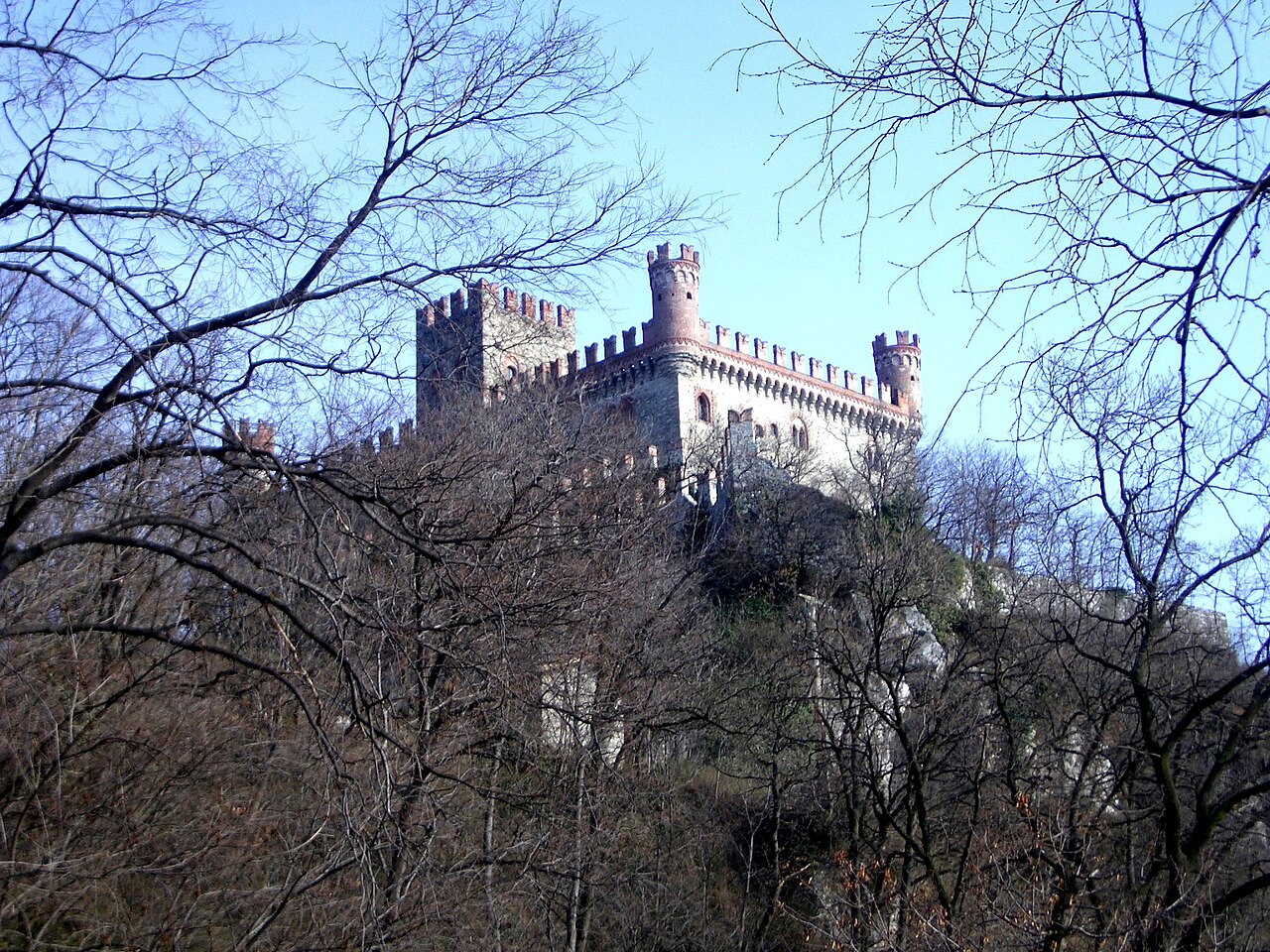
Settimo Vittone Castle
Settimo Vittone Castle stands as a remarkable example of early medieval fortification in the Piedmont region of Italy. Constructed in the 9th century AD, the castle was strategically built on the site of a former 6th-century abbey, integrating religious and military functions in a single complex. This location was significant during the Middle Ages, serving as an important stop for pilgrimages to Rome, offering protection and shelter to travelers on their spiritual journey.
Historical background and significance
The castle's origins are closely tied to the religious and political developments of early medieval Italy. The original abbey, dating back to the 6th century, was among the earliest Christian establishments in the area, reflecting the spread of Christianity through the region. By the 9th century, the need for fortified structures increased due to regional conflicts and the protection of pilgrimage routes, prompting the construction of the castle on this historically sacred site.
Settimo Vittone Castle played a dual role: it was both a defensive stronghold and a spiritual waypoint. Its position along the pilgrimage path to Rome made it a vital refuge for pilgrims, clergy, and merchants alike. The castle's presence illustrates the intertwining of religious and feudal power during the Early Medieval period.
Architectural features and layout
The castle complex originally included typical early medieval fortification elements, such as defensive walls, towers, and a courtyard. Although much of the castle was demolished in the 16th century, archaeological remains and historical records provide insight into its structure. The castle was likely constructed using local stone, with a focus on robust defensive capabilities suited to the turbulent times.
Within the castle grounds lies the Pieve di San Lorenzo, a small church that is one of the oldest surviving Christian chapels in the region. This chapel was probably built in the late 9th century and remains a significant architectural and religious monument. The pieve features simple but sturdy construction typical of early medieval ecclesiastical architecture, with a focus on functionality and spiritual symbolism.
The pieve di San Lorenzo: a rare surviving chapel
The Pieve di San Lorenzo is notable for its preservation and historical importance. Its walls and structure offer valuable insight into early Christian worship spaces in northern Italy. The chapel has a modest plan and retains elements characteristic of early medieval religious architecture, including small windows and a plain interior designed to serve the local community and pilgrims.
Later history and current condition
By the 16th century, the castle had lost much of its military importance and was largely demolished. The reasons for its decline include changes in military technology and shifting political powers in the region. Despite the castle's partial destruction, the site remains an important cultural and historical landmark.
Today, the remains of Settimo Vittone Castle and the Pieve di San Lorenzo attract visitors interested in medieval history and architecture. The site offers a glimpse into early medieval fortification and religious life, preserving the legacy of a place that once served as a crucial link on the pilgrimage route to Rome.
Visiting Settimo Vittone Castle
Visitors to Settimo Vittone can explore the historic chapel and castle ruins, which provide a tangible connection to the early medieval period. The site is accessible and offers an educational experience about the region's religious and military history. The surrounding landscape adds to the atmosphere, with views that reflect the strategic importance of the castle's original location.
Frequently asked questions (FAQ)
- When was Settimo Vittone Castle built?
- Settimo Vittone Castle was constructed in the 9th century AD on the site of a 6th-century abbey, reflecting early medieval fortification needs.
- What is the significance of the Pieve di San Lorenzo?
- The Pieve di San Lorenzo is one of the oldest Christian chapels in the region, likely built in the late 9th century, and remains a key religious monument on the castle grounds.
- Can visitors explore the castle ruins today?
- Yes, visitors can explore the ruins of Settimo Vittone Castle and the Pieve di San Lorenzo chapel, which offer insights into early medieval architecture and history.
- Why was the castle demolished in the 16th century?
- The castle was demolished in the 16th century due to shifts in military technology and political changes that reduced its strategic importance.
- Is Settimo Vittone Castle accessible to the public?
- The castle site is managed by the local municipality and is accessible to the public for educational visits and historical exploration.
Information
Current owner
Municipality
Loading map...
Visitor reviews
No reviews yet. Been here? Write the first review and help other travelers!
Write the first reviewVisited this castle? Share your experience
Your review helps other travelers and adds first-hand knowledge to our encyclopedia.