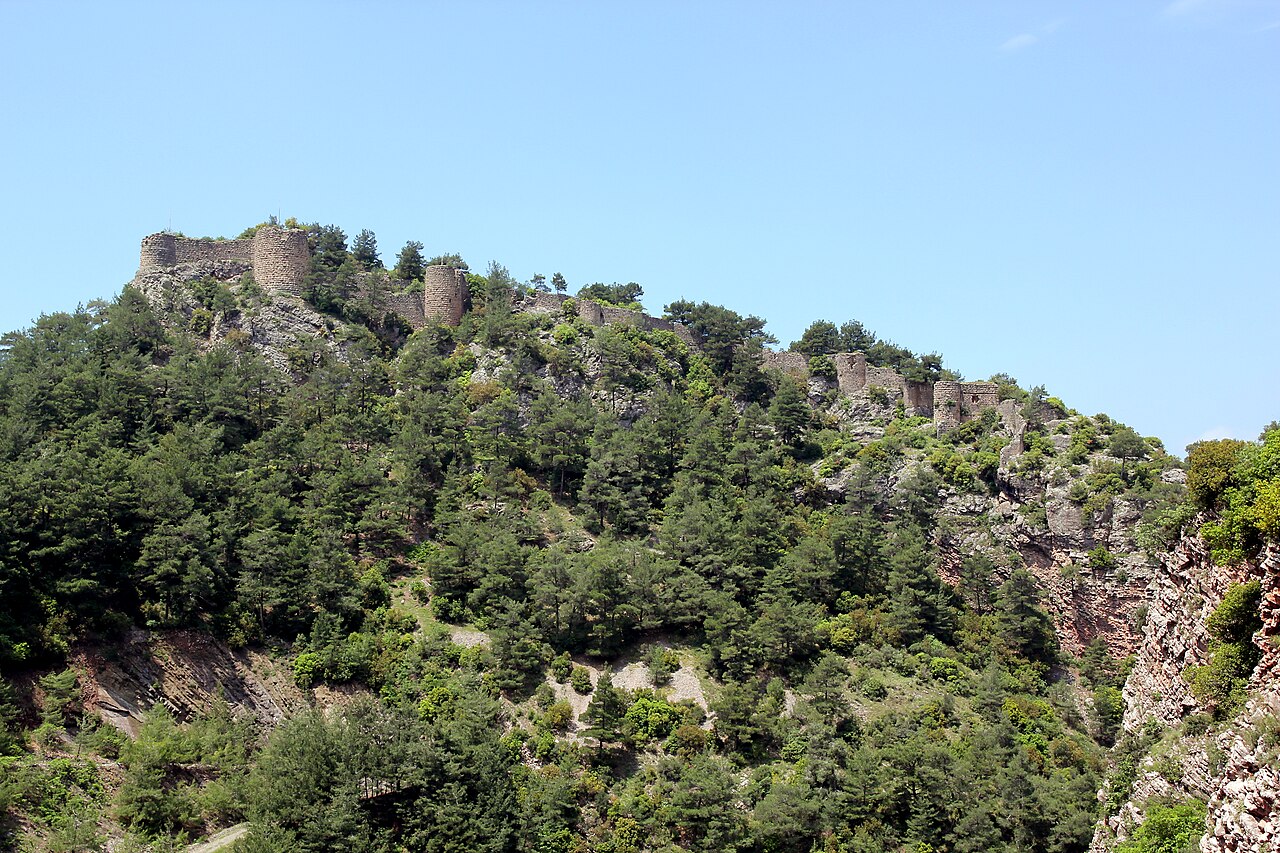
Hasanbeyli Castle
Hasanbeyli Castle, locally known as Hasanbeyli Kalesi, is a modest medieval fortification perched on a rocky outcrop in the village of Hasanbeyli, within the Osmaniye Province of southern Turkey. This castle occupies a strategic position in the historic region of Cilicia, an area that was once the heartland of the Armenian Kingdom of Cilicia from the late 11th century until the late 14th century. The castle’s primary function was military, serving as a watch post rather than a grand residence or fortress.
The castle overlooks the Amanus Gate, a critical mountain pass through the Nur Mountains (historically known as the Amanus Mountains), which formed a natural border between Cilicia and Syria. This pass was a vital route for armies and traders, making Hasanbeyli Castle an important point of surveillance and defense during the High Medieval period.
Historical context and strategic importance
The region of Cilicia was a crossroads of cultures and military campaigns, especially during the time of the Armenian Kingdom and the Crusades. Although the exact medieval name of Hasanbeyli Castle is unknown, it is believed to have been part of the defensive network protecting the kingdom’s borders. The castle’s position allowed it to monitor movement through the Amanus Gate, controlling access between the Mediterranean coast and the interior lands of the Levant.
There is speculation that Hasanbeyli Castle may have been under Crusader control at some point, given its location and architectural features common to Crusader fortifications in the region. The castle also maintained intervisibility with Savranda Castle, another significant fortification in Cilicia, enabling coordinated defense and communication across the mountain passes.
Architectural features and layout
Unlike large concentric castles or palatial fortresses, Hasanbeyli Castle was a relatively small and utilitarian structure. It likely consisted of only two stories, built to conform to the irregular rocky terrain. The castle’s plan appears to have been irregular, shaped by a broad scarped trench cut into the rock, which served as a natural defensive feature.
Today, the remains of Hasanbeyli Castle are minimal. The most visible element is a single straight wall featuring two small windows, which may have served as observation points or arrow slits. The simplicity of the surviving structure reflects the castle’s role as a passive watch post rather than a heavily fortified stronghold.
Construction materials and techniques
The castle was constructed using locally sourced stone, typical of medieval military architecture in the region. The builders utilized the natural rock outcrop to enhance the defensive capabilities of the site, minimizing the need for extensive masonry. The scarped trench around the castle would have hindered attackers and provided a clear line of sight for defenders.
Current condition and access
Hasanbeyli Castle is currently in a state of ruins, with only scant remains visible. The site is located behind a few rural residences and is not developed as a tourist attraction. The surviving wall now forms part of a small pen for farm animals, so visitors should exercise caution when approaching the site.
Due to its limited remains and lack of facilities, Hasanbeyli Castle is not considered a major destination for castle enthusiasts. However, its historical significance as a strategic watch post guarding an important mountain pass offers valuable insight into the military landscape of medieval Cilicia.
Relation to other regional fortifications
Hasanbeyli Castle’s intervisibility with Savranda Castle highlights the interconnected nature of fortifications in Cilicia. These castles formed a network that allowed for early warning signals and coordinated defense, crucial in a region marked by frequent conflicts and shifting political control during the medieval period.
Both castles exemplify the military architecture adapted to the rugged terrain of the Amanus Mountains, emphasizing surveillance and control over key transit routes rather than imposing residential grandeur.
Frequently asked questions (FAQ)
- How do I get to Hasanbeyli Castle?
- Hasanbeyli Castle is located near the village of Yeşilyurt in Osmaniye Province, Turkey. Visitors typically reach the site by car or local transport, but the castle is behind rural residences and not well signposted.
- What is the historical significance of Hasanbeyli Castle?
- Hasanbeyli Castle served as a military watch post guarding the Amanus Gate, a key mountain pass between Cilicia and Syria, during the High Medieval period. It was part of a defensive network protecting the Armenian Kingdom of Cilicia.
- Can I visit Hasanbeyli Castle today?
- Yes, visitors can access the site, but the castle is in ruins with minimal remains. The area is not developed for tourism, and the wall stands within a farm animal pen, so caution is advised.
- What architectural features remain at Hasanbeyli Castle?
- Only a single straight wall with two small windows remains visible. The castle was a simple military watch post, likely with two stories and an irregular plan adapted to the rocky terrain.
- Is Hasanbeyli Castle connected to other castles in the region?
- Yes, Hasanbeyli Castle has intervisibility with Savranda Castle, indicating a network of fortifications used for surveillance and communication across the Amanus Mountains.
Information
Loading map...
Visitor reviews
No reviews yet. Been here? Write the first review and help other travelers!
Write the first reviewVisited this castle? Share your experience
Your review helps other travelers and adds first-hand knowledge to our encyclopedia.