Seraya Loshad Fort — Russia castle

Seraya Loshad Fort

Seraya Loshad Fort: 20th-century bastioned fortress in Russia
Contemporary (20th–21st c.)

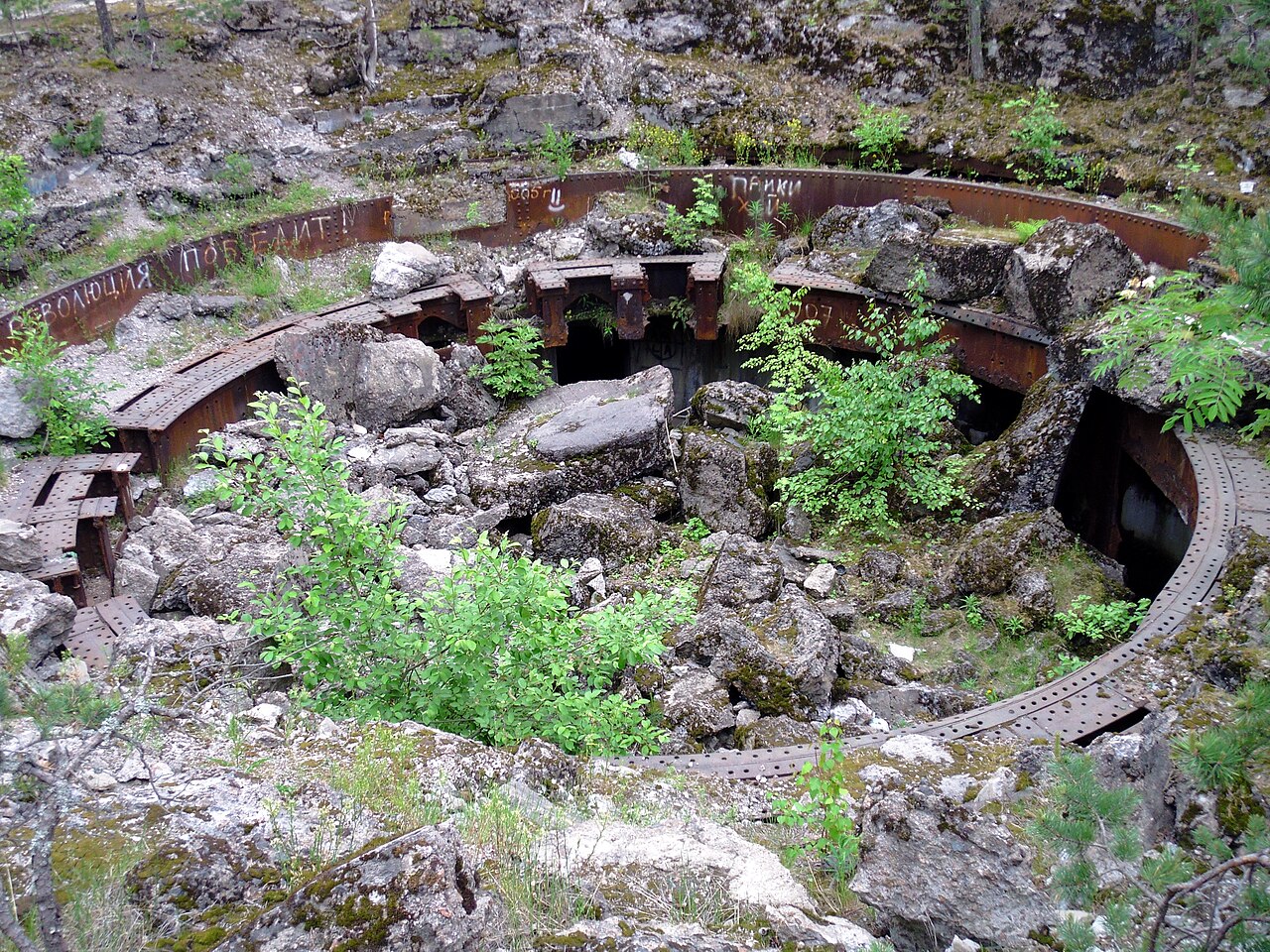
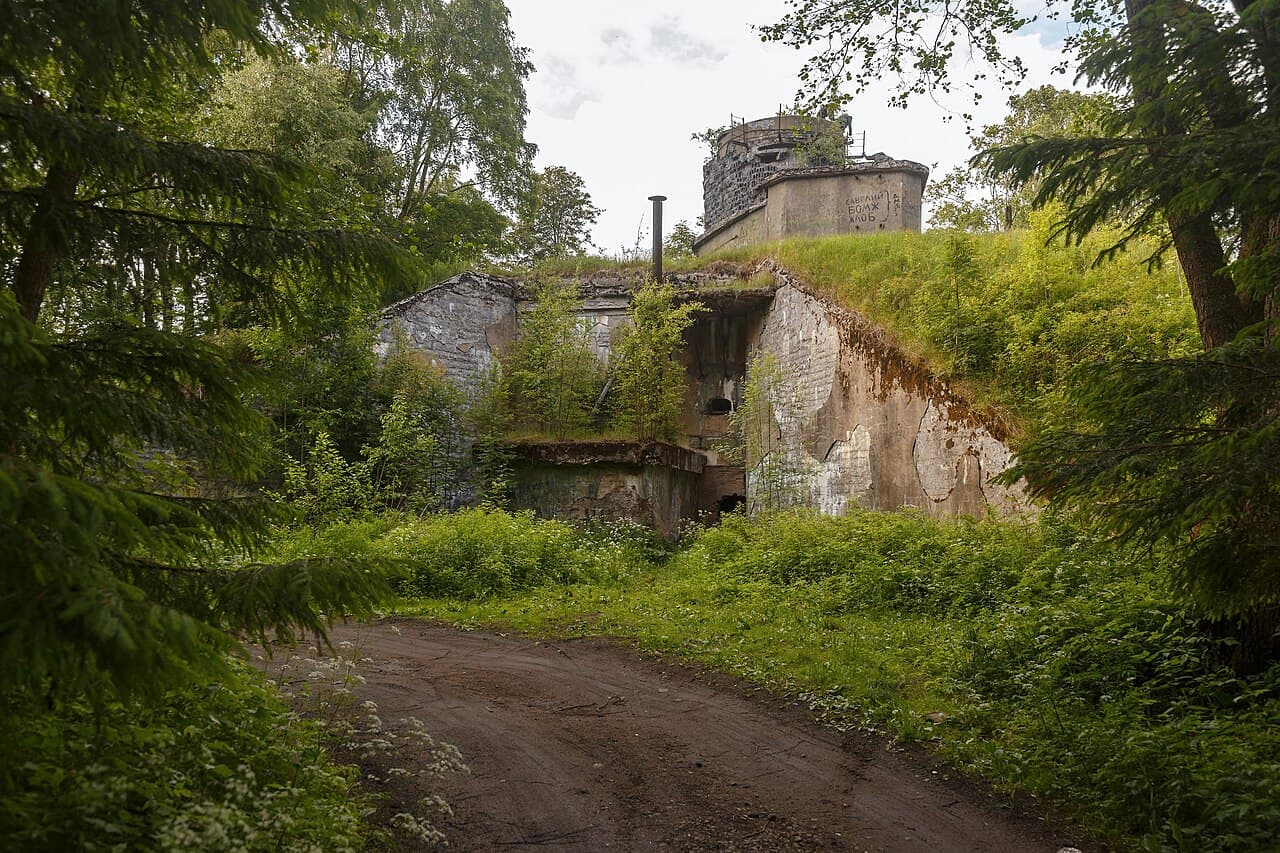
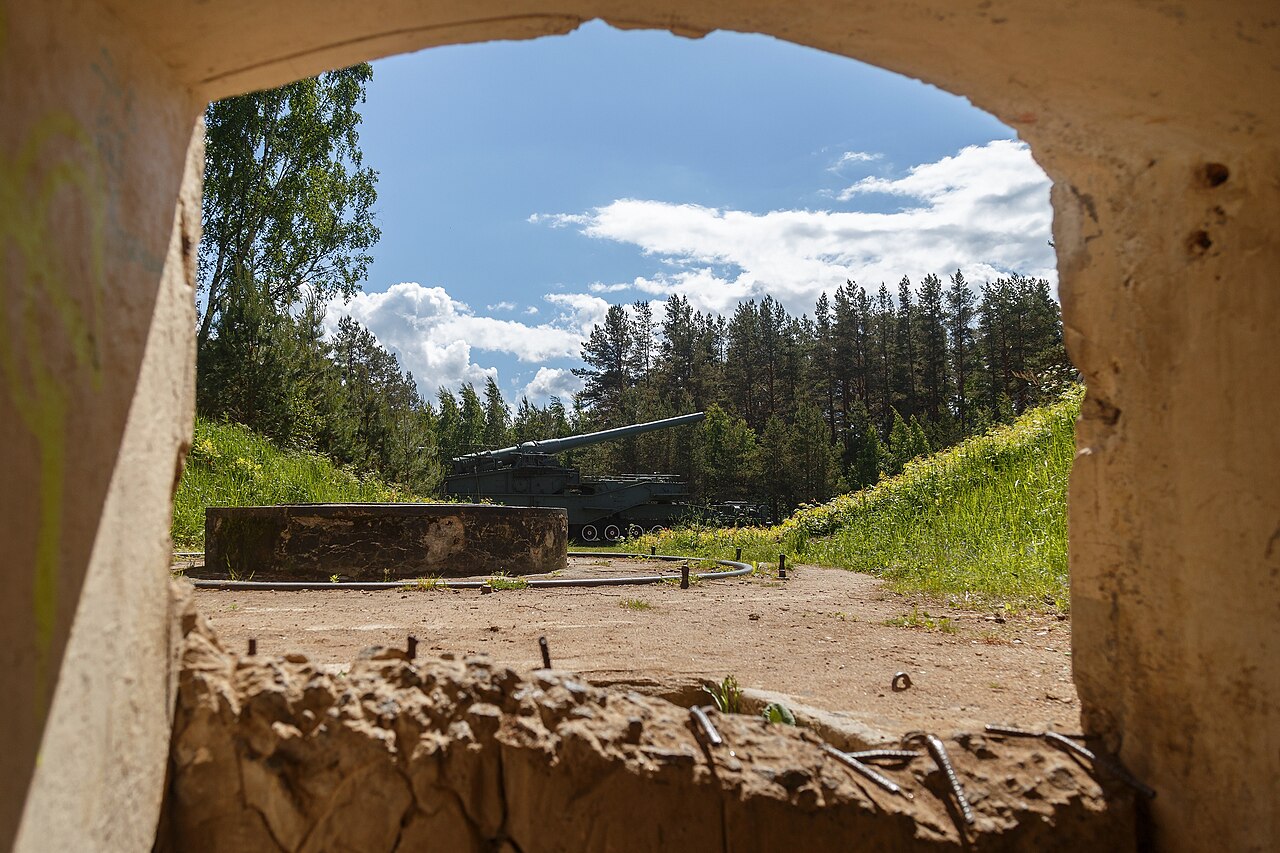
Seraya Loshad Fort is a notable example of a 20th-century bastioned fortress located in the Russian Federation. Unlike medieval castles, this fort was constructed with modern military architectural principles designed to withstand contemporary warfare threats. It reflects the evolution of fortress design into the contemporary period, focusing on defense against artillery and mechanized forces rather than traditional siege tactics.

Architectural design and features

The fort is classified as a bastioned fortress, a style characterized by angular bastions projecting from the main walls. These bastions allowed defenders to cover adjacent walls with overlapping fields of fire, eliminating blind spots and enhancing defensive capability. The design integrates reinforced concrete and modern materials, a departure from the stone and brickwork typical of earlier fortifications.

The layout likely includes thick curtain walls and low-profile bastions optimized for artillery defense. The walls would be angled to deflect incoming shells, and the fortifications would include underground shelters and armored gun emplacements. Defensive ditches or moats may be present but adapted for modern military use rather than medieval water defenses.

Historical context and purpose

Constructed during the 20th century, Seraya Loshad Fort was part of a broader trend in military architecture responding to advancements in artillery and mechanized warfare. Its purpose was to serve as a strategic military installation, likely protecting important infrastructure or serving as a stronghold in regional defense networks.

The fort's name, translating to "Gray Horse," may reference a local geographical feature or military unit, though specific historical records on its origin are limited. Its construction reflects the Soviet-era emphasis on robust defense installations across the Russian landscape.

Current condition and significance

As a contemporary bastioned fortress, Seraya Loshad Fort represents a phase of fortress construction that bridges traditional fortifications and modern military installations. Its preservation status is not widely documented, but such forts are often maintained for historical or military heritage purposes, sometimes repurposed for training or museum functions.

The fort contributes to understanding the evolution of military architecture in the 20th century, illustrating how defensive needs adapted to technological changes. It stands as a physical record of the strategic military thinking during a turbulent period in Russian and global history.

Architectural legacy and influence

Seraya Loshad Fort exemplifies the transition from classical fortress design to modern fortifications incorporating advances in engineering and materials science. The use of bastions in a contemporary context demonstrates the lasting influence of Renaissance and early modern fortification principles adapted to new warfare realities.

The fort's design likely influenced or paralleled other Soviet-era military constructions, emphasizing functionality, durability, and strategic placement. It remains a point of interest for those studying 20th-century military architecture and the development of defensive structures in Russia.

Frequently asked questions (FAQ)

What is the historical significance of Seraya Loshad Fort?
Seraya Loshad Fort is a significant historical site in the Russian Federation, reflecting the architectural and military strategies of its time. Built in the 16th century, it served as a defensive structure against invasions and played a crucial role in regional conflicts. Today, it stands as a testament to the rich history of the area and attracts history enthusiasts and researchers alike.
When was Seraya Loshad Fort constructed?
The construction of Seraya Loshad Fort began in the late 16th century, specifically around 1580. It was completed shortly thereafter, serving as a fortified outpost. Its strategic location made it a pivotal defense point during various historical events.
Is it possible to visit Seraya Loshad Fort year-round?
Yes, Seraya Loshad Fort is open to visitors year-round, although accessibility may vary depending on weather conditions. The fort is particularly enchanting in winter when the surrounding landscape is covered in snow. However, the best time to visit is during the spring and summer months when guided tours and events are frequently held.
Can I take guided tours of Seraya Loshad Fort?
Absolutely! Guided tours are available for visitors who want to learn more about the fort's history and architecture. These tours are typically led by knowledgeable guides who provide insights into the fort's strategic importance and fascinating stories from its past.
What are the opening hours for Seraya Loshad Fort?
Seraya Loshad Fort is generally open to the public from 9 AM to 6 PM daily. However, it is recommended to check the official website or contact the visitor center for any seasonal changes in hours or special events that may affect access.
Are there any nearby attractions to visit while at Seraya Loshad Fort?
Yes, there are several nearby attractions worth exploring, including beautiful natural parks and other historical sites. Visitors can enjoy scenic hikes, local museums, and cultural experiences that enrich their understanding of the region. Taking a day to explore these attractions can enhance your visit to the fort.
What are the ticket prices for visiting Seraya Loshad Fort?
Ticket prices for Seraya Loshad Fort are generally affordable, with discounts available for students and seniors. As of the latest information, adult tickets are priced at approximately 300 rubles, while children under 12 can enter for free. It’s advisable to check the official website for any updates or special promotions.
How do I get to Seraya Loshad Fort?
Seraya Loshad Fort can be accessed by car, bus, or train from major cities in the region. Public transportation options are available, and there are signs directing visitors to the fort from nearby bus stations. For those driving, ample parking is available on-site.

Photo gallery

Seraya Loshad Fort
Click to view

Photo by Alex Doorsen•CC BY-SA 4.0

1 photo • Click any image to view in full screen

Information

Bastioned Fortress

Loading map...

Visitor reviews

No reviews yet. Been here? Write the first review and help other travelers!

Write the first review

Visited this castle? Share your experience

Your review helps other travelers and adds first-hand knowledge to our encyclopedia.
Write a review

(5/5)

0/2000 characters

Your review will be visible after admin approval

Nearby castles

6.8 km
Krasnaya Gorka Fort — Russia castle

Krasnaya Gorka Fort

, Russia

Krasnaya Gorka Fort (Russian: Красная Горка, meaning "Red Hill") is a significant coastal artillery fortress situated in the Lomonosovsky District of Leningrad Oblast, Russia. It occupies a strategic position on the southern shore of the Gulf of Finland, directly opposite Kotlin Island and the naval base of the Baltic Fleet at Kronstadt. This placement underscores its historical and military importance as a defensive stronghold protecting the approaches to Saint Petersburg and the surrounding maritime areas.The fortress is classified architecturally as a bastioned fortress, a style characterized by angular bastions projecting outward from the curtain walls, designed to provide overlapping fields of fire and to resist artillery bombardment effectively. Krasnaya Gorka was constructed in the 20th century, aligning it with the era of modern military fortifications that incorporated advances in artillery technology and coastal defense strategies.Historical context and strategic significanceThe site of Krasnaya Gorka has a long military history, with fortifications existing there since the 18th century, although the current fortress complex primarily dates from the early 20th century. Its primary role was to defend the naval approaches to Kronstadt, the key base of the Russian Baltic Fleet, and to control access to the Gulf of Finland. This made it critical during both World Wars and the interwar period as a coastal defense installation.During World War I and the Russian Civil War, the fortress played a defensive role, and later in World War II, it was part of the Soviet Union's extensive coastal defense network. Its artillery batteries were positioned to cover the sea lanes and prevent enemy naval forces from penetrating the gulf and threatening the city of Leningrad (now Saint Petersburg).Architectural features and fortificationsKrasnaya Gorka Fort exhibits typical characteristics of bastioned fortresses adapted for coastal defense. The design includes multiple bastions that project from the main walls, allowing defenders to cover adjacent walls with cannon fire. The fortress walls are reinforced to withstand modern artillery shelling, with thick concrete and earthworks integrated into the structure.The fortress complex includes artillery batteries equipped with large-caliber coastal guns, observation posts, ammunition storage facilities, and underground shelters for the garrison. These features reflect the evolution of military architecture in response to the increasing power of naval artillery and the need for durable, well-protected defensive positions.Defensive layoutThe layout of Krasnaya Gorka is designed to maximize its defensive capabilities against naval attack. Its position on a hill overlooking the Gulf of Finland provides clear lines of sight and firing arcs. The bastions are arranged to create overlapping fields of fire, minimizing blind spots and allowing defenders to engage enemy ships approaching from multiple directions.Construction materials and techniquesThe fortress was constructed using reinforced concrete, steel, and earthworks, materials typical of early 20th-century military fortifications. These materials provided resilience against bombardment and helped absorb the impact of shells. The use of underground tunnels and magazines also helped protect personnel and munitions from direct hits.Current condition and preservationToday, Krasnaya Gorka Fort is considered a partially preserved military heritage site. While some of its artillery installations and structures remain intact, others have fallen into disrepair due to decades of neglect following the reduction of its military importance after World War II and the Cold War era.The site attracts interest from military historians, tourists, and enthusiasts of coastal fortifications. Efforts have been made to preserve parts of the complex, though it is not fully restored or maintained as a museum. Visitors can explore the ruins and remaining fortifications, gaining insight into early 20th-century coastal defense strategies.Visitor information and accessibilityKrasnaya Gorka Fort is accessible to visitors interested in military history and architecture. However, due to its condition and location, access may be limited, and visitors should check local guidelines before planning a visit. The fortress is often visited in conjunction with tours of the Gulf of Finland's maritime defenses and the nearby Kronstadt naval base area.Nearby attractionsThe proximity of Krasnaya Gorka to Kronstadt and Saint Petersburg makes it part of a broader historical and cultural itinerary. Visitors can explore the naval museums, historic fortifications, and architectural landmarks in the region, enriching their understanding of Russia's maritime defense history.

Contemporary (20th–21st c.)
Details
22.1 km
Fort Ino — Russia castle

Fort Ino

, Russia

Fort Ino, also known as Fort Nikolaevsky, is a coastal bastioned fortress constructed in the early 20th century on the northern shore of Neva Bay in the Gulf of Finland. This fortification was part of a strategic defensive network designed to protect the approaches to the important city of Saint Petersburg (then Petrograd) from naval threats. Located near the present-day settlement of Privetninskoye (formerly Ino until 1946) in the Vyborgsky District of Leningrad Oblast, Fort Ino stands opposite the Krasnaya Gorka fort on the southern shore, together forming a crossfire defense system controlling the bay. Historical context and strategic importance The construction of Fort Ino began in the early 1900s as part of the Russian Empire's efforts to strengthen its coastal defenses during a period of growing naval tensions in the Baltic region. Its primary role was to serve as a bastioned fortress guarding the northern maritime approaches to the Gulf of Finland, a critical access point to the capital. The fort was designed to work in conjunction with other fortifications, including Krasnaya Gorka, to create overlapping fields of artillery fire, deterring enemy ships from advancing toward Saint Petersburg. During the Russo-Japanese War and the World War I era, Fort Ino was equipped with heavy coastal artillery pieces and reinforced with modern military engineering techniques of the time. Although it saw limited combat action, the fortress was a significant element of the defensive strategy of the region. Architectural features and layout Fort Ino is classified as a bastioned fortress, a style characterized by angular bastions projecting outward from the main walls to provide defensive coverage of adjacent walls and approaches. This design allowed defenders to cover all sides of the fort with overlapping fields of fire, minimizing blind spots. The fortress includes multiple artillery batteries positioned to command the bay, extensive underground tunnels connecting various parts of the complex, and fortified gun emplacements. The underground passages were designed to protect personnel and munitions from enemy bombardment and allowed for secure movement within the fortification. The walls and structures were built using reinforced concrete and steel, reflecting the contemporary military construction technologies of the early 20th century. The fortress also featured observation posts and command bunkers to coordinate its defensive operations. Later history and current condition Following the upheavals of the Russian Revolution and the subsequent wars, Fort Ino gradually lost its military significance. After World War II, the fort was abandoned and fell into a state of disrepair. Today, it remains under Russian control but is largely in ruins, with many of its structures partially preserved. The extensive system of tunnels is a notable feature that intrigues visitors and historians alike. While the fortress is abandoned, parts of it are accessible to the public, offering a glimpse into early 20th-century military architecture and coastal defense strategies. Visiting Fort Ino Fort Ino is located near Privetninskoye in the Leningrad Oblast region, accessible by local roads. Visitors interested in military history and coastal fortifications often explore the ruins, including the tunnels, though caution is advised due to the deteriorated condition of some structures. The site provides a tangible connection to Russia's coastal defense heritage and the turbulent history of the Baltic region during the 20th century. Preservation and cultural significance Despite its ruined state, Fort Ino is recognized for its cultural and historical value. It represents a period of transition in military architecture, bridging traditional bastioned designs with modern concrete fortifications. The fortress is a subject of interest for historians, architects, and enthusiasts of military heritage, highlighting the strategic importance of the Gulf of Finland in Russian defense planning.

Contemporary (20th–21st c.)
Details
28 km
Fort Alexander I — Russia castle

Fort Alexander I

, Russia

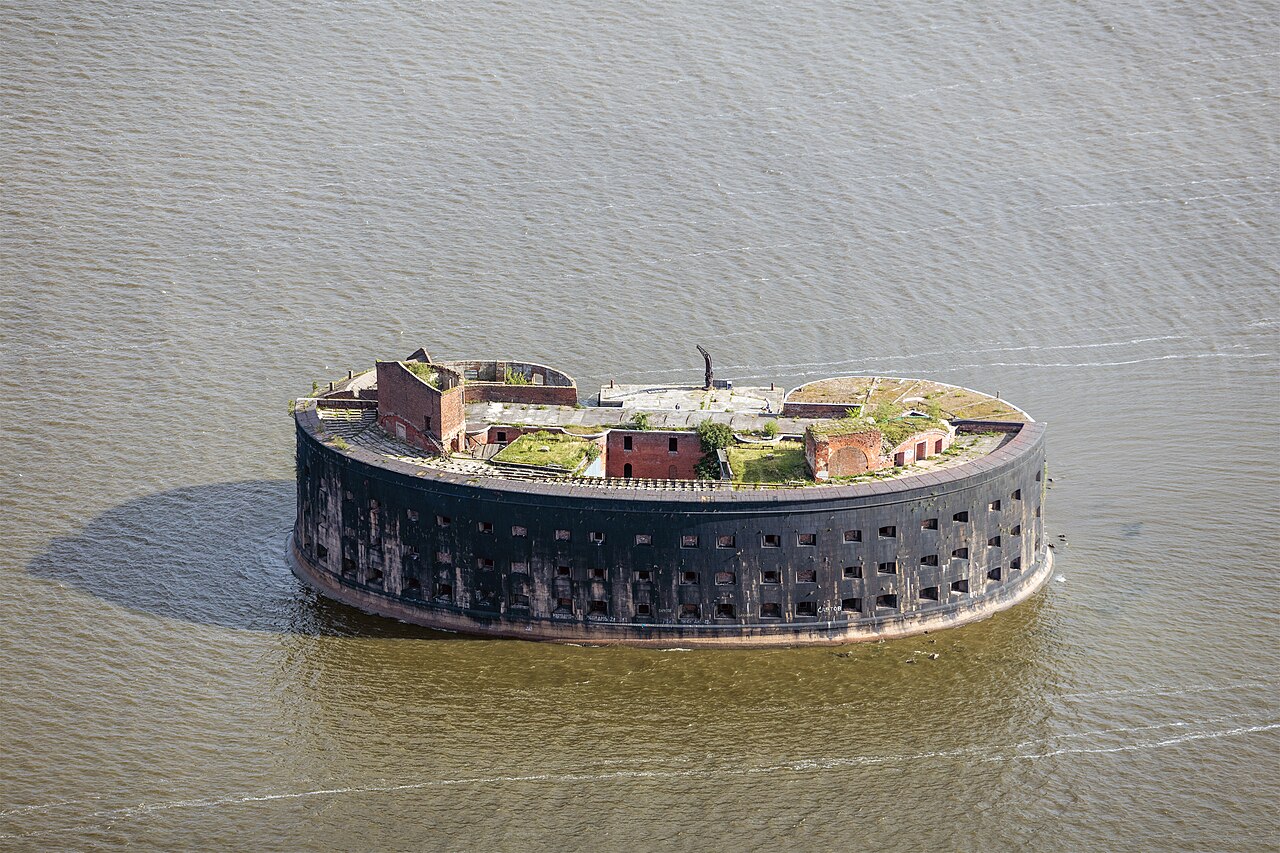
Fort Alexander I, also known as the Plague Fort (Russian: Форт Александр Первый, Fort Aleksandr Perviy; Чумный форт, Chumnyi fort), is a distinctive 19th-century bastioned fortress located on an artificial island in the Gulf of Finland near Kronstadt, Russia. It forms part of the extensive Kronstadt Fortress system, which was built to protect the approaches to Saint Petersburg from naval threats. The fort's unique history and architecture make it a remarkable example of modern military engineering in the Russian Empire during the late 19th century. Historical context and strategic importance Constructed in the 19th century as a response to the increasing naval power of potential adversaries, Fort Alexander I was designed to strengthen the defense of the vital maritime gateway to Saint Petersburg. The fort's location on an artificial island was a strategic choice, allowing it to control naval access through the Gulf of Finland effectively. It was part of a broader network of sea forts that included other fortifications around Kronstadt, creating a formidable defensive ring. Architectural design and fortifications The fort exemplifies the bastioned fortress design, a style characterized by angular bastions projecting outward from the main walls, allowing defenders to cover adjacent walls with overlapping fields of fire. This design was a key feature of coastal and sea fortifications in the 19th century, intended to resist bombardment and amphibious assault. The fort's walls were constructed using robust masonry and reinforced with iron and concrete, materials that reflected advances in military architecture of the period. Its artificial island foundation was engineered to support the heavy weight of the fort's walls and artillery emplacements. The fort included multiple gun batteries, barracks, magazines, and defensive ditches, all arranged to maximize its defensive capabilities against naval attacks. The plague research laboratory From 1899 to 1917, Fort Alexander I served a distinctive role beyond its military function. It housed a research laboratory dedicated to the study of plague and other bacterial diseases. This laboratory was part of Russia's efforts to understand and combat infectious diseases at a time when bacteriology was rapidly advancing. The isolated location of the fort made it an ideal site for such research, minimizing the risk of contagion to the mainland population. The laboratory conducted experiments and developed vaccines, contributing to early bacteriological science. The fort's association with plague research earned it the nickname "Plague Fort," a testament to its unique place in medical as well as military history. Later history and current status After the laboratory closed in 1917, the fort's military significance declined with changes in naval warfare and technology. Over time, Fort Alexander I fell into a state of disuse and partial ruin. Today, it stands as a historical monument and an intriguing example of 19th-century coastal fortifications. While it is not regularly open to the public, it attracts interest from historians, architects, and tourists fascinated by its unique blend of military and medical history. Preservation efforts have been limited, and the fort remains in a partially preserved condition, with many of its original structures still visible but deteriorating. Its remote location on an artificial island presents challenges for restoration and maintenance. Architectural and cultural significance Fort Alexander I represents an important phase in the evolution of military architecture, showcasing the transition from traditional masonry fortresses to more modern constructions incorporating new materials and technologies. Its dual role as a defensive bastion and a medical research facility underscores the multifaceted uses of such structures in the late 19th and early 20th centuries. The fort is also a cultural landmark in the Russian Federation, symbolizing both the military heritage of the Kronstadt region and the pioneering efforts in infectious disease research. Its presence in the Gulf of Finland continues to draw attention to the strategic and scientific history of the area.

Modern (19th–20th c.)
Details