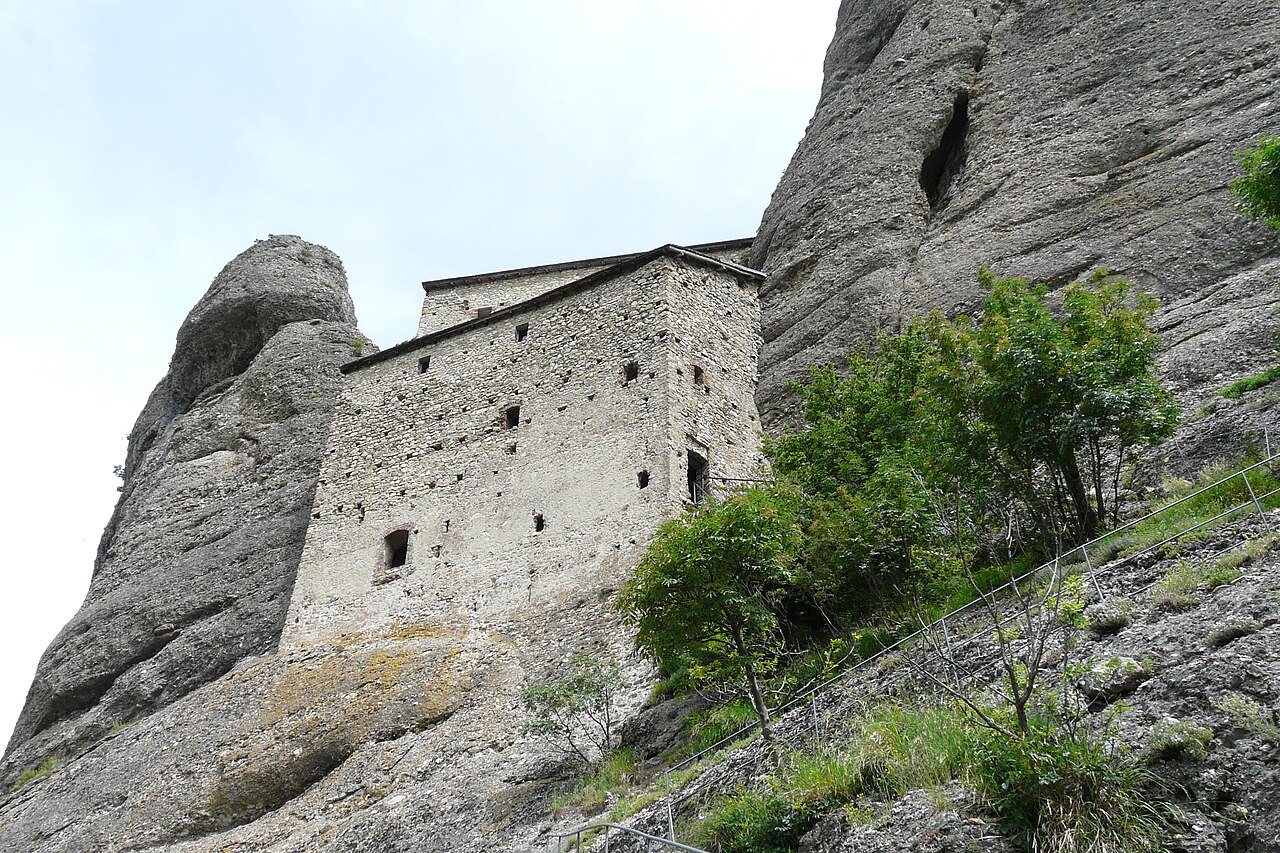
Senarega Castle
Senarega Castle stands as a notable example of a high medieval hill castle located in the hamlet of Senarega within the municipality of Valbrevenna, Liguria, Italy. Constructed originally in the 12th century by the Senarega family, this castle embodies the architectural and historical characteristics typical of medieval fortifications in the Ligurian Apennines. The site reflects a blend of defensive and residential functions, evolving over centuries to meet the needs of its noble owners.
Early construction and architectural features
The earliest component of Senarega Castle was a medieval tower built in the 12th century, which served primarily as a lookout and defensive stronghold. This tower is characterized by its simple, robust square shape, a common feature in Ligurian medieval military architecture. Narrow arrow slits punctuate the walls, providing archers with protected vantage points to defend against attackers. The tower’s strategic placement on a hilltop allowed commanding views of the surrounding landscape, crucial for early warning and territorial control.
During the 15th century, the Senarega family expanded the castle by adding a lower block or palazzo adjacent to the original tower. This addition maintained the castle’s geometric simplicity, with a square footprint and sturdy stone masonry that harmonized with the existing tower. The palazzo included multiple functional rooms: on the ground floor, a large fireplace was installed to heat the main living area, while the upper floor housed a wooden oven used for cooking and baking. This combination of defensive and domestic architecture illustrates the dual role of the castle as both a fortress and a noble residence.
Underground passages and prison facilities
One of the most intriguing features of Senarega Castle is its extensive system of underground passages connecting the castle to the nearby church of Santa Maria Assunta. These secret tunnels likely served multiple purposes, including discreet movement during times of conflict or siege, and possibly as escape routes. The existence of such passages is a testament to the strategic planning and security concerns of the castle’s medieval inhabitants.
During the period of Fieschi family ownership, which began in 1685, parts of the castle’s subterranean areas were adapted for use as a prison. Notably, a torture chamber was established within the palazzo, equipped with iron rings fixed into the ceilings and walls. A particularly grim feature was a trapdoor leading to a vertical chute lined with iron blades, designed to execute condemned prisoners by decapitation. This dark aspect of the castle’s history reflects the judicial and punitive functions castles sometimes assumed in early modern Italy.
Historical ownership and significance
The castle remained under the control of the Senarega family until the late 17th century, when it was acquired by the influential Fieschi family from the Savignone branch, who held the title of Counts of Lavagna. Under the Fieschi, Senarega Castle shifted from a primarily defensive stronghold to an administrative center, reflecting broader changes in the political landscape of Liguria during the early modern period.
The Fieschi family's tenure lasted until the Napoleonic reforms of 1797, which abolished imperial fiefs in Liguria and transformed the region’s feudal structure. Following this, in 1838, the castle was transferred to the local parish, marking a new phase in its functional history.
Modern usage and restoration efforts
In the 20th century, Senarega Castle served various community functions, including operation as a rehabilitation center for addiction recovery. After this use ended, the castle fell into disuse until 2014, when it was leased to the nearby Antola Park Authority. With funding from European cultural preservation programs, significant restoration work was undertaken to stabilize and conserve the castle’s structure and unique architectural features.
These restoration efforts have preserved key elements such as the medieval tower, the palazzo’s fireplaces and ovens, the defensive arrow slits, and the underground prison facilities. Today, the castle stands as a well-preserved example of Ligurian medieval architecture, offering visitors insights into the region’s feudal past, defensive strategies, and noble lifestyles.
Architectural layout and defensive features
The castle’s layout is straightforward, with the original tower linked to the palazzo by internal access points. The tower’s narrow arrow slits and elevated position provided effective defense, while the palazzo’s rooms combined residential comfort with security. The large fireplace on the ground floor and the wooden oven above indicate the castle’s role as a home as well as a fortress.
Cultural and heritage importance
Senarega Castle is significant not only for its architectural features but also for its role in the local history of Liguria. It reflects the evolution of medieval fortifications into noble residences and administrative centers. The castle’s connection to prominent families like the Senarega and Fieschi highlights its importance in regional power dynamics.
Its preservation and restoration contribute to the cultural heritage of Valbrevenna and Liguria, attracting visitors interested in medieval history, architecture, and the complex social histories of Italian hill castles.
Frequently asked questions (FAQ)
- How do I visit Senarega Castle?
- Senarega Castle is located in the hamlet of Senarega, Valbrevenna, Liguria. Visitors can reach it by local roads, and it is advisable to check with the Antola Park Authority for current visiting hours and access details.
- What is the historical significance of Senarega Castle?
- Senarega Castle dates back to the 12th century and was built by the Senarega family. It played a defensive and administrative role in Liguria and was later owned by the Fieschi family, reflecting regional power shifts.
- Are there any unique architectural features at Senarega Castle?
- Yes, the castle features a medieval tower with narrow arrow slits, a 15th-century palazzo with a large fireplace and wooden oven, and underground passages connecting to the nearby church of Santa Maria Assunta.
- Can I explore the underground passages and prison areas?
- Access to underground passages and prison areas may be limited due to safety concerns. Visitors should inquire locally for guided tours or special access arrangements.
- When was the castle restored?
- Significant restoration of Senarega Castle took place after 2014, funded by European cultural preservation programs, to conserve its medieval structures and unique features.
Information
Sources & official resources
Verify the information above using these authoritative references.
Loading map...
Visitor reviews
No reviews yet. Been here? Write the first review and help other travelers!
Write the first reviewVisited this castle? Share your experience
Your review helps other travelers and adds first-hand knowledge to our encyclopedia.