Scotty’s Castle
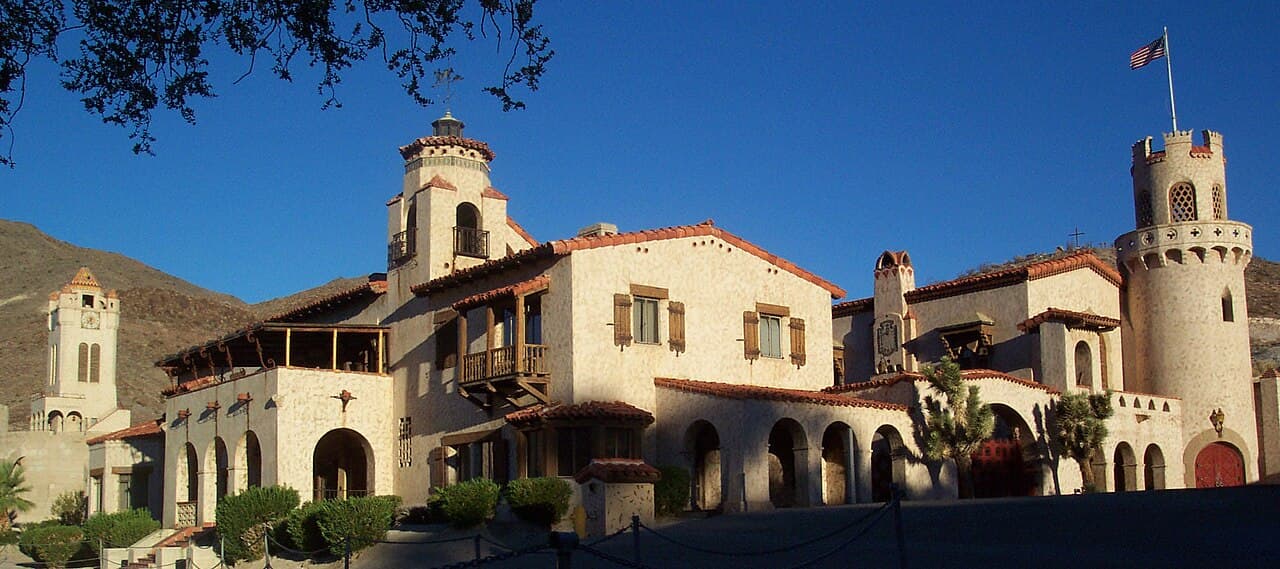
Scotty's Castle, located in the remote northern region of Death Valley National Park, California, stands as a remarkable testament to early 20th-century desert architecture and the colorful history of the American West. This distinctive Spanish-style mansion was constructed during the 1920s and early 1930s, embodying the spirit of the Roaring Twenties and the subsequent Great Depression era. Nestled in the green oasis of Grapevine Canyon, the castle contrasts starkly with the harsh desert surroundings, offering a lush refuge that has fascinated visitors for decades.
The castle is often associated with the enigmatic figure Death Valley Scotty, whose real name was Walter Scott. Scotty was a flamboyant showman and storyteller who captivated audiences with tales of secret gold mines and hidden fortunes in Death Valley. However, the true patron behind the castle was Albert Mussey Johnson, a wealthy Chicago businessman and engineer. Johnson financed and oversaw the construction of the estate as a luxurious vacation home for himself and his wife, Bessie. Their friendship with Scotty, who served as a charismatic guide and entertainer, added a layer of mystery and legend to the property.
Architectural design and features
Scotty's Castle is an excellent example of Spanish Colonial Revival architecture, a style popular in the southwestern United States during the early 20th century. The design incorporates elements such as stucco walls, red tile roofs, wrought iron details, and arched doorways and windows. The estate includes multiple buildings, courtyards, and terraces that blend indoor and outdoor living spaces harmoniously.
The castle's interior showcases elegant craftsmanship with handcrafted tiles, intricate woodwork, and decorative ironwork. Notable features include a grand music room with a pipe organ, a cozy library, and spacious guest rooms that reflect the luxury and comfort intended by its owners. The estate also had modern amenities for its time, such as a water system and electricity, which were engineering feats given the remote desert location.
Historical context and significance
The construction of Scotty's Castle began in the mid-1920s and continued intermittently into the early 1930s. The project was interrupted by the Great Depression, which affected funding and progress. Despite these challenges, the castle was completed to a high standard and served as a retreat from urban life for the Johnsons and their guests.
The castle's story is intertwined with the legend of Death Valley Scotty, whose colorful persona and tales of hidden mines attracted media attention and public curiosity. The friendship between Scotty and Johnson was unusual, bridging social and economic divides. Scotty never owned the castle but lived nearby and entertained visitors, adding to the castle's mystique.
Preservation and public access
Today, Scotty's Castle is managed by the National Park Service and remains a popular destination for tourists exploring Death Valley. The estate is recognized for its cultural and historical importance, representing an era of American history marked by adventure, innovation, and resilience.
The castle suffered damage during a flood in 2015 and has been under restoration to preserve its unique architectural features and historical integrity. Visitors can tour the castle and grounds, learning about the fascinating stories of its inhabitants and the engineering marvels that made the desert retreat possible.
Visitor experience and tours
Guided tours of Scotty's Castle offer insights into the lives of the Johnson family and Death Valley Scotty, the construction techniques used, and the challenges of building in such an arid environment. The castle's lush gardens, terraces, and courtyards provide a striking contrast to the surrounding desert landscape, enhancing the visitor experience.
Visitors are encouraged to check current access conditions and tour availability, as restoration work may affect visiting hours. The castle's remote location requires careful planning for travel, but the combination of history, architecture, and natural beauty makes it a rewarding destination.
Frequently asked questions (FAQ)
- What is the best time to visit Scotty's Castle?
- The best time to visit Scotty's Castle is during the cooler months from October to April, when temperatures in Death Valley are more comfortable for exploring the desert environment.
- How do I get to Scotty's Castle?
- Scotty's Castle is located in the northern part of Death Valley National Park. Visitors typically reach it by car via State Route 267 and a gravel road. It's important to check road conditions before traveling, especially after rain.
- Can I take guided tours inside Scotty's Castle?
- Yes, guided tours are available and provide detailed information about the castle's history, architecture, and the intriguing story of Death Valley Scotty and the Johnson family.
- Is Scotty's Castle wheelchair accessible?
- Due to its historic nature and terrain, Scotty's Castle has limited wheelchair accessibility. Visitors with mobility concerns should contact the National Park Service for the most current accessibility information.
- Why is Scotty's Castle historically significant?
- Scotty's Castle is historically significant as a unique example of Spanish Colonial Revival architecture and for its association with the colorful figure Death Valley Scotty and the Johnson family during the early 20th century.
Photo gallery

Public domain
Information
Current owner
National Park Service
Loading map...
Visitor reviews
No reviews yet. Been here? Write the first review and help other travelers!
Write the first reviewVisited this castle? Share your experience
Your review helps other travelers and adds first-hand knowledge to our encyclopedia.