Excalibur Hotel

Excalibur Hotel Las Vegas: a modern castle resort with medieval charm
Post-Renaissance (17th–18th c.)
Well Preserved

The Excalibur Hotel in Las Vegas, Nevada, is a unique modern resort that draws inspiration from medieval castle architecture to create a striking and memorable presence on the world-famous Las Vegas Strip. Opened in 1990, the hotel is part of the MGM Resorts International portfolio and is instantly recognizable for its fairytale castle facade complete with turrets, towers, and battlements that evoke the romantic imagery of a medieval fortress. While not a historical castle, the Excalibur blends themed entertainment with hospitality, offering guests a unique castle-inspired experience in a contemporary setting.

Architecture and design inspired by medieval castles

The castle structure at Excalibur serves as the centerpiece of the hotel complex, housing the main reception area and numerous guest amenities. Its design incorporates tall towers and crenellated walls that mimic the defensive features of a traditional medieval castle. The exterior is painted in bright colors to enhance the fantasy aesthetic, making it a popular subject for visitors and photographers alike.

The hotel complex includes two adjacent towers of guest accommodation, which rise alongside the castle to provide a total of approximately 4,000 rooms. These towers continue the castle theme with their pointed roofs and decorative elements reminiscent of medieval architecture, though they are constructed with modern building materials and techniques.

Facilities and entertainment offerings

Beyond its architectural theme, the Excalibur Hotel is a full-service resort featuring a large casino, multiple restaurants, theaters, and swimming pools. It caters to a wide range of visitors, from families to gaming enthusiasts, offering a blend of leisure and entertainment.

One of the hotel's signature attractions is the Tournament of Kings dinner show, a medieval-themed spectacle that immerses guests in a dramatic reenactment of knights, kings, and courtly life. The show features choreographed jousting, music, and theatrical performances, all staged in a specially designed arena within the castle. Audience members enjoy a themed feast eaten with their hands, enhancing the immersive experience.

Seasonal and holiday events

The Tournament of Kings show has become a beloved tradition, especially during the holiday season when it transforms into "Tournament of Kings: 'Twas the Knight". Running annually from late November through December, the arena is decorated as a winter wonderland with holiday costumes, banners, and festive lighting. The show incorporates holiday music and storytelling, creating a unique blend of medieval fantasy and seasonal celebration.

Guests can enjoy a special holiday meal featuring dishes such as roasted Cornish game hen, sweet potatoes, and hand-decorated sugar cookies, all served in the style of a medieval banquet. This seasonal event draws many visitors seeking a festive and entertaining experience on the Strip.

Location and accessibility

The Excalibur Hotel is located at 3850 S Las Vegas Blvd, placing it in the heart of the Las Vegas Strip's vibrant entertainment district. Its central location makes it easily accessible to tourists and locals alike, with numerous other resorts, casinos, and attractions nearby.

The hotel offers convenient amenities including parking, shuttle services, and proximity to McCarran International Airport. Its family-friendly atmosphere and themed environment make it a popular choice for visitors looking for both excitement and a touch of fantasy during their stay in Las Vegas.

Legacy and cultural significance

Though the Excalibur Hotel is not a historic castle, it holds a distinctive place in the cultural landscape of Las Vegas. Its deliberate use of medieval castle motifs as part of a large-scale resort design reflects the city's penchant for themed entertainment and architectural spectacle.

The hotel has contributed to the popular imagination of medieval times through its Tournament of Kings show and castle imagery, making it a notable example of how castle architecture can be reinterpreted in modern hospitality contexts. It continues to attract visitors who appreciate the blend of fantasy, history-inspired design, and contemporary luxury.

Visitor information

  • Opening hours: The hotel and casino operate 24/7, while the Tournament of Kings show has scheduled performances, especially during the holiday season.
  • Ticket prices: Tickets for the Tournament of Kings start around $51.86, with discounts for Nevada residents and complimentary admission for children under three.
  • Booking: Tickets are available online, at the box office, or by phone.

Overall, the Excalibur Hotel offers a distinctive blend of medieval castle architecture and modern resort amenities, making it a unique destination on the Las Vegas Strip for those seeking an immersive and entertaining castle experience.

Frequently asked questions (FAQ)

What is the architectural style of the Excalibur Hotel castle?
The Excalibur Hotel castle is designed in a romantic neo-Gothic style, featuring turrets, battlements, and towers inspired by medieval castles.
When was the Excalibur Hotel opened?
The Excalibur Hotel opened in 1990 and has been a prominent themed resort on the Las Vegas Strip since then.
What is the Tournament of Kings show at Excalibur?
Tournament of Kings is a medieval-themed dinner show featuring jousting, knights, and a feast served to the audience in a castle arena.
Where is the Excalibur Hotel located?
Excalibur Hotel is located at 3850 S Las Vegas Blvd, in the heart of the Las Vegas Strip, Nevada.
Can I buy tickets for the Tournament of Kings online?
Yes, tickets for the Tournament of Kings show can be purchased online through the official MGM Resorts website or at the hotel box office.
Are there special holiday events at the Excalibur Hotel?
Yes, the Tournament of Kings show transforms into a holiday-themed event called 'Twas the Knight' from late November through December, featuring festive decorations and seasonal performances.

Information

Palace Castle

Opening hours

24/7 for hotel and casino; showtimes vary

Ticket prices

From $51.86 for Tournament of Kings show

Current owner

MGM Resorts International

Address

3850 S Las Vegas Blvd, Las Vegas

Loading map...

Visitor reviews

No reviews yet. Been here? Write the first review and help other travelers!

Write the first review

Visited this castle? Share your experience

Your review helps other travelers and adds first-hand knowledge to our encyclopedia.
Write a review

(5/5)

0/2000 characters

Your review will be visible after admin approval

Nearby castles

176.3 km
Scotty’s Castle — United States of America castle

Scotty’s Castle

Death Valley National Park, United States of America

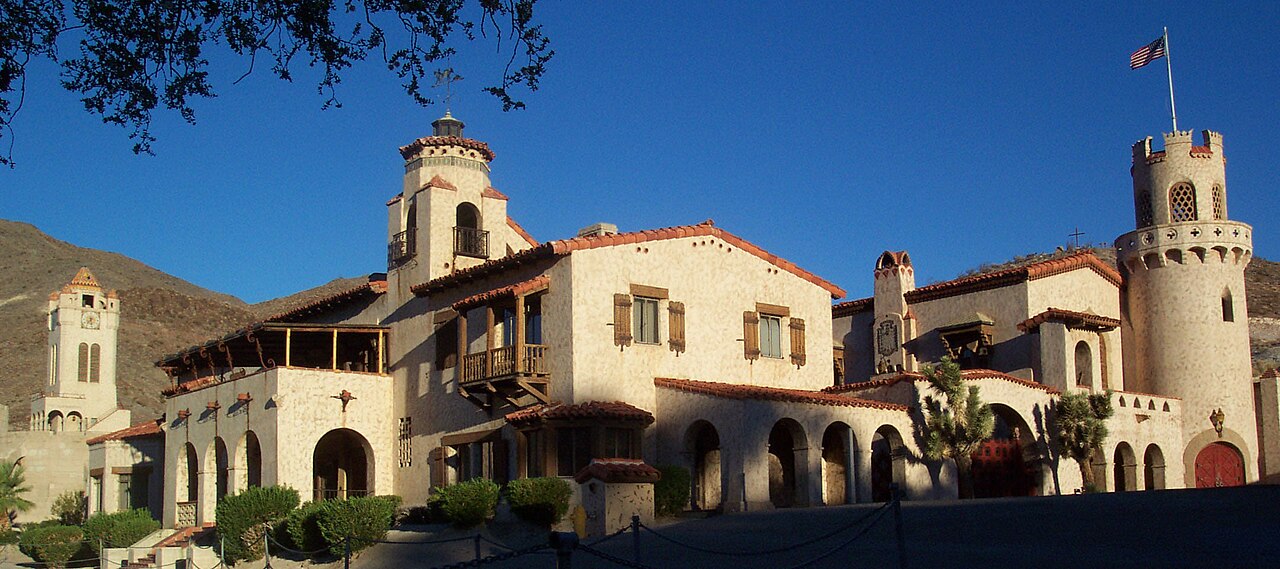
Scotty's Castle, located in the remote northern region of Death Valley National Park, California, stands as a remarkable testament to early 20th-century desert architecture and the colorful history of the American West. This distinctive Spanish-style mansion was constructed during the 1920s and early 1930s, embodying the spirit of the Roaring Twenties and the subsequent Great Depression era. Nestled in the green oasis of Grapevine Canyon, the castle contrasts starkly with the harsh desert surroundings, offering a lush refuge that has fascinated visitors for decades.The castle is often associated with the enigmatic figure Death Valley Scotty, whose real name was Walter Scott. Scotty was a flamboyant showman and storyteller who captivated audiences with tales of secret gold mines and hidden fortunes in Death Valley. However, the true patron behind the castle was Albert Mussey Johnson, a wealthy Chicago businessman and engineer. Johnson financed and oversaw the construction of the estate as a luxurious vacation home for himself and his wife, Bessie. Their friendship with Scotty, who served as a charismatic guide and entertainer, added a layer of mystery and legend to the property.Architectural design and featuresScotty's Castle is an excellent example of Spanish Colonial Revival architecture, a style popular in the southwestern United States during the early 20th century. The design incorporates elements such as stucco walls, red tile roofs, wrought iron details, and arched doorways and windows. The estate includes multiple buildings, courtyards, and terraces that blend indoor and outdoor living spaces harmoniously.The castle's interior showcases elegant craftsmanship with handcrafted tiles, intricate woodwork, and decorative ironwork. Notable features include a grand music room with a pipe organ, a cozy library, and spacious guest rooms that reflect the luxury and comfort intended by its owners. The estate also had modern amenities for its time, such as a water system and electricity, which were engineering feats given the remote desert location.Historical context and significanceThe construction of Scotty's Castle began in the mid-1920s and continued intermittently into the early 1930s. The project was interrupted by the Great Depression, which affected funding and progress. Despite these challenges, the castle was completed to a high standard and served as a retreat from urban life for the Johnsons and their guests.The castle's story is intertwined with the legend of Death Valley Scotty, whose colorful persona and tales of hidden mines attracted media attention and public curiosity. The friendship between Scotty and Johnson was unusual, bridging social and economic divides. Scotty never owned the castle but lived nearby and entertained visitors, adding to the castle's mystique.Preservation and public accessToday, Scotty's Castle is managed by the National Park Service and remains a popular destination for tourists exploring Death Valley. The estate is recognized for its cultural and historical importance, representing an era of American history marked by adventure, innovation, and resilience.The castle suffered damage during a flood in 2015 and has been under restoration to preserve its unique architectural features and historical integrity. Visitors can tour the castle and grounds, learning about the fascinating stories of its inhabitants and the engineering marvels that made the desert retreat possible.Visitor experience and toursGuided tours of Scotty's Castle offer insights into the lives of the Johnson family and Death Valley Scotty, the construction techniques used, and the challenges of building in such an arid environment. The castle's lush gardens, terraces, and courtyards provide a striking contrast to the surrounding desert landscape, enhancing the visitor experience.Visitors are encouraged to check current access conditions and tour availability, as restoration work may affect visiting hours. The castle's remote location requires careful planning for travel, but the combination of history, architecture, and natural beauty makes it a rewarding destination.

Post-Renaissance (17th–18th c.)
Details
219.5 km

Scotty's Castle

Inyo County, United States Minor Outlying Islands

Scotty's Castle, located in the remote and arid landscape of Death Valley, California, is a unique historic mansion often mistaken for a traditional castle. Despite its name, it is neither a castle nor was it owned by the colorful figure "Scotty" himself. The estate was actually built by Albert Johnson, a wealthy insurance broker from Chicago, who was drawn to Death Valley after being duped into investing in a fraudulent gold mine scheme by Walter Scott, better known as "Death Valley Scotty." Johnson's wife, Bessie Johnson, encouraged him to remain in the desert for health reasons, which ultimately led to the construction of this remarkable desert retreat. Death Valley Scotty was a man of many contradictions. Born in Kentucky, he once toured with Buffalo Bill Cody's Wild West Show and was known for his flamboyant personality. Historian Richard E. Lingenfelter described him as "a ham actor, a conscienceless con man, an almost pathological liar, and a charismatic bullslinger." Scotty was a master showman with a magnetic charm that captivated audiences, though beneath his bravado lay a furtive and tense character. His insatiable desire for attention led him to fabricate stories about a lucrative gold mine, which he used to attract investors and fund his extravagant lifestyle. The vision and construction of the desert mansion Tired of their modest cabin accommodations, the Johnsons embarked on building a grand residence that would serve multiple purposes: Albert's dream home, Bessie's peaceful desert retreat, and Scotty's hideout from his dubious enterprises. Construction began in 1922 and was marked by the economic fluctuations of the era, from the prosperity of the Roaring Twenties to the hardships of the Great Depression. Albert Johnson invested approximately $1.4 million into the project, a staggering sum for the time. While the mansion was under construction, Johnson agreed to act as Scotty's "banker," allowing Scotty to promote the myth that the house was funded by the proceeds of his gold mine. This elaborate ruse helped Scotty attract more investors from urban centers, perpetuating the legend of his wealth. Architectural style and features Scotty's Castle is a striking example of Spanish Revival architecture, a style that was popular in the southwestern United States during the early 20th century. The design incorporates elements such as stucco walls, red tile roofs, and arched doorways that blend harmoniously with the desert environment. The mansion features multiple towers and courtyards, creating an impression of grandeur and seclusion. The interior of the castle is equally impressive, with richly decorated rooms, wrought iron fixtures, and hand-painted tiles. The estate includes a music room, dining hall, and a library, all designed to offer comfort and luxury in a remote location. The use of natural light and ventilation was carefully considered to adapt to the harsh desert climate. Historical significance and legacy Though Scotty's Castle was never a true fortress or defensive structure, it stands as a testament to the eccentric characters of the American West and the allure of Death Valley. The mansion symbolizes the intersection of ambition, deception, and resilience in the face of an unforgiving landscape. After Albert Johnson's death, the property was eventually acquired by the National Park Service and is now part of the Death Valley National Park. It serves as a popular tourist attraction, offering visitors a glimpse into the lavish lifestyle of its original owners and the colorful history of the region. Visiting scotty's castle today Today, Scotty's Castle is accessible to the public through guided tours, which showcase the mansion's architecture, furnishings, and the fascinating stories behind its creation. The remote location requires some planning for visitors, but the experience offers a unique window into early 20th-century desert living. The site also includes gardens, a visitor center, and hiking trails that explore the surrounding desert landscape. Preservation efforts continue to maintain the castle's condition, ensuring that this remarkable piece of American history endures for future generations. Frequently asked questions How do I get to Scotty's Castle? Scotty's Castle is located in Death Valley National Park, accessible via a scenic drive from nearby towns like Beatty, Nevada, or Furnace Creek, California. Visitors should check current road conditions and park alerts before traveling. What is the best time to visit Scotty's Castle? The most comfortable visiting months are during the cooler seasons, from fall through spring, as summer temperatures in Death Valley can be extremely high. Can I tour the interior of Scotty's Castle? Yes, guided tours of the interior are available seasonally and provide detailed insights into the architecture and history of the mansion. Is Scotty's Castle wheelchair accessible? The site has limited accessibility due to its historic nature and terrain, but some areas and tours may accommodate visitors with mobility challenges. It's recommended to contact the visitor center for specific information. Are there any admission fees? Entrance to Death Valley National Park requires a park fee, but tours of Scotty's Castle may have additional charges. Visitors should check the National Park Service website for current prices.

Post-Renaissance (17th–18th c.)
Details
236.6 km

The Castle House Estate

Joshua Tree, United States of America

The Castle House Estate stands out as a remarkable fusion of medieval architectural inspiration and contemporary luxury glamping nestled in the scenic desert landscape of Joshua Tree, California. Located just minutes from the entrance to Joshua Tree National Park, this estate offers a unique getaway experience that combines historical aesthetics with modern comfort. The estate is renowned for its distinctive guard tower suites, which are cylindrical, stark white structures topped with crenellations reminiscent of classic medieval castle towers. These towers evoke the defensive features typical of fortified castles, providing guests not only with a visually striking environment but also a memorable stay that sparks conversations about castle architecture and history. Medieval architectural elements and design The design of The Castle House Estate incorporates several hallmark features of medieval castles, adapted for modern use. The crenellated battlements crowning the guard towers are emblematic of castle fortifications designed historically for defense and observation. These crenellations, or battlements, consist of alternating high and low sections allowing defenders to shield themselves while observing or firing upon attackers. While the estate does not function as a traditional castle, the guard tower suites serve as an homage to these defensive structures. Their cylindrical shape recalls the round towers common in many European castles, which were favored for their ability to deflect projectiles and eliminate blind spots. Beyond the towers, the estate’s overall layout and additional accommodations, such as yurts, cyber-tents, and shipping container homes, reflect a blend of rustic and contemporary styles. This eclectic mix enhances the estate’s appeal as a glamping destination, offering both an immersive historic ambiance and modern amenities. Location and natural surroundings Situated in the high desert environment of Joshua Tree, The Castle House Estate benefits from the dramatic backdrop of the Joshua Tree National Park. This location is renowned for its unique desert flora and fauna, rock formations, and clear night skies, making it a popular destination for nature lovers and outdoor enthusiasts. Guests at the estate can enjoy easy access to hiking, stargazing, rock climbing, and exploring the natural beauty that defines the region. The estate’s design complements this setting by offering accommodations that blend with the desert’s stark beauty while providing comfort and style. Modern glamping experience The Castle House Estate elevates the concept of glamping by integrating historical castle motifs with innovative, sustainable lodging options. The guard tower suites are particularly notable for their combination of medieval-inspired architecture and modern interior comforts, including climate control, stylish furnishings, and privacy. Other accommodations on the property, such as yurts and shipping container homes, showcase creative use of space and materials, appealing to a diverse range of visitors seeking unique lodging experiences. This variety makes the estate accessible to different preferences and budgets while maintaining a cohesive thematic identity. Media recognition and cultural significance The Castle House Estate has gained media attention, notably featuring on HGTV, where it was praised for "bringing Tiny Home living to another level." This recognition highlights the estate’s innovative approach to blending historic design elements with modern lifestyle trends. The estate's presence in popular culture underscores the growing interest in themed accommodations that offer more than just a place to stay, but an immersive experience that connects guests to architectural history and natural surroundings. Visitor information and accessibility The estate is located at 64278 E Broadway, Joshua Tree, CA 92252, USA, offering convenient access from major highways and proximity to the national park. Visitors can explore the estate’s unique structures and enjoy the surrounding desert landscape year-round, with the best times to visit being spring and fall when temperatures are moderate. While the estate emphasizes privacy and exclusivity, potential guests are encouraged to book accommodations in advance due to its popularity and limited capacity. The combination of historic architectural elements and modern amenities makes it an attractive destination for travelers interested in both cultural heritage and outdoor adventure.

Details

