Schuttbourg Castle — Luxembourg castle

Schuttbourg Castle

Schuttbourg Castle in Kautenbach, Luxembourg
Kautenbach, Luxembourg, Luxembourg
High Medieval (11th–13th c.)
Partially Restored

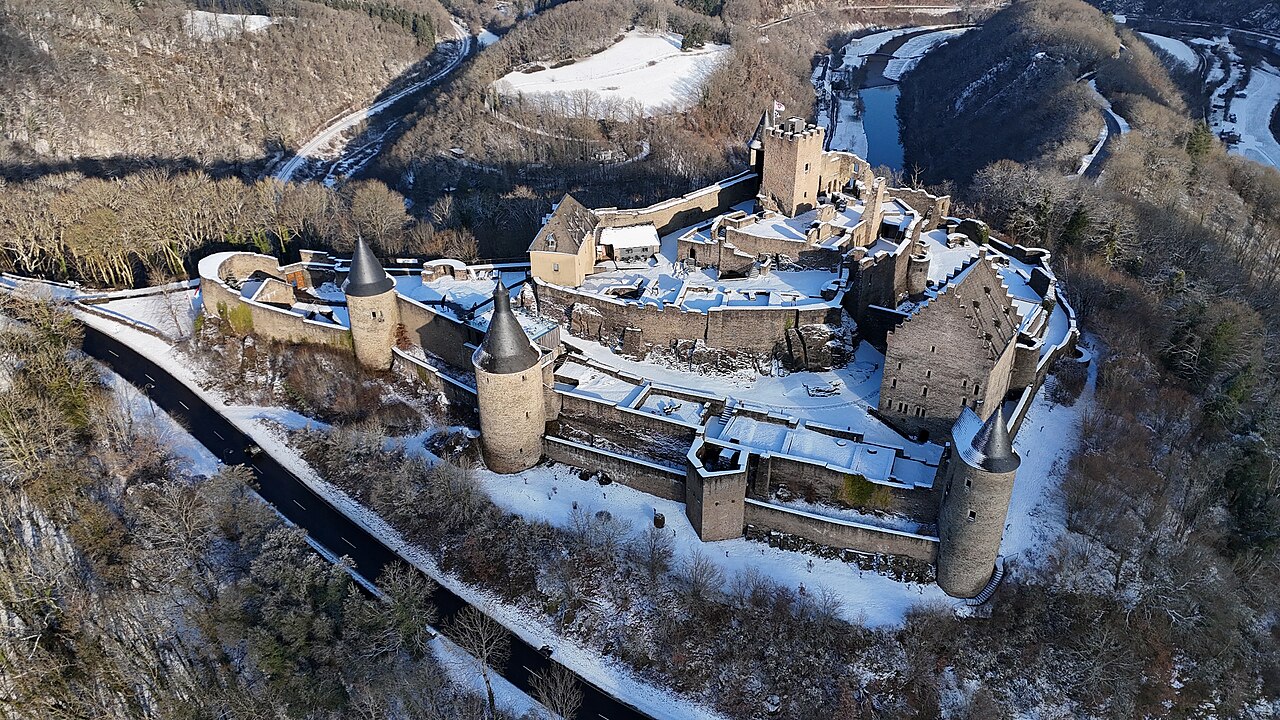
Schuttbourg Castle is a notable high medieval fortress perched above the scenic valley of the Clerf stream between the villages of Consthum and Kautenbach in Luxembourg. This castle, shrouded in some historical uncertainty, is believed to have origins dating back to the 12th century, placing it firmly within the high medieval period of European castle construction.

Historical background and ownership

Although the exact date of construction remains unknown, Schuttbourg Castle was first documented in the 15th century. Originally, it was under the possession of the Lords of Fischbach, a noble family influential in the region. Later, ownership passed to the Lords of Clerf, indicating its strategic and feudal importance in the medieval landscape of Luxembourg. This transfer of ownership reflects the common medieval practice of castles serving as power bases for noble families.

Architectural features and layout

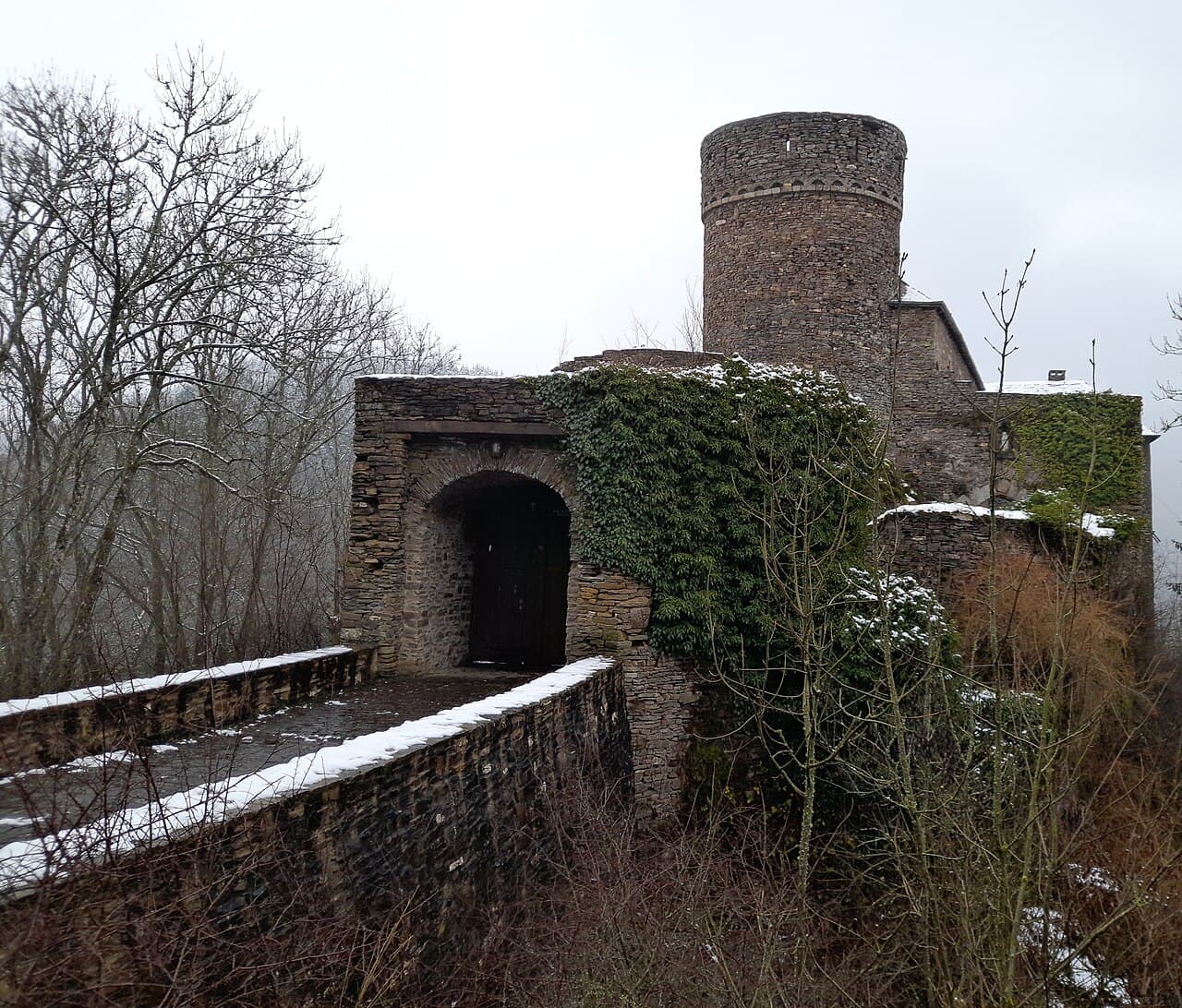
The castle's position on a hill above the valley exemplifies the typical hill castle design, utilizing natural topography for defense. While much of the original medieval structure has not survived intact, the remains suggest a compact fortress with defensive walls and possibly a central keep or tower. The site is characterized by its secluded location and the surrounding forest, which historically would have provided both a natural barrier and resources.

Defensive elements

The castle likely featured typical high medieval fortifications such as battlements, curtain walls, and possibly a moat or ditch, though specific details are scarce. The elevated position would have offered commanding views of the surrounding valley, aiding in early warning against approaching enemies.

20th-century history and restoration

By the early 20th century, Schuttbourg Castle had fallen into ruin. In 1936, it became private property and was transformed into a youth hostel, opening its doors in 1939. This adaptive reuse was a significant chapter in the castle's history, reflecting changing social functions of such historic buildings in modern times.

During the Second World War, the castle suffered severe damage amid the Ardennes Offensive, a major battle in the region. Post-war restoration efforts in 1950 repaired much of the war-inflicted destruction, preserving the castle's structure and enabling its continued use.

Current status and accessibility

Today, Schuttbourg Castle remains privately owned. Recent reports suggest ownership by two engineers who have undertaken rebuilding efforts, although visible signs of active restoration are limited. The access road is overgrown, and the castle maintains a quiet, secluded atmosphere, making it a hidden gem rather than a major tourist destination.

This privacy and seclusion contribute to the castle's charm, offering visitors a glimpse into Luxembourg's medieval heritage away from crowded sites. However, public access may be restricted due to private ownership and the condition of the surrounding infrastructure.

Significance and cultural heritage

Schuttbourg Castle represents an important piece of Luxembourg's medieval history, illustrating the evolution of feudal power and defensive architecture in the region. Its survival through centuries, war damage, and adaptive reuse showcases the resilience and changing roles of castles in European history.

Despite its modest size and somewhat obscure status, the castle's historical associations with noble families and its strategic location highlight its past significance. Preservation efforts, even if limited, contribute to maintaining Luxembourg's rich cultural landscape.

Frequently asked questions (FAQ)

How do I get to Schuttbourg Castle?
Schuttbourg Castle is located in Kautenbach, Luxembourg, and can be accessed by car or public transport. The nearest train station is in the village of Kautenbach, from where you can take a short taxi ride to the castle.
What is the historical significance of Schuttbourg Castle?
Schuttbourg Castle dates back to the 11th century and played a crucial role in the region's defense during medieval times. It is a fine example of feudal architecture and reflects the rich history of Luxembourg's nobility.
When was Schuttbourg Castle built?
Construction of Schuttbourg Castle began in the early 11th century, with various modifications and restorations taking place over the centuries. Its strategic location made it an important fortress throughout its history.
Can I visit Schuttbourg Castle year-round?
Yes, Schuttbourg Castle is open to visitors year-round, although the best time to visit is during the spring and summer months when guided tours and events are more frequent. Be sure to check the official website for specific opening hours and seasonal events.
Why is Schuttbourg Castle popular among tourists?
Schuttbourg Castle attracts visitors for its stunning architecture, historical significance, and picturesque surroundings. The castle offers a glimpse into the medieval past and breathtaking views of the Luxembourg countryside.
Is it possible to take guided tours of Schuttbourg Castle?
Yes, guided tours are available and highly recommended for an in-depth understanding of the castle's history and architecture. Knowledgeable guides will share fascinating stories and insights during the tour.
What are the ticket prices for Schuttbourg Castle?
Ticket prices for Schuttbourg Castle vary depending on the type of tour and age group. Generally, adult tickets range from €5 to €10, while discounts are available for children and seniors.
What are the opening hours of Schuttbourg Castle?
Schuttbourg Castle typically opens at 10 AM and closes at 5 PM from April to October. During the winter months, the hours may vary, so it's best to consult the official website before planning your visit.
What nearby attractions can I explore while visiting Schuttbourg Castle?
While visiting Schuttbourg Castle, you can also explore the beautiful villages of Kautenbach and the surrounding scenic hiking trails. Additionally, the nearby town of Clervaux offers charming architecture and cultural sites worth visiting.

Photo gallery

Schuttbourg Castle
Click to view

Photo by Hejnjahns•CC BY-SA 4.0

1 photo • Click any image to view in full screen

Information

Hill Castle

Loading map...

Visitor reviews

No reviews yet. Been here? Write the first review and help other travelers!

Write the first review

Visited this castle? Share your experience

Your review helps other travelers and adds first-hand knowledge to our encyclopedia.
Write a review

(5/5)

0/2000 characters

Your review will be visible after admin approval

Nearby castles

6.8 km
Wiltz Castle — Luxembourg castle

Wiltz Castle

Wiltz, Luxembourg

Wiltz Castle stands as a remarkable example of architectural evolution and historical resilience in the town of Wiltz, Luxembourg. Originally established in the 13th century by the Lords of Wiltz, the castle was strategically built on a rocky promontory that played a crucial role in the development of the upper town. This initial fortified structure laid the foundation for what would become a significant cultural and historical landmark, reflecting centuries of architectural styles and historical events. The early medieval origins and fortifications The castle's origins trace back to the High Medieval period, when the Lords of Wiltz constructed a stronghold designed to oversee and protect the surrounding region. The choice of a hill castle location on elevated terrain was typical of medieval defensive strategies, providing natural protection and commanding views of the approaches. The earliest surviving element of the castle complex is the round Witches' Tower, situated to the east of the gardens, which is recognized as the oldest part of the present-day structure. The castle endured significant military challenges, notably in 1388 when French forces attacked and burned it down. Despite this destruction, the castle was promptly repaired, demonstrating its strategic importance. Later, in 1453, the castle faced another assault by the troops of Philip of Burgundy, underscoring its continued role in regional conflicts during the late medieval period. Renaissance transformation under Count John VI of Wiltz The most defining phase of Wiltz Castle's architectural history began in 1631 under the direction of Count John VI of Wiltz. This period marked the transition from a purely defensive fortress to a more refined Renaissance style residence. The new construction incorporated elements typical of the Renaissance movement, emphasizing symmetry, proportion, and the integration of aesthetic details alongside functional fortifications. However, the progress of construction was interrupted by the Thirty Years War, a devastating conflict that affected much of Europe. Despite these delays, the main building was eventually completed around 1720. Subsequent enhancements included the completion of the old chapel in 1722 and the addition of a monumental staircase descending to the gardens in 1727, which contributed to the castle's elegant appearance and accessibility. Architectural features and layout The castle complex is characterized by a blend of medieval and Renaissance architectural elements. The Witches' Tower remains a prominent medieval feature, while the main residential buildings exhibit Renaissance design principles. The castle's gardens and the grand staircase highlight the emphasis on landscape integration and formal approaches typical of the period. The structural layout includes fortified walls, residential quarters, a chapel, and service buildings such as stables. The harmonious combination of defensive and residential architecture reflects the castle's evolution from a military fortress to a noble residence and cultural center. Modern history and cultural significance In the 20th century, Wiltz Castle underwent a transformation in its use and cultural role. Acquired by the State of Luxembourg in 1951, the castle was initially repurposed as an old people's home, demonstrating adaptability in its function. Since 1953, it has gained international recognition as the venue for the Wiltz International Music Festival, attracting renowned artists and orchestras, thereby enriching Luxembourg's cultural landscape. Further cultural enrichment came with the establishment of museums within the castle precincts. The National Museum of Brewing, housed in the castle's stables since 1999, offers visitors an extensive overview of the history of beer production spanning over 6,000 years, with a special focus on Luxembourg's brewing heritage. Additionally, the Musée de la Tannerie presents the local leather industry's history, dating back to 1644, highlighting Wiltz's industrial past. Visiting Wiltz Castle today Today, Wiltz Castle is a well-preserved cultural monument that offers visitors a multifaceted experience combining history, architecture, and the arts. The castle's Renaissance architecture and medieval remnants provide a tangible connection to Luxembourg's past. The annual music festival and the museums housed within the castle attract a diverse audience, making it a vibrant center of heritage and cultural activity. Visitors can explore the castle's interiors, including the chapel and grand halls, stroll through the formal gardens, and learn about the region's brewing and tanning history through the dedicated museums. The castle's location in the picturesque town of Wiltz also allows for exploration of the surrounding natural and urban landscapes.

High Medieval (11th–13th c.)
Details
7.6 km
Bourscheid Castle — Luxembourg castle

Bourscheid Castle

Bourscheid, Luxembourg

Bourscheid Castle majestically crowns a steep promontory 150 meters above the winding River Sûre in northern Luxembourg. This imposing hill castle is renowned as the largest fortress in Luxembourg by area, encompassing over 12,000 square meters. Its strategic location on a rocky outcrop provided natural defense and commanding views over the surrounding valley, making it a formidable medieval stronghold. The origins of Bourscheid Castle date back to around the 10th century, when a wooden fortification was replaced by a stone structure, reflecting the transition from early medieval wooden defenses to more durable stone castles. Archaeological excavations have revealed evidence of even earlier occupation, including Roman, Merovingian, Carolingian, and Ottonian remains, underscoring the site's long-standing strategic importance. First documented in 1095 as the property of Bertram von Bourscheid, the castle initially consisted of a small square near the keep, a chapel, and a palace with a great hall, all enclosed by a circular wall with at least four towers. Over the centuries, the castle underwent significant expansions and fortifications, reflecting evolving military architecture and the needs of its noble owners. Medieval expansions and architectural features Between the mid-14th century and late 14th century, the castle's defenses were substantially enhanced. Starting shortly after 1350, an outer circular wall fortified with eight towers was constructed and completed by 1384. This expansion included the erection of the Stolzemburger House, a residential building featuring a distinctive Gothic vaulted cellar that remains preserved today. The improved outer defenses allowed the castle's inner structures to be developed further. The great hall was built up to at least 10 meters high, equivalent to four stories, emphasizing the castle's role not only as a fortress but also as a noble residence. Beneath the castle, a two-level dungeon was hewn directly into the rock, topped by a bakery, highlighting the self-sufficiency of the fortress during sieges. After 1477, the castle's main gate was constructed, protected by a deep ditch and four towers that secured access to both the upper and lower parts of the castle. The outer gate area was further defended by palisades, and a linden tree in this courtyard was historically significant as the site where justice was administered. Ownership changes and decline From its early ownership by the von Bourscheid family, who held important positions within the County of Luxembourg, the castle remained in their hands until 1512. Upon the death of the last male heir, Bernhard IV, without descendants, the estate was divided among his sisters, leading to fragmented ownership among several noble families, including the Metternich-Zievel, Zant von Merl, Ahr, and Schwarzenburg families. The castle's condition began to deteriorate in the 16th and 17th centuries. Although the chapel was enlarged in 1650, the castle was increasingly used only by bailiffs rather than as a noble residence. The Stolzemburger House was completely rebuilt in 1785, but by then, the old palace and chapel had partially collapsed. The invasion by French revolutionary troops in 1794-1795 marked the end of feudal rule in the region, accelerating the castle's decline. By the early 19th century, the castle was abandoned and fell into ruin. Restoration and modern use Recognized for its historical significance, Bourscheid Castle was declared a national monument in 1936. The Luxembourg state acquired the ruins in 1972, initiating extensive restoration and archaeological projects to preserve this emblematic fortress. Since then, key structures such as the Stolzemburger House and the gatekeeper's lodge have been rebuilt, and several towers have been reroofed, although much of the castle remains an open-air ruin. Today, the castle is fully accessible to visitors year-round. It features an audio tour available in multiple languages, including Luxembourgish, German, French, Dutch, and English, providing detailed insights into the castle's history and architecture. The gatekeeper's house hosts a small museum dedicated to the castle's past and its lords, while the Stolzemburger House serves as a cultural venue for events and exhibitions. Architectural highlights and defensive features Bourscheid Castle's layout is triangular, divided into three main sections: the Upper Castle, the Lower Castle, and the Outer Bailey. The Upper Castle includes the main keep, the great hall, family living quarters, and the chapel. Although only the keep and cellar remain intact, ruins of other buildings evoke the castle's former grandeur. The Lower Castle, developed in the 14th century, contained residential and craft buildings such as smithies and armorers' workshops. It is enclosed by a double ring wall with six towers and several bastions, demonstrating the castle's layered defensive strategy. The Outer Bailey, constructed after 1477, protected the main access road with strong walls, four towers, a large artillery bastion, a deep moat, and a drawbridge. The entrance gate was flanked by two towers, corresponding today to the concierge's house. The castle's Romanesque-Gothic architecture features notable opus spicatum (herringbone) masonry patterns. The underground dungeon carved into the rock beneath the bakery exemplifies medieval ingenuity in fortress design. The artillery bastions built in the 16th century reflect adaptations to gunpowder weaponry, marking the castle's evolution through military technological changes. Visitor experience and cultural significance Visitors to Bourscheid Castle can explore a site that blends restored buildings with evocative ruins, offering a tangible connection to Luxembourg's medieval past. The castle's night illuminations create a magical atmosphere, enhancing its romantic appeal. While some critics note the restorations give a somewhat modern appearance, the castle remains a vital cultural landmark and a testament to centuries of architectural and historical development. Its commanding position, extensive fortifications, and layered history make Bourscheid Castle a must-visit destination for enthusiasts of medieval architecture, history, and heritage tourism.

High Medieval (11th–13th c.)
Details
8.9 km
Esch-sur-Sûre Castle — Luxembourg castle

Esch-sur-Sûre Castle

Esch-sur-Sûre, Luxembourg

Esch-sur-Sûre Castle, also known by its German name Burg Esch-an-der-Sauer, is a remarkable medieval fortress located in the quaint village of Esch-sur-Sûre in north-west Luxembourg. Nestled on a prominent spur naturally defended by a sharp meander of the Sûre river, the castle's strategic position has made it a significant historical landmark since its inception in the early Middle Ages. The castle's origins trace back to around 927 AD when a noble named Megingaud (or Maingaud) acquired the site through an exchange with the Abbey of Stavelot. Megingaud constructed the original core of the castle, a robust Romanesque square keep measuring approximately eight meters on each side. This keep served both as a defensive stronghold and a residence, surrounded by agricultural buildings that supported the castle's self-sufficiency. By the end of the 11th century, the castle was under the control of the brothers Heinrich I and Godfrid I, Lords of Esch-sur-Sûre. Their participation in the First Crusade (1096-1099) notably kept them from expanding the castle during this period. Heinrich I died in Mesopotamia, underscoring the castle's connection to broader medieval European history. Medieval expansions and architectural evolution The castle underwent significant enlargement during the 13th century under the last two Counts of Esch. They expanded the fortress in the Gothic architectural style, transforming the originally modest keep into a more complex castle with additional residential and defensive structures. This period marked the castle's zenith, both in terms of architectural sophistication and regional influence. In response to the advent of gunpowder and changing military technology during the 15th century, the village of Esch-sur-Sûre was fortified with a substantial stone wall approximately 450 meters long, encircling the settlement with two defensive towers. A notable addition was the construction of the Lochturm, a large round watchtower positioned opposite the main keep, designed to enhance surveillance and defense. Defensive features and village fortifications The village defenses included a deep moat up to 30 meters wide and 20 meters deep, separating the main castle from the forework and round tower to the south. The curtain walls and gatehouses were reinforced to withstand artillery attacks, reflecting the castle's adaptation to the evolving warfare of the late medieval period. Decline and partial dismantling The castle's decline began in the mid-16th century as the nobility increasingly preferred more comfortable and modern residences elsewhere. The last major renovation focused on the northern gate, but overall maintenance waned. Following the capture of Luxembourg city by the troops of King Louis XIV of France in the late 17th century, many Luxembourg fortresses were dismantled to prevent their military use. Esch-sur-Sûre Castle was partially dismantled in 1685, although the village walls remained largely intact and were incorporated into local buildings. Throughout the 18th and 19th centuries, the castle fell into ruin and was inhabited by common villagers who repurposed parts of the structure for housing and storage. When the famed French writer Victor Hugo visited in 1871, several families still lived within the castle ruins, illustrating its continued role in local life despite its military obsolescence. 20th and 21st century restoration efforts In the early 20th century, the castle entered private ownership. In 1902, the ruins were purchased by the Egyptian Martin Riano d’Hutzt, who commissioned architect Charles Arendt to undertake restoration work. The castle chapel, originally Romanesque, was restored in 1906 with a distinctive bell tower, a rare feature for castle chapels. However, restoration funds were limited, and much of the castle remained in ruins. The State of Luxembourg acquired the site in 2005 and initiated further restoration and preservation work the following year. Archaeological excavations in the 1980s had already provided valuable insights into the castle's history and structure. Today, the castle ruins are well maintained, illuminated in the evenings, and freely accessible to the public during daytime hours, serving as a cultural and historical monument. Architectural features and layout The bergfried and keep The heart of Esch-sur-Sûre Castle is its Romanesque bergfried, a square stone tower measuring approximately 8 by 8 meters. This tower functioned as the primary defensive structure and residence for the lords. Its robust construction and elevated position provided commanding views over the surrounding landscape and the Sûre river. The lochturm and village walls The Lochturm, a large round watchtower built in the 15th century, stands on a higher rock platform opposite the bergfried. It was designed to guard the approach to the castle and village, separated by a deep moat. The village walls, stretching 450 meters, were about 1.5 meters thick and included two additional watchtowers, providing comprehensive protection for the settlement. Castle chapel and auxiliary buildings The castle chapel, restored in the early 20th century, retains its Romanesque origins with medieval-style interiors and a unique bell tower. Auxiliary buildings, including stables and residential quarters, were expanded northward between the 12th and 14th centuries, with terraces created by leveling surrounding rock outcrops to accommodate the growing complex. Historical significance and cultural heritage Esch-sur-Sûre Castle played a significant role in the regional power dynamics of medieval Luxembourg. The lords of Esch controlled numerous villages and hamlets, extending their influence to areas as far as Diekirch. Their participation in the First Crusade and presence at notable medieval events like the Chauvency tournament highlight the castle's importance within the noble networks of the time. The castle's gradual transformation from a military fortress to a residential and communal space reflects broader shifts in European medieval society, warfare, and architecture. Its preservation as a ruin and national monument today offers valuable insights into Luxembourg's medieval heritage and architectural evolution. Visiting esch-sur-sûre castle Visitors to Esch-sur-Sûre Castle can explore the atmospheric ruins set against the dramatic backdrop of the Sûre river valley. The site is open during daytime hours and benefits from evening illumination, enhancing its fairytale-like appearance. While no intact buildings remain, the preserved walls, towers, and chapel provide a tangible connection to the castle's rich history. The village of Esch-sur-Sûre itself offers charming surroundings with traditional houses and scenic river views, making a visit to the castle a rewarding cultural and historical experience in Luxembourg.

High Medieval (11th–13th c.)
Details