Bourscheid Castle
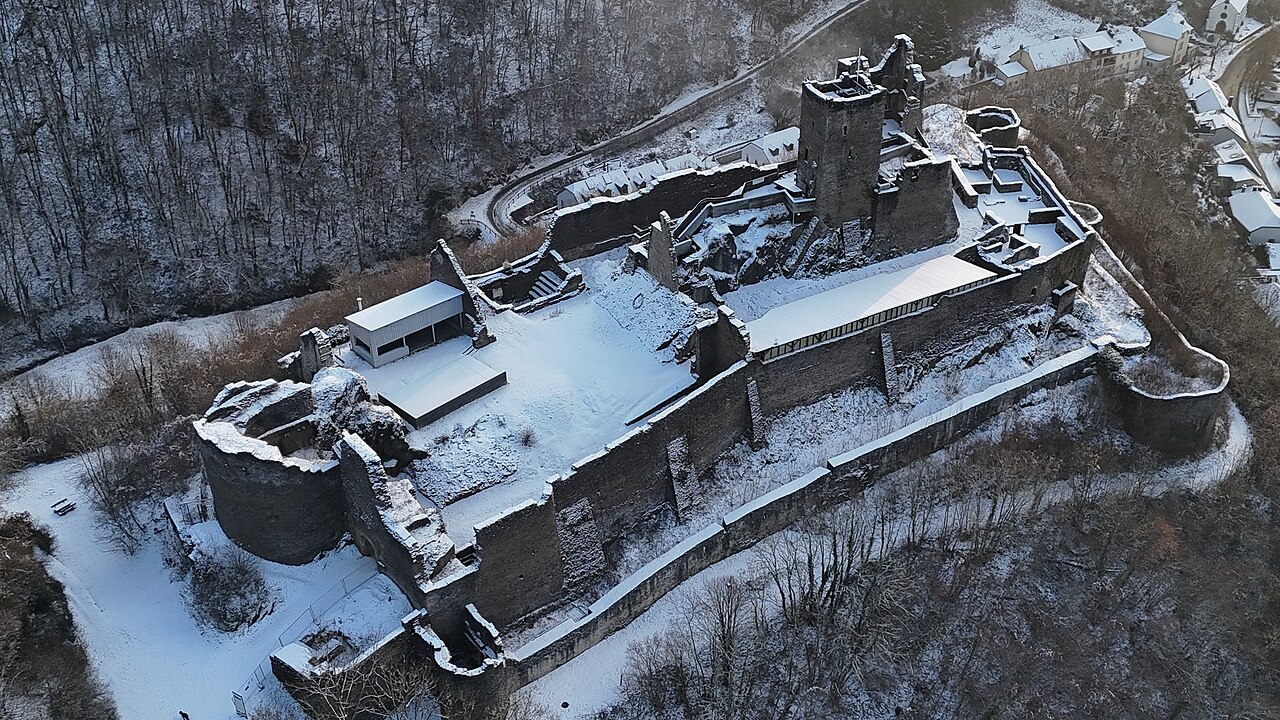
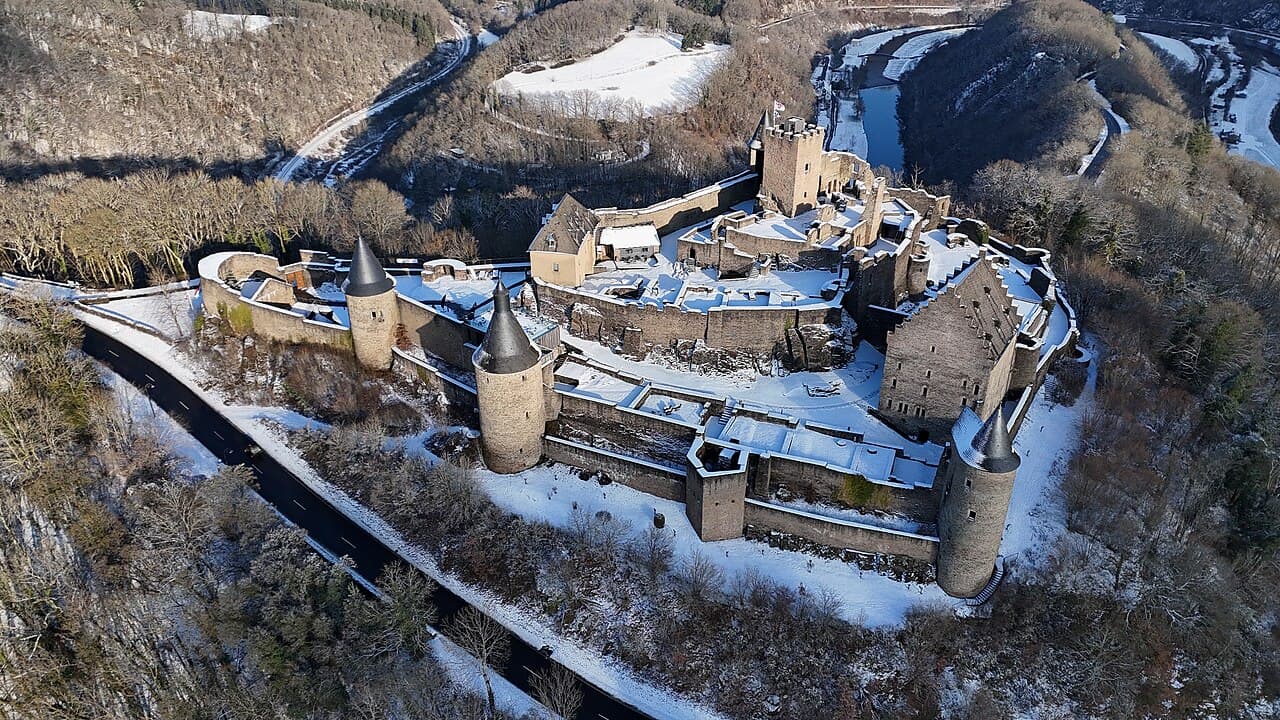
Bourscheid Castle majestically crowns a steep promontory 150 meters above the winding River Sûre in northern Luxembourg. This imposing hill castle is renowned as the largest fortress in Luxembourg by area, encompassing over 12,000 square meters. Its strategic location on a rocky outcrop provided natural defense and commanding views over the surrounding valley, making it a formidable medieval stronghold.
The origins of Bourscheid Castle date back to around the 10th century, when a wooden fortification was replaced by a stone structure, reflecting the transition from early medieval wooden defenses to more durable stone castles. Archaeological excavations have revealed evidence of even earlier occupation, including Roman, Merovingian, Carolingian, and Ottonian remains, underscoring the site's long-standing strategic importance.
First documented in 1095 as the property of Bertram von Bourscheid, the castle initially consisted of a small square near the keep, a chapel, and a palace with a great hall, all enclosed by a circular wall with at least four towers. Over the centuries, the castle underwent significant expansions and fortifications, reflecting evolving military architecture and the needs of its noble owners.
Medieval expansions and architectural features
Between the mid-14th century and late 14th century, the castle's defenses were substantially enhanced. Starting shortly after 1350, an outer circular wall fortified with eight towers was constructed and completed by 1384. This expansion included the erection of the Stolzemburger House, a residential building featuring a distinctive Gothic vaulted cellar that remains preserved today.
The improved outer defenses allowed the castle's inner structures to be developed further. The great hall was built up to at least 10 meters high, equivalent to four stories, emphasizing the castle's role not only as a fortress but also as a noble residence. Beneath the castle, a two-level dungeon was hewn directly into the rock, topped by a bakery, highlighting the self-sufficiency of the fortress during sieges.
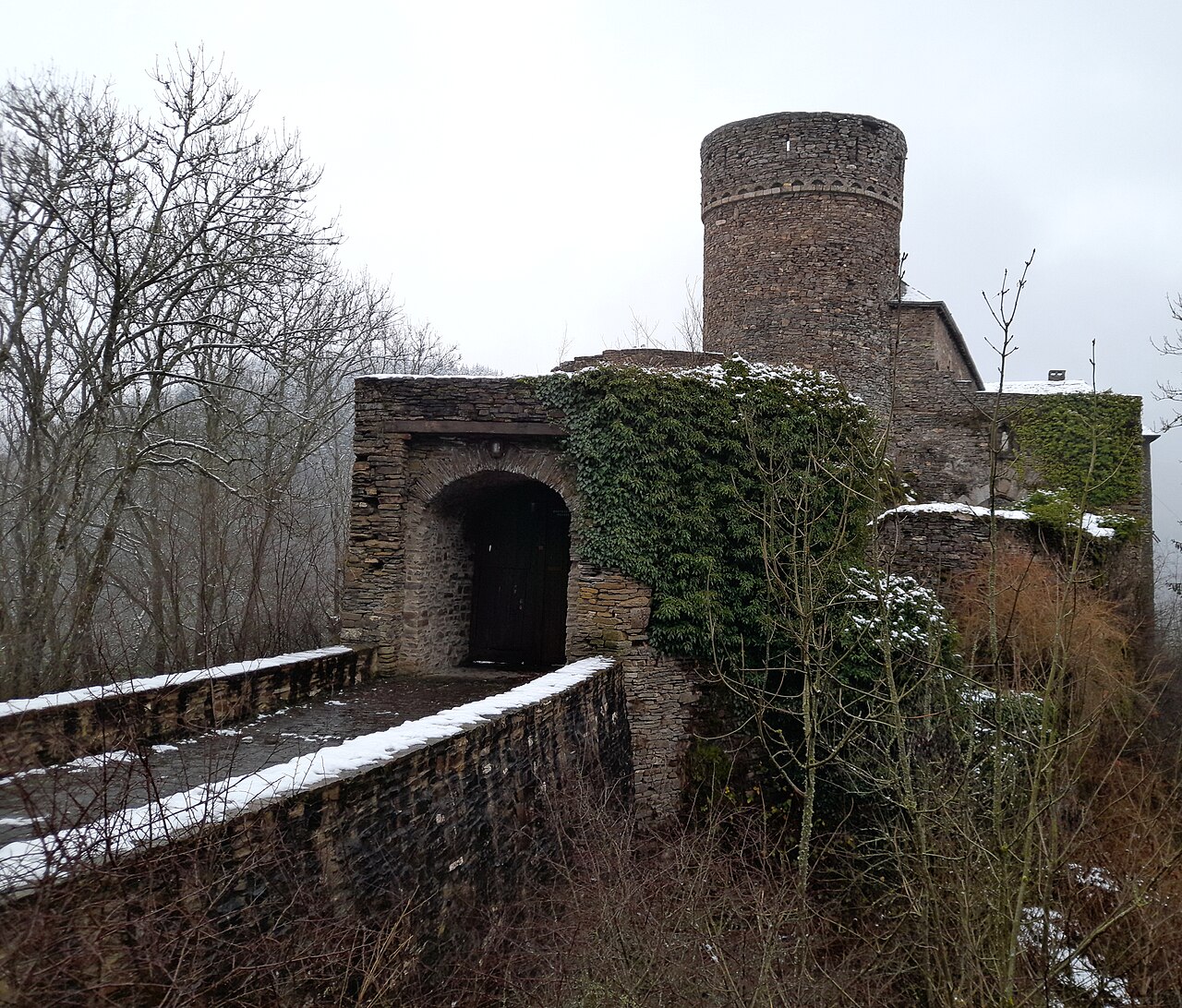
After 1477, the castle's main gate was constructed, protected by a deep ditch and four towers that secured access to both the upper and lower parts of the castle. The outer gate area was further defended by palisades, and a linden tree in this courtyard was historically significant as the site where justice was administered.
Ownership changes and decline
From its early ownership by the von Bourscheid family, who held important positions within the County of Luxembourg, the castle remained in their hands until 1512. Upon the death of the last male heir, Bernhard IV, without descendants, the estate was divided among his sisters, leading to fragmented ownership among several noble families, including the Metternich-Zievel, Zant von Merl, Ahr, and Schwarzenburg families.
The castle's condition began to deteriorate in the 16th and 17th centuries. Although the chapel was enlarged in 1650, the castle was increasingly used only by bailiffs rather than as a noble residence. The Stolzemburger House was completely rebuilt in 1785, but by then, the old palace and chapel had partially collapsed.
The invasion by French revolutionary troops in 1794-1795 marked the end of feudal rule in the region, accelerating the castle's decline. By the early 19th century, the castle was abandoned and fell into ruin.
Restoration and modern use
Recognized for its historical significance, Bourscheid Castle was declared a national monument in 1936. The Luxembourg state acquired the ruins in 1972, initiating extensive restoration and archaeological projects to preserve this emblematic fortress. Since then, key structures such as the Stolzemburger House and the gatekeeper's lodge have been rebuilt, and several towers have been reroofed, although much of the castle remains an open-air ruin.
Today, the castle is fully accessible to visitors year-round. It features an audio tour available in multiple languages, including Luxembourgish, German, French, Dutch, and English, providing detailed insights into the castle's history and architecture. The gatekeeper's house hosts a small museum dedicated to the castle's past and its lords, while the Stolzemburger House serves as a cultural venue for events and exhibitions.
Architectural highlights and defensive features
Bourscheid Castle's layout is triangular, divided into three main sections: the Upper Castle, the Lower Castle, and the Outer Bailey. The Upper Castle includes the main keep, the great hall, family living quarters, and the chapel. Although only the keep and cellar remain intact, ruins of other buildings evoke the castle's former grandeur.
The Lower Castle, developed in the 14th century, contained residential and craft buildings such as smithies and armorers' workshops. It is enclosed by a double ring wall with six towers and several bastions, demonstrating the castle's layered defensive strategy.
The Outer Bailey, constructed after 1477, protected the main access road with strong walls, four towers, a large artillery bastion, a deep moat, and a drawbridge. The entrance gate was flanked by two towers, corresponding today to the concierge's house.
The castle's Romanesque-Gothic architecture features notable opus spicatum (herringbone) masonry patterns. The underground dungeon carved into the rock beneath the bakery exemplifies medieval ingenuity in fortress design. The artillery bastions built in the 16th century reflect adaptations to gunpowder weaponry, marking the castle's evolution through military technological changes.
Visitor experience and cultural significance
Visitors to Bourscheid Castle can explore a site that blends restored buildings with evocative ruins, offering a tangible connection to Luxembourg's medieval past. The castle's night illuminations create a magical atmosphere, enhancing its romantic appeal. While some critics note the restorations give a somewhat modern appearance, the castle remains a vital cultural landmark and a testament to centuries of architectural and historical development.
Its commanding position, extensive fortifications, and layered history make Bourscheid Castle a must-visit destination for enthusiasts of medieval architecture, history, and heritage tourism.
Frequently asked questions (FAQ)
- How do I get to Bourscheid Castle?
- Bourscheid Castle is accessible by car and public transport. If you're driving, you'll find parking nearby. Public buses also serve the area, making it easy to reach the castle from Bourscheid village.
- What is the historical significance of Bourscheid Castle?
- Bourscheid Castle dates back to the 10th century and played a crucial role in the defense of Luxembourg. It has witnessed numerous historical events and has been an important symbol of feudal power in the region.
- When was Bourscheid Castle built?
- Construction of Bourscheid Castle began in the 10th century, with significant expansions and modifications occurring over the centuries. Its strategic location and robust architecture reflect its importance during medieval times.
- Can I take guided tours of the castle?
- Yes, guided tours are available at Bourscheid Castle, offering insights into its fascinating history and architecture. Tours are conducted in multiple languages, allowing visitors to fully appreciate the castle's heritage.
- Why is Bourscheid Castle considered an architectural marvel?
- Bourscheid Castle showcases a blend of Romanesque and Gothic architectural styles, with its robust towers and well-preserved structures. The castle's design is a testament to the engineering skills of the medieval era, making it a unique attraction.
- Is it possible to visit Bourscheid Castle year-round?
- Bourscheid Castle is open to visitors throughout the year, although opening hours may vary seasonally. It's recommended to check the official website for the latest information on hours and any special events.
- What are the ticket prices for visiting Bourscheid Castle?
- Ticket prices for Bourscheid Castle are generally affordable, with discounts available for children, students, and seniors. It's best to check the official site for current pricing and any special offers before your visit.
- What is the best time to visit Bourscheid Castle?
- The best time to visit Bourscheid Castle is during the spring and early autumn months when the weather is mild and the surrounding landscapes are lush. These seasons also offer a variety of events and activities, enhancing the visitor experience.
- Are there any nearby attractions to explore?
- Yes, Bourscheid Castle is located near several attractions, including the picturesque village of Bourscheid and scenic hiking trails along the Sûre River. Visitors can also explore other historic sites and enjoy local dining options in the area.
Photo gallery

Information
Sources & official resources
Verify the information above using these authoritative references.
Loading map...
Visitor reviews
No reviews yet. Been here? Write the first review and help other travelers!
Write the first reviewVisited this castle? Share your experience
Your review helps other travelers and adds first-hand knowledge to our encyclopedia.