Schonburg
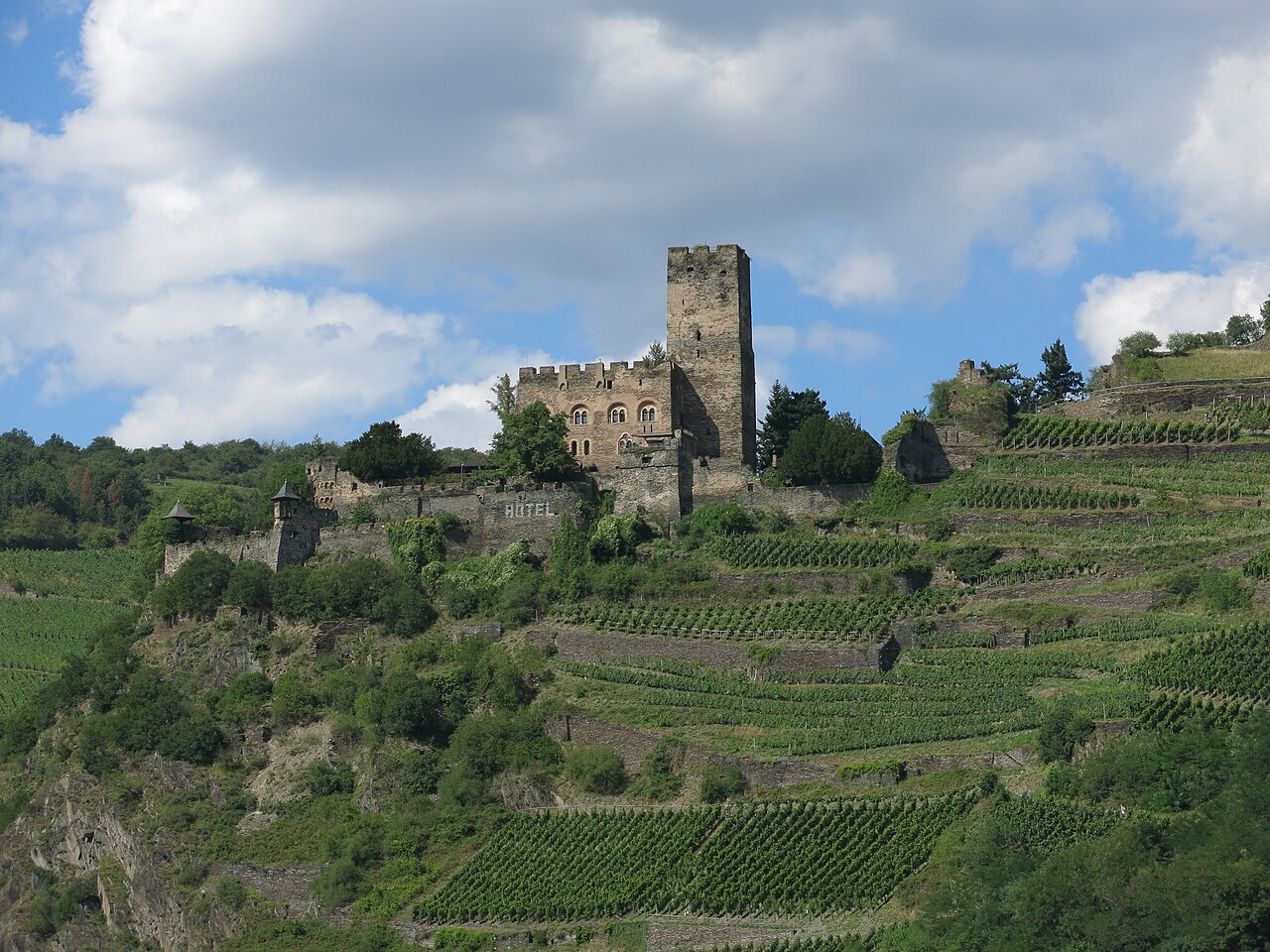
Schonburg castle stands majestically above the medieval town of Oberwesel in the Upper Middle Rhine Valley, a designated UNESCO World Heritage site. This high medieval fortress, dating back to the 12th century, is a prime example of the strategic hill castles that once dominated the Rhine river landscape, serving as defensive strongholds and symbols of feudal power.
Historical significance and origins
Constructed in the high medieval period, Schonburg castle was originally built to control the vital trade routes along the Rhine River and to protect the town of Oberwesel. Its location atop a steep hill provided commanding views of the river valley, allowing its occupants to monitor and regulate river traffic effectively. The castle was part of a network of fortifications in the region that played crucial roles during the numerous territorial conflicts and power struggles characteristic of medieval Germany.
Throughout the centuries, the castle witnessed various phases of occupation, siege, and reconstruction. By the early modern era, like many castles in the Rhine Valley, Schonburg fell into disuse and decay, eventually becoming a ruin.
Restoration by the Rhinelander family
For approximately two centuries, Schonburg castle remained in ruins until the late 19th century when it was acquired by the German-American Rhinelander family. This family undertook a significant restoration project, reviving the castle's structure and adapting it for contemporary use while respecting its historic character. Their efforts preserved the castle's architectural heritage and prevented further deterioration.
Modern use and preservation
In 1950, the town council of Oberwesel reacquired the castle from the Rhinelander family, ensuring its protection as a cultural monument. Since 1957, the Huttl family has leased the castle and transformed it into a hotel and restaurant, which has become a popular destination for tourists exploring the Rhine Valley. The castle's well-preserved medieval architecture combined with modern hospitality services offers visitors a unique experience that blends history with comfort.
Architectural features and layout
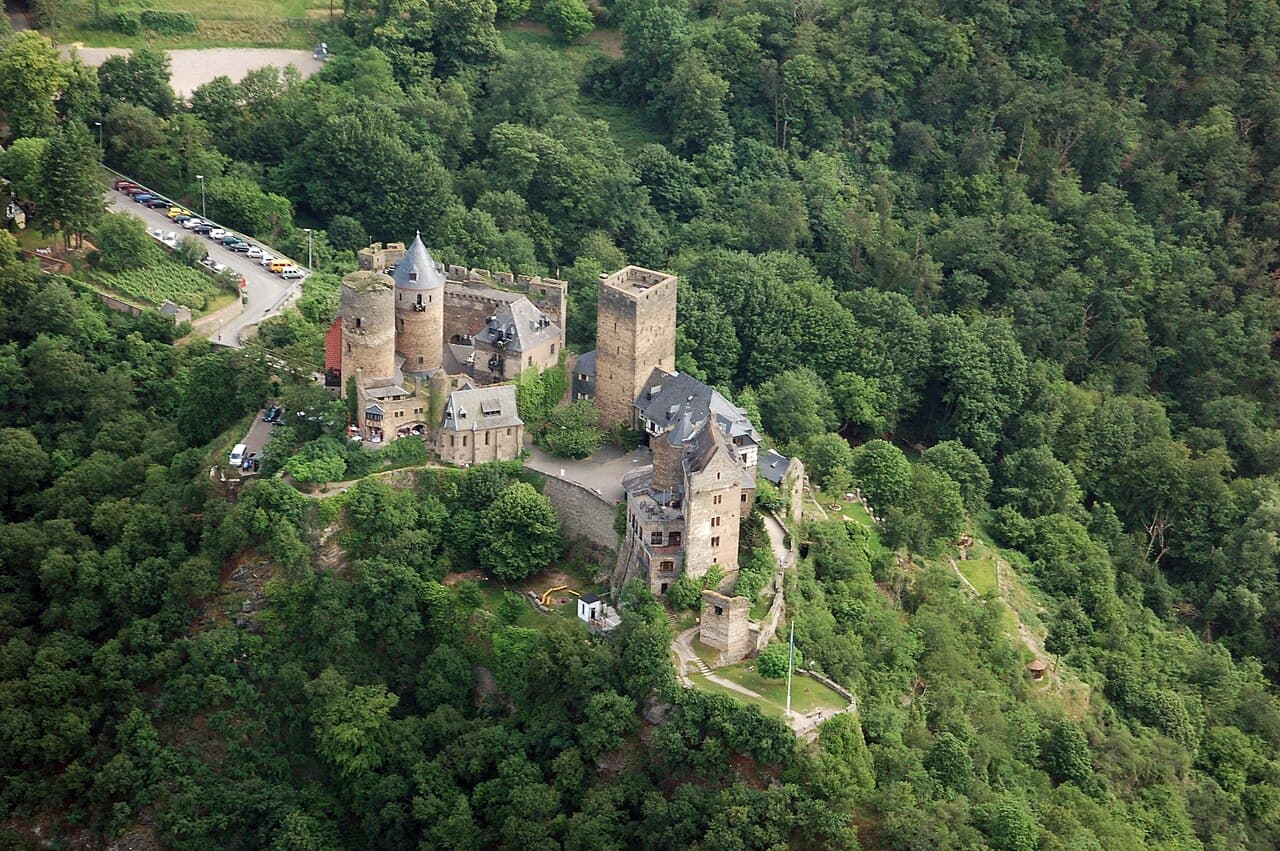
Schonburg castle exemplifies the characteristics of a hill castle with its strategic placement on elevated terrain. Its design includes robust stone walls, defensive battlements, and a series of towers that provided vantage points for surveillance and defense. The castle complex encompasses a courtyard, residential quarters, and fortified gates, reflecting typical medieval military architecture adapted for both defense and habitation.
The restoration preserved many original elements, such as the keep and portions of the curtain walls, while integrating necessary modern amenities discreetly. Visitors can appreciate the blend of medieval fortification techniques and 19th-century restoration craftsmanship.
Cultural and touristic importance
Situated within the scenic Upper Middle Rhine Valley, Schonburg castle contributes to the region's rich cultural landscape. It attracts history enthusiasts, architecture admirers, and travelers seeking to explore the heritage of the Rhine castles. The castle's hotel and restaurant offer an immersive experience, allowing guests to stay within historic walls and enjoy panoramic views of the Rhine River and surrounding vineyards.
The castle also serves as a venue for cultural events, weddings, and private functions, further embedding it in the local community and tourism economy.
Frequently asked questions (FAQ)
- What is the historical significance of Schonburg Castle?
- Schonburg Castle, located in Oberwesel, Germany, dates back to the 11th century and played a crucial role in the region's defense. It was strategically positioned to protect the Rhine River and served as a noble residence, reflecting the power and influence of the local aristocracy during the Middle Ages.
- When was Schonburg Castle built?
- Construction of Schonburg Castle began in the early 11th century, with significant expansions and renovations occurring over the centuries. The castle has witnessed various historical events and has been preserved to showcase its medieval architecture and rich history.
- Can I visit Schonburg Castle?
- Yes, Schonburg Castle is open to the public, allowing visitors to explore its fascinating history and stunning views of the Rhine Valley. Guided tours are available, providing insights into the castle's architecture and stories from its past.
- What are the opening hours for Schonburg Castle?
- Schonburg Castle typically opens from 10 AM to 5 PM, but hours may vary seasonally. It is advisable to check the official website before planning your visit to ensure you have the most up-to-date information.
- Is it possible to access Schonburg Castle with mobility challenges?
- While Schonburg Castle has some areas that may be challenging to navigate due to its historic architecture, efforts have been made to improve accessibility for visitors with mobility issues. It is recommended to contact the castle’s visitor services in advance to inquire about specific accommodations.
- What is the best time to visit Schonburg Castle?
- The best time to visit Schonburg Castle is during the spring and early autumn when the weather is mild, and the surrounding landscape is vibrant. Additionally, visiting during these times allows you to enjoy various events and festivals held in the area.
- How much do tickets cost to enter Schonburg Castle?
- Ticket prices for Schonburg Castle are generally affordable, with discounts available for children, students, and seniors. It is best to check the castle’s official website for current pricing and any special offers that may be available.
- What nearby attractions can I explore after visiting Schonburg Castle?
- After visiting Schonburg Castle, you can explore the charming town of Oberwesel, known for its medieval architecture and beautiful vineyards. The Rhine River offers scenic boat trips, and you can also visit other nearby castles, such as Burg Katz and Burg Rheinfels, to further immerse yourself in the region's rich history.
Photo gallery

Information
Website
Visit websiteSources & official resources
Verify the information above using these authoritative references.
Loading map...
Visitor reviews
No reviews yet. Been here? Write the first review and help other travelers!
Write the first reviewVisited this castle? Share your experience
Your review helps other travelers and adds first-hand knowledge to our encyclopedia.