Gutenfels Castle
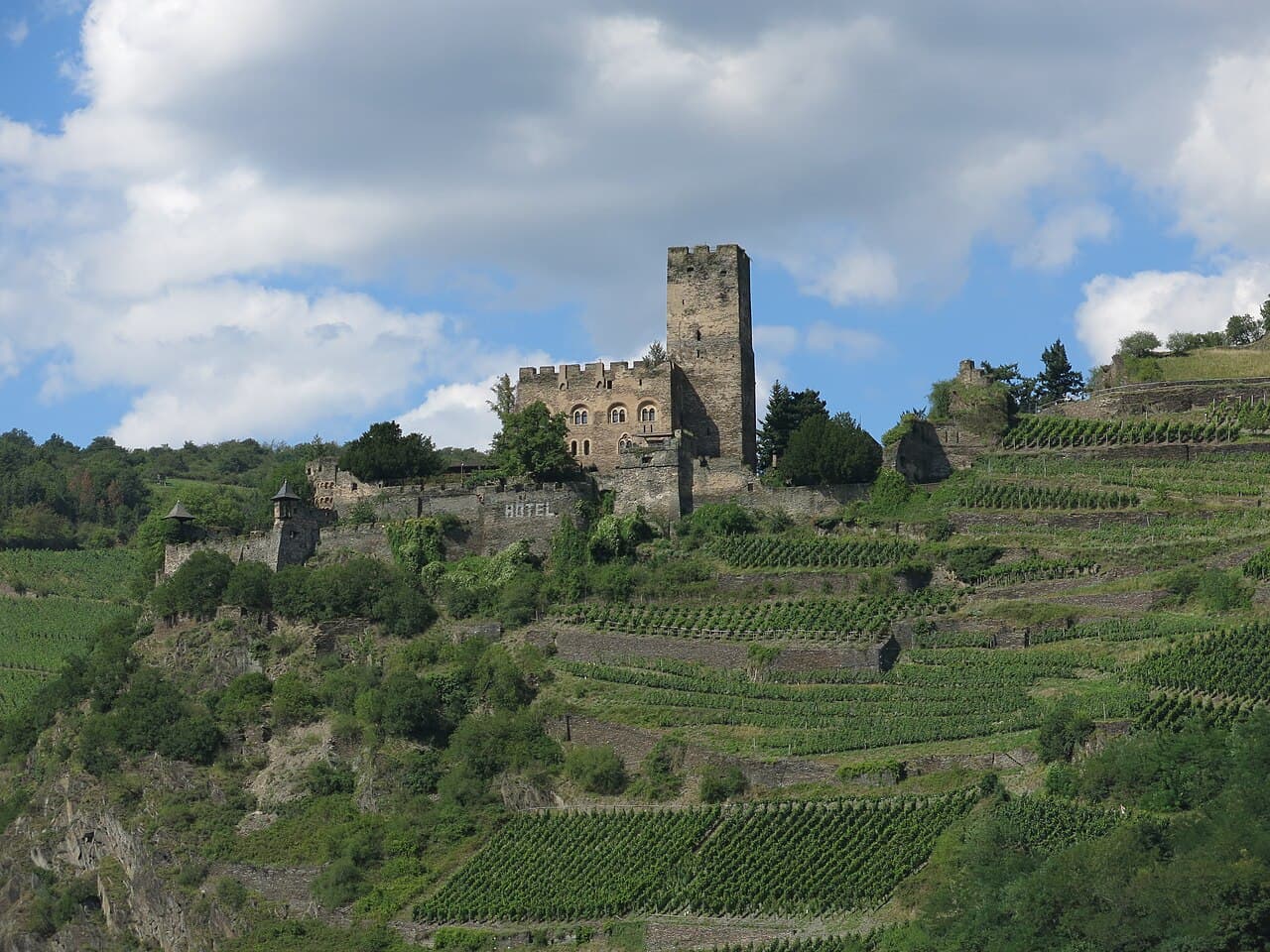
Gutenfels Castle, perched approximately 110 meters above the town of Kaub in Rhineland-Palatinate, Germany, is a significant example of a high medieval hill castle with a rich history tied to the control of the Rhine River. Constructed around 1220, the castle was strategically positioned to dominate the river valley and enforce toll collection, a vital source of revenue and power during the Holy Roman Empire.
Historical significance and strategic role
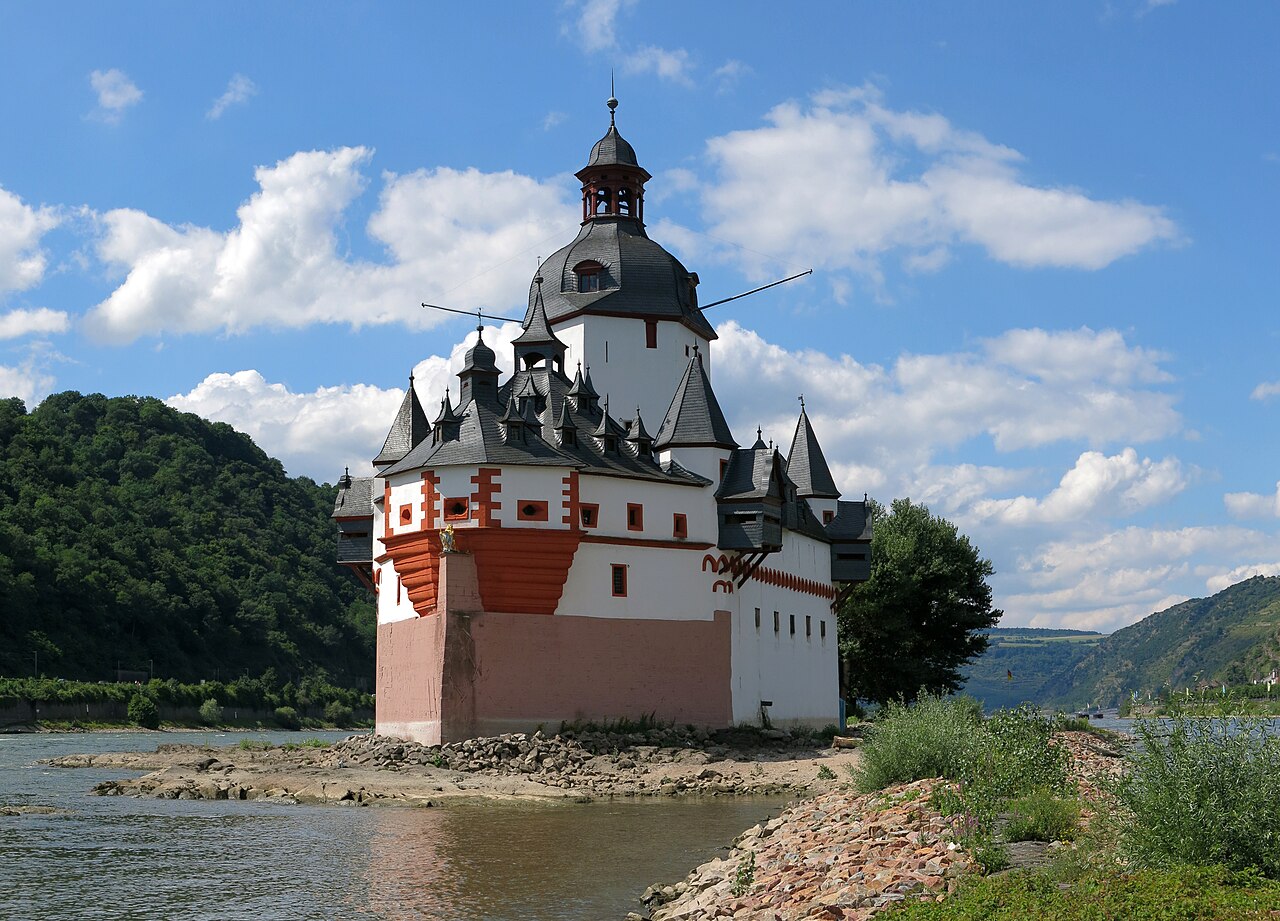
Originally known as Caub Castle or Kaub Castle, Gutenfels Castle was part of a triad of fortifications that included Pfalzgrafenstein Castle situated on an island in the middle of the Rhine, and the fortified town of Kaub on the opposite bank. This network created an impenetrable toll zone for river traffic, allowing the Holy Roman Emperor to control and tax commerce along this crucial waterway. The castle's role in toll enforcement continued until the mid-19th century, ending when Prussia acquired the territory in 1866 and abolished the toll in 1867.
Architectural features and style
The castle is a prime example of the Hohenstaufen military and residential architecture characteristic of the Rhine region during the high medieval period. Its construction reflects the practical and defensive needs of the era, with thick stone walls, a commanding keep, and fortified towers designed to withstand sieges and control the surrounding landscape. The castle's elevated position on a hill provided a natural defensive advantage and panoramic views of the Rhine, essential for monitoring river traffic and approaching threats.
Defensive structures
Gutenfels Castle features a robust curtain wall, battlements, and a gatehouse that controlled access to the inner ward. The layout includes multiple defensive layers, typical of hill castles built to maximize natural topography for protection. The castle's name, which means "solid rock," was adopted after a failed siege in 1504 by Landgrave Wilhelm of Hesse, underscoring its reputation for strength and resilience.
Residential and functional spaces
Inside the castle, there were residential quarters for the ruling family, storerooms, and facilities to support a garrison. The castle's design balanced military functionality with the needs of a noble household, reflecting its dual role as a fortress and a residence.
Ownership and historical transitions
Since 1257, the castle was primarily owned by the Falkenstein family, a noble lineage influential in the region. From 1277, it became part of the possessions of the Electorate of the Palatinate, a significant principality within the Holy Roman Empire. This transfer of control highlights the castle's importance in regional politics and military strategy.
The castle's military significance was tested during the early 16th century when it withstood an unsuccessful siege by Landgrave Wilhelm of Hesse in 1504. This event reinforced the castle's reputation for formidable defenses and contributed to its renaming as Gutenfels, emphasizing its solid and enduring construction.
Later history and preservation
After centuries of military use, the castle's strategic importance declined with changes in political power and military technology. In the late 19th century, between 1889 and 1892, Gutenfels Castle underwent significant rebuilding and restoration efforts, adapting it for new uses while preserving its historical character.
Today, the castle functions as a hotel, allowing visitors to experience its historic ambiance and commanding views of the Rhine. Its preservation as a well-preserved high medieval hill castle offers valuable insights into medieval military architecture and the history of the Rhine Valley.
Architectural and cultural importance
Gutenfels Castle stands as one of the most important examples of Hohenstaufen-era military architecture on the Rhine. It illustrates the integration of natural landscape features with man-made fortifications typical of hill castles of this period. The castle's enduring presence reflects the complex history of territorial control, commerce, and defense along one of Europe's most significant rivers.
Its association with the Electorate of the Palatinate and the Falkenstein family connects it to broader historical narratives of medieval German nobility and imperial authority. The castle's survival through sieges, political changes, and modernization efforts underscores its resilience and historical value.
Visiting gutenfels castle today
Visitors to Gutenfels Castle can explore its historic architecture and enjoy panoramic views of the Rhine Gorge, a UNESCO World Heritage site. The castle's adaptation as a hotel offers a unique opportunity to stay within medieval walls, combining history with hospitality. The surrounding town of Kaub provides additional cultural and historical attractions, making the castle a focal point for tourism in the region.
Frequently asked questions (FAQ)
- How do I visit Gutenfels Castle?
- Gutenfels Castle operates as a hotel, allowing visitors to stay overnight and explore its historic interiors. Booking in advance is recommended, especially during peak tourist seasons.
- What is the historical significance of Gutenfels Castle?
- Gutenfels Castle was built in 1220 to control tolls on the Rhine River, forming a strategic defensive network with Pfalzgrafenstein Castle and the town of Kaub.
- When was Gutenfels Castle rebuilt?
- The castle was extensively rebuilt between 1889 and 1892, preserving its medieval character while adapting it for modern use.
- Can I see panoramic views from Gutenfels Castle?
- Yes, the castle is located 110 meters above Kaub, offering impressive panoramic views of the Rhine Gorge and surrounding landscape.
- Why was Gutenfels Castle renamed?
- After resisting a siege in 1504 by Landgrave Wilhelm of Hesse, the castle was renamed Gutenfels, meaning 'solid rock,' to reflect its strength.
Photo gallery

Information
Current owner
Private owner
Loading map...
Visitor reviews
No reviews yet. Been here? Write the first review and help other travelers!
Write the first reviewVisited this castle? Share your experience
Your review helps other travelers and adds first-hand knowledge to our encyclopedia.