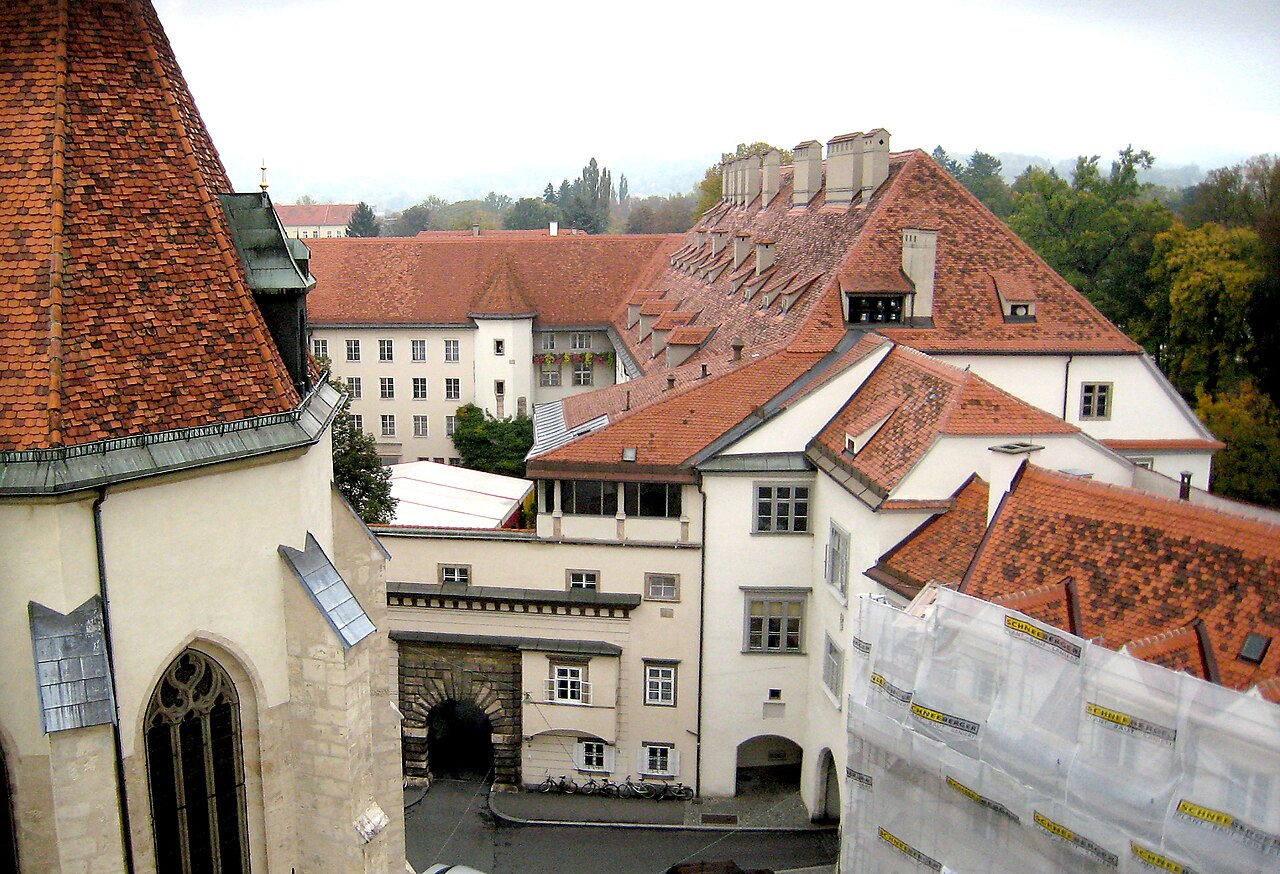
Schloßberg
The Schloßberg is a historic fortress site located in the heart of Graz, Austria. This prominent hill, now transformed into a public park, offers extensive panoramic views over the city and serves as a cultural and historical landmark. The origins of fortification on the Schloßberg date back to at least the 10th century, marking it as a significant medieval defensive position in the region.
Medieval origins and fortification development
The initial fortress on the Schloßberg was established during the early medieval period, serving as a strategic lookout and defense point. By the mid-16th century, the fortifications were extensively rebuilt and expanded into a formidable 400-meter-long fortress under the direction of architects from northern Italy, reflecting Renaissance military engineering influences. This construction phase incorporated advanced bastions and walls designed to withstand artillery assaults, a testament to evolving military architecture of the time.
Historical records mention the use of a cable-hauled lift between 1528 and 1595, employed to transport heavy construction materials up the steep hill, illustrating the logistical challenges of fortress building on such terrain.
Architectural features and surviving structures
Although the fortress was never conquered in battle, it suffered significant demolition following the Treaty of Schönbrunn in 1809 when Napoleonic forces ordered its destruction. However, two key structures, the Uhrturm (clock tower) and the Glockenturm (bell tower), were spared after the citizens of Graz paid a ransom for their preservation. These towers remain iconic symbols of Graz today.
The Uhrturm is notable for its unique clock mechanism, where the larger hand indicates the hours, and the smaller hand shows the minutes, contrary to typical clock designs. The Glockenturm houses "Liesl," the heaviest bell in Graz, which historically marked time and alerted residents.
The park also features remnants of the original fortress, including a cistern and two bastions, which provide insight into the defensive layout and water management systems of the castle complex.
Modern adaptations and cultural significance
In 1839, the fortress ruins were converted into a public park by Ludwig von Welden, enhancing the site’s accessibility and recreational value. Today, visitors can enjoy several cafés located near the Uhrturm and on the western side of the Schloßberg, offering scenic views over the old town and western Graz.
Near the terminus of the funicular railway is a hilltop restaurant, providing additional amenities and vantage points for visitors. The site also hosts the Kasemattenbühne, an open-air stage situated in what was once a bastion cellar, used for concerts and cultural performances.
Underground tunnels and World War II history
Beneath the Schloßberg lies an extensive network of tunnels constructed during World War II to shelter the civilian population from aerial bombings. Some of these tunnels remain accessible, including a passage connecting Schloßbergplatz to Karmeliterplatz and a grotto railway designed for children.
Within this subterranean complex is the Dom im Berg, a multi-purpose venue expanded in 2000 that can accommodate up to 600 people, used for exhibitions, concerts, and events, blending historical preservation with contemporary cultural use.
Visitor experience and accessibility
The Schloßberg is easily accessible via the funicular railway, which transports visitors up the steep hill, making the site suitable for a wide range of visitors. The combination of historical architecture, natural beauty, and cultural activities makes the Schloßberg a key attraction in Graz.
Visitors can explore the well-preserved towers, stroll through the park's paths, and enjoy the views from several vantage points. The presence of cafés and dining options enhances the visitor experience, providing opportunities to relax while taking in the historic ambiance.
Frequently asked questions (FAQ)
- How do I get to Schloßberg?
- You can reach Schloßberg by taking the funicular railway from the city center of Graz, which offers a scenic ride to the top. Alternatively, there are walking paths that lead up to the castle, providing a more adventurous experience with beautiful views along the way.
- What is the historical significance of Schloßberg?
- Schloßberg has been a vital part of Graz's history since it was first fortified in the 11th century. The castle played a crucial role in protecting the city from invasions and has witnessed numerous historical events, making it a landmark of cultural heritage in Austria.
- When was Schloßberg built?
- The origins of Schloßberg date back to the 11th century, with various expansions and modifications made over the centuries. The current structure reflects architectural styles from the medieval period through to the Renaissance, showcasing the evolution of military architecture.
- Can I visit Schloßberg year-round?
- Yes, Schloßberg is open to visitors year-round, though some attractions within the site may have seasonal hours. It’s advisable to check the official website for any updates on opening hours or special events before planning your visit.
- Why is Schloßberg a popular tourist attraction?
- Schloßberg is popular due to its stunning panoramic views of Graz, its rich history, and the impressive architecture of its structures, including the iconic clock tower. Visitors can explore the castle grounds, learn about its history, and enjoy the beautiful gardens that surround the area.
- Is it possible to access Schloßberg with a wheelchair?
- Yes, the funicular railway provides wheelchair access to Schloßberg, making it easier for visitors with mobility challenges to enjoy the site. However, some areas of the castle may have uneven terrain, so it's advisable to check specific accessibility options before your visit.
- What are the best times to visit Schloßberg?
- The best times to visit Schloßberg are during the spring and fall when the weather is mild, and the gardens are in bloom. Early mornings or late afternoons on weekdays are also ideal for avoiding large crowds and enjoying a more peaceful experience.
- What are the ticket prices for Schloßberg?
- Ticket prices for Schloßberg vary depending on the type of access you choose, with discounts available for children, students, and seniors. For the most accurate and current pricing, it's best to check the official website before your visit.
- What are the opening hours of Schloßberg?
- Schloßberg typically opens at 9 AM and closes at 5 PM, but these hours may vary seasonally. It's recommended to verify the exact hours closer to your visit, especially during holidays or special events.
Information
Loading map...
Visitor reviews
No reviews yet. Been here? Write the first review and help other travelers!
Write the first reviewVisited this castle? Share your experience
Your review helps other travelers and adds first-hand knowledge to our encyclopedia.