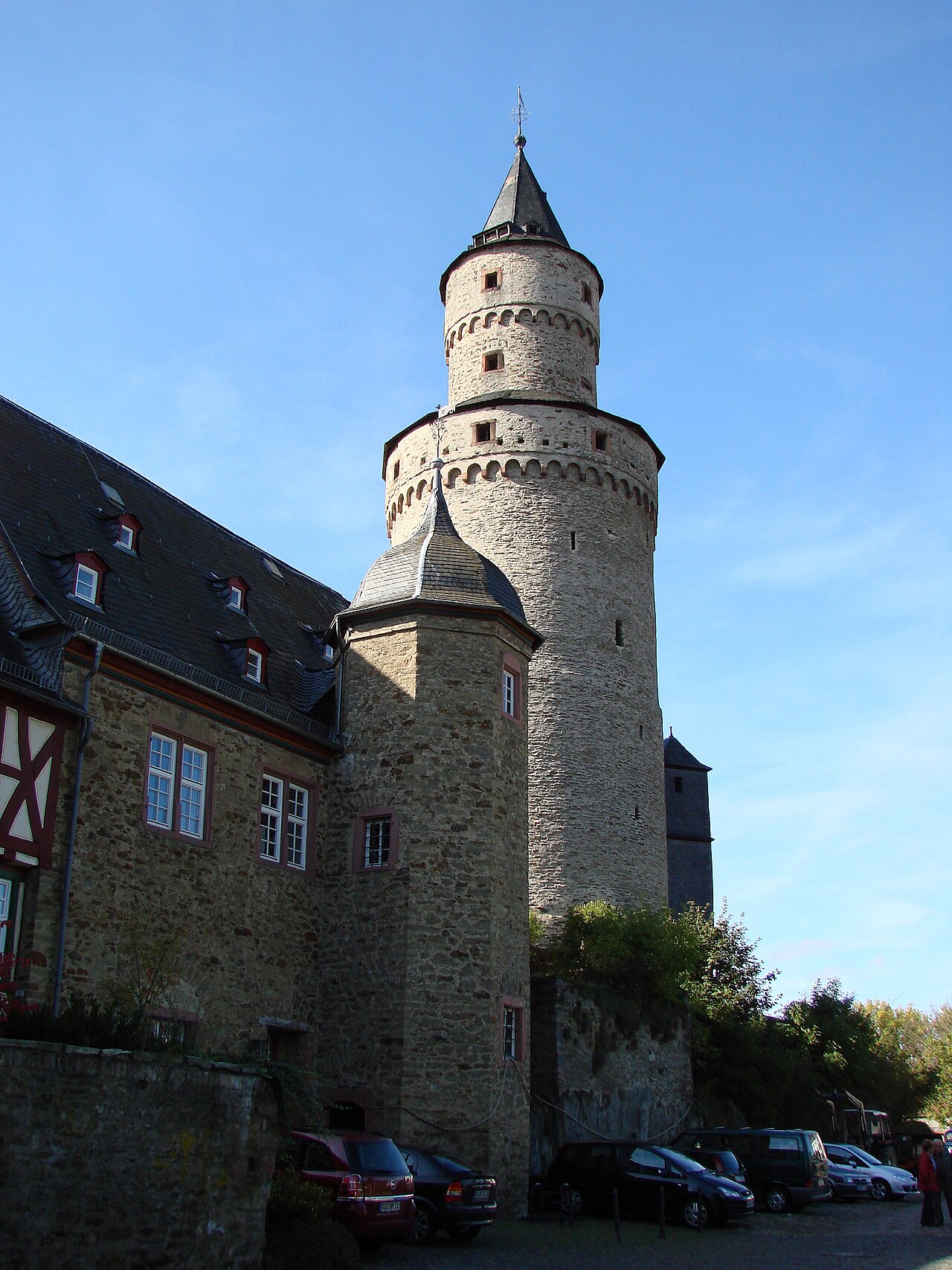
Schloss Wehen
Schloss Wehen is a historic hill castle located in the municipality of Taunusstein in the state of Hesse, Germany. The site occupies a strategically important position along the former town defensive wall, reflecting its medieval origins and significant role in regional governance and defense. The castle's history spans from the early 13th century through to the modern era, showcasing a remarkable evolution from a medieval fortress to a noble residence and administrative center.
The medieval origins and early history
The earliest recorded association of the site is with the noble de Wehena family, mentioned in documents dating back to 1227. This family became extinct in the early 16th century, but their name is linked to the initial settlement of Wehen, which is first documented in 1285. The granting of town rights by Emperor Ludwig the Bavarian in 1323 was a pivotal moment, as it officially recognized Wehen's growing importance and included fortified defenses, indicative of the need for protection and control in this strategic location.
Around 1330, Count Gerlach I of Nassau constructed a castle on the site, likely building upon the foundations of an earlier smaller tower castle that belonged to local nobility. This structure would have served both defensive and administrative functions. Following the division of Nassau estates in 1346, the castle became part of the holdings of Johann I of Nassau-Weilburg. During this period, Schloss Wehen assumed a judicial and administrative role overseeing the surrounding Wehener Grund area, emphasizing its importance beyond mere military defense.
Architectural evolution and noble residence
Between 1595 and 1611, the castle underwent significant repairs and alterations. The medieval fortifications were removed, reflecting changing military technologies and the reduced need for heavy defenses. Instead, the castle was adapted for residential purposes, including the addition of two gate arches in 1630. Throughout the 16th and 17th centuries, Schloss Wehen served as a residence for widows of the Nassau-Weilburg counts, highlighting its role as a noble household and symbol of status.
After the devastation of the Thirty Years’ War (1618–1648), the castle was rebuilt and transformed into a hunting lodge for the ruling princes during the 17th and 18th centuries. This period saw the construction of the main manor house, which rests on medieval foundations but reflects the architectural tastes and functions of the early modern era.
The main manor house and outbuildings
The principal building is a large rectangular structure notable for its mansard-hipped roof, a roof style characterized by a double slope with a steeper lower section. This architectural feature was popular in the 18th century and contributes to the building's stately appearance. Access to the manor is provided by an external staircase with two flights, enhancing its grandeur and accessibility.
Adjacent to the main house is an outbuilding from the same century, featuring plastered half-timbering construction and a slate-covered upper floor beneath a half-hipped roof. The combination of these architectural elements is typical of the period and region, blending functionality with aesthetic appeal.
The entire complex is enclosed by barns with gabled roofs, constructed in one and two-story sections. These buildings suggest that Schloss Wehen functioned as a self-sufficient estate, supporting agricultural and storage needs alongside its residential and administrative roles.
Military and administrative significance in later centuries
During the late 18th and early 19th centuries, Schloss Wehen played an important military role. It served as the headquarters of King Friedrich Wilhelm II of Prussia in 1792 and was later occupied by General Ludwig Yorck von Wartenburg in 1813 during the Napoleonic Wars. These events underscore the castle’s strategic importance in regional and European conflicts.
The castle continued its function as a local justice center until 1943, when the court based there was discontinued. This long-standing judicial role highlights the castle’s enduring administrative significance over several centuries.
Preservation and archaeological discoveries
In the 20th century, significant changes were made to the castle grounds, including the demolition of the enclosing wall along Weiherstraße in 1967 and the filling in of the old moat. These alterations changed the site's medieval defensive character but were part of adapting the property to modern needs.
More recent archaeological excavations in 2018 uncovered wall remains on a neighboring property, possibly linked to the original medieval castle complex. These findings contribute valuable insights into the castle’s historical extent and architectural development.
Today, Schloss Wehen is protected as a historic monument, preserving key architectural elements that connect the present structure to its medieval origins and subsequent transformations. The castle stands as a testament to the region’s rich history, noble lineage, and architectural heritage.
Frequently asked questions (FAQ)
- How do I get to Schloss Wehen?
- Schloss Wehen is located in Taunusstein, Germany, and is easily accessible by car or public transport. If you are traveling by train, the nearest station is in Wiesbaden, from where you can take a bus or taxi to the castle.
- What is the historical significance of Schloss Wehen?
- Schloss Wehen dates back to the 13th century and served as a noble residence for various families throughout its history. Its architecture reflects the transition from medieval fortifications to Renaissance elegance, making it an important landmark in the region.
- When was Schloss Wehen built?
- The construction of Schloss Wehen began in the early 13th century, with significant renovations occurring during the Renaissance period. This long history contributes to its unique architectural style and historical value.
- Can I visit Schloss Wehen year-round?
- Yes, Schloss Wehen is open for visitors throughout the year, but it's advisable to check specific opening hours, as they may vary seasonally. Guided tours are available, providing insights into the castle's rich history and architecture.
- Why is Schloss Wehen an important architectural site?
- Schloss Wehen showcases a blend of medieval and Renaissance architectural styles, representing the evolution of castle design in Germany. Its well-preserved structures and scenic surroundings make it a prime example of historical architecture worth exploring.
- Is it possible to host events at Schloss Wehen?
- Yes, Schloss Wehen offers facilities for hosting various events, including weddings and corporate gatherings. The stunning backdrop of the castle and its grounds provides a picturesque setting for any occasion.
- What are the ticket prices for visiting Schloss Wehen?
- Ticket prices for Schloss Wehen are generally affordable, with discounts available for students and seniors. It's best to check the official website for the most current pricing and any special offers.
- What is the best time to visit Schloss Wehen?
- The best time to visit Schloss Wehen is during the spring and early autumn when the weather is pleasant and the gardens are in full bloom. This timing also allows visitors to enjoy outdoor events and guided tours in a comfortable climate.
- Are there any nearby attractions to visit along with Schloss Wehen?
- Yes, nearby attractions include the scenic Taunus region, great for hiking and outdoor activities, as well as the historic city of Wiesbaden with its thermal baths and cultural sites. Combining these visits can enrich your experience in the area.
Information
Website
Visit websiteSources & official resources
Verify the information above using these authoritative references.
Loading map...
Visitor reviews
No reviews yet. Been here? Write the first review and help other travelers!
Write the first reviewVisited this castle? Share your experience
Your review helps other travelers and adds first-hand knowledge to our encyclopedia.