Schloss Strassburg
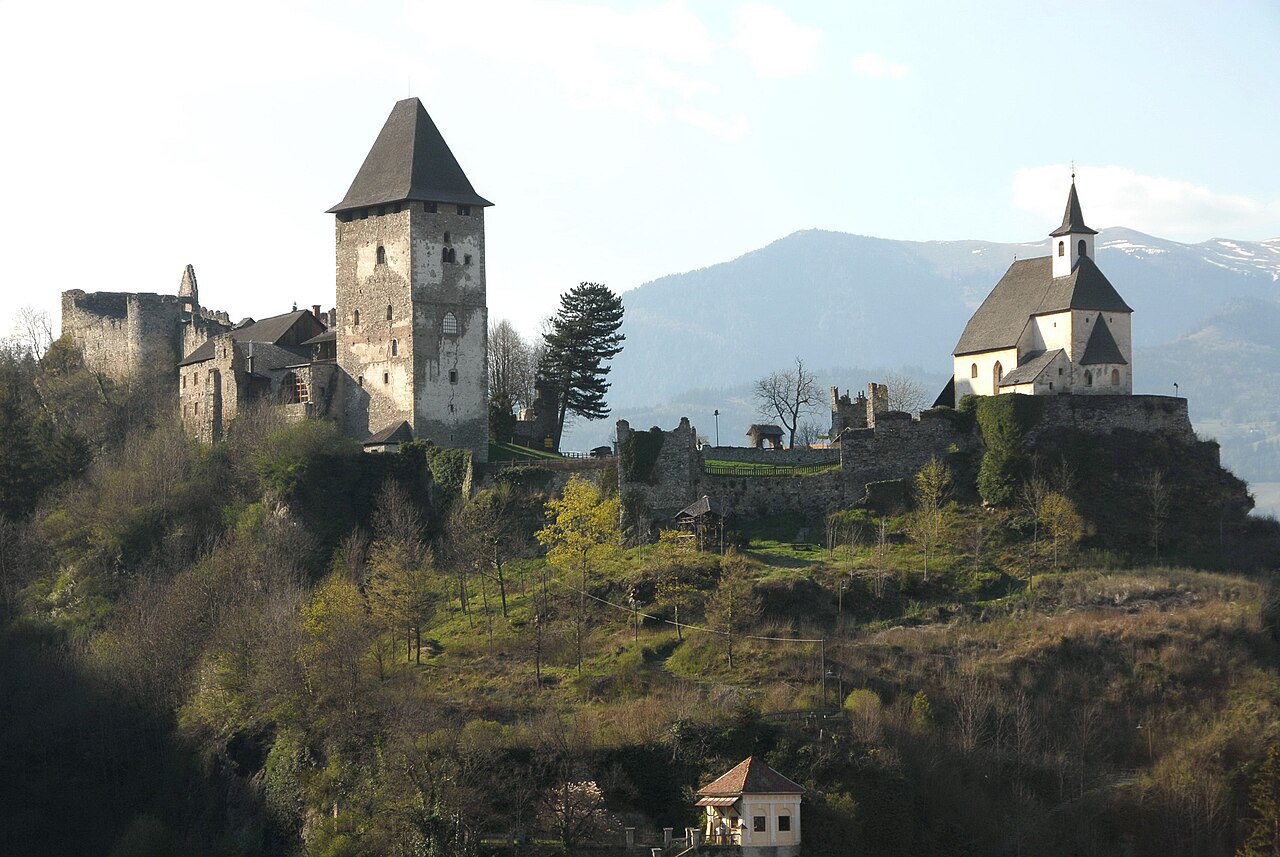
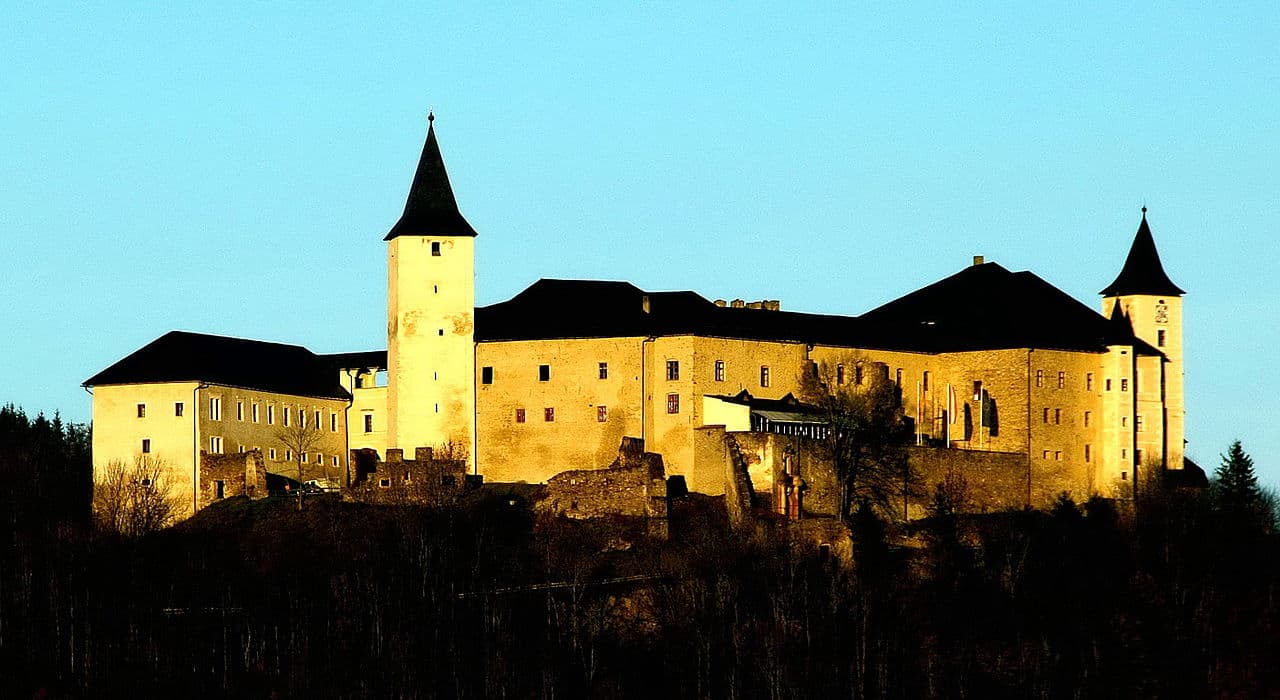
Schloss Straßburg is a prominent 12th-century hill castle located 754 metres above sea level in the municipality of Straßburg, Carinthia, Austria. This castle stands as a testament to the region's medieval power struggles and architectural evolution, blending Romanesque foundations with later Baroque modifications. Today, it serves as a cultural hub, hosting changing museum exhibits and preserving extensive ethnographic collections that highlight rural life, including rustic furniture, kitchen gadgets, tools, household equipment, textiles from the 19th and 20th centuries, and a notable collection of smoking pipes.
Historical significance and foundation
Schloss Straßburg was established in the early 12th century by Bishop Roman I of Gurk, a significant ecclesiastical figure who also commissioned the nearby Gurk Cathedral. Constructed shortly before 1147 on a strategic hill east of the town, the castle was intended to assert the independence of the Gurk bishopric from the powerful Archbishopric of Salzburg. This political and religious assertion is reflected in the castle's initial role as the bishop’s representative residence and the administrative center overseeing extensive estates across southern Styria and Carniola.
Throughout the High Medieval period, the castle played a crucial military and judicial role. It endured a notable siege in 1179 by Archbishop Konrad III of Salzburg, which culminated in the fortress's capture and demolition by Salzburg forces in 1180. This event underscores the intense regional power struggles between ecclesiastical authorities during the era.
Medieval conflicts and judicial authority
Following its reconstruction, Schloss Straßburg experienced cycles of expansion, destruction, and rebuilding throughout the Middle Ages and Renaissance. These changes mirrored ongoing disputes involving the Gurk bishops, rebellious ministeriales, the archdiocese of Bamberg, and local nobility. In 1280, the castle was granted imperial tribunal status by King Rudolf I of Habsburg, elevating its importance as a judicial center with authority over legal matters in the region.
However, after 1494, the castle lost the authority to carry out death sentences, which was transferred to the Carinthian ducal magistrate. Despite this, Schloss Straßburg remained the bishop’s seat until 1783, after which it was abandoned as a residence, marking the beginning of its decline.
Damage, decline, and restoration efforts
The castle suffered significant damage over the centuries from multiple fires in 1368, 1638, 1650, 1856, and 1904, as well as an earthquake in 1767. These events contributed to its gradual deterioration. In the 20th century, the castle faced near demolition in 1954, but restoration efforts spearheaded by the Association of Friends of Straßburg began mid-century and continue to this day.
Currently owned by the Diocese of Gurk, Schloss Straßburg hosts cultural events and houses a local history and hunting museum. Among its treasured artifacts is the Five Lenten Veils, underscoring the castle’s ongoing cultural and religious significance.
Architectural features and layout
Occupying a strategic hilltop overlooking the town and the road to Gurk, Schloss Straßburg extends approximately 70 meters in length. Its walls, constructed of Romanesque quarry stone, reach up to nine meters in height. Most walls remain intact except on the south side, where preservation is partial.
The faulturm keep
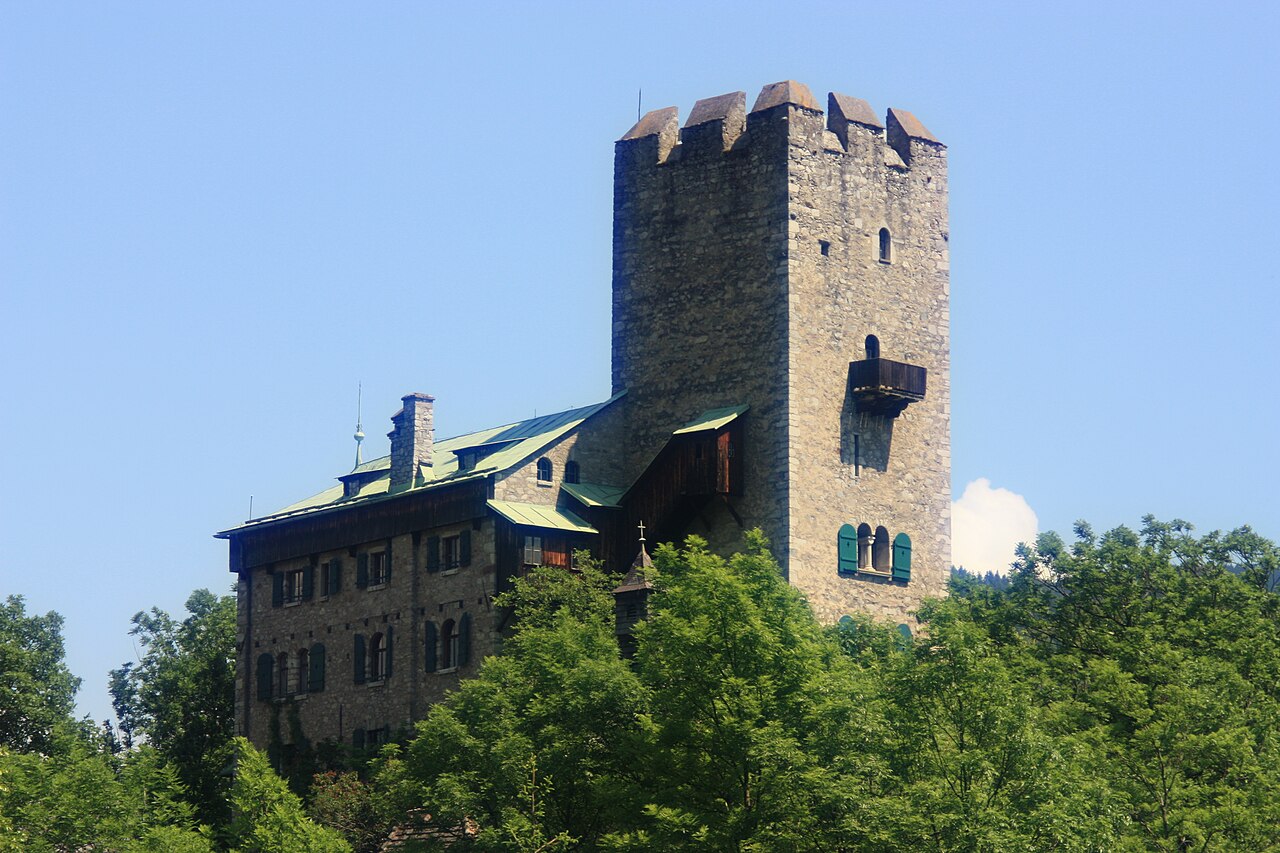
The castle’s original core is the solid keep known as the Faulturm, built in the 12th century. Measuring about 8.4 by 8 meters, it originally had four floors, later raised by one more in the late Middle Ages. This keep served both defensive and residential purposes, housing the ministeriales who managed the bishop’s estates. The basement contained a prison with wooden parapets, while the living quarters featured bifora windows, characteristic double-arched openings typical of Romanesque architecture.
Castle chapel of saint maurice
The castle chapel, dedicated to Saint Maurice, dates from the late 12th century. Architecturally, it comprises a nave, a square choir, and a semicircular apse. The chapel was raised by one floor in the 14th century and further elevated in the 15th and 17th centuries. Its interior was redecorated in the late 17th century in Baroque style, featuring elaborate stucco work by Gabriel Wittini and paintings by Adam Claus, reflecting the artistic tastes of the period.
Residential and defensive structures
The main residential building, or palas, located on the south side west of the chapel, contains elements dating from the 13th century. It was extended westward in the late Middle Ages and heightened in the early 17th century. A notable architectural feature is the two-flight staircase with a rounded arch portal made of chlorite slate, completed in 1611.
Two defensive towers flank the castle. The eastern tower, built in the 14th century, retains original smoke kitchens on its ground and first floors. The western tower, known as the coin tower, was constructed in the 15th century and features late Gothic portals, showcasing the evolution of architectural styles at the castle.
Outer defenses and later additions
The outer ring wall was strengthened in the mid-15th century, including the addition of a two-story west wing and a north wing built around 1500. The outer courtyard is enclosed by 16th-century bastions, enhancing the castle’s defensive capabilities.
Between 1583 and 1584, architect Johann Anton Verda constructed a three-story stable and granary in the northwest section. The ground floor contains a seven-bay, three-nave hall originally used as a horse stable. This building was expanded westward in the 17th century and connected to the main castle by an arcade wing.
Courtyard and baroque elements
The courtyard features a monumental Baroque portal from 1685 leading to the zwinger, an enclosed killing ground or defensive courtyard. A second Baroque main gate, built in 1686, bears inscriptions commemorating the donor of the 1583 construction.
Surrounding the courtyard are two-story arcades with semicircular arches resting on massive pillars at ground level and slender columns above. Although constructed between 1682 and 1689 in Baroque style, these arcades display Renaissance motifs. The upper arcades on the south and west sides were restored in 1962.
The south wing contains a two-story ballroom rebuilt in 1959, while the north-east corner houses the former knights’ hall, now serving as a hunting museum. These spaces illustrate the castle’s adaptation from a medieval fortress to a cultural venue.
Cultural importance and preservation
Schloss Straßburg is protected as a historic monument by the Republic of Austria under monument number 63411. Its preservation reflects a commitment to maintaining the architectural and cultural heritage of Carinthia. The castle’s diverse architectural elements—from Romanesque keeps to Baroque portals and arcades—offer insights into centuries of architectural trends and regional history.
Today, Schloss Straßburg stands not only as a monument to medieval ecclesiastical power but also as a vibrant cultural center, engaging visitors with its museum exhibits, historic halls, and ongoing restoration efforts. Its commanding hilltop position continues to offer panoramic views, connecting visitors with the rich historical landscape of southern Austria.
Frequently asked questions (FAQ)
- How do I get to Schloss Strassburg?
- Schloss Strassburg is located in the picturesque town of Straßburg, Austria. You can reach the castle by car, with on-site parking available, or by public transportation, including buses and trains that connect to the nearby towns. Once you arrive in Straßburg, the castle is a short walk from the town center.
- What is the historical significance of Schloss Strassburg?
- Schloss Strassburg dates back to the late Middle Ages and has served various purposes throughout its history, including as a royal residence and a strategic military stronghold. Its architecture reflects the transition from Gothic to Renaissance styles, making it an important example of historical architecture in Austria. The castle is also associated with local legends and historical figures, adding to its cultural importance.
- When was Schloss Strassburg built?
- Construction of Schloss Strassburg began in the 12th century, with various renovations and expansions taking place over the centuries. The castle's architecture showcases elements from the Gothic, Renaissance, and Baroque periods, representing the evolving styles of its time. Its long history makes it a fascinating site for visitors interested in medieval history.
- Can I take guided tours of Schloss Strassburg?
- Yes, guided tours of Schloss Strassburg are available and provide an in-depth look at the castle's history, architecture, and legends. Tours typically last around 1-2 hours and are led by knowledgeable guides who share fascinating stories about the castle's past. It is recommended to book your tour in advance, especially during peak tourist seasons.
- Why is Schloss Strassburg a popular tourist destination?
- Schloss Strassburg attracts visitors due to its stunning architecture, rich history, and beautiful surrounding landscape. The castle offers breathtaking views of the surrounding area, and its gardens are perfect for leisurely strolls. Additionally, the town of Straßburg itself is charming, with quaint streets and local shops, making it a great day trip destination.
- Is it possible to visit Schloss Strassburg year-round?
- Yes, Schloss Strassburg is open to visitors year-round, although opening hours may vary by season. During the summer months, the castle typically has extended hours to accommodate the influx of tourists. It's advisable to check the official website for the current schedule and any seasonal events that may be taking place.
- What are the ticket prices for visiting Schloss Strassburg?
- Ticket prices for Schloss Strassburg vary depending on the type of tour you choose and whether you qualify for any discounts, such as student or senior rates. Generally, admission is quite affordable, making it accessible for families and individual travelers alike. Be sure to check the castle's official website for the most up-to-date pricing information.
- What is the best time to visit Schloss Strassburg?
- The best time to visit Schloss Strassburg is during the spring and early fall when the weather is mild, and the gardens are in full bloom. These seasons typically offer fewer crowds compared to the summer months, allowing for a more enjoyable experience. Additionally, visiting during these times can provide picturesque views of the castle against the backdrop of changing leaves or blooming flowers.
- Are there any nearby attractions to visit when at Schloss Strassburg?
- Yes, there are several attractions near Schloss Strassburg that complement your visit. The charming streets of the town of Straßburg itself are lined with shops and cafes, perfect for exploring. Additionally, nearby hiking trails and natural parks offer opportunities for outdoor activities and scenic views, making it an ideal area for a day of exploration.
Photo gallery

Information
Sources & official resources
Verify the information above using these authoritative references.
Loading map...
Visitor reviews
No reviews yet. Been here? Write the first review and help other travelers!
Write the first reviewVisited this castle? Share your experience
Your review helps other travelers and adds first-hand knowledge to our encyclopedia.