Petersberg Castle
Petersberg Castle, perched on the Petersberg hill overlooking the town of Friesach, Austria, is a remarkable example of a High Medieval hill castle with a rich history spanning nearly a millennium. Constructed around 1076 by Archbishop Gebhard of Salzburg, the fortress played a critical role during the Investiture Controversy, serving as a strategic stronghold to block Emperor Henry IV from advancing through the Alpine passes. This castle not only reflects the turbulent political and religious conflicts of the 11th and 12th centuries but also showcases architectural evolution through the medieval and Renaissance periods.
The castle was built to assert the power of the Archbishopric of Salzburg in a region contested by secular rulers, notably the Carinthian ducal House of Sponheim. Its position above Friesach allowed control over trade routes and military movements, making it a coveted military asset. The fortress endured numerous sieges and attacks, including a significant assault by Duke Engelbert II of Carinthia in the early 12th century, which it successfully repelled. Over the centuries, the castle was expanded and fortified, reflecting the changing needs of its occupants and advancements in defensive architecture.
Historical context and significance
The origins of Petersberg Castle are tied closely to the political-religious conflicts of the High Middle Ages. The castle's construction was commissioned by Archbishop Gebhard of Salzburg, a staunch supporter of Pope Gregory VII during the Investiture Controversy, a power struggle between the papacy and the Holy Roman Emperor over the appointment of church officials. By erecting this fortress, Gebhard aimed to prevent Emperor Henry IV from crossing the Alps, thereby securing the archbishop's influence and protecting papal interests.
Throughout the 12th century, the castle became a symbol of ecclesiastical power in the region. In 1149, King Conrad III of Germany stayed at Petersberg Castle after returning from the Second Crusade, highlighting its importance as a royal refuge. Similarly, in 1192, Richard the Lionheart passed through the castle during his return from the Third Crusade, attempting to evade the guards of Duke Leopold V of Austria. These visits underscore the castle's strategic and political significance during this era.
The castle also witnessed various military conflicts, including a siege in 1292 involving forces loyal to Duke Albert I, and later, during the late 15th century, occupation by Hungarian troops amid hostilities between Emperor Frederick III and King Matthias Corvinus. Renovations by Archbishop Leonhard von Keutschach around 1495 modernized the fortress and the town fortifications, reflecting Renaissance influences and the evolving nature of warfare.
Architectural features and layout
Overall structure and defensive elements
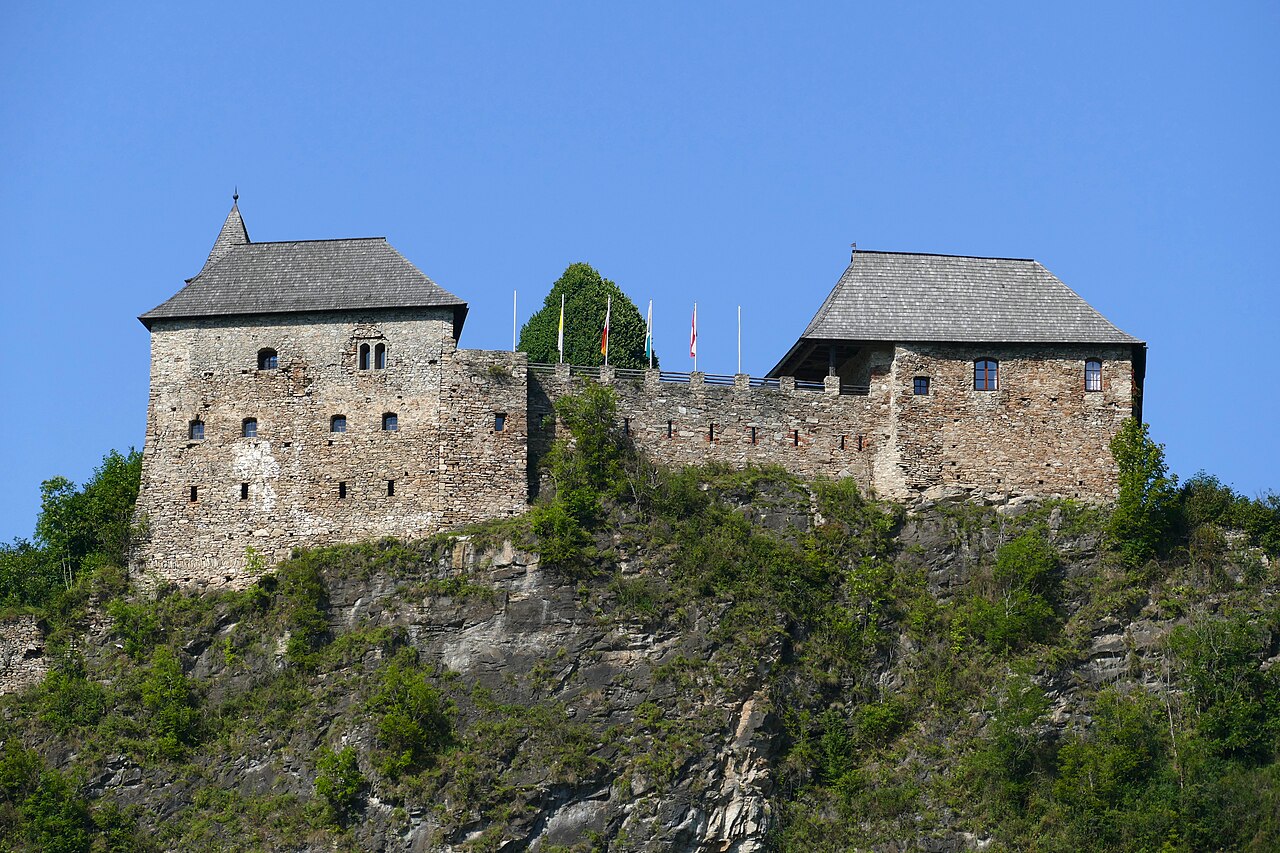
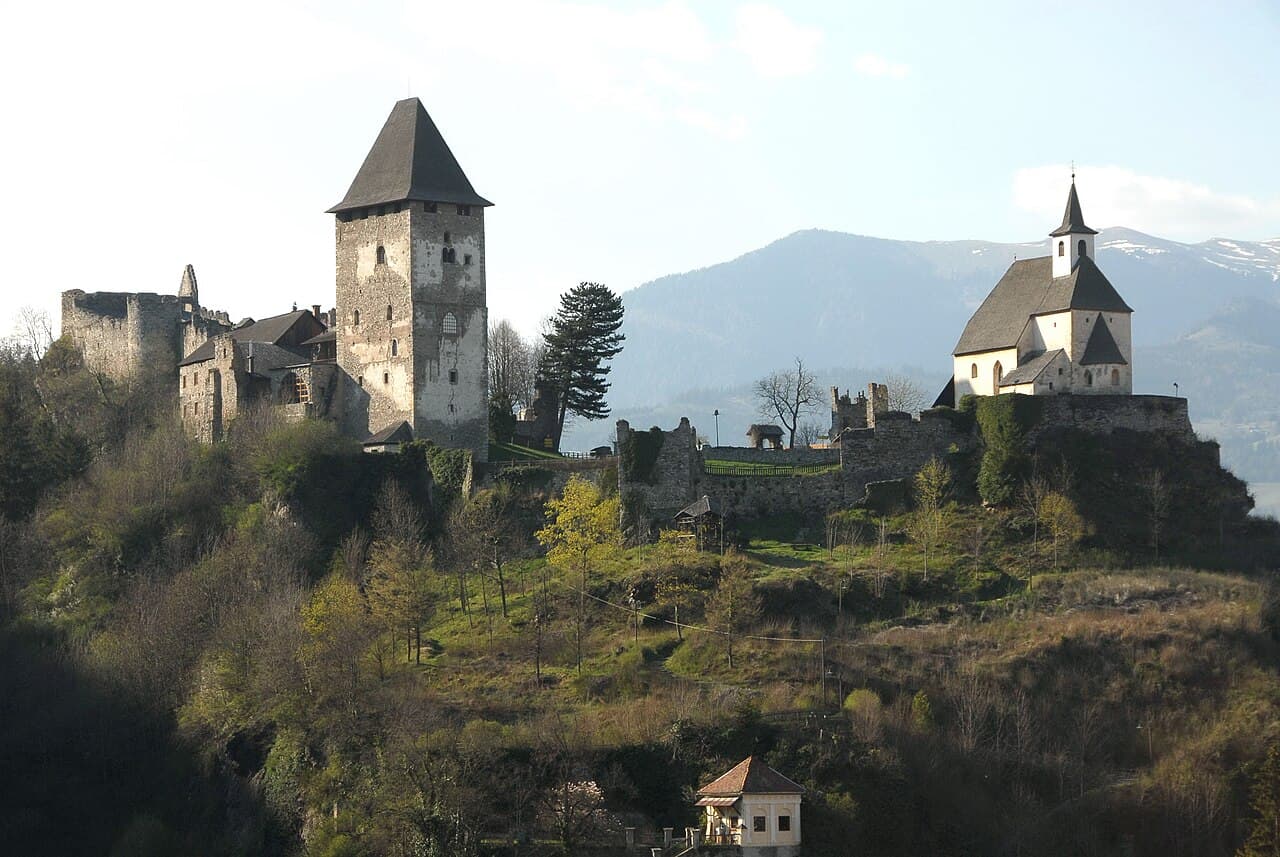
The castle is divided into two main sections: the upper courtyard (Oberhof) and the lower courtyard (Unterer Burghof), each enclosed by robust fortified walls that were adapted over several centuries to meet defensive needs. The entire complex is an excellent example of medieval construction techniques combined with later Renaissance modifications.
The upper courtyard occupies the rocky summit of Petersberg hill, featuring a large fortified enclosure with half-towers on its northern and southern edges. These towers projected outward from the curtain walls, allowing defenders to cover the walls with crossfire. Access to the upper courtyard was primarily through the main western gate, parts of which, including fragments of the original gate tower, remain intact. A secondary northern entrance also provided access.
The bergfried and chapels
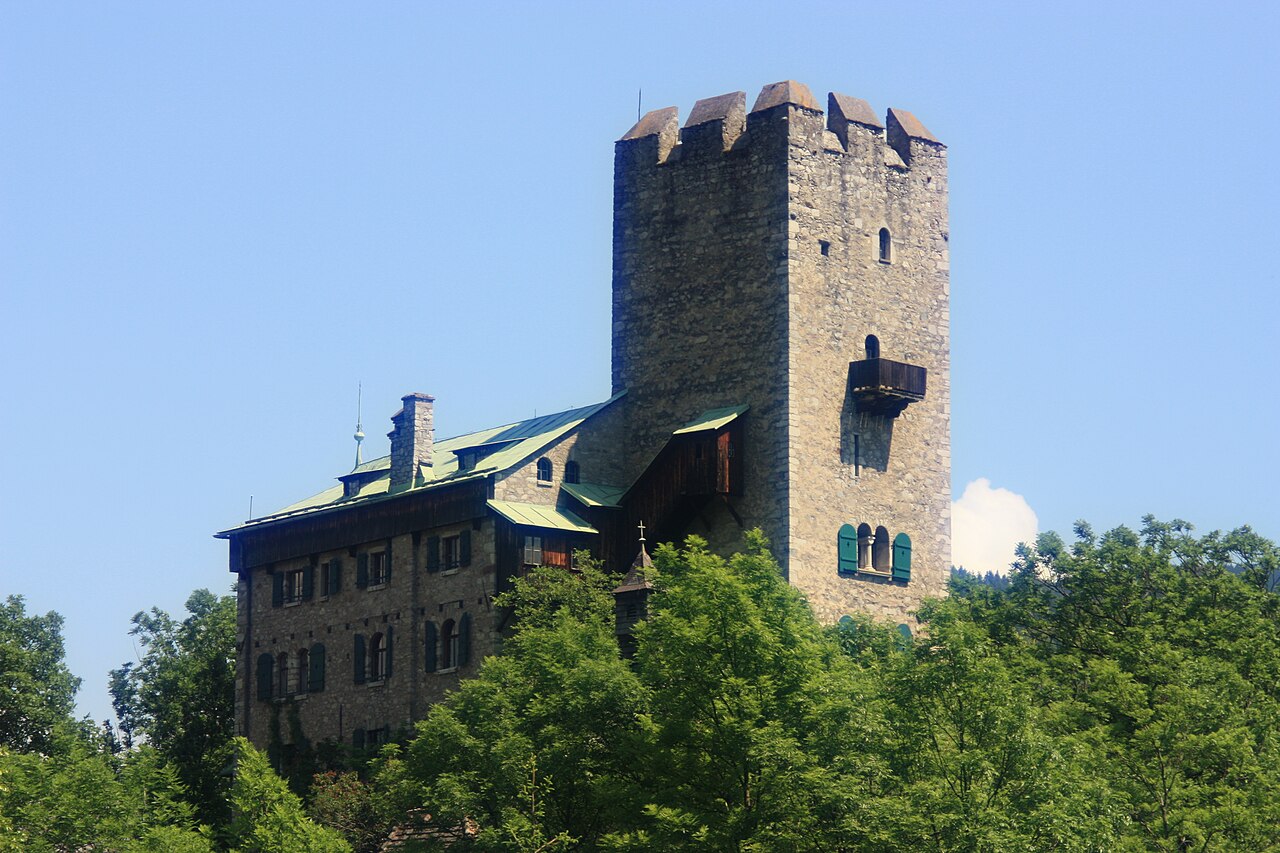
Dominating the castle is the imposing six-story bergfried, constructed around 1200. This tall defensive tower served as the fortress's main stronghold and lookout point. The bergfried has undergone partial restoration since the late 19th century, preserving its historical silhouette. Within this tower lies the Rupert Chapel, a significant religious chamber historically used for worship by the castle's inhabitants. Adjacent to the bergfried are the remains of an older chapel, known as the Gebhard or Conrad Chapel, which reflects earlier ecclesiastical architectural phases within the castle complex.
Lower courtyard buildings and Renaissance influences
The lower courtyard originally contained several buildings surrounded by protective walls. The southern building is the best-preserved structure, dating to the 16th century. This three-story building features a distinctive arcade façade—a series of arches supported by columns—typical of Renaissance architectural style. Historically, it housed the castle captain and today serves as a restaurant, demonstrating adaptive reuse of the historic fabric.
Ruins on the western and northern sides of the lower courtyard include remains of former representative residences such as the Eberhard II Palace and the Leonhardsbau. These buildings, constructed between the 13th and 15th centuries, served administrative and ceremonial roles within the castle, further illustrating the complex's multifunctional nature.
Decline and current status
By the late 17th century, Petersberg Castle had lost its military importance. A devastating fire in 1673 severely damaged the fortress, leading to its abandonment and gradual decay. Despite this, the site remains a significant cultural and historical monument.
Today, the castle houses the Friesach City Museum, which offers exhibits on the town's history, culture, mining industry, and trade. Visitors can explore the ruins, including the bergfried and chapels, gaining insight into the castle's architectural evolution and its role in regional history.
The preservation of Petersberg Castle as a hill castle ruin provides a tangible connection to Austria's medieval past and the complex interplay of religious and secular powers that shaped the region. Its layered architecture, from Romanesque chapels to Renaissance arcades, offers a unique opportunity to study the development of castle construction over several centuries.
Visitor information and cultural significance
Located in the historic town of Friesach, Petersberg Castle is accessible to the public and serves as a focal point for cultural tourism in the region. The castle's museum enriches visitors' understanding of the area's medieval heritage and the broader historical narratives of Austria.
The site’s combination of military architecture, religious structures, and residential buildings exemplifies the multifunctional nature of medieval castles as fortresses, administrative centers, and noble residences. Its preservation allows for ongoing archaeological study and public education, highlighting the importance of heritage conservation.
Frequently asked questions (FAQ)
- How do I get to Petersberg Castle?
- Petersberg Castle is located in Friesach, Austria, and can be easily accessed by car or public transport. If traveling by car, there are designated parking areas nearby. For those using public transport, local buses connect Friesach to major cities, making it convenient for visitors.
- What is the historical significance of Petersberg Castle?
- Petersberg Castle dates back to the 12th century and played a vital role in the region's defense and administration. It is one of the oldest castles in Carinthia and offers insights into the medieval architecture and lifestyle of the time. The castle's historical significance is highlighted by its well-preserved structure and artifacts.
- When was Petersberg Castle built?
- Petersberg Castle was constructed in the 12th century, with its origins rooted in the need for protection and governance in the area. Over the centuries, it has undergone numerous renovations and restorations, preserving its historical essence while adapting to modern visitor needs.
- Can I take guided tours of Petersberg Castle?
- Yes, guided tours are available at Petersberg Castle, providing visitors with a comprehensive understanding of its history and architecture. The tours are led by knowledgeable guides who share fascinating stories and facts about the castle. It's recommended to check the schedule in advance for tour times.
- Why is Petersberg Castle an architectural gem?
- Petersberg Castle is celebrated for its striking medieval architecture, featuring fortified walls and impressive towers. The blend of Gothic and Romanesque styles showcases the evolution of architectural design over the centuries. Its unique structure not only attracts history enthusiasts but also architecture lovers from around the world.
- Is it possible to visit Petersberg Castle year-round?
- Yes, Petersberg Castle is open to visitors year-round, although hours may vary with the seasons. It is advisable to check the official website for current opening hours and any seasonal events that may enhance your visit. Be sure to plan your trip accordingly to make the most of your experience.
- What are the ticket prices for Petersberg Castle?
- Ticket prices for Petersberg Castle are generally affordable, with discounts available for students, seniors, and families. Children under a certain age often enter for free, making it a great destination for family outings. Check the official website for the most up-to-date pricing and any special offers.
- What is the best time to visit Petersberg Castle?
- The best time to visit Petersberg Castle is during the spring and early autumn months when the weather is mild and ideal for exploring the grounds. During these seasons, you can enjoy beautiful views of the surrounding landscape and partake in various outdoor activities. Additionally, there are often special events and festivals held during these times.
- Are there any nearby attractions to Petersberg Castle?
- Yes, Friesach offers several nearby attractions, including the medieval town center, which is rich in history and charm. Visitors can also explore local museums and enjoy scenic walking trails in the surrounding countryside. Combining a visit to the castle with other local sights makes for a fulfilling day trip.
Photo gallery

Information
Loading map...
Visitor reviews
No reviews yet. Been here? Write the first review and help other travelers!
Write the first reviewVisited this castle? Share your experience
Your review helps other travelers and adds first-hand knowledge to our encyclopedia.