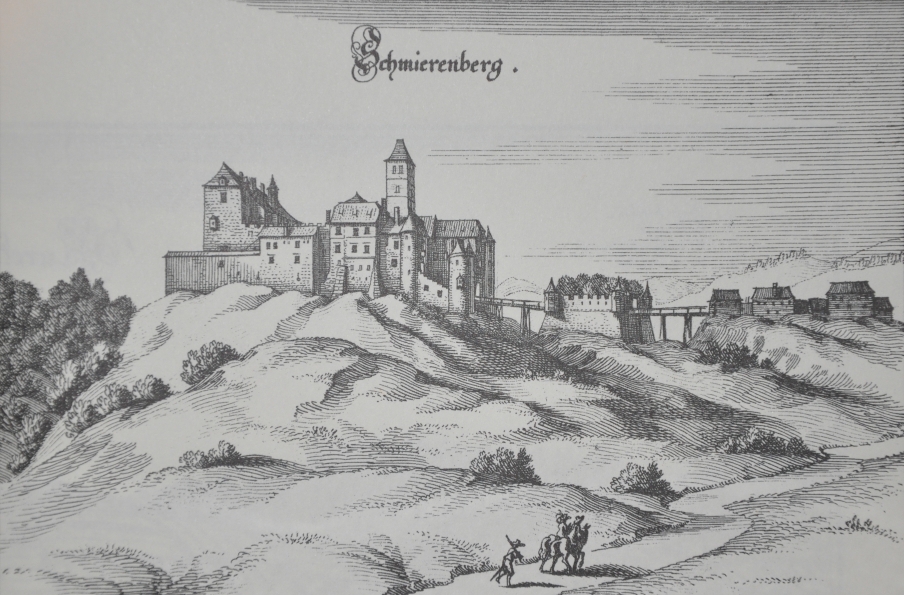
Schloss Seggau
Schloss Seggau is a remarkable hill castle located on a densely wooded hill overlooking the town of Leibnitz and the scenic Sulm valley in southern Styria, Austria. Its strategic position has made it a significant landmark since ancient times, with archaeological evidence of Celtic and Roman presence, including stone monuments dating back to the 2nd and 3rd centuries. These artifacts highlight the site's long-standing importance well before the medieval era.
The castle's core was established in the 12th century by the Archbishopric of Salzburg as a fortified base for missionary work and regional supervision. This initial structure, known as the upper castle, was expanded in 1218 by the bishops of Seckau, marking the beginning of a complex that ultimately comprised three distinct castles: Burg Leibnitz (belonging to Salzburg archbishops), the bishops of Seckau's castle, and Schloss Polheim, which served as a residence for Salzburg ministeriales and burgraves. This grouping of castles illustrates the layered ecclesiastical and feudal authority in the region during the High Medieval period.
Medieval origins and strategic importance
The original construction of Schloss Seggau was driven by the need for a fortified center to support the colonization and administration of southern Styria. The castle's location on a hill provided commanding views over the surrounding landscape, essential for both defense and oversight. The upper castle's design reflects typical High Medieval fortification principles, with robust stone walls and a compact layout suitable for military and administrative functions.
Throughout the 15th century, the castle complex faced challenges such as damage during the Hungarian War of 1479. Although it was not directly besieged during the Ottoman wars, the castle underwent defensive enhancements including the addition of a zwinger—a narrow enclosed killing ground designed to trap attackers—and artillery bastions to adapt to evolving military technology. These upgrades illustrate the castle's continued military relevance into the late medieval period.
Baroque transformation and architectural evolution
The castle's most significant transformation occurred in the late 17th century under Bishop Johann Ernst Graf von Thun. Architect Antonio Solari contributed to the renovation by adding elegant arcades in 1664, which introduced a Baroque aesthetic to the predominantly medieval fortress. This period saw the unification of the three castles into a cohesive complex, including the removal of walls between Burg Leibnitz and the bishops' castle and the construction of a shared outer wall under Bishop Martin Brenner. These changes enhanced both the castle's defensive capabilities and its function as an episcopal residence.
Schloss Seggau served as the primary residence of the bishops of Seckau until 1786, after which it became their summer residence until the 20th century. The castle's adaptation to residential and ceremonial purposes is evident in the preservation of the baroque princely chambers on the second upper floor and the restoration of the castle chapel in 2010.
Castle complex and notable architectural features
The castle complex is arranged around two main courtyards: the upper castle courtyard and the economic courtyard. The upper courtyard is enclosed by mostly three-story buildings, including the court tract with a Gothic core dating to 1491 and the Vizedomhaus. Embedded within the courtyard walls are numerous Roman stone monuments, including Noricum round medallions depicting mythological scenes, discovered during 19th-century renovations.
The economic courtyard, dating from the 16th century, was unified in 1682 by builder Jakob Schmerlaib. Its main gate is flanked by a 1729 statue of St. John of Nepomuk and mid-16th century coat of arms stones. This courtyard has been adapted for modern use as a conference and hotel facility, incorporating a modern annex for additional guest accommodations and dining.
A distinctive feature is the Orangerie, a long garden hall with 13 arches located at the northern end of the castle garden. Beneath it lies the castle's wine cellar, a free-standing Baroque vaulted structure over 300 years old. This cellar is one of the largest and oldest in Europe, housing large wooden barrels and offering wine tastings and sales, reflecting the region's rich viticultural tradition.
Chapels and religious art
The castle has housed several chapels over the centuries. The St. Michael Chapel was originally located in the northern wing of the economic courtyard and consecrated in 1961, featuring concrete-glass windows by Alfred Wickenburg illustrating the Apocalypse of John and sculptures by Alexander Silveri. In 2004, a new St. Michael Chapel was built in the Brennertrakt, the former armory dating from 1586 and remodeled in the late 17th century. This chapel was consecrated in 2005 and includes a stone altar made of eclogite, original windows and sculptures from the previous chapel, and new artworks by Gerald Brettschuh and Wolfgang Hollegha.
Historic bells and towers
A prominent clock tower stands between the economic courtyard and the upper castle. It has undergone several renovations, including being raised by one floor in 1964 and topped with a hipped roof. The tower contains three historic bells dated 1385, 1587, and 1688, though they are currently not in use.
Another notable feature is the bastion tower on the south side, which houses the "Seggauer Liesl", the largest historic bell in Styria. Cast in 1688 and measuring two meters in diameter, it is rung manually at noon on Sundays and holidays by four individuals, continuing a centuries-old tradition.
Schloss polheim and surrounding structures
Schloss Polheim lies lower on the terrain and apart from the main complex. This late Renaissance, hook-shaped building dates from the mid-16th century and features two-story arcades with Ionic capitals on the ground floor columns. Its simple portal bears the coat of arms of Bishop Rudolf Josef Graf Thun. Although much of Schloss Polheim was demolished in 1693, it remains a protected historic monument despite its poorer condition compared to the rest of the castle.
Modern use and cultural significance
Today, Schloss Seggau functions as a venue for seminars, conferences, and cultural events, incorporating a hotel and the popular Schloss Cafe. The castle's extensive wine cellar is a highlight for visitors, offering tastings and sales of local wines. The castle garden features the Trinity Fountain, created in 1995 by Fred Höfler, adding a contemporary artistic element to the historic site.
The castle's rich history, architectural evolution, and well-preserved features make it an important cultural heritage site in Austria. Its blend of medieval fortifications, Baroque renovations, and modern adaptations provide a comprehensive glimpse into the region's historical and architectural development over nearly a millennium.
Visitors to Schloss Seggau can explore guided tours of the upper castle, including the baroque princely chambers and the restored chapel, while enjoying the serene natural surroundings and panoramic views of the Sulm valley. The castle's combination of historical depth and contemporary function makes it a unique destination for those interested in European castle architecture and history.
Frequently asked questions (FAQ)
- How do I visit Schloss Seggau and what are the opening hours?
- Schloss Seggau is open to visitors primarily for guided tours, seminars, and conferences. Opening hours vary depending on events, so it is recommended to check the official website or contact the castle directly for the latest visiting times.
- What is the historical significance of Schloss Seggau?
- Schloss Seggau has been a strategic ecclesiastical fortress since the 12th century, serving as a residence for bishops and a military stronghold. Its layered history reflects the political and religious developments in southern Styria over several centuries.
- Can I attend wine tastings at Schloss Seggau?
- Yes, the castle's wine cellar is over 300 years old and one of the largest in Europe. Visitors can enjoy wine tastings and purchase local wines, making it a popular attraction for wine enthusiasts.
- Is Schloss Seggau accessible for people with disabilities?
- While some modern facilities have been added, the historic nature of Schloss Seggau means that full accessibility may be limited in certain areas. Visitors with mobility concerns should inquire in advance to plan their visit accordingly.
- What architectural styles are represented in Schloss Seggau?
- Schloss Seggau features a blend of <strong>High Medieval</strong> fortifications and <strong>Baroque</strong> renovations, including Gothic cores and late 17th-century arcades. This combination reflects its evolution from a fortress to an episcopal residence.
Information
Website
Visit websiteSources & official resources
Verify the information above using these authoritative references.
Loading map...
Visitor reviews
No reviews yet. Been here? Write the first review and help other travelers!
Write the first reviewVisited this castle? Share your experience
Your review helps other travelers and adds first-hand knowledge to our encyclopedia.