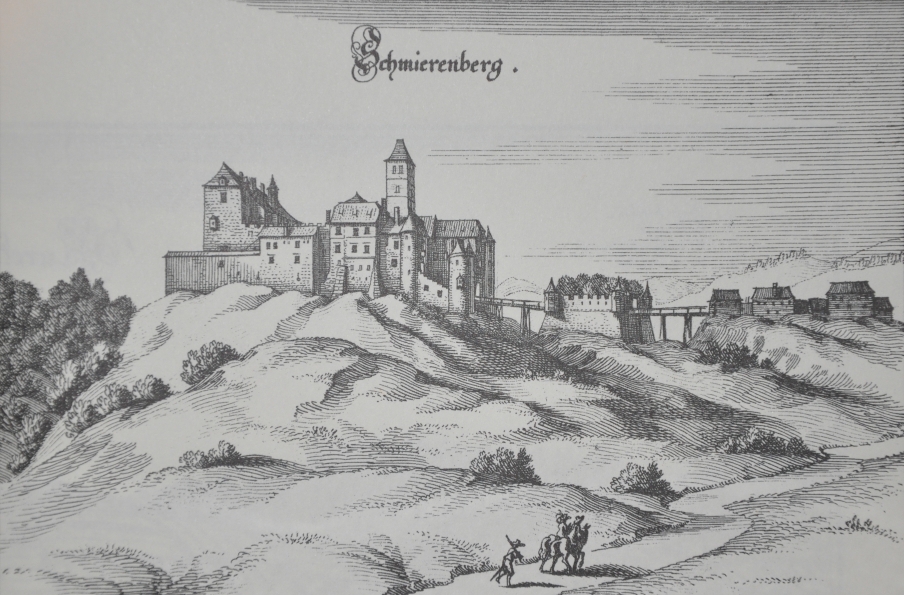
Ehrenhausen Castle
Ehrenhausen Castle stands as a notable example of Renaissance architecture in Austria, located in the town of Ehrenhausen. Although its origins trace back to the 12th century, the castle's current form was largely shaped in the 16th century by the influential Eggenberg family. The castle's strategic position in southern Austria made it a key fortification in securing the region against Turkish incursions during the turbulent periods of the late Middle Ages and early modern era.
Historical background and development
The earliest records of Ehrenhausen Castle date to 1240, indicating its existence as a medieval stronghold. Initially constructed as a defensive site, it evolved significantly under the Eggenbergs, who were prominent nobles and patrons of the arts. Their extensive renovations in the 16th century transformed the castle into a four-winged, three-story complex that combined both residential and military functions. This period coincided with the Renaissance, and the architectural style of the castle reflects this influence, marking a departure from purely medieval fortress designs.
Architectural features and layout
The castle is characterized by its four-winged structure, enclosing a central courtyard, which was typical of Renaissance residential castles. Its three-story height allowed for expansive living quarters and defensive capabilities. The walls are robust, designed to withstand sieges, while the layout facilitates both defense and domestic comfort. The castle's exterior and interior display Renaissance stylistic elements, including symmetrical arrangements and decorative details that contrast with its original medieval military purpose.
The mausoleum of ruprecht and wolf von eggenberg
On the castle hill, visitors find the mausoleum of Ruprecht von Eggenberg (1546-1611) and his nephew Wolf von Eggenberg. This mausoleum is a significant cultural landmark designed by the Italian painter and architect Giovanni Pietro de Pomis, who was active in the late Renaissance period. The structure reflects Italian Renaissance artistic influences and serves as a testament to the Eggenberg family's prominence and their connections to European artistic circles.
Military significance and regional role
Ehrenhausen Castle played a critical role in the defense of Austria's southern and eastern frontiers. During the 16th and 17th centuries, the Habsburg Monarchy faced repeated threats from the Ottoman Empire. As part of a network of fortifications, Ehrenhausen helped to secure the region against Turkish advances. Its location on a castle hill provided strategic oversight of the surrounding landscape, enabling early warnings and defense coordination.
Preservation and current status
Today, Ehrenhausen Castle is recognized as a well-preserved example of Renaissance architecture with medieval origins. Its condition allows visitors to appreciate the blend of military and residential architecture from two distinct periods. The castle and mausoleum remain important heritage sites in Austria, attracting scholars and tourists interested in architectural history and the region's complex past.
Visiting information and cultural significance
While specific visiting hours and ticket prices may vary, Ehrenhausen Castle is typically accessible to the public during certain seasons or by appointment, reflecting its status as a heritage site. The castle's rich history and architectural features make it a valuable destination for those interested in the evolution of fortifications and noble residences in Austria. The mausoleum adds an artistic dimension, highlighting the cultural exchanges between Austria and Italy during the Renaissance.
Frequently asked questions (FAQ)
- When was Ehrenhausen Castle originally built?
- Ehrenhausen Castle was originally constructed in the 12th century, with the first recorded mention dating back to 1240.
- What architectural style characterizes Ehrenhausen Castle?
- The castle primarily exhibits Renaissance architectural features, especially after its 16th-century reconstruction by the Eggenberg family.
- Who designed the mausoleum on the castle hill?
- The mausoleum of Ruprecht and Wolf von Eggenberg was designed by Italian painter and architect Giovanni Pietro de Pomis, reflecting Renaissance artistic influences.
- What was the castle's role in regional defense?
- Ehrenhausen Castle was part of Austria's fortifications securing the south and east against Turkish invasions during the 16th and 17th centuries.
- Is Ehrenhausen Castle open to visitors?
- The castle is generally accessible to the public during certain seasons or by appointment, offering insight into Renaissance architecture and Austrian history.
Information
Loading map...
Visitor reviews
No reviews yet. Been here? Write the first review and help other travelers!
Write the first reviewVisited this castle? Share your experience
Your review helps other travelers and adds first-hand knowledge to our encyclopedia.