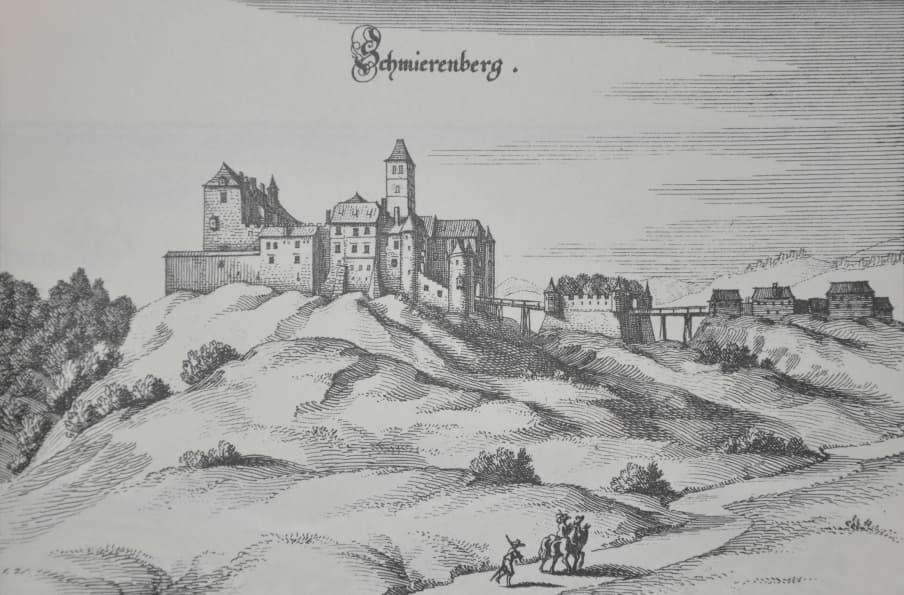
Ruine Schmirnberg
Ruine Schmirnberg is a notable high medieval castle ruin located in the region of Styria, Austria. Constructed in the 13th century, it served as one of the most formidable fortifications in the Pößnitz and Seggau area. The castle's strategic position and robust defenses made it a significant stronghold during the medieval period.
Historical significance and timeline
The earliest known mention of Ruine Schmirnberg dates to around 1250, highlighting its importance in regional defense and control. Throughout the high medieval period, the castle played a critical role in overseeing and securing the surrounding territories. It remained inhabited and operational well into the 18th century, demonstrating its sustained relevance across several centuries.
By 1822, the castle had been abandoned and had fallen into a state of ruin, reflecting the broader decline of many medieval fortifications as military technology and political landscapes evolved. In 1912, the ruins were acquired by the Czerweny-Arland family, marking a new chapter in the site's history focused on preservation and heritage.
Architectural features and layout
Although now in ruins, Ruine Schmirnberg originally featured typical high medieval defensive architecture. The castle likely included thick stone walls, a keep or donjon serving as the main fortified residence, and various towers for surveillance and defense. Its location in Styria suggests it was designed to control important routes and oversee the surrounding landscape.
The castle's fortifications would have been complemented by a curtain wall enclosing the inner courtyard, along with gatehouses and possibly a moat or natural defensive features adapted to the terrain. Defensive elements such as battlements and arrow slits would have been integral to its design, allowing defenders to repel attackers effectively.
Cultural and regional context
Styria during the medieval period was a region of strategic importance due to its position within the Holy Roman Empire and its proximity to key trade and military routes. Castles like Ruine Schmirnberg were essential for maintaining control and projecting power locally. The castle's endurance into the 18th century indicates its role adapted over time, possibly transitioning from a purely military fortress to a noble residence or administrative center.
The ownership transfer to the Czerweny-Arland family in the early 20th century reflects growing interest in heritage conservation and the recognition of such ruins as cultural landmarks. Today, the site stands as an archaeological ruin that offers insights into medieval fortification techniques and regional history.
Preservation and visitor information
As an archaeological site and ruin, Ruine Schmirnberg is partially preserved, allowing visitors to explore the remains and appreciate the castle's original scale and defensive complexity. The site provides valuable opportunities for historical research and education about medieval architecture in Austria.
While specific visitor facilities and access details are limited, the castle's ruins contribute to the cultural tourism appeal of Styria. Visitors interested in medieval history and castle architecture find Ruine Schmirnberg a compelling destination to witness firsthand the vestiges of a once-powerful fortress.
Frequently asked questions (FAQ)
- What is the historical significance of Ruine Schmirnberg?
- Ruine Schmirnberg is a significant historical site in Austria, representing the architectural and cultural evolution of the region during the medieval period. Built in the 12th century, it served as a strategic fortification and offers insights into the feudal systems of the time.
- When was Ruine Schmirnberg constructed?
- The construction of Ruine Schmirnberg began in the 12th century, making it one of the oldest castles in the area. Over the centuries, it underwent various modifications and expansions, reflecting the changing needs and styles of its inhabitants.
- Can I visit Ruine Schmirnberg year-round?
- Yes, Ruine Schmirnberg is open to visitors throughout the year, although access may be limited during the winter months due to weather conditions. It’s advisable to check local resources for specific opening times and any seasonal events.
- What are the opening hours for Ruine Schmirnberg?
- The opening hours for Ruine Schmirnberg vary by season, typically welcoming visitors from 9 AM to 5 PM during the spring and summer months. In the fall and winter, hours may be reduced, so it's best to verify before planning your visit.
- Is it possible to access Ruine Schmirnberg with mobility challenges?
- The accessibility of Ruine Schmirnberg can be challenging due to uneven terrain and steep pathways. While there are some areas that can be navigated with assistance, visitors with mobility issues may find it difficult to explore the entire site.
- What is the best time to visit Ruine Schmirnberg?
- The best time to visit Ruine Schmirnberg is during the late spring and early fall when the weather is mild and the landscape is at its most beautiful. These seasons also offer fewer crowds, allowing for a more enjoyable exploration of the castle's ruins.
- Are there any nearby attractions to visit along with Ruine Schmirnberg?
- Yes, there are several nearby attractions, including the picturesque village of Schmirn, which features charming architecture and beautiful hiking trails. Additionally, the surrounding Tyrolean Alps offer breathtaking views and outdoor activities for nature enthusiasts.
- What are the ticket prices for visiting Ruine Schmirnberg?
- Entrance to Ruine Schmirnberg is generally free; however, donations are appreciated to help maintain the site. Special guided tours may have a fee, providing an enriched understanding of the castle's history and architecture.
Photo gallery

Photo by Matthäus Merian•Public domain
Information
Loading map...
Visitor reviews
No reviews yet. Been here? Write the first review and help other travelers!
Write the first reviewVisited this castle? Share your experience
Your review helps other travelers and adds first-hand knowledge to our encyclopedia.



