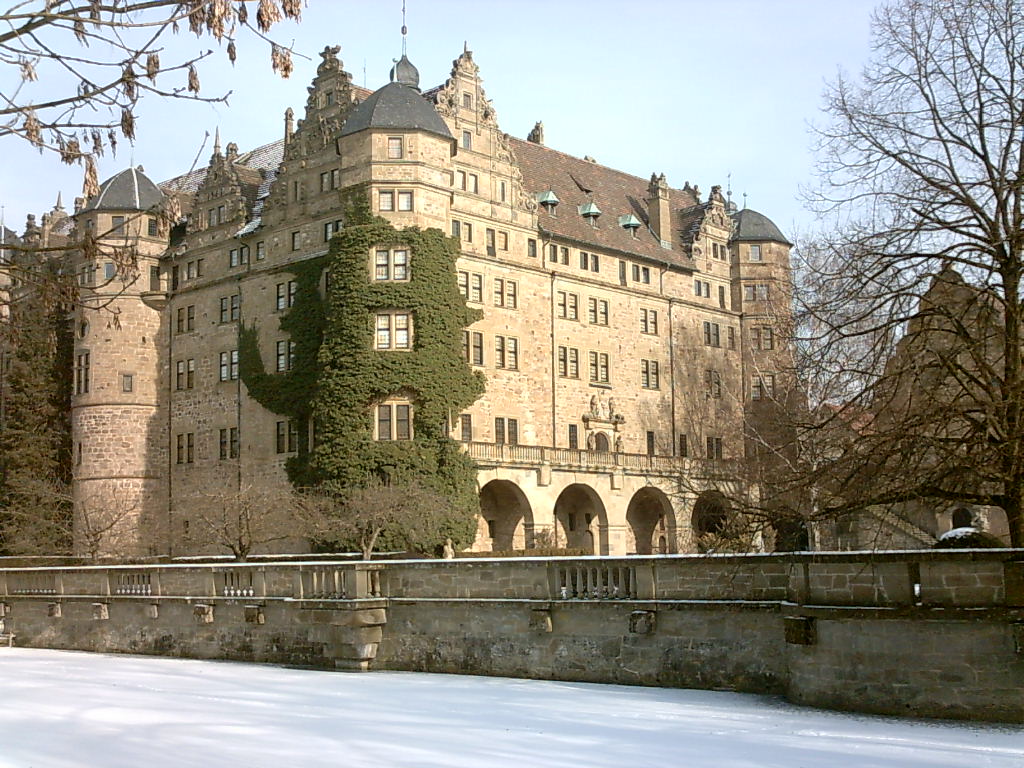
Schloß Hermersberg
Schloß Hermersberg is a historic hill castle located near the town of Niedernhall in Germany. Perched atop a plateau approximately 350 meters above sea level, the castle overlooks the scenic Kochertal valley to the north, where the terrain drops about 150 meters. This strategic yet peaceful location reflects its origins as a noble rural retreat rather than a military fortress.
The earliest surviving parts of Schloß Hermersberg date back to the 15th century, marking its establishment during the late medieval period. Initially, the castle served primarily as a hunting lodge for local nobility, chosen for its remote and tranquil setting surrounded by open meadows and forests. Its design prioritized leisure and the enjoyment of nature, rather than defense or administrative functions.
Throughout the 16th century, the castle underwent significant expansions and fortifications under the stewardship of the prominent Hohenlohe family, who were influential counts in the region. Between approximately 1530 and 1540, Count Georg I added a distinctive round stair tower with a timber-framed upper section, renewed in 1588, which became a defining architectural feature. This tower provided essential vertical circulation and enhanced the castle's imposing vertical profile.
Following this, from 1551 to 1568, Count Ludwig Kasimir commissioned the construction of a long western wing, which became the central part of the castle complex. During this period, the castle was further fortified with protective walls and a gate tower, signaling a shift towards a more secure and prestigious residence. These Renaissance-era enhancements combined functional defense with refined noble living spaces.
At the turn of the 17th century, between 1599 and 1610, the castle saw the addition of a substantial hall wing, expanding the indoor space for social and ceremonial functions. The estate continued to evolve in the 18th century with practical improvements such as the construction of a horse stable in 1743 on the northern side, replacing an older shepherd’s house demolished in 1706.
The castle’s architectural details reflect high craftsmanship, including windows installed in 1756 featuring frames carved by an Ingelfingen carpenter and fitted with fine glass from Nuremberg. A stone bridge built in 1768 spans the castle’s moat, providing a durable and elegant entrance. Interior modifications continued with the addition of a wooden staircase on the first floor of the central building in 1794, improving accessibility within the residence.
Architectural features and layout
The castle complex is partially encircled by a moat, with remnants of the original defensive ditch still visible on the southern and western sides. The stone bridge from the late 18th century crosses this water-filled barrier, marking the main point of entry.
The eastern wing houses the oldest surviving structure from the 15th century, representing the castle’s medieval origins. The western wing, added in the mid-1500s, serves as the main section of the complex, combining residential and defensive functions.
The round stair tower stands out as a key architectural element, with its half-timbered upper portion providing a visually striking contrast to the stone masonry below. This tower not only facilitated movement between floors but also symbolized the castle’s status and architectural sophistication during the Renaissance.
The hall wing added around 1600 expanded the castle’s capacity for hosting gatherings and noble functions, reflecting the social importance of the estate. The horse stable on the northern side illustrates the estate’s operational needs and its adaptation over time to changing uses.
East of the main buildings lies a man-made lake covering approximately 0.9 hectares, which enhances the landscape and may have served both practical and decorative purposes, integrating the castle harmoniously with its natural surroundings.
Historical significance and ownership
Schloß Hermersberg was originally constructed by local noble families during the late Middle Ages, with the Hohenlohe counts playing a pivotal role in its Renaissance expansion and fortification. The castle’s evolution from a hunting lodge to a fortified noble residence mirrors broader regional trends in aristocratic estate development during the 16th and 17th centuries.
By the 18th century, the estate continued to be maintained and refined to suit the needs of its noble occupants, balancing aesthetic enhancements with functional improvements. The castle’s isolated location and rural setting underscore its role as a leisure and status symbol rather than a military stronghold.
In the early 1970s, after a period of decline, Schloß Hermersberg was acquired by entrepreneur Reinhold Würth, who undertook careful restoration efforts. Since 1974, it has served as a private family residence, preserving its historical fabric while adapting to contemporary living standards.
Landscape and surroundings
Situated on a plateau surrounded by farmland and bordered by forests descending to nearby streams, Schloß Hermersberg enjoys a commanding view of the Kochertal valley. The natural setting emphasizes the castle’s role as a rural retreat designed to blend with and take advantage of the scenic landscape.
The presence of the moat and the man-made lake contribute to the estate’s picturesque environment, enhancing both its defensive character and its aesthetic appeal. The castle grounds have been shaped over centuries to balance utility, defense, and beauty, with features such as a redesigned well or fountain and carefully planned gardens and moats dating back to the late 16th century.
Preservation and current use
Today, Schloß Hermersberg is well preserved, thanks to restoration efforts that respect its historical architecture and character. The castle remains a private residence, which has helped maintain its integrity and prevented extensive commercial alterations.
The careful stewardship by its current owners ensures that Schloß Hermersberg continues to stand as a significant example of a late medieval and Renaissance noble estate in Germany, combining historical authenticity with modern habitation.
Frequently asked questions (FAQ)
- How do I get to Schloß Hermersberg?
- Schloß Hermersberg is located in Niedernhall, Germany, easily accessible by car or public transportation. If you're traveling by train, the nearest station is just a short bus ride away. Detailed directions can be found on the castle's official website or local tourist information centers.
- What is the historical significance of Schloß Hermersberg?
- Schloß Hermersberg dates back to the 13th century and has played a crucial role in the region's history. It served as a strategic stronghold during various conflicts and has witnessed the evolution of architectural styles over the centuries. The castle is a testament to the area's rich cultural heritage.
- When was Schloß Hermersberg built?
- Construction of Schloß Hermersberg began in the early 1200s, with significant renovations occurring in the following centuries. The castle showcases a blend of medieval and Renaissance architecture, reflecting the historical changes it has undergone. Visiting the castle allows you to appreciate its long-standing history.
- Can I take a guided tour of the castle?
- Yes, guided tours of Schloß Hermersberg are available and highly recommended for a comprehensive understanding of its history and architecture. Tours typically include access to key areas of the castle and are led by knowledgeable guides. Be sure to check the schedule in advance to secure your spot.
- Why is Schloß Hermersberg a popular tourist attraction?
- Schloß Hermersberg attracts visitors due to its stunning architecture, rich history, and beautiful surrounding landscapes. Additionally, the castle often hosts events, exhibitions, and cultural activities, making it a vibrant part of the community. Its picturesque setting makes it a perfect destination for photography and exploration.
- Is it possible to host events at Schloß Hermersberg?
- Yes, Schloß Hermersberg offers facilities for hosting various events, including weddings, corporate gatherings, and private celebrations. The unique historical ambiance provides a memorable backdrop for any occasion. For more information on booking and available services, please contact the castle's event coordination team.
- What are the opening hours of Schloß Hermersberg?
- Schloß Hermersberg is typically open to visitors from 10 AM to 5 PM, but hours may vary depending on the season and special events. It’s advisable to check the official website for the most current opening hours before your visit. This ensures you can make the most of your time exploring the castle.
- What are the ticket prices for visiting Schloß Hermersberg?
- Ticket prices for Schloß Hermersberg are generally affordable, with discounts available for students, seniors, and groups. Children under a certain age may enter for free or at a reduced rate. For the latest pricing information, including any special offers, consult the castle's official website or visitor center.
- What is the best time to visit Schloß Hermersberg?
- The best time to visit Schloß Hermersberg is during the spring and early autumn when the weather is mild and the surrounding gardens are in full bloom. These seasons also often feature fewer crowds, allowing for a more enjoyable experience. Special events and festivals may also take place during these times, enhancing your visit.
- Is Schloß Hermersberg accessible for visitors with disabilities?
- Schloß Hermersberg strives to be accessible to all visitors, with certain adaptations in place for those with mobility challenges. However, due to the castle's historical nature, some areas may have limitations. It’s best to contact the castle prior to your visit to inquire about specific accessibility options and accommodations.
Information
Loading map...
Visitor reviews
No reviews yet. Been here? Write the first review and help other travelers!
Write the first reviewVisited this castle? Share your experience
Your review helps other travelers and adds first-hand knowledge to our encyclopedia.