Schloss Hantberg
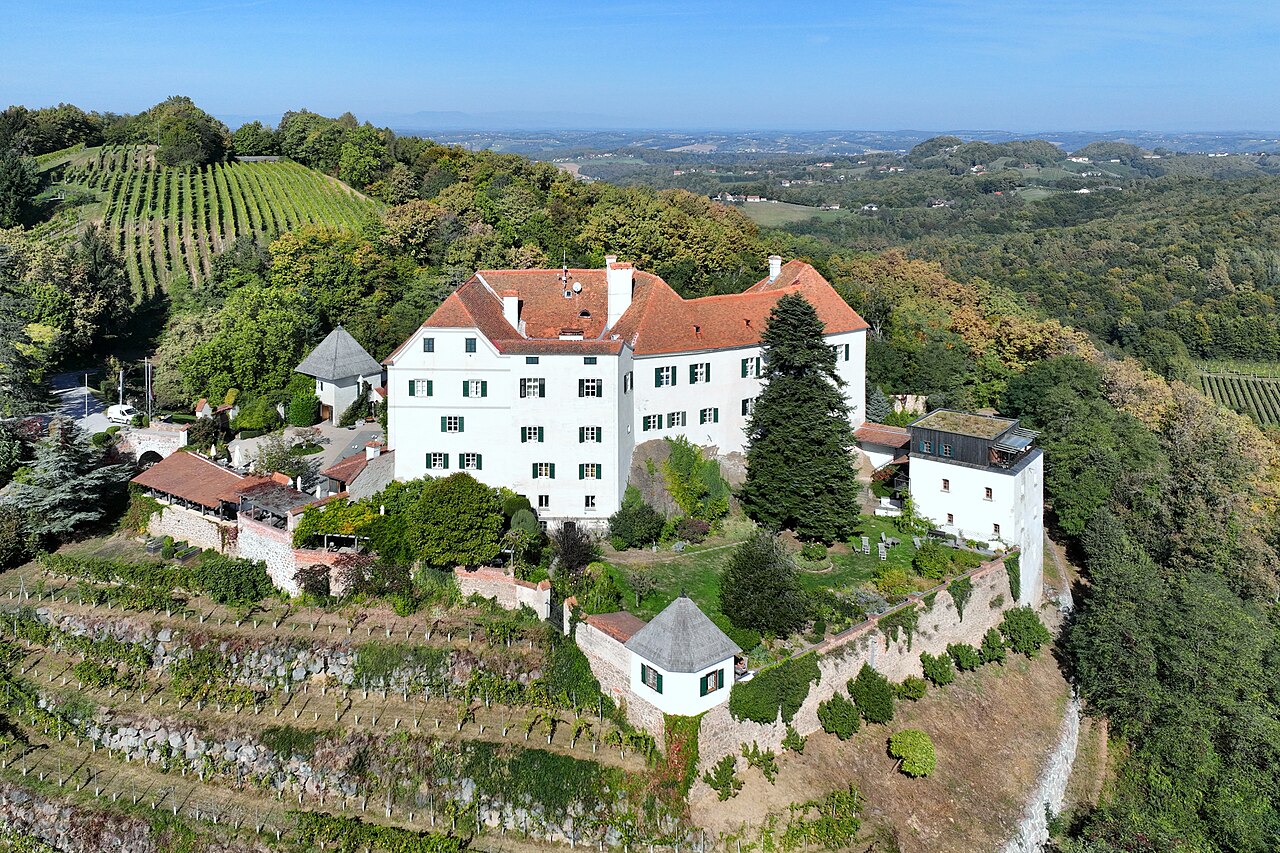
Schloss Hantberg stands as a remarkable example of Historicist architecture from the late 19th century, located in the municipality of Johnsdorf-Brunn, Austria. Constructed beginning in 1897, this hill castle reflects the cultural and architectural trends of its era, blending historical motifs with modern building techniques. The castle’s masonry façade is designed to evoke the appearance of a fortified structure, a common theme in the Historicist movement that sought to reinterpret medieval and renaissance architectural forms for contemporary residences.
The castle’s inception is closely tied to the personal history of Belgian Count Clemente de Renesse, who began construction after marrying Josefa Herring, the owner of the local castle estate. Their union in 1909 marked the establishment of Schloss Hantberg as both a noble residence and a symbol of their alliance. The castle’s design, featuring two wings connected by a bridge, creates a cohesive architectural ensemble that emphasizes both grandeur and functionality.
Architectural features and layout
The main building of Schloss Hantberg is composed of two wings linked by a distinctive bridge structure, which unifies the complex and adds a dramatic element to the castle’s silhouette. The masonry façade employs stonework that mimics the defensive walls of medieval castles, including battlement-like details that enhance its fortress-like appearance without compromising residential comfort.
Integral to the estate is a chapel, designed as a serene space for worship and reflection. The chapel’s interior is noted for its meticulous craftsmanship, consistent with the overall attention to detail found throughout the castle. This religious feature underscores the cultural values of the period and the personal devotion of its original inhabitants.
Historical context and ownership timeline
Following its completion, Schloss Hantberg experienced significant events that shaped its history. After World War I, the owners faced financial challenges that affected the maintenance of the property. Count Clemente de Renesse passed away in 1929, leaving Josefa to manage the estate until her death in 1952. The castle then transitioned to new ownership under Paula Freiin von Hammer-Purgstall, who embarked on careful renovations to preserve the castle’s condition.
From 1980 onward, the estate was owned by Elfriede Grete and Josef Franz Pscheidl, who undertook extensive expansions and improvements. Their work was characterized by a commitment to architectural integrity, using stone materials that matched the original masonry to ensure a seamless integration of new and old. This sensitive approach preserved the castle’s historic character while adapting it for modern use.
In late 2022, ownership transferred to a financial company, marking a new chapter in the castle’s stewardship and potentially its future development.
Landscape and preservation efforts
The castle is set within a carefully designed landscaped park that enhances the aesthetic and environmental context of the property. This green space complements the castle’s architecture, providing a natural backdrop that reflects the estate’s noble heritage.
Throughout its history, Schloss Hantberg has benefited from ongoing preservation efforts. Photographic records show well-maintained exterior stonework and detailed chapel interiors, evidence of the dedication of its various owners to maintaining the castle’s architectural and historical integrity. The use of matching stone in renovations and expansions has been crucial in preserving the visual harmony of the estate.
Cultural significance and architectural style
Schloss Hantberg exemplifies the Historicist style, a movement that flourished in the late 19th century by reviving and reinterpreting past architectural styles. The castle’s design evokes the romanticized imagery of medieval fortresses, yet it was constructed with modern techniques and comforts suitable for a noble residence of its time.
This blend of historical inspiration and contemporary innovation makes Schloss Hantberg a noteworthy example of historicist hill castles in Austria. Its chapel, bridge-linked wings, and harmonious stonework contribute to its unique character and enduring appeal as a cultural landmark.
Frequently asked questions (FAQ)
- What are the visiting hours for Schloss Hantberg?
- Schloss Hantberg's visiting hours vary depending on ownership and public access policies. It is advisable to check with local tourist information in Johnsdorf-Brunn for current opening times.
- What architectural style characterizes Schloss Hantberg?
- Schloss Hantberg is characterized by the Historicist style, combining medieval fortress motifs with late 19th-century construction techniques.
- Can I visit the chapel inside Schloss Hantberg?
- The chapel is an integral part of Schloss Hantberg and is noted for its craftsmanship. Public access may be limited, so visitors should inquire locally about tours or special openings.
- When was Schloss Hantberg built?
- Construction of Schloss Hantberg began in 1897 under Count Clemente de Renesse and was completed in the early 20th century.
- Who were the original owners of Schloss Hantberg?
- The castle was originally built by Belgian Count Clemente de Renesse and his wife Josefa Herring, who owned the local estate.
Information
Sources & official resources
Verify the information above using these authoritative references.
Loading map...
Visitor reviews
No reviews yet. Been here? Write the first review and help other travelers!
Write the first reviewVisited this castle? Share your experience
Your review helps other travelers and adds first-hand knowledge to our encyclopedia.