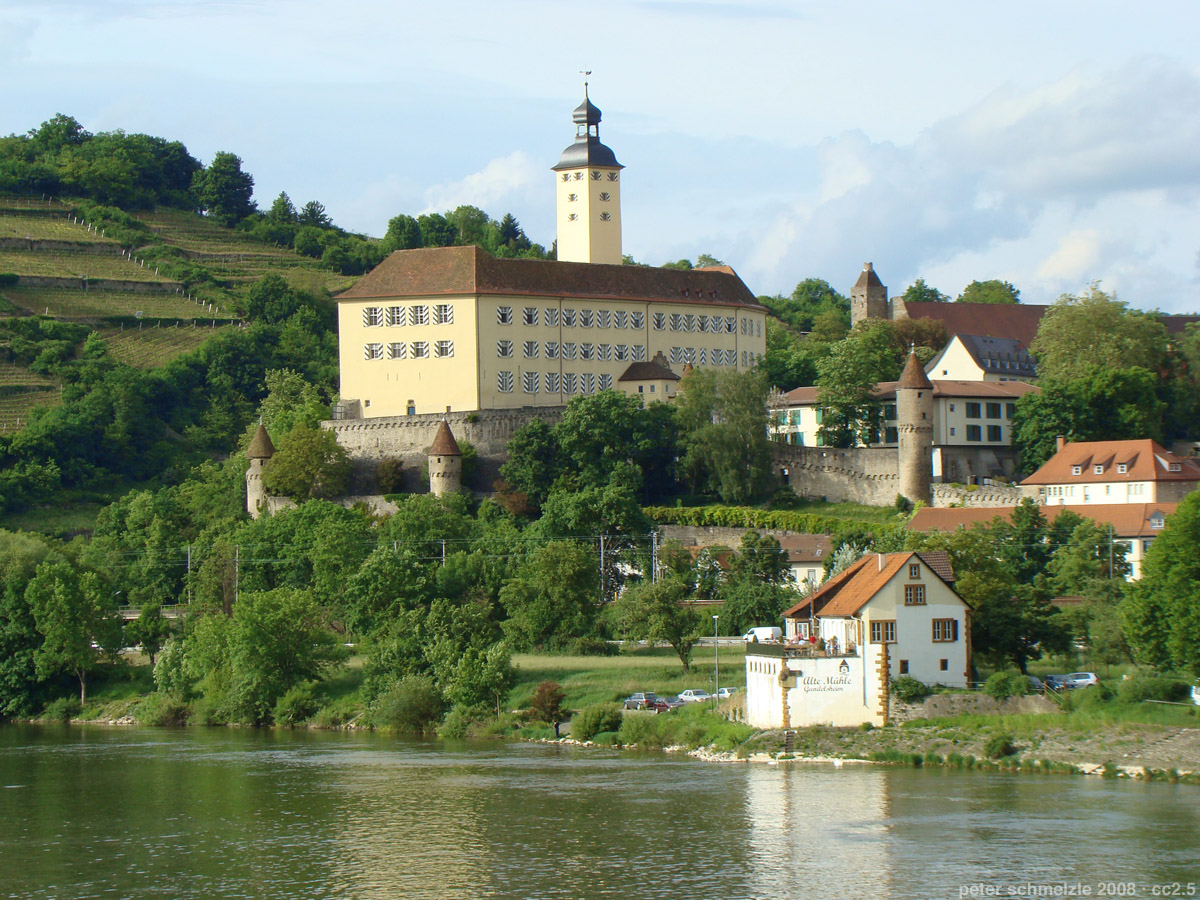
Schloss Duttenberg
Schloss Duttenberg is a notable hill castle situated near the municipality of Bad Friedrichshall in Germany. This castle traces its origins back to the early medieval period, when it was established as a manorial estate by Frankish settlers. Its strategic location atop a ridge overlooking the Jagst valley provided both defensive advantages and fertile agricultural land, which were crucial for sustaining the estate and asserting control over the surrounding region.
The earliest known written record of the site dates to around 798 or 799, where it is referred to as "Dudunburc." The broader region was mentioned even earlier, in 778, as "Tutumer marca," underscoring the area's significance during the Frankish territorial expansion. Originally, Schloss Duttenberg functioned as a noble seat overseeing a nearby settlement centered around the Kreuzkapelle chapel. This marked a gradual shift of local habitation from the valley floor to the more defensible elevated ridge.
Medieval origins and feudal ownership
During the 14th century, the castle was under the ownership of the Lords of Weinsberg, who held it as a possession of the Holy Roman Emperor. They granted the estate as a fief to various noble families, including the Lords of Bieringen in the 14th century and later, in the 15th and 16th centuries, the Lords of Wittstatt. The Wittstatt lineage ended in 1586, after which control passed to the Palatinate Counts of the Rhine. These counts did not reside at the castle but leased the estate to local tenants, reflecting a shift in its administrative role.
The teutonic order's tenure and fire damage
By the end of the 16th century, the Teutonic Order, a medieval Catholic military and religious order, acquired part of Schloss Duttenberg. Over the following decades, the Order expanded its holdings until, by 1668, it owned the entire complex along with approximately 90 acres of surrounding land. However, in 1673, a significant fire damaged the manor house, destroying its two upper timber-framed floors. This disaster led to substantial changes in the building's structure and appearance.
Architectural evolution and agricultural transformation
In the 18th century, the Teutonic Order began offering hereditary leases to local farmers for portions of the estate, signaling a gradual transition from a fortified noble residence to an agricultural estate. The manor itself was sold in 1769 to Joseph Reichert, marking the end of religious ownership and the beginning of private secular control.
By 1860, the property had changed hands again, coming into the possession of the Reiß family. Around this time, significant renovations were undertaken. A dilapidated distillery on the grounds was demolished, and a prominent Renaissance bay window on the manor's western facade was removed. These modifications simplified the manor's appearance, replacing earlier ornamental elements with plain sandstone window frames. The manor house today retains this understated aesthetic, a testament to its evolving function and style.
Castle layout and remaining structures
The original castle complex was enclosed within a rectangular fortification located on the eastern outskirts of Duttenberg. This walled area comprised the main manor house, an old wine press known locally as a Kelter, and several buildings dedicated to agricultural and economic activities. The layout reflects a close integration of residential, religious, and farming functions within a fortified precinct.
On the western side of the castle enclosure stands St. Kilian's Church (Kilianskirche), which was itself surrounded by a separate wall. Beyond the church lie the remains of the village, including partial fortifications dating to around 1460. These village defenses are attributed to Hans von Sickingen, a notable regional figure responsible for their construction.
Today, some fragments of the castle's enclosing walls and a moat remain visible, particularly along the northeastern side. The base or stump of a former defensive tower also survives, providing tangible evidence of the site's military past. These remnants highlight the castle's original role as a fortified stronghold, even as the estate's function shifted over time.
Historical significance and cultural heritage
Schloss Duttenberg stands as a valuable example of a medieval hill castle that evolved through centuries of changing ownership and use. Its history reflects broader regional dynamics, including the expansion of Frankish power, feudal administration under the Holy Roman Empire, and the influence of religious military orders such as the Teutonic Order.
The castle's transformation from a fortified noble seat to an agricultural estate encapsulates the shifting priorities of land use and governance in the region. Despite the loss of many original defensive features, the surviving structures and layout provide insight into the integration of residential, ecclesiastical, and agricultural functions within a fortified setting.
Today, Schloss Duttenberg's modest remains and the surrounding landscape continue to attract interest from historians, architects, and visitors eager to explore the layered history of this early medieval Frankish site. Its enduring presence near Bad Friedrichshall underscores the lasting impact of medieval fortifications on the cultural and historical fabric of Germany.
Frequently asked questions (FAQ)
- When was Schloss Duttenberg first mentioned in historical records?
- Schloss Duttenberg first appears in written records around 798 or 799 under the name "Dudunburc." The wider area was noted earlier, in 778, as "Tutumer marca."
- What architectural features remain visible at Schloss Duttenberg?
- Visitors can see fragments of the enclosing walls, a moat along the northeastern side, and the base of a former defensive tower. The manor house retains simple sandstone window frames from 19th-century renovations.
- Who owned Schloss Duttenberg during the 14th century?
- In the 14th century, Schloss Duttenberg was owned by the Lords of Weinsberg, who held it as a possession of the Holy Roman Emperor and granted it as a fief to various noble families.
- What happened to Schloss Duttenberg in 1673?
- A fire in 1673 destroyed the manor house's two upper timber-framed floors, significantly altering its structure and appearance.
- How did the Teutonic Order influence Schloss Duttenberg?
- The Teutonic Order acquired part of the estate by the late 16th century and owned the entire complex by 1668. They managed the property until the 18th century, transitioning it towards agricultural use by leasing lands to local farmers.
Information
Loading map...
Visitor reviews
No reviews yet. Been here? Write the first review and help other travelers!
Write the first reviewVisited this castle? Share your experience
Your review helps other travelers and adds first-hand knowledge to our encyclopedia.