Ehrenberg Castle
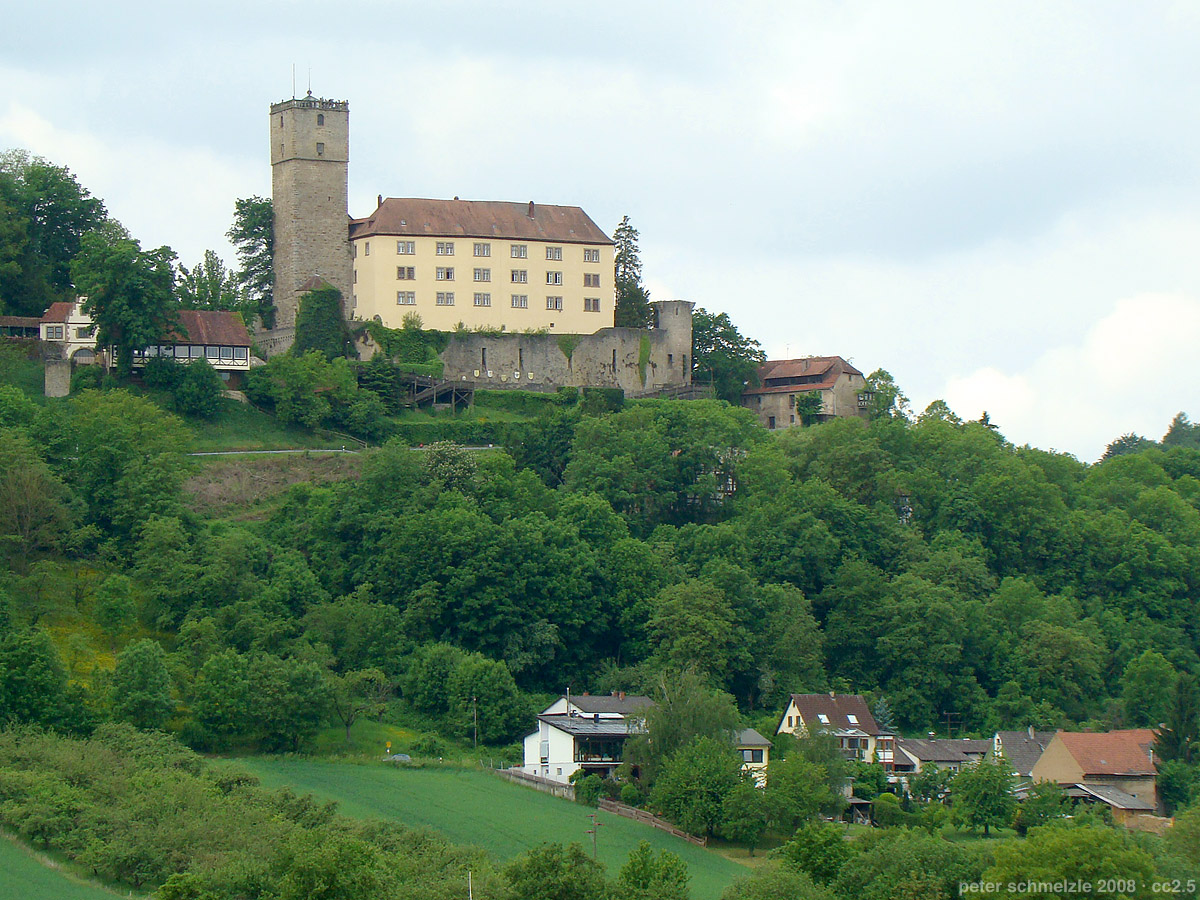
Ehrenberg Castle is a medieval fortress located in Bad Rappenau, Germany, with origins tracing back to the early 12th century. It was originally constructed by the Counts of Lauffen, a noble family influential in the region during the High Medieval period. The castle's earliest surviving fortifications include parts of the curtain wall surrounding the main castle, which date from the 12th century. This defensive wall was integral to the castle's protection and reflects the typical military architecture of the era.
The main castle complex was developed further during the 12th and 13th centuries, with significant additions such as the keep, which is documented to have been built around 1235. The keep served as the stronghold and last line of defense, a common feature in medieval castles designed to withstand sieges. The architectural style of Ehrenberg Castle is characteristic of High Medieval fortifications, emphasizing robust stone walls, narrow windows for archers, and fortified gates.
Historical context and significance
Throughout its history, Ehrenberg Castle played a strategic role in regional defense and governance. It was part of a network of castles that secured the territories controlled by the Counts of Lauffen and their successors. The castle witnessed various historical events, including military conflicts that shaped the political landscape of southwestern Germany.
During the Thirty Years' War (1618–1648), Ehrenberg Castle suffered significant damage. This devastating conflict involved many sieges and battles across the German lands, and the castle was ruined as a result of the warfare. The destruction marked the end of its function as a purely military fortress.
Architectural features and later developments
Following the war, the castle grounds saw the construction of new residential and farm buildings during the 17th and 18th centuries. These additions reflect a shift from military use to more domestic and agricultural purposes. The newer structures were likely built in styles typical of the post-medieval period, incorporating simpler, more functional architectural elements compared to the original fortifications.
The castle complex includes remnants of the original defensive walls, the keep, and various outbuildings that illustrate the evolution of the site over several centuries. Despite the damage and changes, Ehrenberg Castle retains elements that provide insight into medieval castle construction and the adaptations made in later periods.
Current status and accessibility
Today, Ehrenberg Castle is privately owned and is not open to the public. The castle is preserved in a state that reflects both its medieval origins and the later modifications. While visitors cannot explore the interior, the castle remains a notable historical landmark in the region, visible from nearby areas and contributing to the cultural heritage of Bad Rappenau.
Architectural and cultural importance
Ehrenberg Castle exemplifies the typical High Medieval castle architecture of southwestern Germany, with its combination of defensive walls, a central keep, and later residential buildings. Its history offers valuable insights into the military, social, and economic transformations from the Middle Ages through the early modern period. The castle's survival, albeit partially ruined, allows historians and architectural scholars to study medieval fortification techniques and the impact of historical conflicts like the Thirty Years' War on such structures.
The castle's location and construction reflect the strategic considerations of medieval nobility, emphasizing control over territory and defense against rival forces. Its later adaptation for residential and agricultural use demonstrates the changing role of castles as centers of power transitioned into more peaceful functions.
Structural components
- Curtain walls: The oldest surviving parts dating from the 12th century, forming the defensive perimeter.
- Keep (donjon): Built circa 1235, serving as the main fortified tower and refuge.
- Residential buildings: Added in the 17th and 18th centuries, reflecting post-medieval architectural styles.
- Farm buildings: Constructed alongside residential structures, indicating the castle's role in local agriculture.
Preservation and research potential
Although Ehrenberg Castle is not accessible to visitors, it remains an important site for archaeological and historical research. Its well-documented history and remaining structures provide a valuable case study for scholars of medieval and early modern fortifications. Preservation efforts focus on maintaining the integrity of the surviving walls and buildings to prevent further deterioration.
Frequently asked questions (FAQ)
- Can I visit Ehrenberg Castle?
- Ehrenberg Castle is privately owned and is not open to the public, so visitors cannot access the interior or grounds.
- When was Ehrenberg Castle built?
- Ehrenberg Castle was constructed in the early 12th century by the Counts of Lauffen, with significant developments continuing into the 13th century.
- What architectural style characterizes Ehrenberg Castle?
- The castle features typical High Medieval military architecture, including sturdy stone walls, a keep built around 1235, and defensive curtain walls.
- What happened to Ehrenberg Castle during the Thirty Years' War?
- The castle was ruined during the Thirty Years' War due to military conflict and siege warfare that damaged many fortifications in the region.
- Are there any later additions to the castle?
- Yes, new residential and farm buildings were constructed on the castle grounds in the 17th and 18th centuries, reflecting a shift from military to domestic use.
Information
Current owner
Private owner
Loading map...
Visitor reviews
No reviews yet. Been here? Write the first review and help other travelers!
Write the first reviewVisited this castle? Share your experience
Your review helps other travelers and adds first-hand knowledge to our encyclopedia.