
Horneck Castle
Horneck Castle, located in the town of Gundelsheim in the district of Heilbronn, Baden-Württemberg, Germany, is a significant high medieval hill castle overlooking the Neckar River. Constructed around 1200, it has played an important role in the history of the region, particularly as the seat of the Teutonic Order's German Master ('Deutschmeister') during the 15th and early 16th centuries.
Early history and foundation
The castle was originally built in the early 13th century, likely as a strategic fortification to control the Neckar valley. Its elevated position on a hill provided natural defensive advantages, a common feature of hill castles of the high medieval period. The name "Horneck" is believed to derive from its location "over the Neckar," referencing the nearby river that was vital for trade and transport.
The Teutonic Order era
In 1438, Konrad von Horneck granted the castle to the Teutonic Order, a military and religious order prominent in medieval Europe. This transfer marked the beginning of Horneck Castle's role as the administrative center for the Deutschmeister, the German Master of the Order. The castle served as the headquarters for the Order's activities in the region, overseeing estates and military operations.
Architectural features during the Teutonic period
Under the Teutonic Order, the castle was fortified and adapted for both defensive and residential purposes. The complex included strong curtain walls, towers for surveillance and defense, and living quarters for the knights and administrators. The castle's layout reflected typical medieval military architecture, emphasizing security and control.
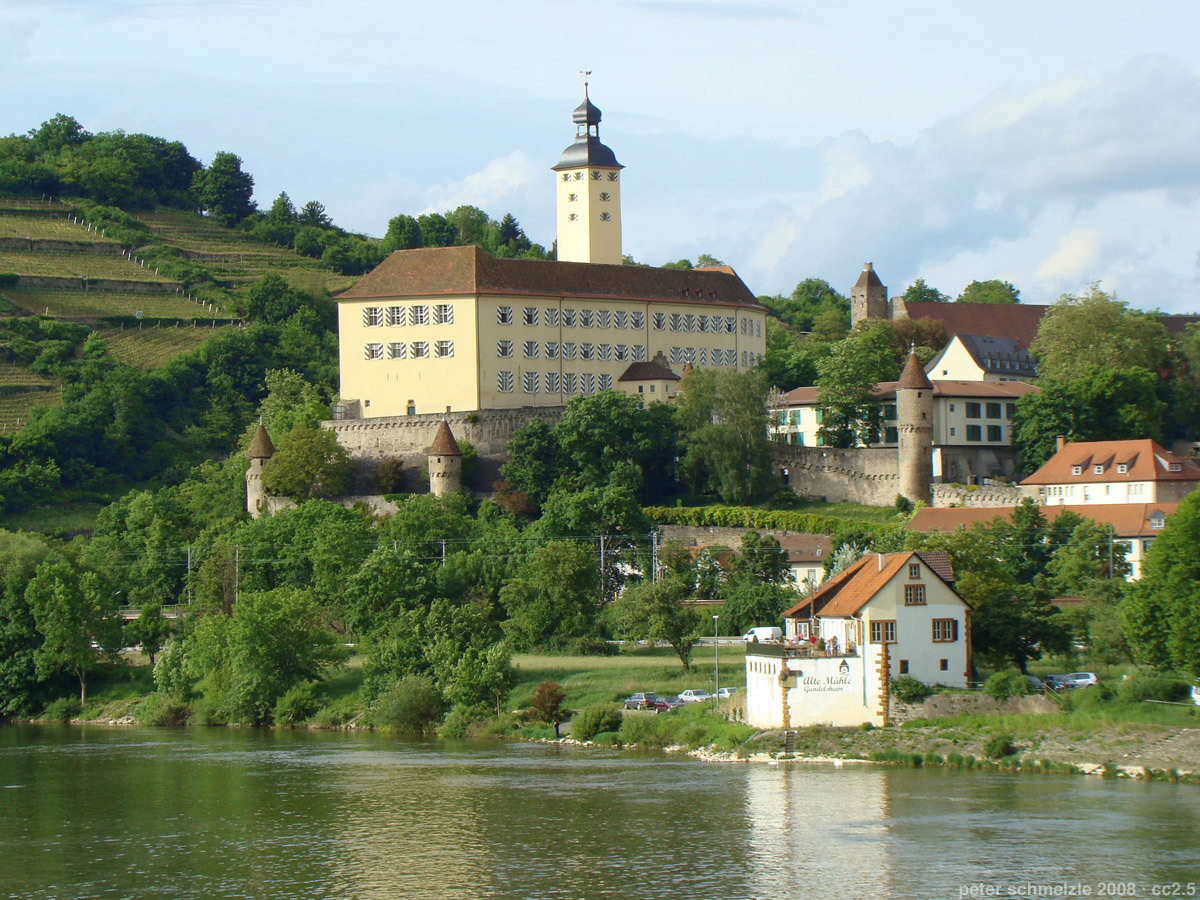
Photo by peter schmelzle • CC BY-SA 3.0
The destruction and aftermath
During the German Peasants' War in 1525, Horneck Castle was severely damaged by fire amid widespread uprisings against feudal authorities. Although efforts were made to rebuild the castle shortly after its destruction, the Teutonic Order decided to relocate its regional headquarters to Mergentheim in 1527, which offered better strategic and administrative advantages.
Later uses and preservation
In the centuries following its decline as a military stronghold, Horneck Castle underwent various changes in ownership and function. By the 20th and 21st centuries, the castle complex was repurposed for civilian use. Notably, it houses an altenheim (a nursing home for the elderly), providing residential care within its historic walls.
Transylvanian Museum
Since 2006, part of the castle has been dedicated to the Transylvanian Museum, which focuses on preserving and documenting the cultural heritage of the Transylvanian Saxons. The museum highlights the history, traditions, and coexistence of this ethnic German community in Transylvania, contributing to the castle's cultural significance beyond its medieval origins.
Architectural style and condition
Horneck Castle exhibits characteristics typical of high medieval hill castles, with robust stone construction, defensive walls, and towers. Although damaged and partially reconstructed after the 1525 fire, the castle remains partially preserved, retaining key architectural elements that reflect its historical phases.
Location and significance
Situated in southwestern Germany, the castle's position overlooking the Neckar River underscores its strategic importance during the medieval period. Today, it stands as a landmark in Gundelsheim, attracting visitors interested in medieval history, military architecture, and cultural heritage.
Visiting information and cultural impact
Visitors to Horneck Castle can explore its historic structures and the Transylvanian Museum, gaining insight into both medieval military life and the cultural narratives of the Transylvanian Saxons. The castle's adaptation as a nursing home also illustrates the evolving use of historic sites in modern times.
Overall, Horneck Castle represents a layered history spanning from its high medieval origins, through its role in the Teutonic Order, to its contemporary cultural and social functions. Its preservation allows for continued appreciation of its architectural and historical significance in the region.
Frequently asked questions (FAQ)
- What is the historical significance of Horneck Castle?
- Horneck Castle was the seat of the Teutonic Order's German Master from 1438 until its destruction in 1525, playing a key role in regional administration and military operations.
- Can I visit the Transylvanian Museum at Horneck Castle?
- Yes, the Transylvanian Museum is located within Horneck Castle and is open to visitors interested in the cultural heritage of the Transylvanian Saxons.
- When was Horneck Castle built?
- Horneck Castle was originally built around 1200, with significant developments occurring up to 1533.
- Is Horneck Castle accessible to the public?
- Parts of Horneck Castle, including the Transylvanian Museum, are accessible to the public, while other areas serve as a nursing home and may have restricted access.
- Why was Horneck Castle important to the Teutonic Order?
- Horneck Castle served as the administrative center for the Teutonic Order's German Master, overseeing regional estates and military affairs during the 15th and early 16th centuries.
Photo gallery

Information
Website
Visit websiteSources & official resources
Verify the information above using these authoritative references.
Loading map...
Visitor reviews
No reviews yet. Been here? Write the first review and help other travelers!
Write the first reviewVisited this castle? Share your experience
Your review helps other travelers and adds first-hand knowledge to our encyclopedia.