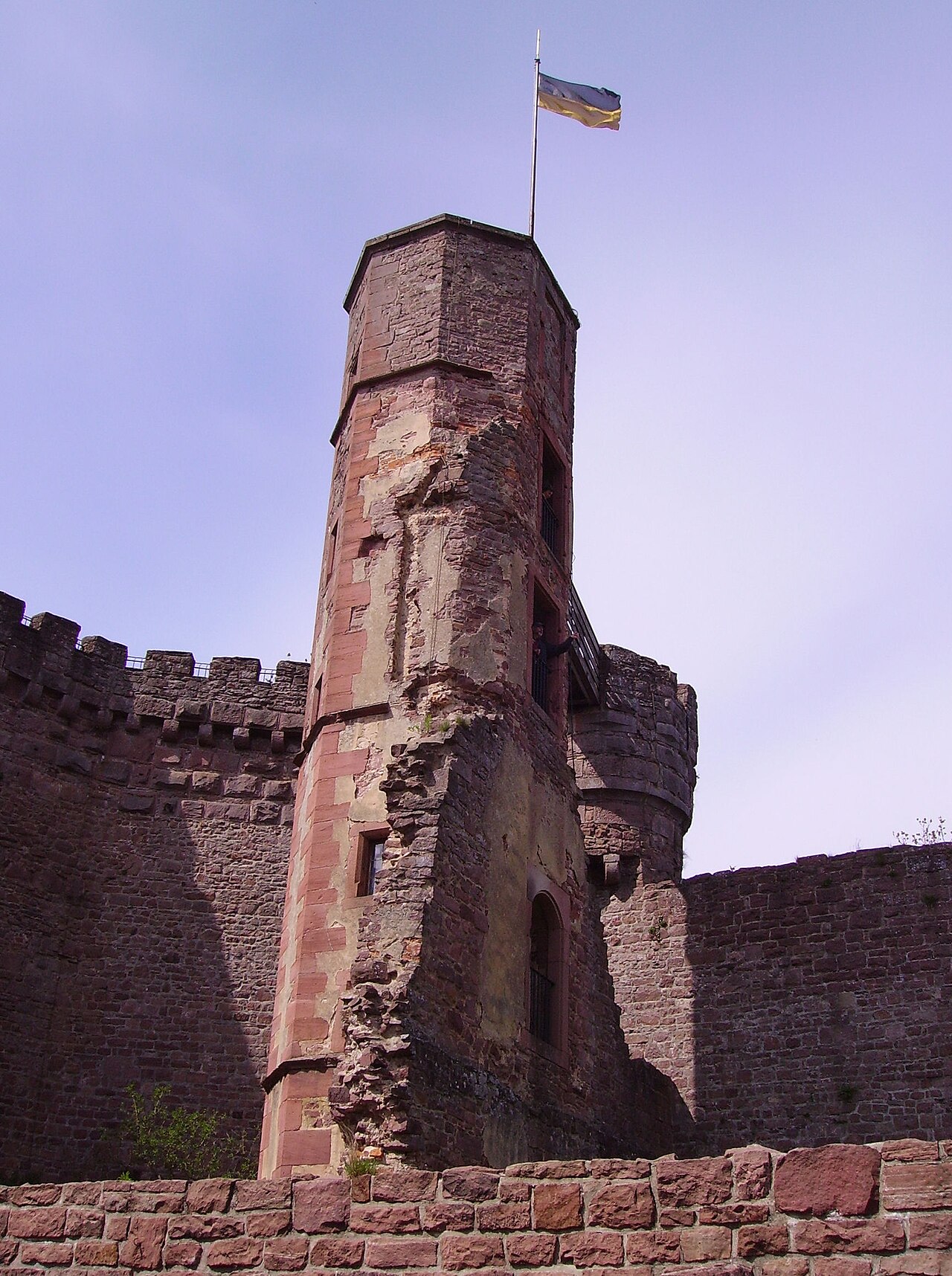
Schloss Daisbach
Schloss Daisbach stands as a remarkable testament to the layered history of medieval and early modern fortifications in Germany. Located in the municipality of Waibstadt, this castle originated as a water castle around the turn of the 13th century, embodying the defensive architectural style of moated fortresses prevalent among European nobility. Its strategic placement and design reflect the medieval emphasis on protection and control over surrounding lands.
The earliest documented mention of Schloss Daisbach dates to 1349, when the knight Kuntz von Massenbach sold the estate to the noble Venningen family, an influential lineage from the nearby Kraichgau region. This transfer initiated a series of ownership changes that shaped the castle's development. Around 1400, the castle underwent significant renovations and expansions, adapting to evolving military and residential needs. This period introduced architectural elements that bridged the medieval fortress with Renaissance influences, notably the distinctive circular stair tower that remains a prominent feature today.
Medieval origins and architectural evolution
Originally constructed as a water castle, Schloss Daisbach was surrounded by a moat that enhanced its defensive capabilities. The core medieval structure included robust foundations and a compact two-story residential building, typical of the era's fortified noble residences. The castle's layout and construction techniques are still visible in the surviving stone foundations and outer walls, which reach up to the first floor in several areas.
The presence of a vaulted cellar with an arched entrance, situated just above the former moat pond, highlights the skilled stonemasonry and practical design considerations of the medieval builders. The cellar's two-section division suggests its use for storage and possibly as a secure refuge during sieges.
Architectural details such as the "Neidkopf" (envy head) carved into an ashlar stone dated to 1400 provide insight into the symbolic and artistic expressions of the time. This stone marks the early 15th-century remodeling phase, linking the castle's fabric to its historical narrative.
Ownership transitions and historical significance
Following the Venningen family, the castle passed by marriage in 1446 to the family of Matthias von Rammung. By 1497, it was under the control of Albrecht V. Göler von Ravensburg, initiating a long tenure by the Göler family. The castle's importance was further recognized in 1607 when Emperor Rudolf II confirmed the Göler family's rights, underscoring the estate's noble status.
The Thirty Years' War brought devastation to Schloss Daisbach, with the main residential building destroyed by fire in 1627. This event marked a turning point, leading to a prolonged period of decline and partial ruin.
Baroque transformation and decline
In 1730, Karl Eberhard von Göler initiated ambitious plans to rebuild Schloss Daisbach as a Baroque palace, reflecting contemporary tastes and the desire to modernize the ancestral seat. Although the project was left incomplete due to his death in 1732, the remaining footprint reveals the intended rectangular layout and stylistic aspirations.
The alliance coat of arms of Karl Eberhard von Göler and his wife Katharina Elisabetha Helwica, née von Winkelmann, displayed above the courtyard entrance, symbolizes this noble union and the Baroque rebuilding phase.
Despite these efforts, the castle fell into disrepair during the 19th century. Structural collapses occurred in 1844, and much of the stone was repurposed for other constructions. Only the vaulted cellar remained in use, serving as storage space.
20th-century preservation and current state
Preservation initiatives began in earnest in the early 20th century. In 1926, concrete reinforcement was applied to the cellar roof, and in 1957, the owner successfully prevented the castle's demolition despite safety concerns. The city of Waibstadt acquired the site in 1983, facilitating further conservation efforts.
Volunteer-driven stabilization projects from 1991 onwards improved the ruins' condition, leading to the site's reopening to the public in 1995 during a heritage event. Today, visitors can explore the castle's remains, which prominently feature the Renaissance circular stair tower linking the medieval fortress to the Baroque ambitions.
Architectural features and ruins
The castle's ruins include the stone foundations of the medieval residential building on the south side, the vaulted cellar with its arched entrance adjacent to the former moat, and outer walls preserved up to the first floor with original window openings. Reinforcement work is visible on the eastern walls, and two wall segments in the northeast corner hint at a more complex original layout.
The site also includes the former outer bailey area, now serving as the residence of the Freiherren Göler von Ravensburg family, maintaining a historic continuity of ownership and connection to the castle.
Cultural heritage and visitor experience
Schloss Daisbach offers a unique glimpse into the architectural and historical evolution of a noble estate transitioning from medieval defensive fortress to Baroque residence. Its ruins embody centuries of German noble history, architectural styles, and the impact of warfare and restoration efforts.
Visitors to Schloss Daisbach can appreciate the blend of medieval defensive features, Renaissance architectural elements, and the ambitious yet unfinished Baroque palace plans. The preserved details, such as the "Neidkopf" carving and the alliance coat of arms, enrich the storytelling of the site.
The castle's location in Waibstadt situates it within the scenic landscape of southwestern Germany, offering cultural and historical tourism opportunities. The ongoing preservation underscores the community's commitment to maintaining this heritage landmark.
Frequently asked questions (FAQ)
- How do I get to Schloss Daisbach?
- Schloss Daisbach is located in Waibstadt, Baden-Württemberg, Germany. It is accessible by car and local roads; visitors should check local transport options for the best route.
- What is the historical significance of Schloss Daisbach?
- Schloss Daisbach is significant for its origins as a medieval water castle and its later transformation attempts into a Baroque palace. It reflects noble family histories and architectural evolution from the 13th to 18th centuries.
- Can I visit the ruins of Schloss Daisbach?
- Yes, the ruins of Schloss Daisbach are open to the public. The site was stabilized and reopened in 1995, offering visitors the chance to explore the remains and learn about its history.
- What architectural styles are visible at Schloss Daisbach?
- Visitors can observe a mix of medieval defensive architecture, Renaissance elements such as the circular stair tower, and Baroque features from the 18th-century rebuilding plans.
- When is the best time to visit Schloss Daisbach?
- The best time to visit Schloss Daisbach is during the warmer months from spring to early autumn when the weather is favorable for exploring the outdoor ruins.
Information
Current owner
City of Waibstadt
Loading map...
Visitor reviews
No reviews yet. Been here? Write the first review and help other travelers!
Write the first reviewVisited this castle? Share your experience
Your review helps other travelers and adds first-hand knowledge to our encyclopedia.