Schengen Castle
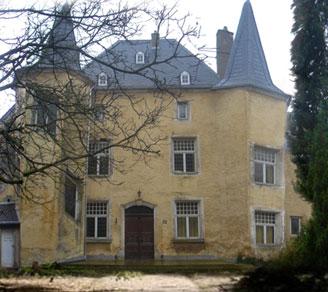
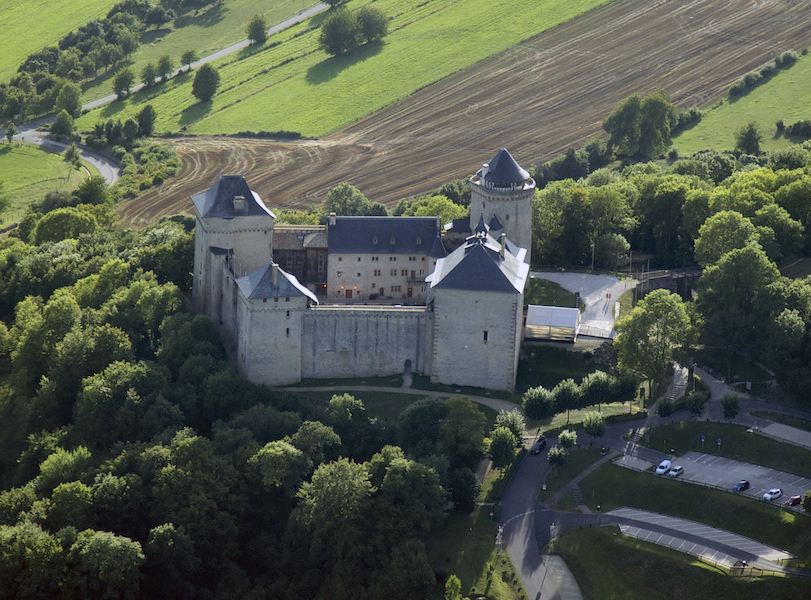
Schengen Castle in Luxembourg is a site where medieval heritage and early 19th-century architecture converge. Originally dating back to around 1390, the castle was largely demolished in 1812 by the industrialist Jean-Nicolas Collart, who replaced the medieval fortress with a residential manor house. Despite the extensive reconstruction, the round central tower of the original medieval castle was preserved, serving as a tangible link to the site's medieval past.
Medieval origins and architectural features
The original castle, built in the late 14th century, was typical of small fortified residences of the region, featuring defensive walls and a prominent round tower. This tower, the only surviving element of the medieval structure, was likely a keep or donjon, designed for both defense and residence. Its robust masonry and strategic position would have provided a vantage point over the surrounding landscape, a common feature in castles from this period.
19th-century transformation into a manor house
In 1812, the castle underwent a significant transformation under the direction of Jean-Nicolas Collart, a prominent industrialist of the era. Collart demolished most of the medieval fortifications to construct a manor house that reflected the architectural tastes of the early 19th century. This new building served as a comfortable residence rather than a defensive stronghold, marking a shift in the site's function and style. The manor house exhibits characteristics of the period's residential architecture, with an emphasis on comfort and aesthetics rather than military utility.
Cultural significance and notable visitors
One of the castle's most notable historical moments was the visit by the famed French writer Victor Hugo in 1871. During his stay with the Collart family, Hugo sketched the old medieval tower, capturing its enduring presence amidst the newer construction. This visit highlights the castle's role not only as a private residence but also as a cultural landmark attracting prominent figures of the time.
Modern use and preservation
Today, Schengen Castle functions as a hotel and conference centre, blending its historical ambiance with modern hospitality needs. The preservation of the medieval tower alongside the 19th-century manor house offers visitors a unique architectural experience that spans several centuries. The castle's setting near the town of Schengen situates it within a region known for its historical importance, including the nearby Schengen Agreement site, which symbolizes European unity.
Architectural and historical context
Schengen Castle represents a common European pattern where medieval fortresses were adapted or replaced by manor houses as military threats diminished and residential comfort became paramount. The retention of the medieval tower provides valuable insight into the defensive strategies and architectural styles of the late medieval period in Luxembourg. Meanwhile, the manor house reflects early modern architectural trends and the social changes of the early 19th century.
Location and surroundings
Situated in the town of Schengen, in the southeastern part of Luxembourg, the castle enjoys a strategic position near the borders of Germany and France. This location has historically been significant for trade and defense, contributing to the castle's original establishment and ongoing relevance.
Visitor experience
Visitors to Schengen Castle can explore the preserved medieval tower and appreciate the architectural contrast with the manor house. The castle's current use as a hotel and conference centre means it is well-maintained and accessible, offering modern amenities alongside historical charm. The surrounding region provides additional attractions related to European history and culture.
Frequently asked questions (FAQ)
- What is the history of Schengen Castle?
- Schengen Castle dates back to around 1390, originally a medieval fortress. It was mostly demolished in 1812 by Jean-Nicolas Collart, who built a manor house while preserving the medieval round tower.
- Can I visit the medieval tower at Schengen Castle?
- Yes, the round central tower from the medieval period is preserved and accessible to visitors, offering insight into the castle's original defensive structure.
- What is the current use of Schengen Castle?
- Today, Schengen Castle operates as a hotel and conference centre, combining historical architecture with modern hospitality services.
- When did Victor Hugo visit Schengen Castle?
- Victor Hugo visited the castle in 1871, during which he made a sketch of the medieval tower while staying with the Collart family.
- Where is Schengen Castle located?
- Schengen Castle is located in the town of Schengen in Luxembourg, near the borders of Germany and France, an area known for its historical and cultural significance.
Information
Website
Visit websiteSources & official resources
Verify the information above using these authoritative references.
Loading map...
Visitor reviews
No reviews yet. Been here? Write the first review and help other travelers!
Write the first reviewVisited this castle? Share your experience
Your review helps other travelers and adds first-hand knowledge to our encyclopedia.