Malbrouck Castle
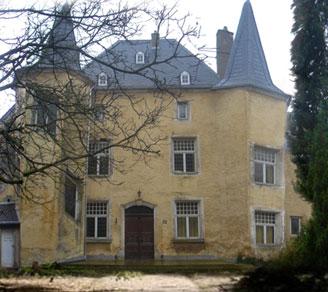
Malbrouck Castle, also known as Château de Malbrouck, Château de Manderen, Burg Mensberg, or Meinsberg, is a remarkable example of a Renaissance hill castle situated on a prominent hill overlooking the village of Manderen in the Moselle department of France. Located less than two kilometers from the German border, this fortress has a rich history intertwined with regional power struggles, military conflicts, and noble lineage.
The castle's origins date back to the early 15th century when in 1419, Arnold VI, Lord of Sierck Castle, received authorization from the Duke of Lorraine to construct a castle on Meinsberg hill. Construction began shortly thereafter, and by 1436, the fortress—originally called Meinsberg Castle—was completed. Arnold VI intended the castle to serve as a symbol of his family's power and influence in the region, complementing his nearby Montclair Castle. The castle's strategic location atop a rocky hill provided both defensive advantages and a commanding view of the surrounding landscape.
Historical significance and ownership
Following Arnold VI's death, the castle passed through several noble families over the centuries. The Counts of Sayn, originating from the Koblenz region, inherited the castle after the last of Arnold's sons. By the late 16th century, ownership transferred to the Counts of Sulz. The castle endured significant damage during the Thirty Years' War (1618-1648), reflecting the turbulent political and military upheavals of the era.
One of the castle's most notable historical episodes occurred in June 1705 during the War of the Spanish Succession. The fortress was occupied for two weeks by John Churchill, 1st Duke of Marlborough, who used it as his headquarters in a standoff against French forces entrenched in nearby Sierck Castle. Despite the large military presence, no battle ensued due to desertions among Marlborough's troops and strategic withdrawal. The French nickname for Churchill, "Malbrouck," became associated with the castle, giving it its enduring name.
During the French Revolution in 1793, the castle was sold as national property. Subsequently, it was repurposed as a farm, which led to gradual deterioration and neglect. The castle suffered additional damage during World War II in 1945, compounding its state of ruin.
Architectural features and defensive design
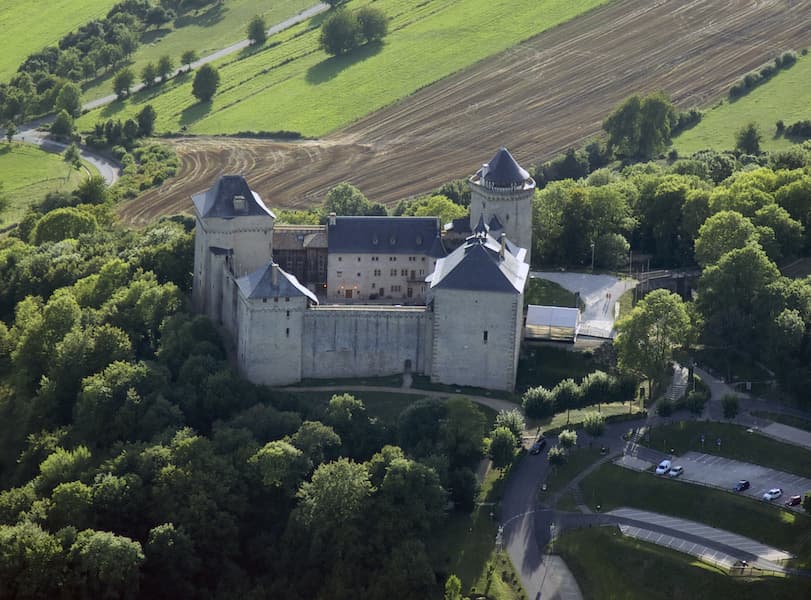
Malbrouck Castle is characterized by its nearly rectangular layout, measuring approximately 50 by 68 meters. The core structure comprises a three-story corps de logis surrounding a spacious central courtyard. The fortress is enclosed by robust curtain walls connecting four distinct corner towers: the Lantern Tower, the Ladies’ Tower, the Witch Tower, and the Bald Rock Tower. Three of these towers are rectangular, while the Witch Tower is uniquely round, adding architectural variety to the silhouette.
The northern entrance is fortified with a gatehouse (châtelet) positioned between the Lantern and Ladies’ towers. Defensive features include an outer barbican, a moat, and a drawbridge, which collectively controlled access and enhanced protection against attackers.
The castle's defensive architecture reflects adaptations to evolving military technology. For example, firing chambers inside the Lantern Tower were designed to accommodate early firearms, illustrating the transition from traditional archery to gunpowder weaponry. The Ladies’ Tower is equipped with machicolations, which allowed defenders to attack enemies directly below by dropping projectiles or boiling liquids through openings in the battlements.
The staircases within the castle spiral counterclockwise, a strategic design to favor right-handed defenders positioned above while hindering attackers ascending the stairs. The curtain walls, especially on the northern side, are exceptionally thick—up to 4.8 meters—to withstand artillery fire and sieges.
Restoration and current status
After decades of neglect and damage, the castle's fortunes changed in 1975 when it was acquired by the regional council. A comprehensive restoration project was undertaken between 1991 and 1998, involving meticulous archaeological research and conservation techniques. Missing sections of the walls were rebuilt using small rubble masonry, clearly distinguishable from the original large stone blocks. Slate shingle roofs were reinstated to reflect the castle's historical appearance.
The restoration encompassed approximately 1,500 square meters, making it one of the largest historic monument conservation efforts in France since the Parliament of Brittany. Today, Malbrouck Castle stands as a well-preserved example of a Renaissance hill castle, showcasing architectural and military innovations of its time.
The castle is open to visitors for a fee and offers a rich cultural experience through guided tours, exhibitions, and events. Its location near the borders of Germany and Luxembourg adds to its appeal as a cross-cultural heritage site. Visitors can explore the imposing towers, fortified walls, and the atmospheric courtyard, gaining insight into the castle's strategic importance and noble heritage.
Cultural and heritage significance
Malbrouck Castle's layered history reflects the complex political, military, and social dynamics of the Lorraine region over several centuries. Its association with notable figures such as Arnold VI of Sierck and the Duke of Marlborough, as well as its survival through wars and revolutions, highlight its resilience and adaptability.
The castle's restoration and preservation efforts underscore its importance as a cultural monument and tourist destination. It serves as an educational resource, illustrating the evolution of castle architecture from medieval fortifications to Renaissance residences adapted for gunpowder warfare.
Overall, Malbrouck Castle remains a testament to the architectural ingenuity and historical significance of hill castles in northeastern France, offering visitors a vivid connection to the past and a well-preserved example of Renaissance military architecture.
Frequently asked questions (FAQ)
- How do I get to Malbrouck Castle?
- Malbrouck Castle is located in Manderen, France, and is easily accessible by car. There are also public transport options available, including buses that connect to nearby towns. For the best experience, consider planning your visit around local tourism services for detailed travel advice.
- What are the opening hours of Malbrouck Castle?
- Malbrouck Castle is generally open from 10 AM to 6 PM during the main tourist season, which runs from April to October. In the off-season, hours may vary, so it's advisable to check the official website before your visit to confirm current opening times.
- Is there an entry fee to visit Malbrouck Castle?
- Yes, there is an entry fee to visit Malbrouck Castle, with ticket prices typically ranging from €8 to €12 depending on age and special discounts. Children under a certain age may enter for free, while group rates are also available. It's a good idea to purchase tickets in advance during peak season to avoid long lines.
- When was Malbrouck Castle built?
- Malbrouck Castle was constructed in the late 15th century and completed in the early 16th century. It was built by the knights of the Teutonic Order and served as a strategic military stronghold. The castle is a remarkable example of medieval architecture in the region.
- Can I take guided tours of Malbrouck Castle?
- Yes, guided tours are available and offer an informative way to explore the castle's history and architecture. These tours are typically conducted in multiple languages and provide deeper insight into the significance of the castle and its surroundings. It's recommended to check the schedule and book in advance.
- Why is Malbrouck Castle historically significant?
- Malbrouck Castle is historically significant as it reflects the military architecture of the late Middle Ages and served as a key defensive structure in the region. It is also recognized for its role in the conflicts between France and Germany, making it a fascinating site for history enthusiasts. The preservation of the castle allows visitors to connect with the past and understand its impact on local history.
- What is the best time to visit Malbrouck Castle?
- The best time to visit Malbrouck Castle is during the spring and early autumn months when the weather is pleasant, and the gardens are in bloom. Visiting during these times also allows you to enjoy various cultural events and activities hosted at the castle. Summer can be busy, so plan accordingly if you prefer a quieter experience.
- Is Malbrouck Castle accessible for visitors with disabilities?
- Yes, Malbrouck Castle is committed to accessibility and offers facilities for visitors with disabilities. There are designated paths and ramps to navigate the site, though some areas may have limited access due to historical preservation. It's advisable to contact the castle in advance to ensure a smooth visit.
- What nearby attractions can I visit while at Malbrouck Castle?
- While visiting Malbrouck Castle, you can explore other nearby attractions such as the picturesque village of Manderen and the scenic countryside. The region is also home to wine routes and other historical sites, making it a great opportunity for a full day of exploration. Don't forget to check local tourism information for additional nearby sites of interest.
Photo gallery

Information
Website
Visit websiteSources & official resources
Verify the information above using these authoritative references.
Loading map...
Visitor reviews
No reviews yet. Been here? Write the first review and help other travelers!
Write the first reviewVisited this castle? Share your experience
Your review helps other travelers and adds first-hand knowledge to our encyclopedia.