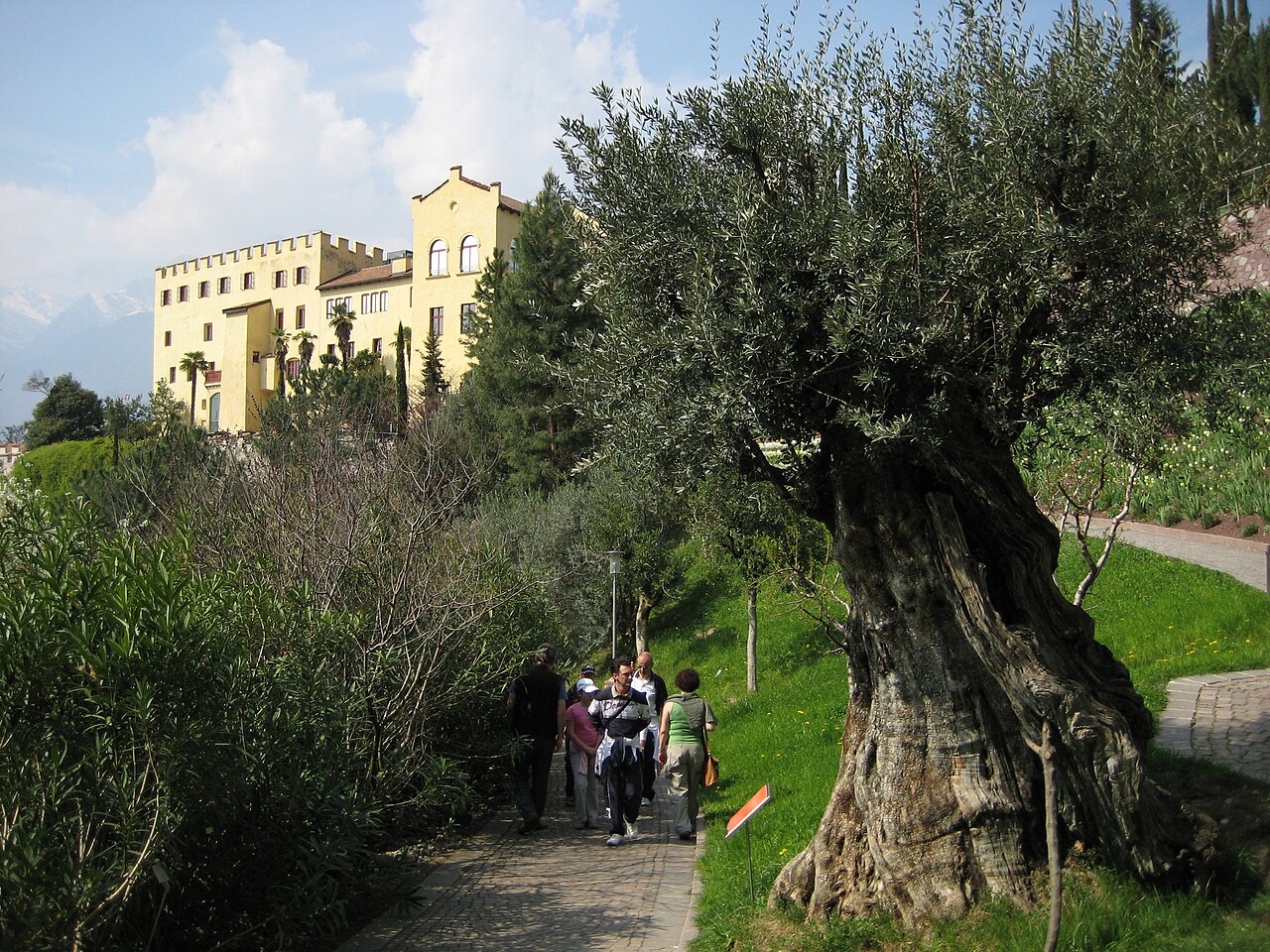
Scena Castle
Scena Castle, also known as Castel Schenna, is a prominent medieval fortress located in the municipality of Schenna near Merano in northern Italy. The castle's origins trace back to the early 14th century, with the first documented mention in 1346 referring to an earlier structure on the site. The current castle complex, however, was constructed around 1350 by Petermann from Scena, the burgrave of Tyrol and a loyal supporter of Margaret, Countess of Tyrol. This construction established the castle's enduring layout and defensive features that remain visible today.
Historical development and ownership
Throughout its history, Scena Castle has experienced numerous changes in ownership, reflecting the shifting political landscape of the region. After its initial construction, the castle passed through the hands of several noble families, including the Lords of Starkenberg and the Counts of Lichtenstein. In the 19th century, it came under the possession of Archduke John of Austria, an influential Habsburg figure who undertook significant renovations and enhancements to the castle complex.
The castle has remained continuously inhabited since its construction, a rarity among castles in the Merano area. This uninterrupted occupation has contributed to its excellent state of preservation, preventing the decay and ruin common to many medieval fortresses.
Architectural features and layout
Access to Scena Castle is gained via a sturdy bridge leading to the main entrance. Visitors pass through a historic oubliette, a dungeon-like space used in medieval times for imprisonment, before entering the castle's inner courtyard. The castle's defensive architecture includes thick stone walls, battlements, and towers designed to withstand sieges typical of the Late Medieval period.
Inside, the castle houses several notable rooms and collections. The lordly chambers reflect the residential aspect of the fortress, while a Renaissance hall features a distinctive faience oven dating to the 18th century, showcasing the blend of medieval and later architectural styles. The castle also contains a painting gallery and an extensive weapons collection spanning from the 12th to the 19th century, illustrating the evolution of arms and armor over several centuries.
Andreas Hofer collection
One of the castle's unique attractions is the largest private collection dedicated to Andreas Hofer, the Tyrolean patriot and freedom fighter. This collection provides valuable insights into the region's history and Hofer's role in the early 19th-century resistance against Napoleonic forces.
Neo-Gothic mausoleum and family heritage
Part of the castle complex includes a neo-Gothic mausoleum where Archduke John of Austria and his family are entombed. This mausoleum adds a distinctive architectural and historical dimension to the castle, reflecting 19th-century funerary styles and the prominence of the Habsburg family in the region.
Today, the castle remains in the hands of the Earls of Merano, descendants of Archduke John, who continue to maintain and cultivate the estate. Their stewardship ensures that Scena Castle remains a living monument to the region's medieval heritage and aristocratic traditions.
Visiting Scena Castle
Visitors to Scena Castle can explore the well-preserved interiors, including the historic chambers, the Renaissance hall, and the unique collections. The castle's continuous habitation and careful preservation offer an authentic glimpse into the life and architecture of a medieval Tyrolean fortress. Its location near Merano makes it accessible for those interested in history, architecture, and cultural heritage.
Frequently asked questions (FAQ)
- How do I visit Scena Castle and what can I see inside?
- Scena Castle is open to visitors who can explore its lordly rooms, Renaissance hall with an 18th-century faience oven, painting gallery, and extensive weapons collection. The castle also features the largest private Andreas Hofer collection and a neo-Gothic mausoleum. Check local tourism websites for current opening hours and ticket prices.
- What is the historical significance of Scena Castle?
- Built around 1350 by Petermann from Scena, the castle has a rich history of noble ownership including the Lords of Starkenberg, Counts of Lichtenstein, and Archduke John of Austria. It is notable for never being abandoned, preserving its medieval structure and heritage continuously.
- Can I access the neo-Gothic mausoleum at Scena Castle?
- The neo-Gothic mausoleum housing Archduke John of Austria and his family is part of the castle complex. While it may be viewed during guided tours, access may be limited due to its funerary nature. Visitors should inquire locally for specific visiting arrangements.
- Why is Scena Castle well preserved compared to other castles in the Merano region?
- Scena Castle has been continuously inhabited since its construction in the 14th century, preventing the decay and ruin common to many castles that were abandoned. This ongoing occupation has allowed for regular maintenance and preservation of its medieval architecture.
- Is Scena Castle accessible for visitors with mobility issues?
- Due to its medieval design, including stone steps, narrow passages, and a bridge entrance, accessibility may be limited for visitors with mobility impairments. It is advisable to contact the castle management in advance to inquire about accommodations.
Information
Current owner
Earls of Merano
Loading map...
Visitor reviews
No reviews yet. Been here? Write the first review and help other travelers!
Write the first reviewVisited this castle? Share your experience
Your review helps other travelers and adds first-hand knowledge to our encyclopedia.