Sárvár Castle — Hungary castle

Sárvár Castle

Sárvár Castle: Renaissance fortress and cultural landmark in Hungary
Sárvár, Hungary
High Medieval (11th–13th c.)
Well Preserved

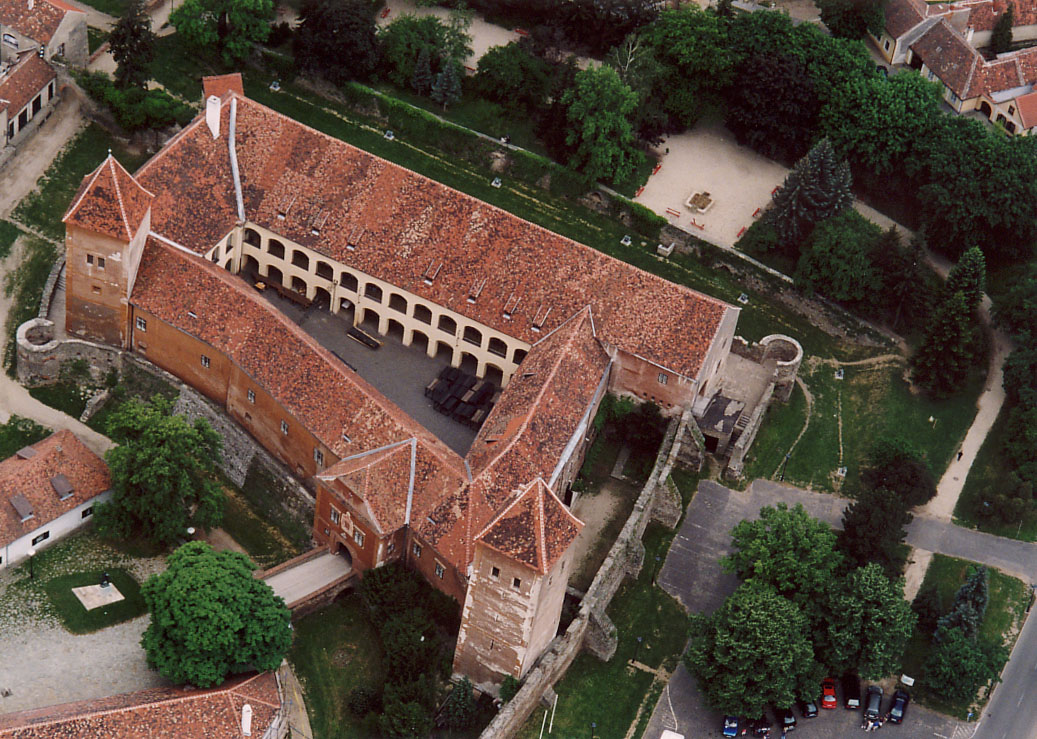
Sárvár Castle, located in the town of Sárvár, Hungary, stands as a remarkable example of a Renaissance water castle with a rich history dating back to the 13th century. Originally constructed as a medieval fortress, it evolved through centuries of architectural transformations and noble ownership, becoming a significant cultural and military stronghold in Hungarian history.

The castle's earliest recorded mention is from 1288, with its initial structure centered around a three-storey dwelling tower in the southwest corner and a single-storey northern wing. Over time, the fortress was expanded and fortified, especially during the 15th century under the Kanizsai family, who added a three-storey residential wing and enhanced its defenses in the Gothic style. The lower level of the present gate-tower also dates to this period.

Architectural evolution and defensive features

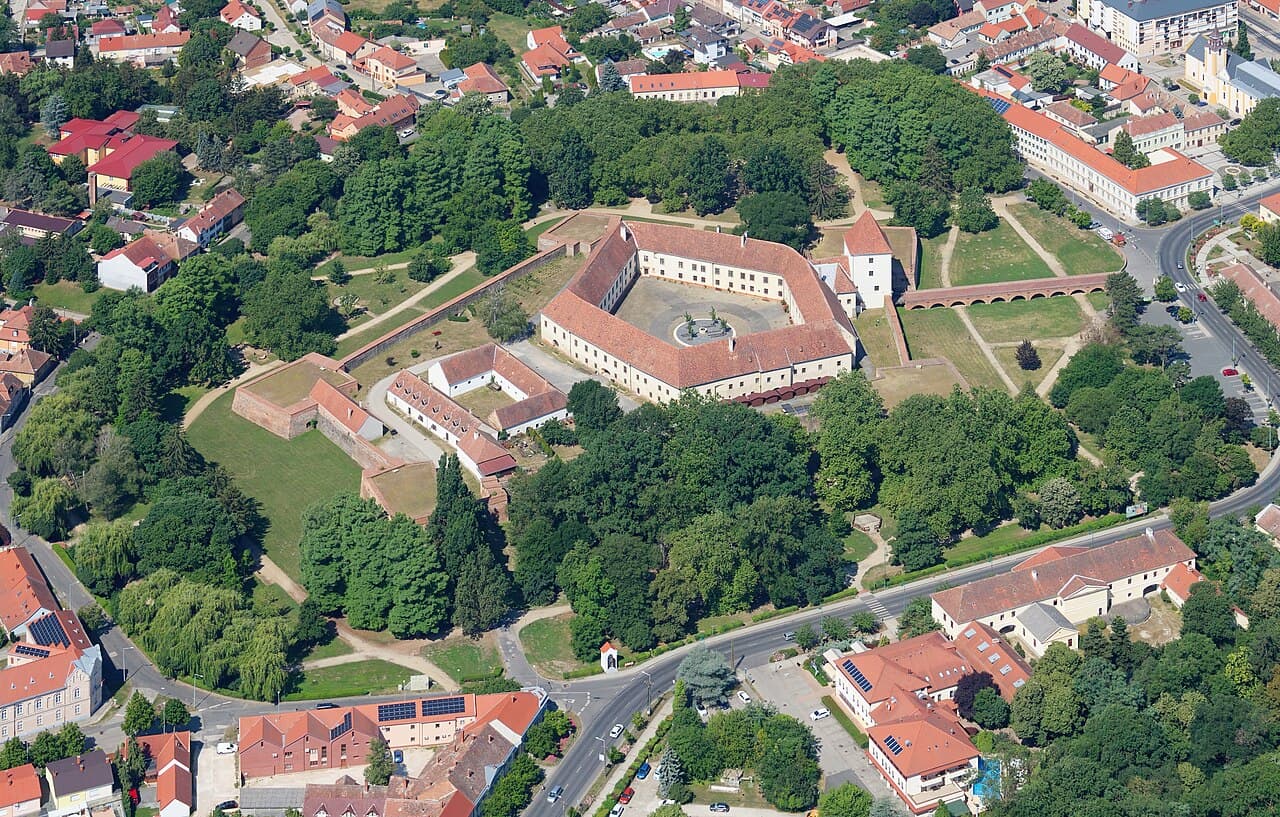
By the beginning of the 16th century, the castle had developed a large, enclosed courtyard surrounded by earth ramparts and wooden palisades, reflecting medieval defensive strategies. Between 1534 and 1671, the castle was owned by the influential Nádasdy family, who transformed it extensively in the Renaissance style. This period saw the construction of the castle's current form, including the addition of Old Italian style bastions between 1588 and 1615, designed to withstand the evolving threats of artillery warfare, particularly from the Ottoman Empire.

The castle's defensive system originally included five angular bastions and a broad moat, characteristic of Renaissance military architecture inspired by Italian fortifications. Although the moat was drained in the 19th century to create a landscaped park, the bastions remain a defining feature of the fortress's silhouette.

The Nádasdy family and cultural significance

The castle is closely associated with the Nádasdy family, especially Ferenc Nádasdy, known as the "Black Knight" of Hungary, who used the castle as a base for campaigns against the Ottoman Turks in the late 16th century. His marriage to the infamous Elizabeth Báthory adds a layer of dark legend to the castle's history, as she was imprisoned here after accusations of heinous crimes.

During the 17th century, the castle became the administrative center of the Nádasdy estates under Ferenc III Nádasdy. He commissioned the construction of a grand ceremonial hall, completed in 1653, richly decorated with monumental ceiling frescoes by Hans Rudolf Müller that depict the family's military victories. The hall's walls feature scenes from the Old Testament painted by István Dorfmeister in 1769, blending oil and fresco techniques to create a unique artistic ensemble.

Inside the ceremonial hall, visitors can admire two elaborately decorated double-door cabinet wardrobes originally from the Ocskay family, showcasing intricate marble inlays and gilded details that reflect the refined interior tastes of the Hungarian nobility.

Later history and preservation

Following the Nádasdy era, the castle passed through various noble hands, including the Archduke Ferdinand Estei in the early 19th century, who initiated renovations that introduced Classicist architectural elements. These changes included filling in the castle moat and building corridors along the upper levels of the eastern wing, allowing visitors to circumnavigate the castle's interior.

In 1875, the castle became property of the Wittelsbach family, who maintained it until the mid-20th century. During World War II, it served as a retreat for Prince Albert of Bavaria. Post-war, the castle was nationalized and repurposed for residential and educational uses before restoration efforts began in the 1960s.

Archaeological excavations since 1962 have uncovered multiple layers of the castle's construction phases, revealing its complex history from medieval origins through Renaissance and Baroque periods. Today, Sárvár Castle stands as one of Hungary's most complete historical fortresses, offering visitors a glimpse into the architectural and cultural heritage of the region.

Architectural highlights and visitor experience

Defensive bastions and fortifications

The castle's five bastions, built in the Old Italian Renaissance style, are among its most striking features. These angular bastions were designed to provide overlapping fields of fire, a revolutionary concept in military architecture of the time, enhancing the castle's ability to resist sieges and artillery attacks.

Interior decoration and ceremonial hall

The Great Hall remains a highlight for visitors, with its 1653 ceiling frescoes celebrating the Nádasdy family's military exploits. The combination of Baroque artistic elements with Renaissance structural design creates a richly layered aesthetic experience. The Old Testament wall paintings add a spiritual dimension, reflecting the religious and cultural values of the Hungarian nobility during the 18th century.

Surrounding landscape and moat transformation

Originally encircled by a water-filled moat, the castle's defensive perimeter was transformed in the 19th century when the moat was drained and converted into a park. This change reflects broader shifts in castle function from military fortress to noble residence and cultural monument. The landscaped grounds today offer a peaceful setting that contrasts with the castle's martial past.

Historical significance in Hungarian culture

Sárvár Castle played a pivotal role in the development of Hungarian culture and printing. It was here that the first Hungarian book, the New Testament of 1541, was printed, marking a milestone in the spread of literature and literacy in Hungary. The castle's association with the Nádasdy family, one of Hungary's most influential noble houses, further cements its place in the nation's history.

The castle also witnessed numerous historical events, including noble conspiracies, Ottoman wars, and shifts in political power through the centuries. Its survival and preservation offer valuable insights into the evolution of Hungarian fortifications and noble residences from the medieval period through the Renaissance and beyond.

Today, Sárvár Castle functions as a museum and cultural venue, attracting visitors interested in history, architecture, and art. Its well-preserved bastions, frescoes, and noble chambers provide a tangible connection to Hungary's rich past and the legacy of the families who shaped it.

Frequently asked questions (FAQ)

When was Sárvár Castle originally built?
Sárvár Castle was originally built in the 13th century, with the first written mention dating back to 1288.
What architectural styles are represented in Sárvár Castle?
The castle features a blend of Gothic, Renaissance, Baroque, and Classicist architectural styles, reflecting its development from the 13th to the 19th centuries.
Who were the notable historical figures associated with Sárvár Castle?
Notable figures include Ferenc Nádasdy, known as the Black Knight of Hungary, and Elizabeth Báthory, who resided there before her imprisonment.
Can visitors see the original defensive bastions?
Yes, the castle's five Renaissance-style bastions are well preserved and remain a prominent feature of the fortress.
Is the castle open to the public and are there guided tours?
Sárvár Castle operates as a museum open to visitors, offering guided tours that explore its history, architecture, and art collections.

Photo gallery

Sárvár Castle
Click to view

Photo by Carsten Steger•CC BY-SA 4.0

1 photo • Click any image to view in full screen

Information

Hill Castle

Current owner

State museum

Sources & official resources

Verify the information above using these authoritative references.

Loading map...

Visitor reviews

No reviews yet. Been here? Write the first review and help other travelers!

Write the first review

Visited this castle? Share your experience

Your review helps other travelers and adds first-hand knowledge to our encyclopedia.
Write a review

(5/5)

0/2000 characters

Your review will be visible after admin approval

Nearby castles

10.9 km
Batthyány-Strattmann Mansion, Intaháza — Hungary castle

Batthyány-Strattmann Mansion, Intaháza

, Hungary

The Batthyány-Strattmann Mansion located in Intaháza, Hungary, is a notable example of a historic hill castle that reflects the architectural and cultural heritage of the region. Though the exact construction date is uncertain, the mansion is associated with the prominent Batthyány and Strattmann families, influential noble houses in Hungarian history. The mansion is situated on elevated terrain, characteristic of hill castles, which provided strategic advantages for defense and surveillance in earlier centuries. Historical background and ownership The mansion has deep ties to the Batthyány family, one of Hungary's most distinguished noble families, known for their political and social influence from the medieval period through the modern era. The Strattmann family, also notable in Hungarian aristocracy, became connected to the mansion through marriage alliances, adding to the estate's prominence. The mansion served as a noble residence and administrative center, overseeing local estates and agricultural lands. Architectural features and style The Batthyány-Strattmann Mansion exhibits architectural elements typical of hill castles in Hungary, blending defensive features with residential comfort. The structure likely includes a fortified main building with thick walls and limited access points designed for protection. Surrounding the main residence, there may be ancillary buildings such as stables, servant quarters, and storage facilities arranged around a central courtyard. While specific architectural style details are scarce, the mansion probably incorporates elements from the Renaissance or Baroque periods, common in Hungarian noble residences, with later adaptations or restorations reflecting evolving tastes and needs. Features such as decorative stonework, arched windows, and ornate interior spaces could be present, alongside practical defensive structures like battlements or watchtowers. Location and strategic importance Positioned in Intaháza, the mansion's elevated location on a hill provided a commanding view of the surrounding landscape. This vantage point was crucial for monitoring approaching visitors or potential threats, a typical characteristic of hill castles. The location also reflects the estate's role in regional governance and defense during periods of unrest or conflict. Current condition and preservation The current state of the Batthyány-Strattmann Mansion is not extensively documented, but like many historic Hungarian castles and mansions, it may be partially preserved or restored. Its condition could range from well-maintained to partially ruined depending on historical events, ownership changes, and conservation efforts. Preservation of such estates is important for cultural heritage and tourism in Hungary. Visiting and cultural significance Although specific visitor information is not readily available, estates like the Batthyány-Strattmann Mansion often serve as cultural landmarks, attracting visitors interested in Hungarian history, architecture, and noble heritage. The mansion's association with prominent families adds to its historical value, making it a point of interest for researchers and tourists alike.

Details
33.7 km
Jurisics Castle — Hungary castle

Jurisics Castle

Kőszeg, Hungary

Jurisics Castle, located in the historic town of Kőszeg in western Hungary, stands as a remarkable testament to medieval fortification and resilience. Named after the Croatian nobleman Nikola Jurišić, the castle's origins date back to the 13th century, with its oldest parts constructed in the High Medieval period. Over centuries, it evolved architecturally, initially featuring a Gothic style inner castle that was later expanded and modified during the Renaissance and Baroque eras. The castle complex historically functioned as an estate castle, strategically positioned near the Király Valley, utilizing natural and man-made defenses including a surrounding moat fed by the nearby Gyöngyös stream. Historical significance and ownership The earliest recorded mention of the site is from the year 802, referred to as "castellum Guntionis" in the chronicles of Einhard, indicating its early medieval importance. The castle's strategic location made it a focal point throughout Hungarian history, especially following the devastating Tatar invasion of 1242, which prompted renewed fortification efforts. The Lower Castle near the valley settlement gradually became the primary center of manorial authority, overtaking the original Upper Castle. Ownership of Jurisics Castle shifted among prominent families and rulers, reflecting the turbulent political landscape of the region. In the late 13th century, it belonged to the Héder family before being seized by Duke Albert in 1289. Following the Hainburg peace treaty, King Andrew III ordered the demolition of the Old Castle in 1291. The castle was reclaimed by Charles Robert in 1327 after wresting control from the Kőszegi family, who had held it for some time. Subsequent transfers of ownership included the Garai family in 1392, the Habsburg rulers in 1445, a brief return to King Matthias Corvinus in 1482, and back to the Habsburgs in 1492. The siege of 1532 and military importance The castle's most renowned historical episode is the 1532 siege during the Habsburg-Ottoman wars. Commanded by Captain Miklós Jurisics, fewer than 1,000 defenders, largely local peasants, withstood the assault by the forces of Suleiman the Magnificent led by Pargalı İbrahim Pasha. Despite lacking artillery and facing nineteen separate attacks over 25 days, the defenders' resilience prevented the Ottoman army from capturing the fortress. The siege ended with a negotiated symbolic victory for the Ottomans, who were allowed to raise their flags atop the castle's eight defensive towers as a token of triumph. This event elevated Jurisics' status, earning him nobility and the town's grant by Emperor Ferdinand I. The nearby Sultan's Hill (Szultán-domb), situated between Király Valley and Kálvária Hill, served as the vantage point from which Suleiman observed the siege, adding further historical significance to the landscape surrounding the castle. Architectural features and fortifications Jurisics Castle is a complex fortification system comprising distinct inner and outer sections, with the Lower Castle replacing the earlier Upper Castle as the main manorial hub. The castle's defenses were progressively enhanced with robust stone walls, multiple towers, and a moat system that utilized diverted water sources for added protection. The eight towers played a critical tactical role during the 1532 siege, providing vantage points for defense and signaling. The castle's interior features include the notable Esterházy altar, crafted in 1771 under the patronage of Miklós József Esterházy. This altar prominently displayed a central figure of the Madonna and has undergone several restorations, including a significant conservation effort in 1963 and a comprehensive restoration completed in 2018 following archaeological investigations. The altar's preservation reflects the castle's layered history, blending religious art with military architecture. Restoration, cultural significance, and modern use After a damaging fire in 1777 and subsequent military use through the 20th century, Jurisics Castle underwent extensive restoration beginning in the 1960s. These efforts transformed it into a vibrant cultural center, hosting a theater established in 1982 to commemorate the 1532 siege anniversary. Modern renovations starting in 2011 enhanced exhibition spaces with climate-controlled display cases and interactive rooms, enabling visitors to explore the castle's history comprehensively through to 1945. The castle also serves as a backdrop for Hungarian and international film productions, highlighting its enduring architectural charm and historical ambiance. The restoration projects have preserved the castle's structural integrity while adapting it for contemporary cultural and educational use, ensuring that Jurisics Castle remains a vital heritage site in Hungary. Visitor experience and surrounding landscape Visitors to Jurisics Castle can explore its fortified walls, towers, and courtyards, gaining insight into medieval defensive architecture and the castle's storied past. The nearby Sultan's Hill offers panoramic views and historical context related to the 1532 siege. The castle's location in Kőszeg, a town known for its rich history and cultural heritage, makes it an attractive destination for those interested in medieval history, military architecture, and Hungarian heritage. Overall, Jurisics Castle exemplifies the resilience and strategic importance of Hungarian fortifications during the Middle Ages and Renaissance, standing as a monument to the heroic defense against overwhelming odds and the layered history of Central Europe.

High Medieval (11th–13th c.)
Details
34.6 km
Somló Castle Ruins — Hungary castle

Somló Castle Ruins

Doba, Hungary

Somló castle ruins stand prominently on the northern slopes of Somló Hill in Hungary, a basaltic extinct volcanic formation rising to 431 meters. Constructed in the 13th century shortly after the Mongol Invasion, this hill castle played a significant role in the medieval defense system of the region. Its strategic location allowed it to control the surrounding landscape, including the fertile Somló wine region, offering commanding views that remain spectacular to this day. The castle’s history is marked by a succession of influential owners, including notable figures such as Pál Kinizsi, one of Hungary’s renowned military leaders, and Bishop Tamás Bakócz, who transformed the fortress during the late 15th century. Despite its military importance, the castle was never captured by the Ottoman Turks despite multiple attempts, underscoring its formidable defenses and strategic value. Historical development and ownership The earliest documented mention of Somló castle dates back to 1352, when King Louis I transferred ownership from a local noble to another prominent figure. Throughout the 14th and 15th centuries, the castle was royal property before passing into the hands of several noble families, including the Garai, Rozgonyi, Kanizsai, and Kinizsi families. The fortress was granted to Pál Kinizsi in 1479 by King Matthias Corvinus, cementing its military and political significance. The most transformative period occurred after Bishop Tamás Bakócz acquired the castle in 1495. He initiated extensive renovations, converting the medieval fortress into a Renaissance-style stronghold. These upgrades included the addition of a chapel tower with intricately carved stone door and window frames, enhancing both the castle’s defensive and spiritual functions. Bakócz also modernized the armaments, installing two large cannons, several smaller guns, and two bombards, reflecting the evolving nature of siege warfare during the period. In the 16th century, Somló castle remained a critical defensive position during the Ottoman wars. The castle successfully resisted multiple Turkish sieges, most notably in 1543, when Hungarian defenders inflicted heavy losses on the attackers. Ownership changed hands several times, with the Csoron family maintaining its military role but imposing heavy levies on the local peasantry. During the Rákóczi War of Independence in the early 18th century, the castle was controlled by Imperial forces until liberated by Vak Bottyán in 1707. After this period, the castle’s military importance declined, especially as nearby Sümeg rose as a dominant fortress in the region. By the late 18th century, the castle was largely abandoned and fell into ruin. Architectural features and layout Somló castle’s design is irregular, adapting to the natural contours of the basalt hill on which it sits. The fortress was surrounded by dense forests that provided natural concealment and hindered enemy approach. The castle complex consisted of multiple courtyards and internal towers, arranged to maximize defensive capabilities by utilizing the terrain. On the southern side, the castle was protected by a dry moat approximately eight meters wide. This moat was strategically bordered by a cliff on one end and sloping terrain on the other. A well-preserved wooden drawbridge once spanned the moat, controlling access through a narrow passage into the outer courtyard. The outer courtyard was enclosed by walls equipped with arrow slits, allowing archers to defend the castle effectively. Vaulted guard quarters along the western side provided accommodation and service spaces for soldiers. Access to the inner courtyard was gained via a second drawbridge and a narrow alley beneath a distinctive hexagonal tower. While once thought to be the castle kitchen, recent research supports its function as a chapel, consistent with renovations made by Bishop Bakócz. The chapel tower featured finely carved stone door and window frames, elevating the castle’s architectural and religious significance. The castle’s defenses were enhanced with artillery in the late 15th century, including two large cannons, smaller guns, and bombards, reflecting the adaptation to gunpowder weaponry. By the 18th century, only a few artillery pieces remained, indicative of the fortress’s declining military role. Decline, legend, and preservation Following its military decline, much of the castle’s stonework was dismantled and repurposed for construction of a later fortress at the foot of Somló Hill. The Erdődy family, who regained ownership in the 18th century, chose to build a new residence in the nearby village of Doba rather than restore the medieval ruins. The family retained possession until 1945, when the property was seized by Soviet forces. Local legend connects the castle to Pál Kinizsi, with a nearby basalt formation known as "Kinizsi Rock". The rock’s saddle-shaped depression is said to mark the spot where Kinizsi rested after climbing the hill to inspect the castle, symbolizing his enduring legacy in the region. After centuries of neglect, restoration efforts began in 2017 under Hungary’s National Castle Program. Today, the ruins are protected as a registered monument and can be reached only on foot or bicycle via a concrete path from the hill’s base. Visitors who make the ascent are rewarded with panoramic views of the surrounding Somló wine region and a tangible connection to Hungary’s medieval past. Visiting somló castle ruins Access to the castle ruins is limited to pedestrian and bicycle traffic, ensuring preservation of the site’s natural and historical integrity. The path to the castle is marked with signage, guiding visitors through the forested slopes of Somló Hill. The rugged terrain and elevation require moderate physical effort, making the visit suitable for those with reasonable fitness. The castle’s location offers not only historical insights but also stunning vistas over the Somló wine region, renowned for its unique volcanic terroir and wine production. Visitors can combine their historical tour with wine tasting experiences in the nearby villages, enriching their cultural and sensory appreciation of the area. Architectural significance and cultural heritage Somló castle is an exemplary high medieval hill castle that showcases the evolution of Hungarian fortress architecture from the 13th to the 18th century. Its adaptation to the basalt hill terrain, combined with Renaissance modifications by Bishop Bakócz, reflects the blend of military and religious functions typical of the period. The castle’s defensive features, including dry moats, drawbridges, arrow slits, and artillery embrasures, illustrate the transition from medieval fortifications to early modern warfare adaptations. The chapel tower and carved stone details highlight the cultural and spiritual aspirations of its owners, particularly in the late 15th century. Today, Somló castle ruins stand as a protected cultural heritage site, offering valuable insights into Hungary’s medieval history, architectural development, and regional identity. Its preservation and ongoing restoration contribute to the understanding and appreciation of the country’s rich historical landscape.

High Medieval (11th–13th c.)
Details