Santueri Castle
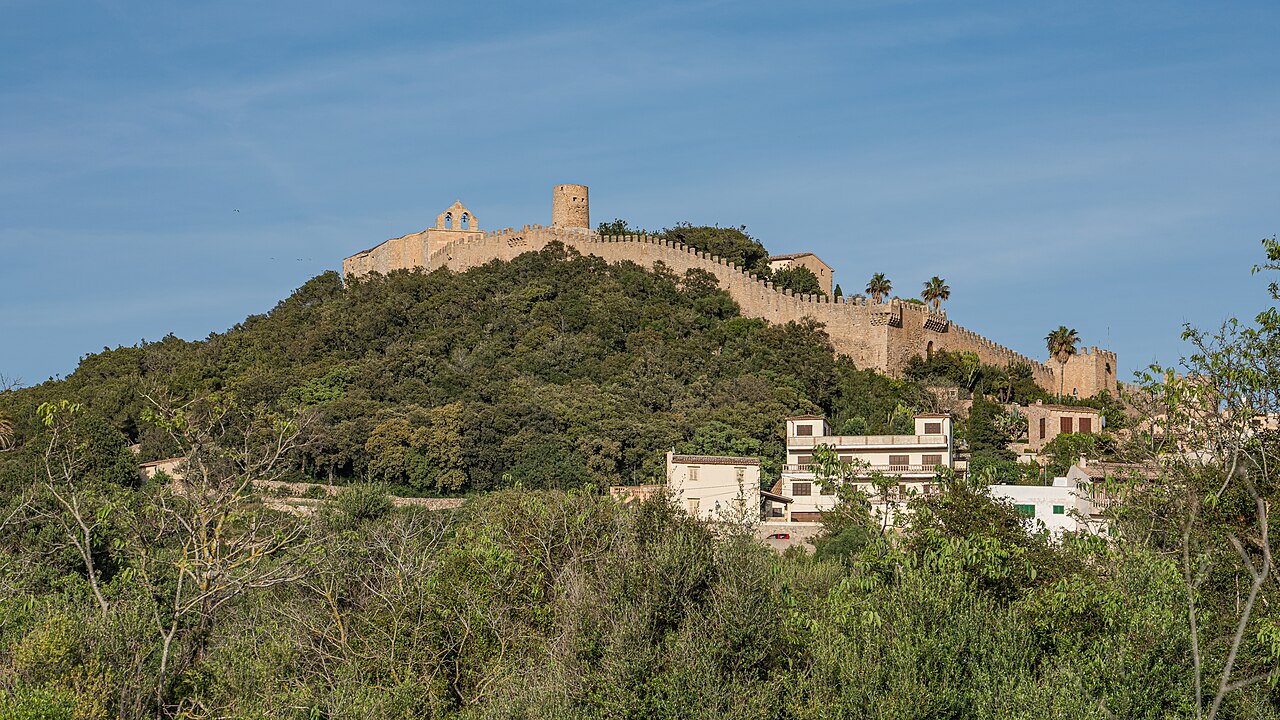
Santueri Castle stands prominently atop a rocky outcrop approximately 475 meters above sea level in the municipality of Felanitx, Mallorca, Spain. This hill castle offers commanding views over the southeastern coastline of Mallorca and, on clear days, extends to the distant Cabrera Islands. The site’s strategic location has made it a place of continuous human occupation and fortification from prehistoric times through the medieval period.
The earliest known human activity around Santueri dates back to the Bronze Age (circa 2200 BC), with archaeological evidence found in nearby caves indicating the area was used as a sacred place of worship. Excavations have revealed artifacts from prehistoric cultures including the epicampaniform, naviform, and talaiotic periods, emphasizing the site's long-standing cultural significance. The castle's foundations are believed to have Roman origins, with stone fortifications initially constructed during the Roman era, highlighting its early military importance.
Roman and Byzantine beginnings
The initial fortress at Santueri was established by the Romans, who recognized the natural defensive advantages of the rocky promontory within the Migjorn mountain range. This early fortification served as an outpost overseeing the surrounding landscape and sea approaches. Archaeological samplings inside the castle have uncovered remains from both Roman and Byzantine occupations, indicating continued use through the Eastern Roman Empire period.
Islamic period and Christian reconquest
Following the decline of Byzantine influence, the site came under Islamic control during the early 10th century, around 903 AD, when Mallorca was invaded. The castle likely functioned as a refuge for the local population during this turbulent period. Its name, Santueri, is thought to derive from the Latin word sanctuarium, suggesting the site’s use as a sanctuary or place of protection.
In 1229, the castle was seized by King James I of Aragon during the Christian reconquest of Mallorca. It was initially granted to Count Nunyo Sans, a nobleman who held it until his death in 1241, after which it reverted to royal possession. The castle played a role in the ongoing conflicts over the Kingdom of Mallorca, notably surrendering to King Alfonso III of Aragon in 1248 after a brief siege.
Medieval fortifications and military role
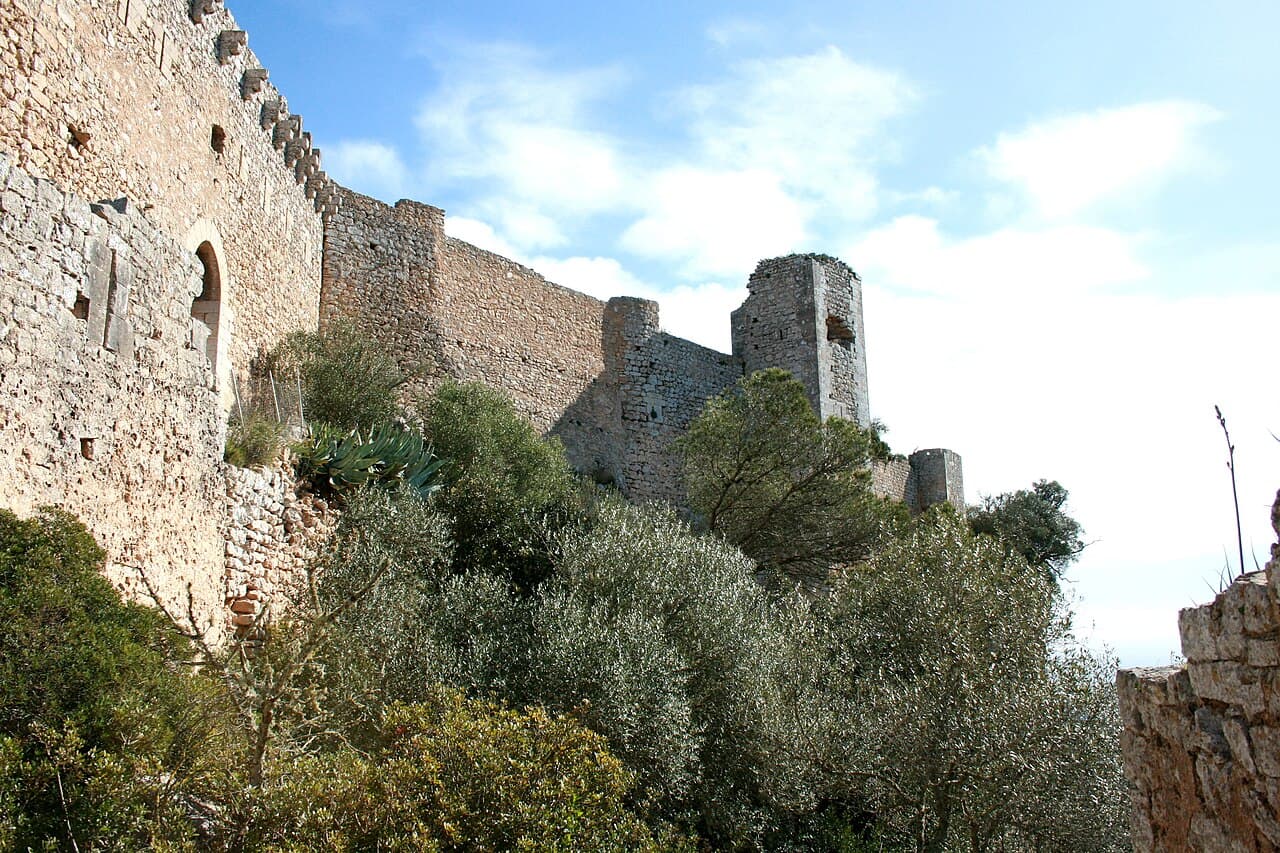
The 14th century marked a period of significant rebuilding and fortification for Santueri Castle. In 1348, the walls were extensively reinforced to adapt to evolving military technology, including the installation of approximately 370 gunports. These small openings allowed defenders to use firearms and small artillery, reflecting the transition from traditional medieval warfare to early modern siege tactics.
The castle's defensive perimeter includes three rectangular towers and a distinctive round tower known as the "Tower of Submission", which likely had a specialized military function. The fortress utilized the natural steep cliffs of the rocky promontory to enhance its defenses, making direct assault difficult.
Role during local conflicts
During the early 16th century, Santueri Castle was involved in local political unrest, notably during the Germanies revolt (1522–1524), a significant Majorcan uprising. Unlike other regional fortresses, Santueri remained loyal to the Crown and served as a bastion against the rebels known as the mascarats. Its strategic position and strong defenses allowed it to withstand sieges during this period.
Decline and later history
After the 16th century, the castle's military importance gradually diminished. It continued to serve as a coastal watchpoint against potential maritime threats during the 17th and 18th centuries, but its condition deteriorated over time. In 1811, the Spanish State sold Santueri Castle to a private owner, marking the end of its role as an active fortress.
Despite abandonment, the castle remains well preserved in parts, allowing visitors to explore its interior structures, including the central tower, ruins of defensive walls, the old keeper's room, and a cistern. The presence of a chapel, a mill, and garden areas within the enclosure suggests the castle was partly self-sufficient, supporting a small garrison and their families.
Archaeological significance and preservation
Excavations conducted between 1997 and 2001 uncovered a wealth of artifacts such as coins, seals, and weights from Roman and Muslim periods, underscoring the site's prolonged strategic and economic importance. Nearby caves have yielded prehistoric ceramics and bronze tools, illustrating a complex history of occupation and cultural layers.
In recognition of its cultural and historical value, Santueri Castle was declared a Cultural Interest Asset (Bien de Interés Cultural) in 1998. Today, it stands as a significant monument reflecting Mallorca's diverse past from prehistoric times through Roman, Islamic, and medieval Christian eras.
Visiting Santueri Castle
Visitors can reach Santueri Castle by road from Felanitx to Santanyi, with parking available nearby. The site offers hiking and cycling trails that explore the rugged terrain surrounding the fortress. Exploring the castle reveals its architectural features, including the fortified walls, towers, and courtyards, alongside spectacular panoramic views.
The castle’s elevated position provides a unique vantage point to appreciate the southeastern Mallorca landscape and the Mediterranean Sea. Its combination of natural defenses and layered historical architecture makes it a compelling destination for those interested in medieval military history and archaeology.
Frequently asked questions (FAQ)
- How do I get to Santueri Castle?
- Santueri Castle is accessible by road from Felanitx to Santanyi. Visitors can drive up close to the site or explore nearby hiking and cycling trails that lead to the castle.
- What is the historical significance of Santueri Castle?
- Santueri Castle has a rich history spanning from prehistoric times through Roman, Islamic, and medieval Christian periods. It played a key role during the Christian reconquest and the Germanies revolt, reflecting Mallorca's layered past.
- Can I explore the interior of the castle?
- Yes, visitors can enter the castle's interior to see the central tower, ruins of defensive structures, the old keeper's room, a cistern, and remains of a chapel, mill, and gardens.
- When was Santueri Castle built?
- The current walls of Santueri Castle date from the 14th century, although the site has been fortified since Roman times and used as a refuge during the Islamic invasion in the early 10th century.
- Is Santueri Castle well preserved?
- Santueri Castle is partially preserved, with significant portions of its walls and towers intact. While some areas are in ruins, the site retains much of its medieval character and defensive features.
Photo gallery

Information
Website
Visit websiteSources & official resources
Verify the information above using these authoritative references.
Loading map...
Visitor reviews
No reviews yet. Been here? Write the first review and help other travelers!
Write the first reviewVisited this castle? Share your experience
Your review helps other travelers and adds first-hand knowledge to our encyclopedia.