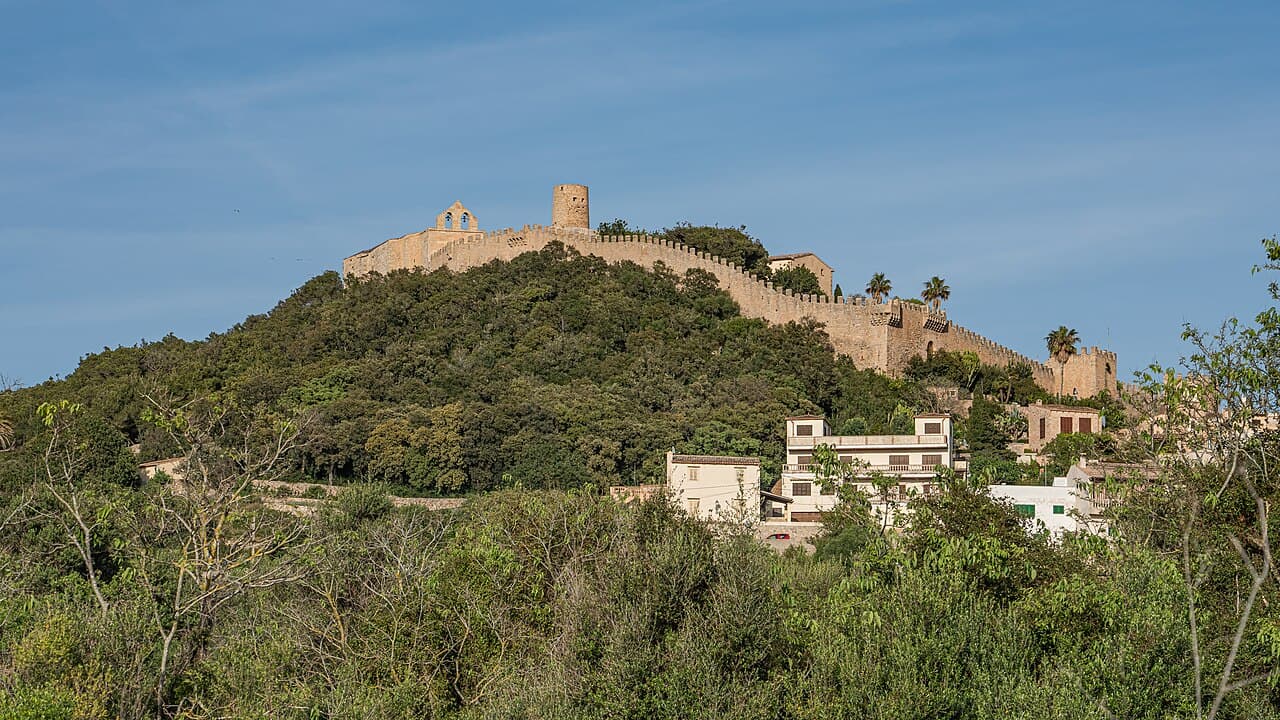
Capdepera Castle stands prominently in the northeast of Mallorca, Spain, perched atop the Puig de Capdepera hill at 159 meters above sea level. This hill castle offers commanding views over the interior landscapes, the coastline, and the Menorca Channel that separates the two Balearic Islands. Its strategic location made it a vital military and defensive site throughout the late medieval period and beyond.
Originally, the site hosted a Roman fortress, followed by a Muslim defensive tower known as the Torre d’en Miquel Nunis, constructed between the 10th and 12th centuries. This tower was later incorporated into the castle complex. The current castle structure was largely built during the early 14th century, around 1300, under the orders of King James II of Majorca. The king aimed to consolidate control over the region and encourage scattered rural populations to settle within a fortified enclosure, especially to protect against frequent pirate attacks.
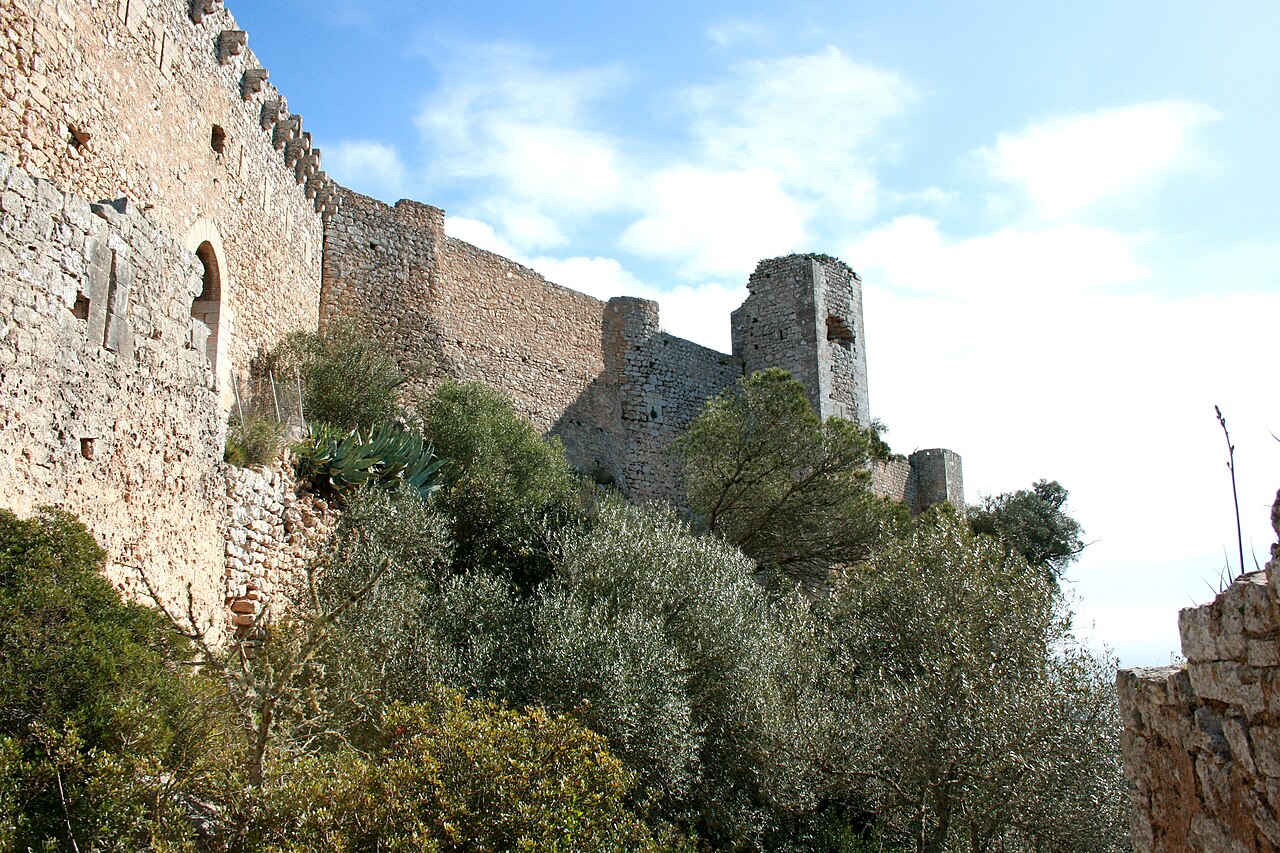
The castle's walls form a near-triangular enclosure covering approximately 8,069 square meters. Constructed from stone and mortar, the walls rise with a gentle slope toward the north and extend roughly 75 meters along the east, 80 meters on the southwest, and 100 meters on the northwest sides. Several defensive towers punctuate the walls, including the Torre d’en Banya and Torre de ses Dames on the east, the Torre de sa Boira guarding the main gate known as the Portalet, and the Torre des Costerans on the southwest. The northwest wall, notably, lacks towers and terminates near the castle church.
Historical significance and military role
The castle played a pivotal role in the history of the Balearic Islands. One of the most notable events associated with Capdepera Castle is the 1231 Treaty of Capdepera, signed within the earlier Islamic tower before the full castle was constructed. This treaty followed a clever military ruse by King James I of Aragon, who ordered signal fires lit at Capdepera to deceive the Muslim rulers of Menorca into believing a large Christian force was preparing to invade. This stratagem led to the peaceful surrender of Menorca, with its inhabitants agreeing to pay tribute rather than face conflict.
Throughout the 14th to 16th centuries, the castle housed a growing population. Initially designed for about 50 families, the fortified village expanded to include approximately 125 houses by the 16th century. The settlement was a refuge for inhabitants fleeing pirate raids, and the castle's fortifications were continually maintained and adapted to meet evolving defensive needs.
In the 18th century, the castle's military function was formalized under the Bourbon monarchy, which stationed a professional garrison commanded by a governor residing in the Casa del Governador. The castle remained a military post until 1854, when the troops withdrew and the site was abandoned. It subsequently passed into private hands before being reclaimed by the municipality of Capdepera in 1983.
Architectural features and layout
Fortifications and towers
The castle’s fortifications are exemplary of late medieval military architecture adapted to the specific needs of the Balearic Islands. The robust defensive walls are equipped with machicolations—openings above gates and towers used to drop projectiles or boiling substances on attackers. The walls also feature embrasures, narrow slits for archers and artillery.
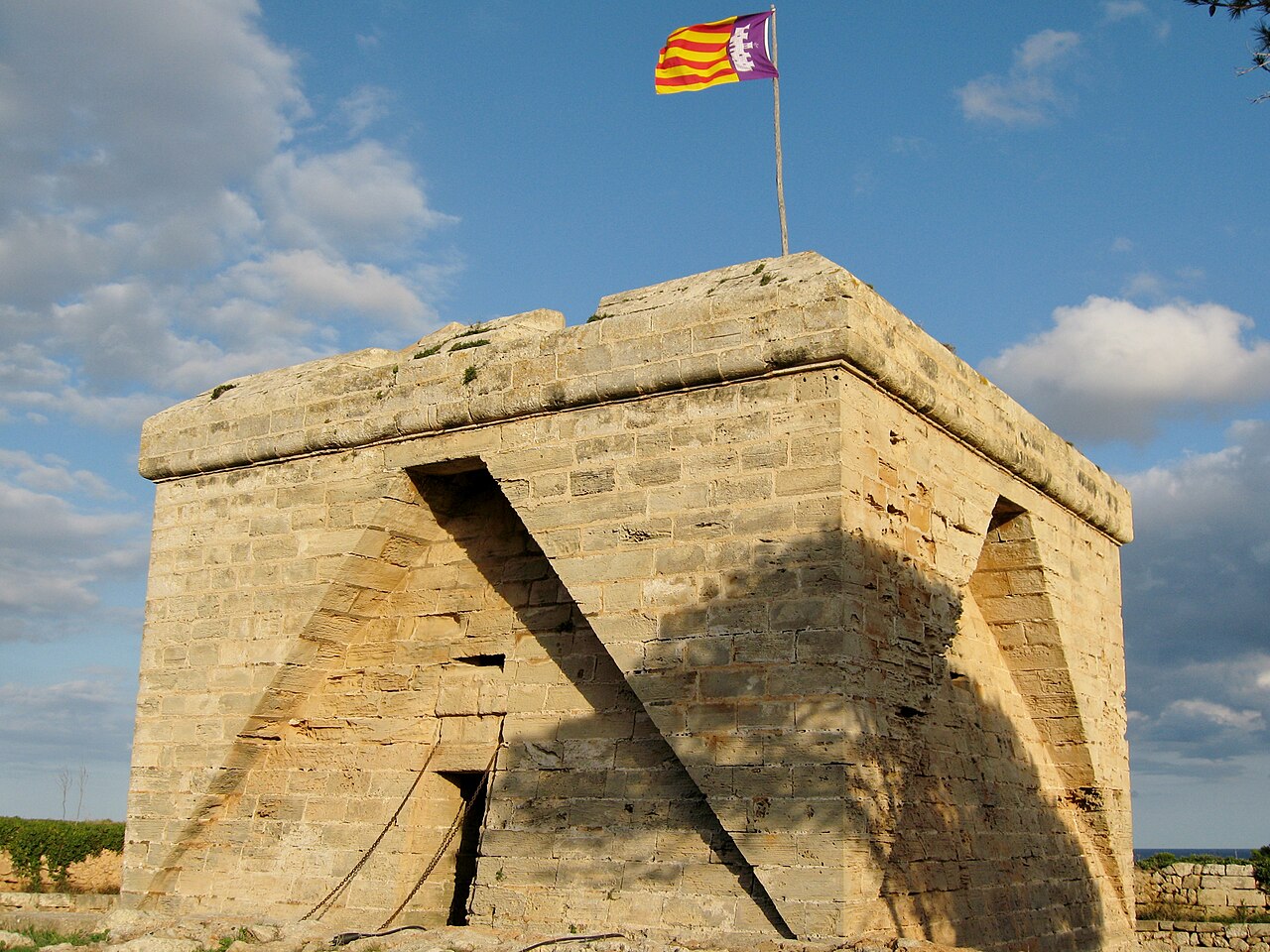
The Torre d’en Miquel Nunis is a key surviving element from the Islamic period. Originally a 10-meter-high square tower, it now stands at about half its original height. It contains a spiral staircase and was converted into a mill in the 19th century, gaining a distinctive conical roof during this adaptation.
The castle church and cistern
Inside the northern corner of the enclosure stands the Església de Nostra Senyora de l’Esperança, a fortified church initially built in the 14th century as a chapel dedicated to Saint John. Over the centuries, it was expanded and fortified, featuring windowless walls and side chapels designed for defense. The church houses a Gothic wooden Christ figure dating from the late 14th or early 15th century. Its roof served as both a lookout point and an artillery platform, underscoring the dual religious and military functions of the structure.
Adjacent to the church is a 14th-century cistern used to collect and store rainwater, a vital resource during sieges. The cistern is accessed via a vertical shaft resembling a well, equipped with mechanisms for drawing water.
Residential and communal structures
Archaeological remains within the castle enclosure reveal the foundations of up to 150 houses, many built against the outer walls or on the hillside slopes. These dwellings housed the castle’s civilian population, which grew significantly in response to regional threats. While most of these structures are now ruins, some have been stabilized and partially restored to aid visitor understanding.
The Casa del Governador, dating from the 18th century, served as the residence of the military governor. Today, it functions as a museum dedicated to the castle’s history and local crafts, providing cultural context to visitors.
Preservation and public access
Capdepera Castle was declared a Property of Cultural Interest (BIC), the highest level of heritage protection in Spain. This designation underscores its importance as a cultural and historical monument. Restoration efforts have included the addition of historically styled battlements and the installation of a stone-paved walkway with metal railings along the ramparts to facilitate safe visitor access.
The castle is open to the public throughout the year, allowing visitors to explore its extensive fortifications, towers, church, and museum. The site is managed by a dedicated board and the local municipality, which oversee preservation and educational initiatives.
The castle's role in regional defense and cultural heritage
Capdepera Castle’s strategic location allowed it to control sea routes and monitor maritime traffic between Mallorca and Menorca. Its presence was crucial in deterring pirate incursions and safeguarding local populations. The castle’s history reflects the complex interactions between Christian and Muslim powers in the Balearic Islands during the medieval period.
Today, Capdepera Castle stands as a testament to the island’s rich historical tapestry, combining elements from Roman, Islamic, and Christian architectural and cultural traditions. It offers valuable insights into medieval fortification techniques and the social dynamics of fortified settlements in the Mediterranean.
Frequently asked questions (FAQ)
- How do I get to the Castle of Capdepera?
- The Castle of Capdepera is located in the Balearic Islands, Spain, and is easily accessible by car or public transport. If you are traveling from Palma, you can take a bus to Capdepera, followed by a short walk uphill to the castle entrance.
- What is the historical significance of the Castle of Capdepera?
- The Castle of Capdepera dates back to the 13th century and was built to protect the island from pirate attacks. It played a crucial role in the defense of the region and has a rich history tied to the reconquest of Mallorca.
- When was the Castle of Capdepera constructed?
- Construction of the Castle of Capdepera began in 1229, shortly after the conquest of Mallorca by King James I of Aragon. It was strategically built on a hilltop to oversee the surrounding area and to serve as a fortress.
- Can I visit the Castle of Capdepera year-round?
- Yes, the Castle of Capdepera is open to visitors year-round, although opening hours may vary by season. It is advisable to check the official website for the latest updates on visiting times and any special events.
- Why is the architecture of the Castle of Capdepera noteworthy?
- The architecture of the Castle of Capdepera reflects a blend of Gothic and military styles, making it a fascinating example of medieval fortifications. Its well-preserved walls and towers offer visitors a glimpse into the engineering techniques of the time.
- Is it possible to explore the grounds of the Castle of Capdepera?
- Yes, visitors can freely explore the grounds of the Castle of Capdepera. There are walking paths that lead to various vantage points, offering stunning views of the surrounding landscape and the Mediterranean Sea.
- What are the ticket prices for the Castle of Capdepera?
- Entrance to the Castle of Capdepera is generally affordable, with discounts available for seniors and children. It's best to check the official site for the most current ticket prices and any special offers.
- When is the best time to visit the Castle of Capdepera?
- The best time to visit the Castle of Capdepera is during the spring and early autumn months when the weather is pleasant and the tourist crowds are smaller. This allows for a more enjoyable exploration of the castle and its scenic surroundings.
- Are there any nearby attractions to the Castle of Capdepera?
- Yes, nearby attractions include the charming town of Capdepera, the beautiful beaches of Cala Ratjada, and the scenic hiking trails of the Llevant Natural Park. These sites complement your visit to the castle and offer a full day of exploration.

Information
Website
Visit websiteSources & official resources
Verify the information above using these authoritative references.
Loading map...
Visitor reviews
No reviews yet. Been here? Write the first review and help other travelers!
Write the first reviewVisited this castle? Share your experience
Your review helps other travelers and adds first-hand knowledge to our encyclopedia.