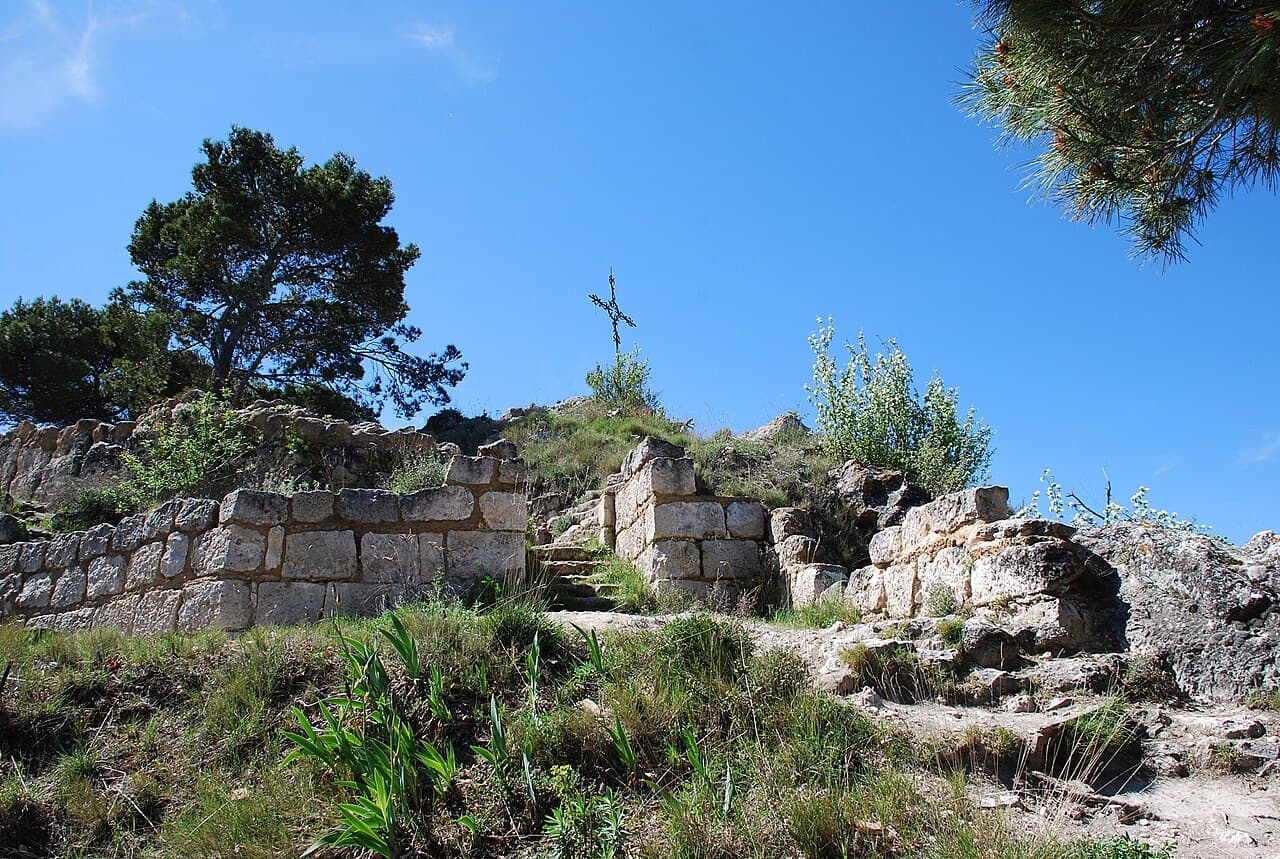
Santa María Jus del Castillo Church
Santa María Jus del Castillo Church stands in Estella, Spain, as a significant monument reflecting the city's medieval past and religious transformations. Constructed in the 12th century on the site of a former synagogue, this church is located in what was once the Jewish quarter of Estella. Originally named Iglesia de Santa María y de Todos los Santos, it served as a Christian place of worship until the 17th century. Today, it functions as an Interpretation Center of the Romanesque and the Camino de Santiago, welcoming visitors interested in the region's architectural and cultural heritage. The church has been officially recognized as a Site of Cultural Interest, underscoring its historical and architectural importance.
Architectural features and style
The church is characterized by its single nave layout, typical of Romanesque ecclesiastical architecture. The apse and the central body of the building retain their Romanesque origins, featuring the robust stone construction, semicircular arches, and modest decorative elements associated with this style. In contrast, the church's façade and tower were later additions from the Baroque period, reflecting the architectural evolution and stylistic changes that took place over several centuries. This juxtaposition of Romanesque and Baroque elements provides a visual narrative of the building's long history and adaptation to changing religious and aesthetic preferences.
Historical context and religious significance
Santa María Jus del Castillo Church occupies a site of profound historical significance. Its foundation on the location of a former synagogue highlights the religious and cultural shifts in medieval Estella. The Jewish community once thrived in this quarter, and the conversion of the synagogue into a church marks the Christian reconquest and consolidation of the region during the High Medieval period. The church's original dedication to both Santa María and All Saints indicates its importance within the local religious landscape.
Throughout its active use as a church until the 17th century, Santa María Jus del Castillo played a central role in the spiritual life of Estella. Its later transformation into an interpretation center reflects a broader trend of preserving and promoting medieval heritage sites along the Camino de Santiago, a major pilgrimage route that passes through the town.
Connection to Estella's medieval fortifications
While the church itself is a religious structure, its location and history are intertwined with the broader defensive network of Estella, including the nearby Zalatambor Castle. The first records of Zalatambor Castle date back to 1024, and it became a key fortification by the 13th century. Alongside the castles of Belmecher and a defensive watchtower, Zalatambor formed part of a fortified enclosure protecting Estella, independent from the city's urban walls.
Zalatambor Castle served as a royal residence during the 13th to 15th centuries, featuring numerous chambers for nobility. However, the castle's decline began in the mid-15th century due to internal conflicts such as the civil war between the Agramonteses and Beaumonteses factions. The castle fell to the Beaumontesa-Castilian coalition in 1512, marking a shift in regional control. Despite continued use until 1572, the castle was eventually abandoned following new military strategies favoring the citadel of Pamplona. Its partial destruction and subsequent use as a quarry have left it mostly in ruins today.
Preservation and current use
Santa María Jus del Castillo Church is well preserved, especially its Romanesque elements, despite later Baroque modifications. Its designation as a Site of Cultural Interest has helped protect the structure and promote its role as an educational and cultural facility. Visitors to the church can explore its architectural details and learn about the religious and social history of Estella and the Camino de Santiago pilgrimage.
The church's adaptive reuse as an interpretation center ensures that it remains an active part of the community, linking past and present through exhibitions and educational programs focused on medieval art, architecture, and pilgrimage traditions.
Frequently asked questions (FAQ)
- What are the visiting hours for Santa María Jus del Castillo Church?
- The church is generally open to visitors during standard daytime hours, often coinciding with the opening times of the Interpretation Center of the Romanesque and the Camino de Santiago. It is advisable to check locally or online for seasonal variations and special events.
- What architectural styles are represented in Santa María Jus del Castillo Church?
- The church features a combination of <strong>Romanesque</strong> architecture in its apse and nave, with later additions in the <strong>Baroque</strong> style visible in the façade and tower. This blend reflects the building's long history and evolving aesthetic influences.
- Can I learn about the Camino de Santiago at the church?
- Yes, Santa María Jus del Castillo Church serves as an Interpretation Center for the Romanesque and the Camino de Santiago, offering exhibitions and information about the pilgrimage route and its historical significance.
- Why was the church built on the site of a synagogue?
- The church was constructed in the 12th century on the site of a former synagogue, reflecting the Christian reconquest and the transformation of the Jewish quarter in Estella during the High Medieval period.
- Is Santa María Jus del Castillo Church protected as a heritage site?
- Yes, it has been declared a Site of Cultural Interest, which provides legal protection and recognition of its historical and architectural value.
Photo gallery

Information
Current owner
Municipality
Loading map...
Visitor reviews
No reviews yet. Been here? Write the first review and help other travelers!
Write the first reviewVisited this castle? Share your experience
Your review helps other travelers and adds first-hand knowledge to our encyclopedia.



