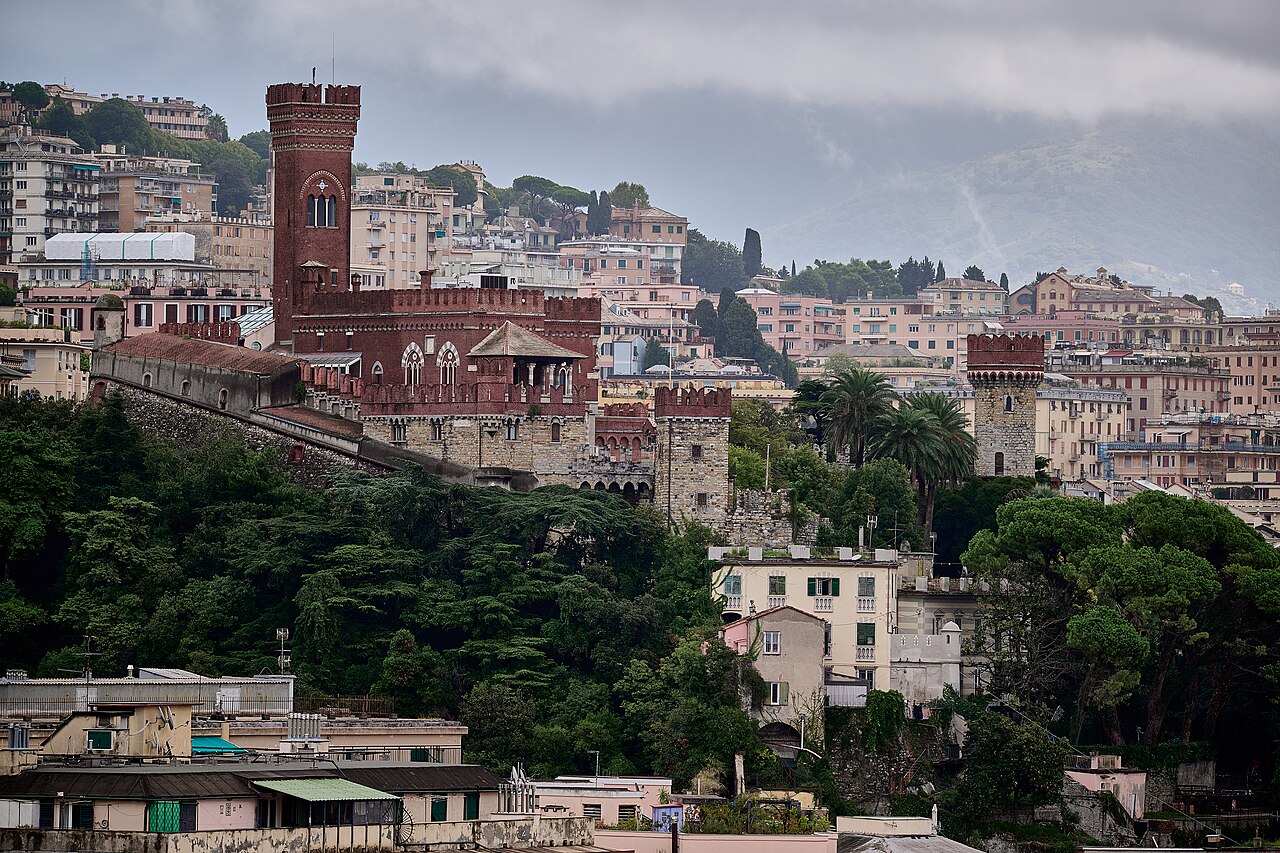
Santa Maria di Castello
Santa Maria di Castello is a prominent Romanesque church and religious complex located on the Castello hill in Genoa, Italy. This site occupies the historic location of a bishop's fortified castle dating back to the Early Medieval period. The church itself was constructed before the 9th century AD, making it one of the oldest religious structures in the city. It is closely associated with the medieval history of Genoa and retains significant architectural and artistic features from various centuries.
Historical background and architectural context
The church stands on a strategic elevated position on Castello hill, which was historically fortified to protect the city. The presence of a bishop's castle during the Middle Ages highlights the site's importance as both a religious and defensive stronghold. The church's Romanesque style is evident in its robust construction and characteristic architectural elements, which reflect the style prevalent in Liguria during the early medieval era.
Adjacent to the church is the imposing Tower of the Embriaci, a medieval tower that further emphasizes the fortified nature of the complex. This tower is a notable example of Genoese medieval military architecture and forms part of the castle's defensive system.
Artistic treasures and interior features
Santa Maria di Castello houses an extensive collection of artworks commissioned by Genoa's leading noble families, showcasing the city's rich artistic heritage. The interior contains paintings and sculptures by renowned artists such as Francesco Maria Schiaffino, Lorenzo Fasolo, Alessandro Gherardini, Giuseppe Palmieri, Francesco Boccaccino, Pier Francesco Sacchi, Bernardo Castello, Aurelio Lomi, and Tommaso Orsolino.
One of the church's highlights is the series of frescoes depicting the Stories of David, which are significant examples of religious narrative art. Additionally, the church features painted majolicas from the 16th-century Genoese school, illustrating the local artistic traditions of that period.
Notable chapels and artworks
The high altar is adorned with a marble group titled Assumption by Domenico Parodi, dating from the late 17th century. The chapel to the left of the presbytery contains a Santa Rosa da Lima painting by Domenico Piola and a marble cover crafted by Taddeo Carlone.
In the left aisle, the fourth chapel houses a Madonna del Rosario attributed to the workshop of Anton Maria Maragliano, noted for his work in sculpture and polychrome wood. The first chapel features a painting attributed to Giovanni Battista Paggi, an important early 17th-century Genoese painter.
The baptistery contains a polyptych created by Lombard masters in the 15th century, reflecting the influence of northern Italian art traditions on Genoa.
Architectural elements and decorative details
The church's main portal is designed in the Tuscan style and dates to the mid-15th century. Above this portal is a Gothic lunette from the 14th century featuring a depiction of the Crucifixion, which blends Gothic artistic elements with the Romanesque structure.
The loggia facing the second cloister is decorated with frescoes of saints and a Madonna, while the first floor contains an Annunciation by Giusto d'Alemagna painted in 1451. This artwork is a valuable example of early Renaissance painting in Genoa.
On the upper floor, visitors can find a statue of St. Catherine of Alexandria and a marble tabernacle attributed to Domenico Gagini, a notable 15th-century sculptor. These elements contribute to the church's rich decorative program spanning multiple artistic periods.
Significance and preservation
Santa Maria di Castello remains a well-preserved example of a Romanesque religious complex that integrates elements from medieval fortification and Renaissance art. Its location on Castello hill and the surviving Tower of the Embriaci provide insight into the defensive strategies of medieval Genoa.
The church continues to be an important cultural and historical site, attracting visitors interested in architecture, medieval history, and religious art. The combination of early medieval origins with later artistic additions makes it a unique monument reflecting Genoa's evolving heritage.
Frequently asked questions (FAQ)
- What is the historical significance of Santa Maria di Castello?
- Santa Maria di Castello is one of the oldest churches in Genoa, dating back to the 12th century. It played a crucial role in the city's early history and reflects the blend of Romanesque and Gothic architectural styles, showcasing the evolution of Genoa's religious and cultural heritage.
- When was Santa Maria di Castello built?
- Construction of Santa Maria di Castello began in the 12th century and continued over several centuries, with significant modifications made in the following years. Its long history is evident in the various architectural styles that can be seen throughout the structure.
- What are the opening hours for Santa Maria di Castello?
- Santa Maria di Castello is typically open to visitors from Monday to Saturday, with varying hours throughout the day. It is advisable to check the official website or contact local tourist information for the most current opening hours before planning your visit.
- Is it possible to access Santa Maria di Castello with mobility aids?
- While Santa Maria di Castello is a historical site, it may pose challenges for visitors with mobility aids due to its ancient architecture and uneven surfaces. However, staff are available to assist and offer information on the best routes for accessibility.
- Can I purchase tickets in advance for Santa Maria di Castello?
- Yes, visitors can purchase tickets in advance through the official website or at local tourist information centers. This is recommended during peak tourist seasons to avoid long wait times and ensure entry to this popular historical site.
- When is the best time to visit Santa Maria di Castello?
- The best time to visit Santa Maria di Castello is during the spring and early fall when the weather is pleasant, and tourist crowds are smaller. Visiting during these months allows for a more enjoyable experience while exploring the historic site and its surroundings.
- What nearby attractions should I consider visiting while in Genoa?
- While visiting Santa Maria di Castello, you can explore nearby attractions such as the Palazzo Rosso and the Genoa Cathedral. The vibrant old town is also home to numerous shops, cafes, and museums that highlight the rich history of the city.
Information
Current owner
Religious institution
Loading map...
Visitor reviews
No reviews yet. Been here? Write the first review and help other travelers!
Write the first reviewVisited this castle? Share your experience
Your review helps other travelers and adds first-hand knowledge to our encyclopedia.