Santa Cruz Fort — Algeria castle

Santa Cruz Fort

Santa Cruz Fort in Oran, Algeria
Oran, Algeria
Renaissance (15th–17th c.)

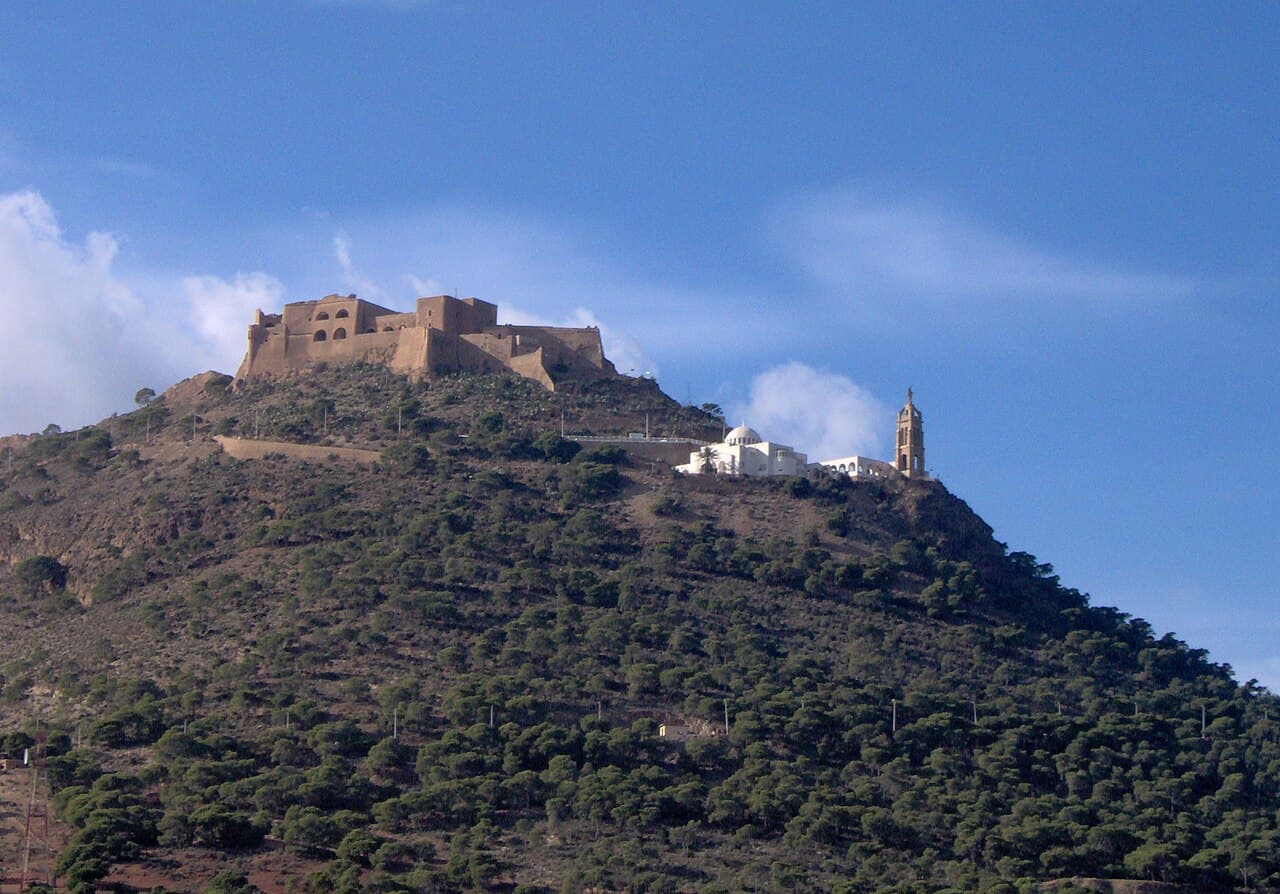
Santa Cruz Fort is a prominent 16th-century bastioned fortress located in Oran, the second largest port city of Algeria. Constructed by the Spanish Empire between 1577 and 1604, the fort was strategically positioned on the Pic d'Aidour, a hill rising over 400 metres above the Gulf of Oran on the Mediterranean Sea. This elevated location provided commanding views and defensive advantage over the surrounding area, crucial for controlling maritime access and protecting the city from naval attacks.

Historical context and strategic importance

The construction of Santa Cruz Fort occurred during the Renaissance period, a time characterized by evolving military architecture incorporating bastioned fortifications designed to withstand artillery sieges. The fort was part of a defensive network that included two other significant forts in Oran: Fort de la Moune to the west and Fort Saint-Philippe at the city center. These three forts were interconnected by a series of underground tunnels, enabling troop movements and communications while maintaining protection from enemy fire.

Santa Cruz Fort's position atop Pic d'Aidour gave it a dominant vantage point over the city and port, allowing the Spanish to monitor and defend against Ottoman and Barbary pirate incursions, which were frequent in the Mediterranean during the 16th century. The fort's construction reflected the broader Spanish efforts to secure their holdings in North Africa during this turbulent era.

Architectural features and design

Santa Cruz Fort exemplifies the bastioned fortress style, which emerged in response to the increased use of gunpowder artillery. Its thick stone walls are angled to deflect cannonballs, and the fort includes multiple bastions—projecting angular structures—that provide overlapping fields of fire covering all approaches. The fort's layout is irregular, adapting to the natural contours of the hill to maximize defensive capabilities.

The fort's entrance is heavily fortified, with a gatehouse designed to withstand direct assault. Inside, the complex includes barracks, storage rooms, and artillery platforms. The extensive use of stone masonry and the robust construction techniques have contributed to the fort's relatively good preservation despite centuries of exposure to the elements.

Connection with other forts

The tunnels linking Santa Cruz Fort with Fort de la Moune and Fort Saint-Philippe are a distinctive feature of Oran's defensive system. These subterranean passages allowed for secure troop movements and the transfer of supplies during sieges, enhancing the city's resilience against prolonged attacks.

French occupation and later history

In 1831, the French forces captured Oran, including Santa Cruz Fort, marking the beginning of French colonial rule in the region. The fort continued to serve a military role under French administration, although its strategic importance diminished with advances in military technology and changing geopolitical circumstances.

Despite this, Santa Cruz Fort remains a significant historical monument, representing the layered history of Oran from Spanish to French control and its role in Mediterranean maritime defense.

Chapel of Santa Cruz and cultural significance

Near the fort stands the Chapel of Santa Cruz, a small religious building that has been refurbished over time. It features a tower topped by a large statue of the Virgin Mary, known as Notre-Dame du Salut de Santa Cruz. This statue is a replica of the famous statue at Notre-Dame de la Garde in Marseille, France, symbolizing protection and faith.

The chapel and its statue have become a cultural landmark, attracting visitors and pilgrims alike. The site offers panoramic views of Oran and the Mediterranean, blending military history with religious heritage.

Visiting Santa Cruz Fort today

Today, Santa Cruz Fort is accessible to visitors interested in military architecture and history. The fort's elevated position provides spectacular views of Oran and the surrounding coastline. Visitors can explore the fortifications, tunnels, and the chapel, gaining insight into the strategic importance of Oran through centuries of Mediterranean conflicts.

The fort is a key attraction for tourists and historians, offering a tangible connection to the Renaissance period's military engineering and the complex colonial history of Algeria.

Frequently asked questions (FAQ)

What is Santa Cruz Fort known for?
Santa Cruz Fort, located in Oran, Algeria, is renowned for its impressive military architecture and historical significance. Built in the 16th century, it served as a strategic defense point against pirates and foreign invasions, showcasing the rich history of the region.
When was Santa Cruz Fort built?
Santa Cruz Fort was constructed in the late 1500s, specifically between 1577 and 1604, under the orders of the Spanish Crown. Its establishment marked an important period in Oran's history, reflecting the architectural styles and military needs of the time.
How do I get to Santa Cruz Fort?
To reach Santa Cruz Fort, you can take a taxi or a local bus from Oran city center. The fort is situated on a hill, so a bit of walking is involved once you arrive at the base, offering stunning views of the city and the Mediterranean.
Is it possible to visit Santa Cruz Fort year-round?
Yes, Santa Cruz Fort is open to visitors throughout the year, but it's best to check for any specific closure dates or maintenance schedules before planning your visit. The fort's accessibility may vary based on weather conditions, so it's advisable to prepare accordingly.
What are the opening hours for Santa Cruz Fort?
Santa Cruz Fort typically opens at 9 AM and closes at 6 PM, but these hours may change depending on the season. It's recommended to verify the current hours before your visit to ensure you have ample time to explore.
Can I take photographs inside Santa Cruz Fort?
Yes, visitors are generally allowed to take photographs within Santa Cruz Fort, capturing its stunning architecture and panoramic views. However, be respectful of any signs or restrictions that may be in place regarding photography in certain areas.
What is the best time to visit Santa Cruz Fort?
The best time to visit Santa Cruz Fort is during the spring and fall months, when the weather is mild and pleasant. Visiting during these times not only enhances your experience but also allows for beautiful landscape photography.
Are there any nearby attractions to visit?
Yes, nearby attractions include the stunning beaches of Oran and the historic city center, which boasts various museums and markets. Exploring these sites can provide a deeper understanding of the culture and history of Oran.
What are the ticket prices for Santa Cruz Fort?
As of now, the entrance fee for Santa Cruz Fort is quite affordable, with discounts often available for students and seniors. It's always a good idea to check for any updates on ticket prices before your visit to ensure you have the correct information.

Photo gallery

Santa Cruz Fort
Click to view

Photo by Photographer and original uploader was Mecifi at fr.wikipedia•Public domain

1 photo • Click any image to view in full screen

Information

Bastioned Fortress

Loading map...

Visitor reviews

No reviews yet. Been here? Write the first review and help other travelers!

Write the first review

Visited this castle? Share your experience

Your review helps other travelers and adds first-hand knowledge to our encyclopedia.
Write a review

(5/5)

0/2000 characters

Your review will be visible after admin approval

Nearby castles

174.7 km
San Felipe Castle — Spain castle

San Felipe Castle

Níjar, Spain

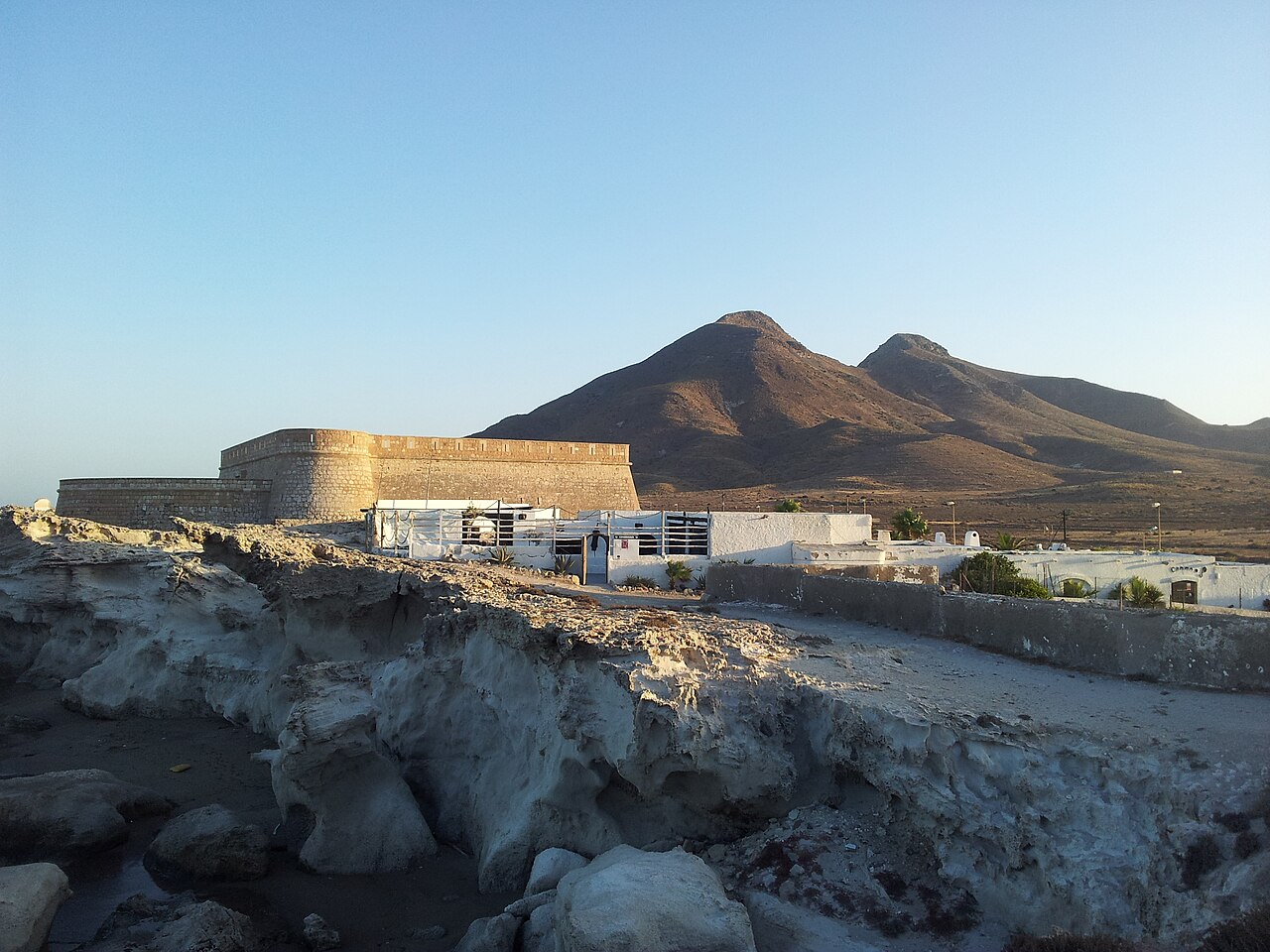
San Felipe Castle, also known locally as Castillo Batería de San Felipe, is a prominent 18th-century coastal fortification located in the hamlet of Los Escullos, within the municipality of Níjar, in the province of Almería, Spain. Perched on the Esparto height, approximately eight meters above sea level, it commands strategic views over the Mediterranean coastline and the surrounding natural landscape of the Cabo de Gata Natural Park. This Neoclassical artillery fort was constructed in 1765 during the reign of King Charles III as part of a broader defensive network designed to protect the southern Spanish Mediterranean coast from frequent attacks by Berber pirates and other maritime threats. Historical context and construction During the 18th century, the southern coast of Spain was vulnerable to raids by pirates operating from North Africa, prompting the Spanish Crown to strengthen its coastal defenses. In 1764, King Charles III ordered the construction of nine fortifications along the coast of the Kingdom of Granada. San Felipe Castle was among these, designed by military engineer José Crame. The fort shares architectural similarities with contemporaneous batteries such as San Ramón, Jesús Nazareno, Guardias Viejas, Carchuna, and La Herradura. The castle was built as a rectangular artillery fort featuring a semicircular counterguard facing the sea to enhance its coastal defense capabilities. It was originally armed with four cannons and included a drawbridge over the main entrance, underscoring its defensive design. The garrison typically consisted of an officer, three corporals, and twenty soldiers, reflecting its role as a modest yet strategically important fortification. Architectural features and design San Felipe Castle exemplifies the Neoclassical military architecture of the late Post-Renaissance period, incorporating Enlightenment principles such as geometric precision and mathematical application in fortress design. The fort’s layout is characterized by a strong geometric plan, with stone masonry construction typical of the era’s durable military structures. The fort’s defensive system includes protruding walls that cover the flanks, enhancing the fort’s ability to repel attacks from both land and sea. The semicircular counterguard was a key feature for coastal artillery defense, allowing the fort to cover a wide arc of fire against enemy vessels approaching from the Mediterranean. The use of a drawbridge at the entrance also reflects traditional defensive measures designed to control access and improve security. Historical use and military significance Throughout its history, San Felipe Castle played a vital role in the coastal defense system of southern Spain. It was part of a network of fortifications built to protect the region from pirate incursions and later adapted to evolving military needs. During the Spanish War of Independence (early 19th century), the fort was temporarily disarmed by French forces, reflecting the turbulent geopolitical situation of the era. By the mid-19th century, the castle was occupied by special forces tasked with littoral surveillance, highlighting its continued military relevance. However, as military technology and strategies evolved, the fort gradually lost its frontline defensive role and was eventually abandoned during the 20th century. Restoration and current status Significant restoration efforts were undertaken in 1990-1991 to preserve the structural integrity and historical value of San Felipe Castle. These works helped stabilize the fort and maintain its characteristic features, allowing it to be accessible to the public today. Although the interior areas may sometimes be closed to visitors, the castle remains an important cultural and historical landmark. Currently, the castle is freely accessible and is managed as part of the cultural heritage of the region. Its location within the Cabo de Gata Natural Park enhances its appeal, combining natural beauty with rich historical significance. The castle serves as a tangible reminder of Spain’s coastal defense efforts during the 18th century and offers visitors panoramic views of the Mediterranean Sea and the surrounding landscape. Cultural heritage and significance San Felipe Castle is recognized as one of the most representative examples of the major fortified batteries constructed in Spain during the 18th century. Its design reflects the Enlightenment-era military engineering principles that emphasized rational geometry and scientific approaches to fortification. The castle’s strategic location and architectural features underscore its importance in safeguarding the southern Spanish coast. Its preservation as a cultural heritage site ensures that this legacy continues to be appreciated by future generations. The fort also contributes to the historical narrative of the Kingdom of Granada and the broader maritime defense strategies of Spain during a period marked by frequent naval conflicts and pirate threats. Comparison with other coastal fortifications San Felipe shares design elements with other contemporary forts such as San Ramón and La Herradura, which were similarly constructed to defend against seaborne attacks. These forts typically feature rectangular layouts with semicircular or angular counterguards, designed to maximize artillery coverage and defensive capabilities. Visitor experience and access Visitors to San Felipe Castle can explore its exterior fortifications and enjoy scenic views of the Mediterranean coastline. The site is accessible without an entrance fee, making it an attractive destination for those interested in military history, architecture, and natural beauty. While interior access may be limited, the castle’s well-preserved walls and battlements provide ample opportunity for exploration and photography. The castle’s proximity to a beautiful beach adds to its appeal, offering a combination of cultural heritage and leisure opportunities for tourists and locals alike.

Post-Renaissance (17th–18th c.)
Details
175.9 km

Los Alumbres Tower

Rodalquilar, Spain

Los Alumbres Tower, known locally as Torre de los Alumbres, is a notable example of Renaissance military architecture located in the province of Almería, Spain. Situated east of the village of Rodalquilar amidst open fields, this tower was strategically positioned to protect the valuable resources and settlements of the Rodalquilar valley from frequent raids by Barbary pirates during the early 16th century. Historical context and defensive purpose Constructed in 1510, Los Alumbres Tower was part of a broader coastal defense system designed to safeguard the region's alum mines and local population. The name "Los Alumbres" derives from the alum mineral extensively mined in the area, which was a valuable commodity for various industrial and chemical uses at the time. The tower's primary role was to monitor and repel pirate incursions, as the Barbary corsairs regularly targeted this stretch of coast to acquire water, minerals, and slaves. Despite its defensive design, the tower was unable to prevent a significant pirate attack in 1520. During this assault, pirates destroyed the nearby settlement and captured many inhabitants as slaves. This event severely disrupted the local mining operations, which struggled to recover manpower and resources in the following decades. By 1590, the alum mines were abandoned, marking the decline of the area's economic importance. Architectural features and design Los Alumbres Tower exemplifies Renaissance military architecture with its robust and functional design. The main structure is a square tower standing approximately 14 meters high. It contains six vaulted rooms arranged over three levels, interconnected by a spiral staircase that facilitated internal movement and defense. The tower is encompassed by an outer defensive wall featuring round corner towers that enhanced its fortification. Historical evidence suggests the presence of a dry moat and a drawbridge, typical defensive elements of the period, although these features are no longer extant. Interior layout The vaulted rooms within the tower served multiple functions, including storage of supplies, housing for guards, and defensive positions during attacks. The spiral staircase was a common defensive architectural feature, designed to favor right-handed defenders descending against attackers moving upward. Later history and current status Following the abandonment of the alum mines, Los Alumbres Tower continued to serve a military function as a barracks during the 17th and 18th centuries. However, its strategic importance diminished after the construction of the nearby San Ramón Castle in 1764, which assumed the primary defensive role in the area. Subsequently, Los Alumbres Tower fell into disuse and gradually became a ruin. Today, the tower remains a significant historical monument but is fenced off and not open to public visitation. Its preservation state is generally considered partially preserved, with substantial portions of the main structure still standing, offering insight into Renaissance coastal defense mechanisms. Nearby attractions The proximity of San Ramón Castle provides visitors with an opportunity to explore complementary military architecture from a slightly later period. The surrounding landscape of the Rodalquilar valley, once a hub of mining and maritime activity, adds historical context to the site. Significance in regional defense and mining history Los Alumbres Tower symbolizes the intersection of economic and military concerns in early modern Spain. Its construction reflects the importance of protecting mineral resources and coastal settlements from Mediterranean piracy. The tower's endurance through centuries highlights its robust design and the evolving nature of coastal defense strategies. As a Renaissance structure, it showcases the period's architectural advancements in fortification, combining functionality with the aesthetic principles of the time. Its role in the history of alum mining connects it to the broader industrial heritage of the Andalusian region.

Renaissance (15th–17th c.)
Details
175.9 km

San Ramón Castle

Carboneras, Spain

San Ramón Castle, also known as Castillo Batería de San Ramón, is a significant 18th-century artillery fortification located near the beach east of Rodalquilar village in the province of Almería, Spain. Constructed in 1765 during the post-Renaissance period, this hill castle was part of a strategic coastal defense system ordered by King Charles III of Spain to protect the southern Mediterranean coast from frequent attacks by Berber pirates. Historical context and strategic importance During the 18th century, the southern coast of Spain, particularly the Mediterranean shoreline of the Kingdom of Granada, was highly vulnerable to pirate raids. To counter this threat, Charles III commissioned the construction of nine coastal fortifications in 1764, including San Ramón Castle. These forts were designed to provide overlapping fields of artillery fire to deter and defend against seaborne attacks. San Ramón Castle was specifically built to guard a key stretch of coastline near the village of Rodalquilar. Its location close to the beach allowed it to monitor maritime traffic and provide early warning of pirate incursions. The castle's proximity to other forts such as San Felipe, Jesús Nazareno, Guardias Viejas, Carchuna, and La Herradura formed a defensive network along the coast. Architectural design and military features The design of San Ramón Castle was attributed to the military engineer Jose Crame. It is a rectangular artillery fort featuring a semicircular counterguard facing the sea, a typical design element intended to provide additional protection to the main walls and artillery placements. The fort was armed with four cannons strategically positioned to cover the coastal approaches. The fort's entrance was originally accessed by a drawbridge, enhancing its defensive capabilities by allowing the gate to be raised in case of attack. The garrison consisted of an officer, three corporals, and twenty soldiers, reflecting its role as a modest but effective coastal battery rather than a large fortress. Construction materials and layout While specific details about the construction materials are limited, typical fortifications of this period in southern Spain were built using local stone and mortar, designed to withstand artillery bombardment and the harsh coastal environment. The rectangular layout was practical for artillery placement and troop accommodation. Role during the peninsular war and later use San Ramón Castle sustained damage during the Peninsular War (1807-1814), a conflict in which Spain fought against Napoleonic France. The fort's coastal defense role diminished as the nature of military threats evolved and the pirate threat waned. In the latter half of the 19th century, the castle was repurposed to shelter homeless people, indicating a shift from military to civilian use. Subsequently, it was transferred to the Carabineros Corps, a Spanish law enforcement agency responsible for customs and border control, reflecting its continued strategic importance in a different capacity. By 1875, the fort was sold to a private owner, marking the end of its official military use. Since then, it has remained private property, and although some refurbishment efforts were initiated, they appear to have stalled. Current condition and accessibility Today, San Ramón Castle is not open to the public due to its status as private property. The fort is located on a picturesque beach, making it a notable landmark in the area despite limited access. Nearby, the Los Alumbres Tower offers additional historical interest related to coastal defense. The castle's preservation state is incomplete, with refurbishment efforts halted, leaving the structure in a partially preserved condition. Its strategic position approximately eight meters above sea level on a coastal elevation provides commanding views of the sea and surrounding landscape. Geographical setting and landscape Situated near the town of Carboneras, the castle occupies a low-lying coastal area with the Mediterranean Sea to the southeast and rising mountains to the west. The terrain around the fort varies from flat lands to mountainous regions, emphasizing its role as a sentinel over a diverse maritime and terrestrial environment. Architectural significance and heritage San Ramón Castle exemplifies 18th-century Spanish military architecture designed for coastal defense against piracy and naval threats. Its design reflects the military engineering principles of the post-Renaissance era, combining functionality with strategic positioning. The fort's similarity to other contemporary coastal batteries underscores a standardized approach to fortification along the southern Spanish coast during this period. Its preservation, although partial, contributes to understanding Spain's historical maritime defense systems. Comparison with other coastal forts San Ramón shares architectural and functional characteristics with nearby forts such as San Felipe and Jesús Nazareno. These forts collectively represent a network of artillery batteries that were crucial in securing the coastline from external threats during the 18th century. Visitor information and surrounding attractions Although San Ramón Castle is currently inaccessible to visitors, its location near a beautiful beach makes the area attractive for tourism. The nearby Los Alumbres Tower and other coastal fortifications offer alternative points of interest for those exploring the military heritage of the Almería coast. Visitors to the region can enjoy the natural landscape, historical sites, and Mediterranean climate, making it a worthwhile destination for history enthusiasts and nature lovers alike.

Post-Renaissance (17th–18th c.)
Details

